LINA Plataform/ UNESCO Chair on Cultural Landscapes and Heritage UPV/EHU
The book POST-PANDEMIC HERITAGE presents the experience of the joint project between LINA Platform and the UNESCO Chair on Cultural Landscapes and Heritage of the University of the Basque Country. Its main goal was to record and reflect on the social, physical and economic impact that the coronavirus pandemic has had on cultural heritage. The book was coordinated by Carolina Quiroga, Veronica Benedet, Juan Manuel Alonso and Eliana Zamalloa.
Terracotta lion and pendant assembly, Buder Building, 1904. Ceramic, Overall - 72 x 24.5 x 14 inches. Photography by Virginia Harold, Collection of the National Building Arts Center
This fall the Pulitzer Arts Foundation gleans insights into pressing issues of the built environment by way of building artifacts, the architectural salvage left in the wake of urban renewal and accelerated material change in St. Louis. Urban Archaeology: Lost Buildings of St. Louis presents more than 25 objects—from a theater façade to a hand-pressed clay brick—drawn from the National Building Arts Center (NBAC), the nation’s largest collection of architectural, structural, and industrial artifacts, located in a former steel foundry 10 minutes from St. Louis’s downtown.
At Outsider (leading Slovene language magazine on architecture and space), we are dedicated to the promotion and research of earth/loam construction, which we perceive as the building material of the future. We have published extensively on the topic and organised festivals, workshops and an international architectural competition dedicated to building with earth. This year, we are expanding our activities even further: with the support of the Creative Impact Research Centre Europe (CIRCE), we have started developing a modular formwork system, aimed at simplifying rammed earth construction and encouraging new, innovative ways of using this material.
Matsue City is steeped in history, from carefully preserved samurai residences and tea houses to the majestic fortress of Matsue Castle. Completed in 1611, Matsue Castle is one of only a few castles in Japan to retain its original castle keep and is designated a national treasure. At this talk, Matsue Mayor Akihito Uesada illuminates the city’s fascinating samurai history, rich cultural heritage and culinary treasures. The program includes an exclusive viewing of a historical reenactment video of the construction and establishment of Matsue Castle. Previously only available on-site at the Matsue City Museum, this video is being shown for the first time outside Japan—at Japan Society. Attendees will also discover Matsue’s culture first-hand through special on-stage demonstrations by some of the city’s highly skilled craftspeople.
Lorenzo-Eiroa, Pablo "Digital Signifiers in an Architecture of Information: From Big Data and Simulation to Artificial intelligence", Routledge, London 2023
The New York Institute of Technology is pleased to invite you to the "Students as Researchers: Creative Practice and University Education" Collateral Event of the 18th International Architecture Exhibition – La Biennale di Venezia - "The Laboratory of the Future" curated by Lesley Lokko. The Collateral Event, curated by Maria Perbellini with deputy curators Marcella Del Signore, Sandra Manninger, and Athina Papadopoulou is hosting a book discussion on Artificial Intelligence: “Digital Signifiers in an Architecture of Information: From Big Data and Simulation to Artificial Intelligence”by Pablo Lorenzo-Eiroa, Routledge, London 2023. The Collateral Event is located at the Armenian Culture Studies and Documentation Center, Dorsoduro 1602, Venice.
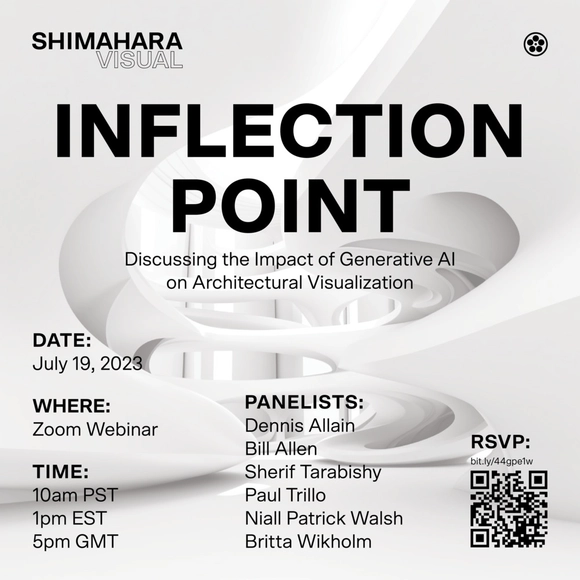
Please join us next month for our Zoom webinar panel discussion, Inflection Point, which will consider the ways that Generative AI impacts, hinders, or helps the future of the Architectural Visualization industry.
Since the launch of the Norman Foster Foundation, its mission has been to promote interdisciplinary thinking and research to help new generations to anticipate the future. In order to respond to the growing importance of urbanization and its challenges, the Foundation is now embarking on a new initiative addressed to those who wish to improve the quality of life in cities worldwide, the Norman Foster Institute.
Its first program, On Sustainable Cities, will combine practical on-site experience with academic input from the foundation’s network of international experts, using the most up-to-date digital tools. Each year, scholars will visit three pilot cities to engage directly with their planners and managers.
In partnership with Make Architects and Sir John Soane’s Museum, World Architecture Festival (WAF) announces the call for entries for the seventh edition of The Architecture Drawing Prize, sponsored by Iris Ceramica Group. Launched in 2017, the Prize was established to celebrate and showcase the art and skill of architectural drawing.
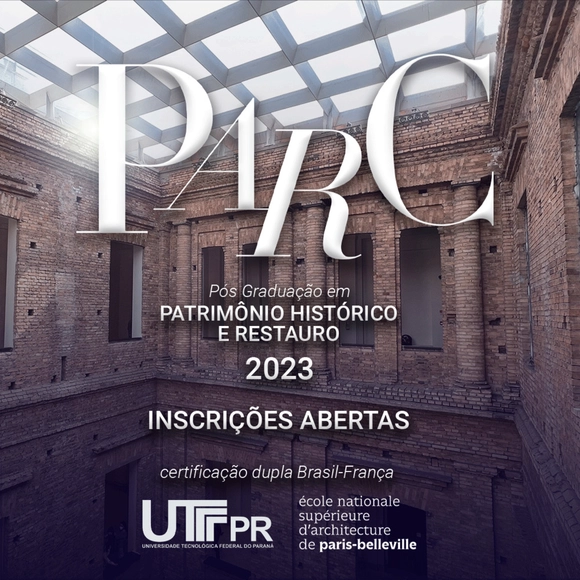
Applications are open until July 10 for the second cohort of the specialization in Historic Preservation and Restoration at the Federal University of Technology – Paraná (UTFPR), in partnership with the École Nationale Supérieure d'Architecture de Paris-Belleville. The program will take place in Curitiba, spanning three semesters (500 hours), with classes scheduled to begin in August and held in-person every two weeks.
América Cupello, Andréa Facchini, Antônia Philippsen, Carlota Philippsen, Clarisse Tarran, Claudia Watkins, Ecila Huste, Edineusa Bezerril, Esther Barki, Grasi Fernasky, Lia do Rio, Maria Pitú, Monica Barki, and Pérola Bonfanti make up the "team" assembled by Paulo Branquinho for the group exhibition "Elas" (Them/Women). The show marks the July 8th reopening of the gallery bearing the producer's name, which had been closed since the pandemic. The feminine universe is represented by these 14 artists, who will present their work through a variety of styles and techniques. Drawing from distinct visual languages, they initiate a dialogue on diversity through paintings, photographs, objects, and installations.
July 1, Saturday, 18:00, the courtyard of the Bulgarian Pavilion, Biennale Architettura 2023, 18th International Architecture Exhibition The Laboratory of the Future, Venice panel discussion with: Andreas Ruby, director, the Swiss Architecture Museum S AM in Basel Aneta Vassileva, architect, architecture critic and historian, professor at the University of Architecture, Civil Engineering and Geodesy, Sofia Erich Schoenenberger, architect, adjunct assistant professor at Pratt Institute; director of su11 architecture+design Katrine Daugaard Jørgensen, architect, head of transformation at Henning Larsen; consultant of the design brief for the architecture competition of the Christo and Jeanne-Claude Center in Gabrovo Tania Hristova, mayor, Gabrovo Municipality Vladimir Yavachev, operations and project director, Christo and Jeanne-Claude
Unbuilt is a studio-based private network for architects and a fresh take on paper architecture. Unbuilt hosts exhibitions of studio work in an experimental digital space. Viewers will inhabit an immersive, social exhibition to experience the architecture together.
Under the theme "Unknown Unknowns. An introduction to mysteries," the curator of the recent XXIII Triennale di Milano in 2022, Ersilia Vaudo —an astrophysicist and director of the Office of Diversity at the European Space Agency (ESA)— asked artists, architects, and scientists to propose projects that address what we do not know, or what we are unaware that we do not know.
Mariana Bunn will be in conversation with architect Fabiana Goulart next Sunday
As part of her series, "Accessibility from North to South: All the Voices of Brazil," Mariana Bunn Architecture and Accessibility will host a conversation with Fabiana Goulart this coming Sunday, July 2nd.
The latest report from the UN’s climate panel states that the building industry accounts for 34% of global energy consumption and 37% of global CO2 emissions. As noted in the report: "The buildings and construction sector is not on track to achieve decarbonization by 2050." Dramatic numbers and rather depressing news. With this reality in mind, Danish window manufacturer VELUX recently set out to initiate a project to demonstrate that if the industry is willing to change, here and now, it’s possible. Together with their partners, Danish architect studio EFFEKT and engineer consultants Artelia, VELUX has built an experimental housing program called Living Places which exemplifies and proves that with current building technology and materials, a transition towards healthier and more sustainable living is already within reach.