
Mónica Arellano

Content Editor at ArchDaily Mexico. Architect by UNAM (2018). Her interests focus on exploring the relationship of the body with architecture through dance. She has collaborated with different international choreographers who explore dance and architecture as an event. Twitter / Instagram: @monicarellano_

BROWSE ALL FROM THIS AUTHOR HERE
↓

A New Mexican Toy Arrives at Galerías Atizapán: Los Trompos / Esrawe + Cadena

A New Mexican Toy Arrives at Galerías Atizapán: Los Trompos / Esrawe + Cadena - Featured Image
Cortesía de Weber Shandwick

A New Mexican Toy Arrives at Galerías Atizapán: Los Trompos / Esrawe + Cadena - 1 的图像 4A New Mexican Toy Arrives at Galerías Atizapán: Los Trompos / Esrawe + Cadena - Featured ImageA New Mexican Toy Arrives at Galerías Atizapán: Los Trompos / Esrawe + Cadena - 2 的图像 4A New Mexican Toy Arrives at Galerías Atizapán: Los Trompos / Esrawe + Cadena - 3 的图像 4A New Mexican Toy Arrives at Galerías Atizapán: Los Trompos / Esrawe + Cadena - More Images+ 8

Héctor Esrawe and Ignacio Cadena are two internationally recognized Mexican designers working at E + C, an interdisciplinary design studio in Mexico City that promotes Mexican design and culture. In 2015, they created an installation exhibited at Discovery Green, Houston's prominent urban park, which occupied a section called the Sarofim Picnic Lawn and has since been presented twice in US cities.

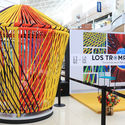
The temporary installation, titled 'Los Trompos,' consists of large-scale, colorful elements inspired by a classic Mexican toy. Currently on display at the Galerías Atizapán shopping center in Ciudad López Mateos, Mexico, from May 24 to June 17, it will subsequently travel to Galerías Vallarta and Galerías Tlaxcala.

Interview with Gabriela Etchegaray and Jorge Ambrosi: Echoes of a Land / Mexican Pavilion at the Venice Biennale

Subscriber Access | 

We interviewed Gabriela Etchegaray (curator) and Jorge Ambrosi (exhibition designer) about the participation of the Mexican Pavilion in the 16th International Architecture Exhibition at the Venice Biennale. They describe the geographical, imaginary, and cultural weight of Mexican architecture; responding to the theme of Freespace—proposed by the Biennale's Artistic Directors, Irish architects Yvonne Farrell and Shelley McNamara—this pavilion grounds the connections expressed in the interaction with the intangible and the incorporation of cultural heritage into architecture.
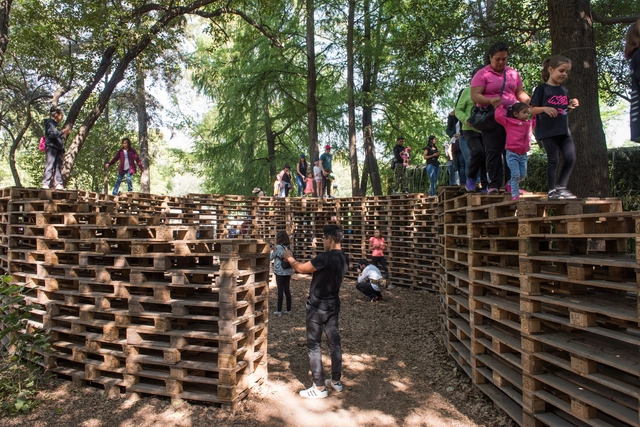
Discover all the details of 'Stand Ground', a piece by Rozana Montiel Estudio de Arquitectura for the 2018 Venice Biennale.

Discover all the details of 'Stand Ground', a piece by Rozana Montiel Estudio de Arquitectura for the 2018 Venice Biennale. - Featured Image
© Rozana Montiel Estudio de Arquitectura

Discover all the details of 'Stand Ground', a piece by Rozana Montiel Estudio de Arquitectura for the 2018 Venice Biennale. - Imagen 1 de 4Discover all the details of 'Stand Ground', a piece by Rozana Montiel Estudio de Arquitectura for the 2018 Venice Biennale. - Imagen 2 de 4Discover all the details of 'Stand Ground', a piece by Rozana Montiel Estudio de Arquitectura for the 2018 Venice Biennale. - Imagen 3 de 4Discover all the details of 'Stand Ground', a piece by Rozana Montiel Estudio de Arquitectura for the 2018 Venice Biennale. - Imagen 4 de 4Discover all the details of 'Stand Ground', a piece by Rozana Montiel Estudio de Arquitectura for the 2018 Venice Biennale. - More Images+ 4

Rozana Montiel is one of the 71 architects invited by the curators of the 16th International Architecture Exhibition of the Venice Biennale, Yvonne Farrell and Shelley McNamara, which opened on May 24, 2018, at the Arsenale in Venice, Italy. Her participation in this renowned festival engages with the central theme, 'Freespace,' which suggests both an imperative—'to free space'—and a resource—'having free space (to act/engage).' The Mexican architect's studio explores this theme as an imperative for action and a social resource for free agency.

Rozana Montiel Estudio de Arquitectura is an internationally recognized firm known for providing users with a sense of place and well-being, promoting habitability and spatial densification to foster active public spaces and local cultural production. Ultimately, this expands horizons of interaction, paving the way for community integration.

Discover the testimonials of the speakers from the Provincia Architecture and City Festival

Subscriber Access | 

In April 2018, the inaugural edition of the Provincia Festival was held, aiming to create an open forum for dialogue and the discussion of civic interest topics, with an emphasis on responsible engagement in regional architectural development.

The festival took place in the city of Tuxtla Gutiérrez in Chiapas, México—a region currently lacking high-quality urban spaces, planning, and a clear vision regarding the impact of architectural projects. Meanwhile, there is a constant drain of local talent, driven by a combination of factors that foster the belief that professional success can only be achieved through large-scale projects in major metropolises. We want to reaffirm the idea that architecture is everywhere, and that the true success of the profession lies in serving everyone, regardless of their gender, social background, or economic status.

Mexico Triumphs at the 2018 Prix Versailles for 'Ixi’im Restaurant'

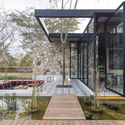
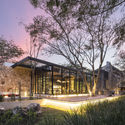
Mexico Triumphs at the 2018 Prix Versailles for 'Ixi’im Restaurant' - Imagen 1 de 4Mexico Triumphs at the 2018 Prix Versailles for 'Ixi’im Restaurant' - Imagen 2 de 4Mexico Triumphs at the 2018 Prix Versailles for 'Ixi’im Restaurant' - Featured ImageMexico Triumphs at the 2018 Prix Versailles for 'Ixi’im Restaurant' - Imagen 3 de 4Mexico Triumphs at the 2018 Prix Versailles for 'Ixi’im Restaurant' - More Images+ 5

Recently, the award ceremony for the 2018 Prix Versailles world awards was held at UNESCO's headquarters in Paris. An annual recognition of commercial architecture worldwide, these awards aim to foster interaction between culture and economy. The Prix Versailles seeks to change how this seemingly opposing architectural duality is perceived, given that commercial venues are often associated with utilitarian functionalism and immediacy, whereas cultural sites are associated with beauty and experience.

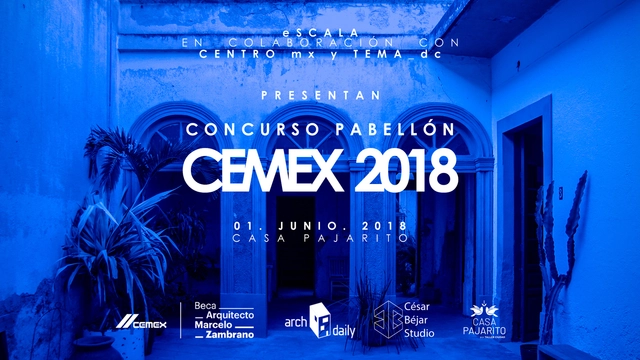
Meet the top three winners of the 2018 CEMEX Pavilion Competition

The 2018 CEMEX Pavilion competition was established to offer Guadalajara's student community an opportunity and a platform to express their aspirations, interests, concerns, and critiques of the architectural profession. This is materialized through an intervention in the courtyard of a heritage home in the city's historic center, which currently serves as both a workshop and a cultural center.

Supported by CEMEX and the Arq. Marcelo Zambrano Scholarship, the first edition of the 2018 CEMEX Pavilion competition was launched. Aimed at the student community of the Guadalajara Metropolitan Area, the competition invited participants to intervene in a heritage property in the city's downtown core, aiming to provide students with a fresh platform to express their concerns and passions about the profession through a built work, bridging the gap to professional practice.

Part Four: 21 Projects Representing Mexico at the 16th International Architecture Exhibition of the Venice Biennale

Part Four: 21 Projects Representing Mexico at the 16th International Architecture Exhibition of the Venice Biennale - Featured Image

The 21 projects making up the Official Selection of the Mexican Pavilion at the 16th International Architecture Exhibition of the Venice Biennale converge across latitudes, geographical regions, and territorial echoes, rooted in the curatorial concept of "Freespace." In four installments, we will share the work and ideas of each participant representing Mexico in Venice. Read on to discover the fourth part of these projects.

Mexican Architects Tell us Their Experience Working With 2018 Pritzker Prize Winner, B.V. Doshi

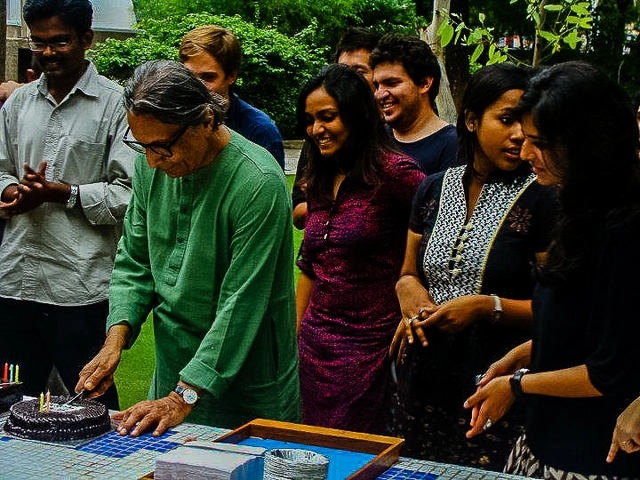
Earlier this year, the jury of the Pritzker Prize chose the Indian architect Balkrishna Doshi, also known as B.V. Doshi, or Doshi, as the winner of the 2018 Pritzker Prize. In recent weeks a lot of information has come to light about the winning architect's practice who, as you probably already know, was an apprentice and collaborator of Le Corbusier and Louis Kahn. Being the first Indian architect to receive Architecture's most prestigious award, Doshi has had an active career of more than 70 years, with a poetic architectural style that is based on oriental cultural influences, creating a production that "covers all socioeconomic classes, in a wide spectrum of typologies, since the 1950s," according to the jury's record.

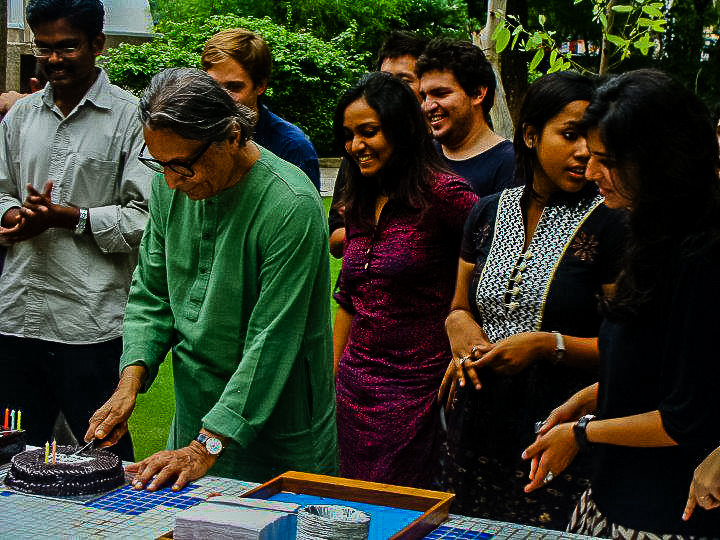
But, can you imagine what it's like to work with Doshi in his firm? We talked with four alumni from the School of Architecture, Art and Design from Tecnológico de Monterrey, who some years ago had the opportunity to travel to India to work directly with Doshi through a professional internship program promoted by the same university. Arturo Acosta, Jeimi Cuendulain, Airam Moreno and Giovanni Llamas tell us about their experience working in the firm, as well as anecdotes that marked them both professionally and personally that helped them see and experience architecture beyond the obvious. Here are their testimonies below:

Mexican Architects Tell us Their Experience Working With 2018 Pritzker Prize Winner, B.V. Doshi - Image 1 of 4Mexican Architects Tell us Their Experience Working With 2018 Pritzker Prize Winner, B.V. Doshi - Image 2 of 4Mexican Architects Tell us Their Experience Working With 2018 Pritzker Prize Winner, B.V. Doshi - Image 3 of 4Mexican Architects Tell us Their Experience Working With 2018 Pritzker Prize Winner, B.V. Doshi - Image 4 of 4Mexican Architects Tell us Their Experience Working With 2018 Pritzker Prize Winner, B.V. Doshi - More Images+ 64

Part Two: 21 Projects That Will Represent Mexico at the 16th International Architecture Exhibition of the Venice Biennale

The 21 projects making up the Official Selection of the Mexican Pavilion at the 16th International Architecture Exhibition of the Venice Biennale converge across latitudes, geographical regions, and echoes of the territory, responding to the curatorial theme “Freespace.” In four installments, we will share the work and philosophy of each of the participants representing Mexico in Venice. Read on to discover the second part of these projects.

Interview with Rozana Montiel: One of the 71 guests invited by the artistic directors to the Venice Biennale

Subscriber Access | 

In addition to the national pavilion, Mexico will have a presence in the main exhibition with the participation of Rozana Montiel (Rozana Montiel Estudio de Arquitectura) as one of the 71 participants invited by the artistic directors.

In this interview, the Mexican architect shares what her participation in the exhibition will entail, the overall outlook of Mexico's presence in alignment with the 'Freespace' theme, and how her career and recent projects inform and influence the piece that will be presented from May 26 to November 25, 2018, at the Venetian Arsenale.

PALMA builds a new urban toy for Mexico City

PALMA builds a new urban toy for Mexico City - Image 1 of 4PALMA builds a new urban toy for Mexico City - Image 2 of 4PALMA builds a new urban toy for Mexico City - Image 3 of 4PALMA builds a new urban toy for Mexico City - Image 4 of 4PALMA builds a new urban toy for Mexico City - More Images+ 24

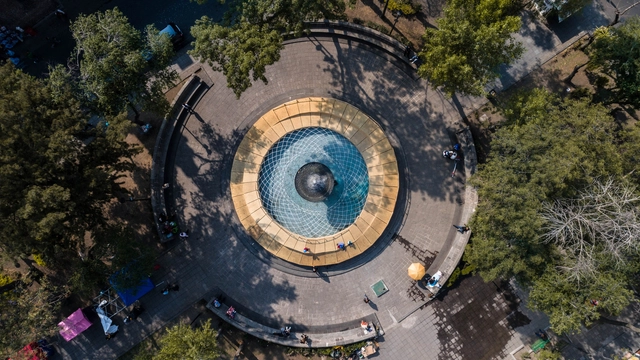
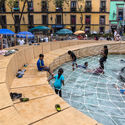
Aros is the winning project of the "Juguetes Urbanos" (Urban Toys) competition, organized by the Laboratory for the City and the Mexico City Government. The competition called for a play-based proposal within Plaza Loreto, located in the historic core of Mexico City's Centro Histórico.

Mexico City's fountains have long been gathering places where children play while waiting for their families to finish the workday. These spots are crucial, perhaps because water carries significant cultural weight in the city; during spring and summer, they regularly draw crowds who engage with public space in this active way.

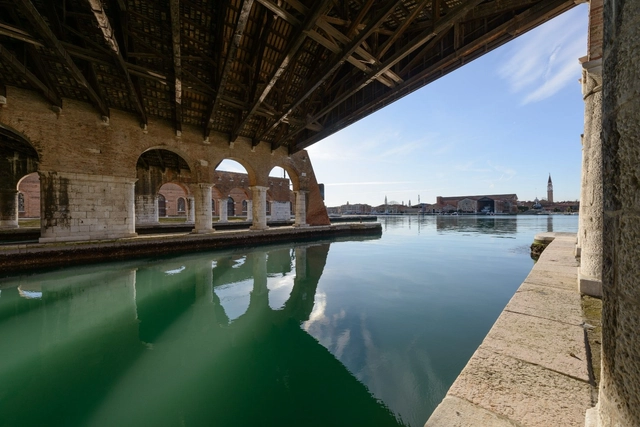
The Mexican Pavilion 'Echoes of a Land' for the Venice Biennale will take place from May 24 to November 25, 2018.

Founded in 1895 as an international art exhibition, the Venice Biennale is currently one of the most prestigious cultural events, aiming to promote contemporary art through events and exhibitions across various disciplines, including visual arts, cinema, dance, music, and theater. The International Art Exhibition and the International Architecture Exhibition alternate every two years. Since 1998, these exhibitions have been organized around three main pillars:

  • National Pavilion exhibitions
  • The central international exhibition organized by the curators
  • Collateral events in the City of Venice

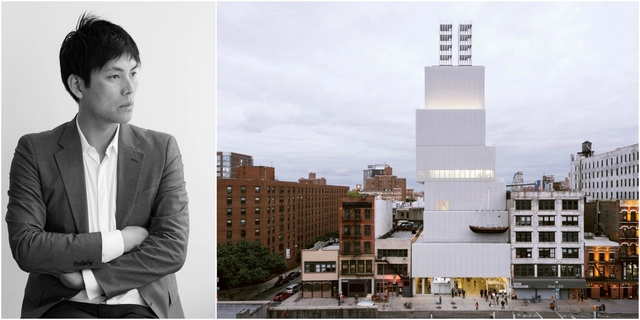
OMA / Shohei Shigematsu: 'We cannot imagine our future city as another version of New York'

The 2018 International Housing Finance Summit, organized by INFONAVIT, brought together experts from various disciplines to discuss the future of cities and the lessons learned to date. Held on May 2 and 3 at the Camino Real in Polanco, the event hosted prominent figures who discussed urban transformation processes to evaluate urban models that could guide us toward a comprehensive master plan.

The event featured Shohei Shigematsu, a partner at OMA, a firm whose global projects have established it as one of the world's leading architecture practices. OMA operates within the traditional boundaries of architecture and urbanism and works in parallel with AMO, a research and design studio that applies architectural thinking to other domains. The firm is led by nine partners—Rem Koolhaas, Ellen van Loon, Reinier de Graaf, Shohei Shigematsu, Iyad Alsaka, David Gianotten, Chris van Duijn, Ippolito Pestellini Laparelli, and Jason Long—and has offices in Rotterdam, New York, Beijing, Hong Kong, Doha, Dubai, and Perth.

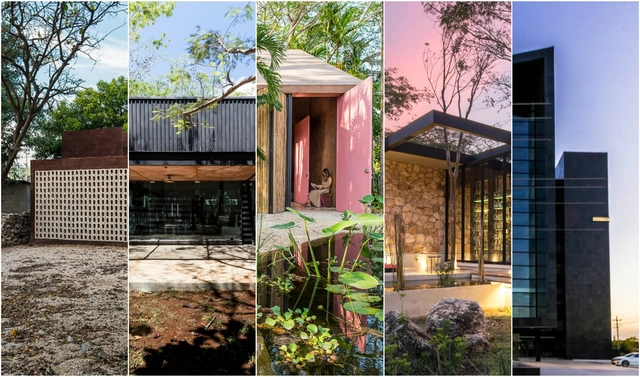
Winners of the XII Yucatecan Architecture Biennial 2018

Single-Family Residential Housing

AS Arquitectura, Xavier Abreu Sacramento, Alejandra Abreu Sacramento, and Efraín Góngora
First Place in Category and Grand Prize of the XII Yucatecan Architecture Biennial 2018
Casa del Árbol

The Mexican design furniture that has recycled 80,000 plastic bottles: Luken by Paola Calzada

Subscriber Access | 
The Mexican design furniture that has recycled 80,000 plastic bottles: Luken by Paola Calzada - Featured Image
© Marta Kowalska

The Mexican design furniture that has recycled 80,000 plastic bottles: Luken by Paola Calzada - Imagem 1 de 4The Mexican design furniture that has recycled 80,000 plastic bottles: Luken by Paola Calzada - Imagem 2 de 4The Mexican design furniture that has recycled 80,000 plastic bottles: Luken by Paola Calzada - Imagem 3 de 4The Mexican design furniture that has recycled 80,000 plastic bottles: Luken by Paola Calzada - Imagem 4 de 4The Mexican design furniture that has recycled 80,000 plastic bottles: Luken by Paola Calzada - More Images+ 11

Luken is a designer furniture brand –created and produced in Mexico by architect Paola Calzada Prats–, characterized by its use of recycled or eco-friendly materials. The collection consists of indoor and outdoor furniture that is easily assembled and resistant to sun, water, and heavy use.

Two different materials are used: recycled plastic for outdoor furniture and valchromat for indoor pieces, the latter being a 12 mm thick Portuguese wood fiber panel that, while not rainproof, is resistant to moderate humidity. No glue or nails are required for assembly. Meanwhile, the outdoor recycled plastic is made of 100% melted plastic with no added chemicals in the process. It performs exceptionally outdoors due to its resistance to direct sunlight, sea air, rain, and even heavy daily use by children.

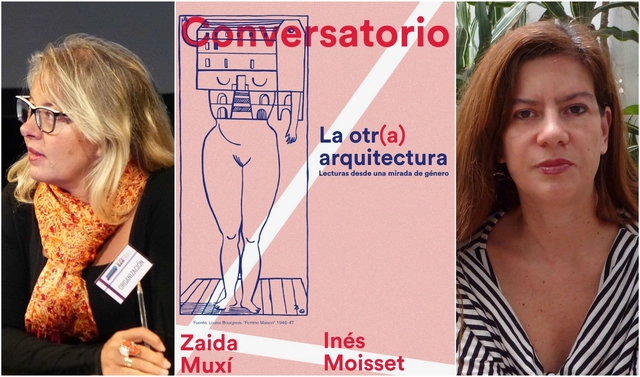
'The Other Architecture' conversations with Zaida Muxí and Inés Moisset

Subscriber Access | 

'The Other Architecture' conversations with Zaida Muxí and Inés Moisset - Image 1 of 4'The Other Architecture' conversations with Zaida Muxí and Inés Moisset - Image 2 of 4'The Other Architecture' conversations with Zaida Muxí and Inés Moisset - Image 3 of 4'The Other Architecture' conversations with Zaida Muxí and Inés Moisset - Image 4 of 4'The Other Architecture' conversations with Zaida Muxí and Inés Moisset - More Images+ 6

Conversatorio FA is a project born out of the desire to create a space for reflection on contemporary thought, aiming to foster a dialogue enriched by diverse perspectives within these very spaces. It seeks to reclaim various spaces and generate new questions and inquiries through critical and pluralistic thinking in open university areas, fostering democratic dialogue on topics chosen based on student interests.

The structure of Conversatorio FA seeks to bring external guests closer to the community, establishing connections and raising new questions about the future of the profession. Past guests have included renowned figures such as Alberto Pérez Gómez, Néstor García Canclini, and, most recently, Carlos Amorales. As part of its eighth edition, an event was held focusing on gender perspective in architecture. It featured Argentine architect Inés Moisset, coordinator of the project "Un día, una arquitecta," and Zaida Muxí, author of several publications on gender perspectives and co-director of the Master's Laboratory of 21st Century Housing at the Polytechnic University of Catalonia.

Dancers explore the dance of Luis Barragán's House and Studio

Subscriber Access | 

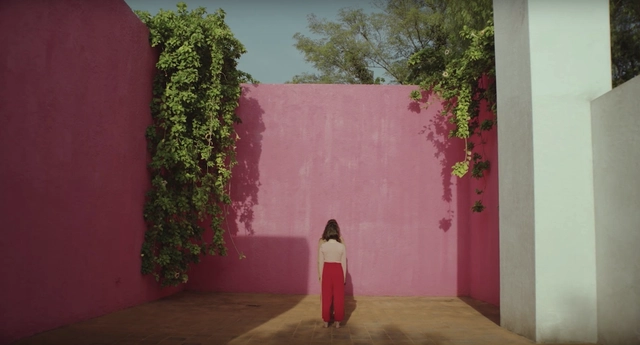
Andrés Arochi directed a video that portrays dancing bodies experiencing the space of the Luis Barragán House and Studio, a site in Mexico City famous for the introspective quality of its gardens and the characteristic mysticism of the Mexican architect. Regarding the video Dancing through the Architecture of Luis Barragán, Arochi comments:

When we started recording, the magic began to happen. Light burst through the window and the dancers' bodies began to flow in an unexpected way.

'Refugio 2018' Pavilion by Fernanda Canales + Claudia Rodríguez for FYJA 2018

'Refugio 2018' Pavilion by Fernanda Canales + Claudia Rodríguez for FYJA 2018 - More Images+ 22

The FYJA Flowers and Gardens Festival is an event that brings together landscape architects, architects, artists, designers, artisans, gardeners, and students to create, for each edition, a route with various activities and exhibitions. These offer everyone—experts, enthusiasts, and the curious alike—the opportunity to engage with horticulture and experience the benefits of plants.

This year's edition, which took place from April 20 to 22, aimed to raise awareness among Mexicans about the importance of plant care and the necessity of creating and preserving urban green spaces, while also fostering interest in landscape design, floral art, and gardening.