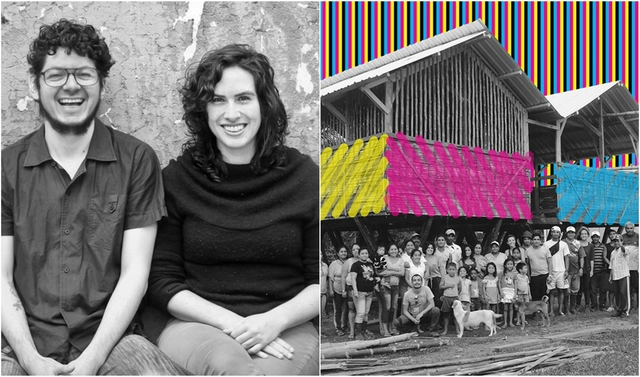
Content Editor at ArchDaily Mexico. Architect by UNAM (2018). Her interests focus on exploring the relationship of the body with architecture through dance. She has collaborated with different international choreographers who explore dance and architecture as an event. Twitter / Instagram: @monicarellano_
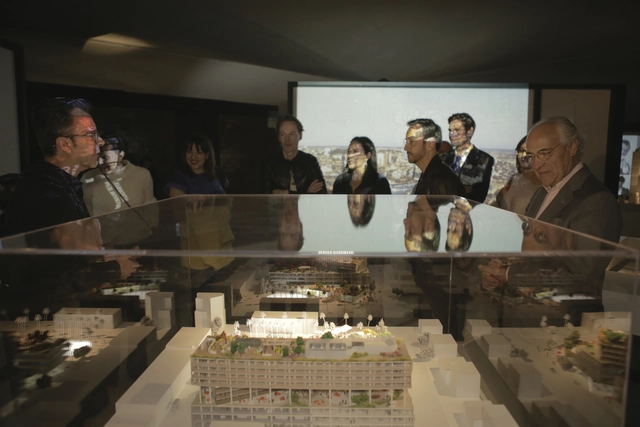
The exhibition “10 Exponents of the 21st Century: City, Architecture, and Design” launches the cultural activities at Espacio CDMX, a public space dedicated to promoting architecture, urban planning, and socially responsible design in the city, while also serving as a temporary creative venue and Information Center for World Design Capital CDMX 2018.
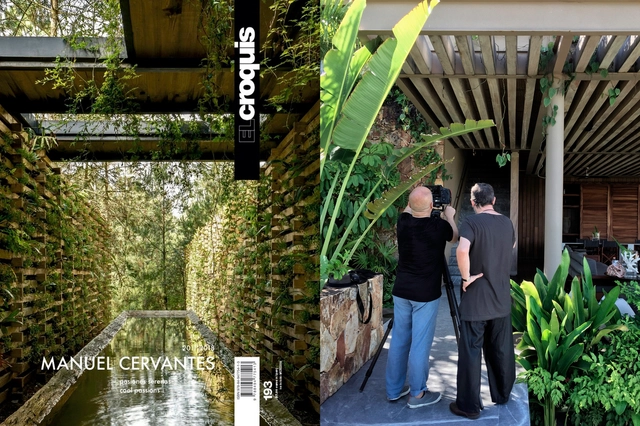
'El Croquis' is one of the most prestigious international architecture magazines, edited by architects Fernando Márquez Cecilia and Richard Levene. Published as carefully curated monographs, the magazine analyzes the work of architects whose careers feature some of the most influential and prestigious projects globally, such as OMARem Koolhaas, Kazuyo Sejima, Herzog & de Meuron, Álvaro Siza or Rafael Moneo. Every two months, a new issue is published with a print run of 35,000 copies, distributed to specialized bookstores in Europe, the Americas, and Asia.
The magazine is published in English and Spanish from El Escorial in Madrid, Spain, and is currently a member of ARCE (Asociación de Revistas Culturales de España) and the Asociación de Editores de Madrid. To date, only 193 issues have been published, the latest of which is dedicated to the career of architect Manuel Cervantes—the first Mexican architect to be featured in 'El Croquis' and the second from Latin America, following Smiljan Radic.
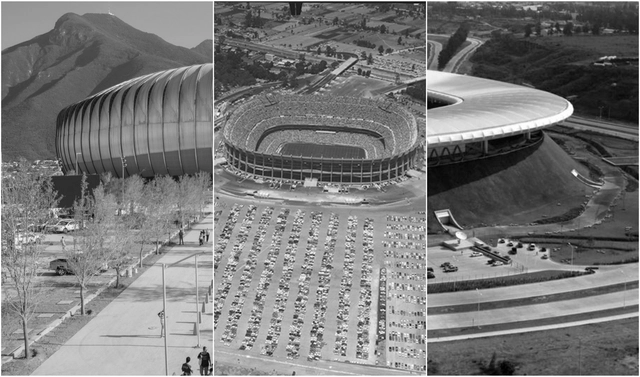
A few days ago, FIFA announced that Mexico, the United States, and Canada will host the 2026 World Cup. The news came as a surprise to some, as it will be the first World Cup to be played across three countries, featuring a new format with 48 teams divided into 16 groups of three. Consequently, further details on the organization will not be available until 2020, when FIFA is scheduled to announce the event's logistics.
Knowing that many of our readers are fans of both soccer and Mexican architecture, we present this special feature on the three Mexican stadiums that will host the 2026 World Cup. Don't miss it!
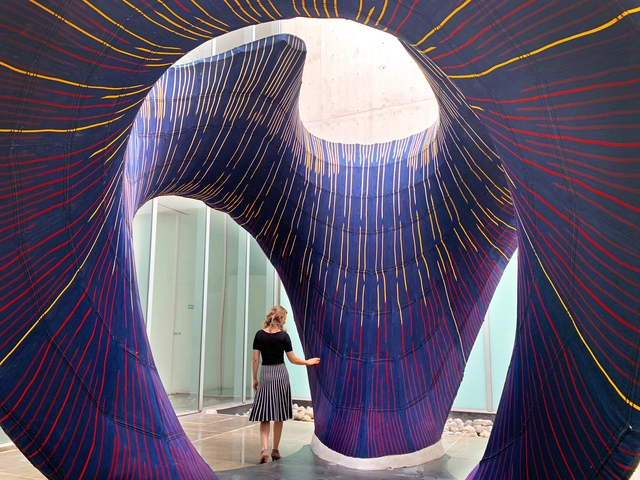
As part of Zaha Hadid Architects' first exhibition in Latin America, the Museo Universitario de Arte Contemporáneo (MUAC) in Mexico City is hosting an experimental structure that pays tribute to Mexican architect and engineer Félix Candela. "Design as Second Nature" showcases several projects by architect Zaha Hadid through models, audiovisual materials, paintings, and photographs, exploring her practice's creative process and highlighting the importance and complexity of design as the articulating axis of forms and construction processes in her work.
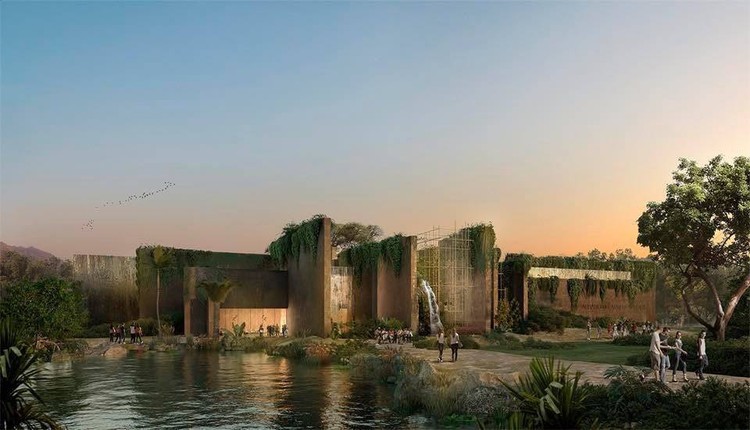
With an investment of 1.188 billion pesos, a new aquarium will be built in Mazatlán. According to local authorities, it will be the largest in Latin America, spanning 12,384 square meters, with 3,917 square meters allocated for outdoor areas and 9,441 square meters for interiors.
The Mexican architecture firm led by Tatiana Bilbao will head the project in collaboration with international companies, including San Francisco-based EHDD, San Diego-based TJP Engineering, and Chicago-based Space Haus.
Once the bidding process—expected to take three months from the release of the call—is complete, construction will take 24 months. This timeline is planned to avoid disrupting the operations of the existing aquarium.
The 2018 CEMEX Pavilion competition was conceived to provide the student community of Guadalajara with an opportunity and a voice to express their aspirations, interests, concerns, and critiques of the profession, channeling them into an intervention within the courtyard of a heritage house in the city's historic center, which functions as a workshop and cultural center. The event is organized by eSCALA, CENTROmx, and TEMAdc—groups made up of students and alumni of the Centro Universitario de Arte, Arquitectura y Diño of the Universidad de Guadalajara—and the winners of the 2018 CEMEX Pavilion Competition, which included one first-place and two second-place projects, were recently published.
In the presence of officials from the Ministry of Culture, Dra. Lidia Camacho, general director of the National Institute of Fine Arts, Mtra. Irene Muñoz Trujillo, director of the Mixed Fund for Tourism Promotion of Mexico City, and Maria Laura Medina de Salinas, honorary president of the Design Week México board, the general director of Design Week México and World Design Capital CDMX 2018, Emilio Cabrero, announced the details of the activity program for World Design Capital CDMX 2018.
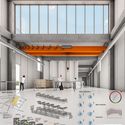
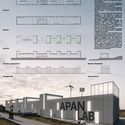
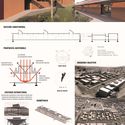
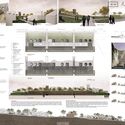
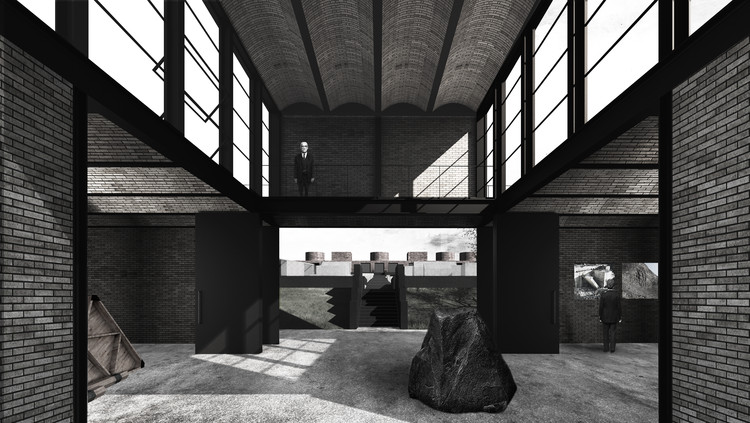
Through the Center for Sustainable Development Research (CIDS), Infonavit launched an open call for architecture and engineering firms to design the "Materials, Energy, and Water Laboratories" Building. Aiming to research and experiment with new materials, industrialized components, and spatial characteristics that foster the development of social housing, the building will be part of the complex named "Infonavit Housing Practical Research and Experimentation Laboratory" in "San Miguel del Arco," Apan, Hidalgo.
The brief required the proposal to be designed as a program container. Specifically, the design for this Ideas Competition had to house three major research spaces (materials, energy, and water) tailored to the specific testing and research needs of each laboratory, which will be developed in detail during the executive project phase with the winning firm. A key requirement for these spaces was spatial flexibility and versatility in both plan and section.
The 2018 International Housing Finance Summit, organized by INFONAVIT, brought together experts from various disciplines to discuss the future of cities and the lessons learned to date. Held on May 2 and 3 at the Camino Real Polanco, the event hosted prominent figures who examined urban transformation processes to evaluate models that could guide us toward an integrated urban plan.
As part of a generation of photographers who in recent years have helped place Mexican architecture on the global map, Jaime Navarro is one of the key figures who has navigated the technological transition shaping a new way of seeing and practicing architecture. As one of the country's most recognized photographers, Jaime Navarro's approach aims for photography that can help document the beauty and goodness of specific historical moments, witnessing how we relate, what moves us, and what transcends disciplinary boundaries to build new futures. Below, we present an exclusive interview that showcases his career and the admiration of the ArchDaily team.
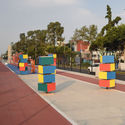
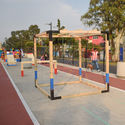
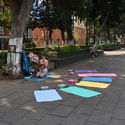
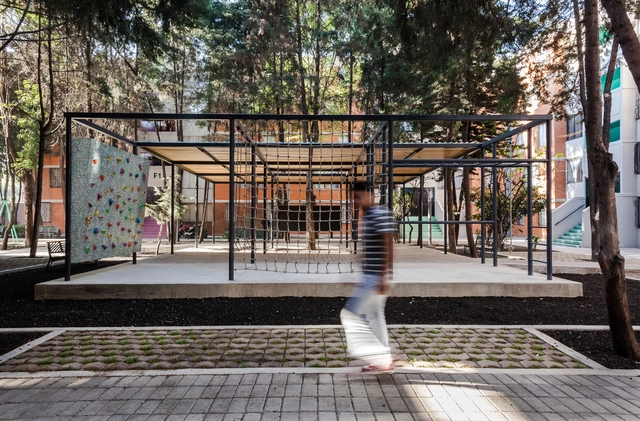
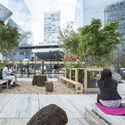
The 2nd Placemaking Latinoamérica Summit—organized by Lugares Públicos A.C.—took place in Mexico City during the first and second weeks of November. It featured various activities, including the rehabilitation of eight public spaces led by Mexican and Latin American participatory urban planning specialists in the boroughs of Cuauhtémoc, Iztacalco, and Miguel Hidalgo.
These interventions were carried out as part of a broader effort to reflect and act on the Placemaking methodology at a Latin American scale, fostering collaboration between organizations from different countries to improve public space. This process is detailed in the "White Paper on Latin American Placemaking: Tactical Urbanism and Innovation in Public Space Program," presented this week by the Alliance for Urban Regeneration (ARU) and Lugares Públicos.
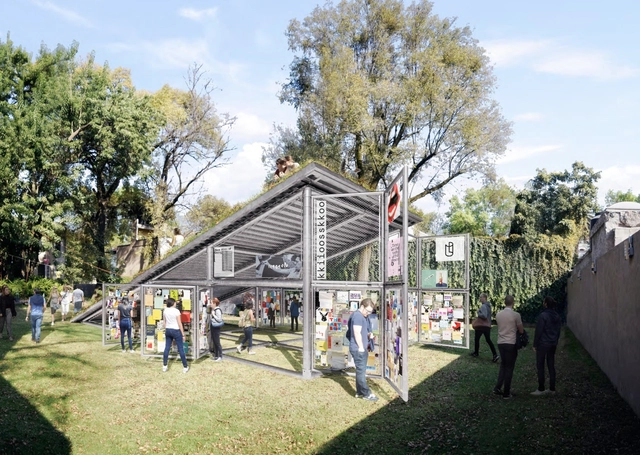
Kiosko, the Alumnos47 initiative that explores publications outside of publishing, now has a winning design for its pavilion. Following the launch of the open call last year, forty-nine proposals were received from different states across Mexico, as well as one from abroad. After a lengthy and rigorous deliberation, the jury—composed of Chus Martínez, Daniel Garza Usabiaga, Tiago Pinto de Calvalho, and Fermín Espinosa—awarded an honorable mention and selected five finalists, from which a winner was chosen.
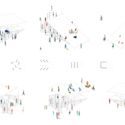
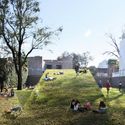
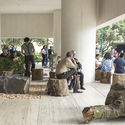
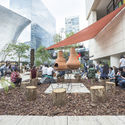
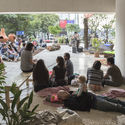
Museo Jumex presents 'Proposals for a Plaza,' a collaborative project by artists Fritz Haeg (United States, 1969) and Nils Norman (United Kingdom, 1966). This temporary installation, commissioned as part of the series 'Agora: A Blueprint for Utopia,' will invite the public to imagine and participate in an alternative vision of the museum's plaza.
Inspired by the outdoor spaces of Mexico City, the project draws elements from public parks and the wildlife areas surrounding the city, while also integrating informal uses of open space. It features seating and sleeping areas, a kiosk, a fire pit, bleachers, and outdoor spaces designed for contemplation, gathering, resting, and play.
It is our duty to place human dignity at the center of the reconstruction process. - Telar Social México
On September 19, 2017, Mexico experienced one of the strongest earthquakes in its history. Measuring 7.1 on the Richter scale, it left more than 369 casualties and 150,000 homes destroyed across five states, with Oaxaca, Morelos, the State of Mexico, and Guerrero being the hardest hit.
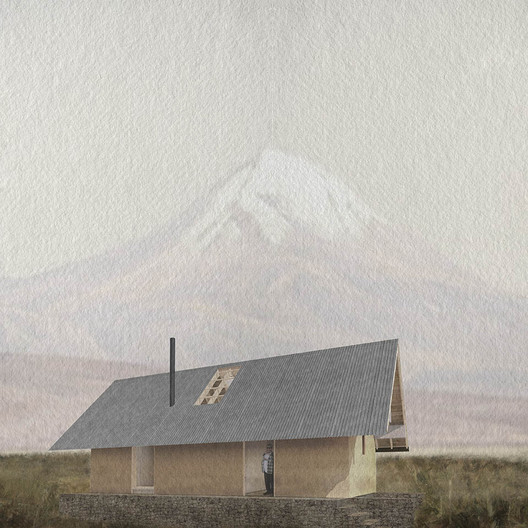
Ecatzingo, located southwest of the Popocatépetl Volcano in the State of Mexico, remains one of the municipalities most severely damaged by the earthquake, where 1,587 affected homes—601 of them uninhabitable—left entire families homeless.
On October 13, the 2018 Archmarathon Awards concluded their fifth edition in Milan. Held at the impressive Palazzo Mezzanotte from October 11 to 13, 2018, the event featured 55 architecture and interior design projects across 16 categories, submitted by 55 studios from 23 countries and four continents. Selected by a prestigious international jury, the 55 firms were invited to present their projects to a large audience of architects, developers, and designers from around the world.
During the ceremony, the winners of each of the 16 categories and two overall winners—one for architecture and one for interior design—were announced. The selection was made by a main jury chaired by Luca Molinari, Gary Chang, Lesley Lokko, and Mexican architect Rozana Montiel, along with a guest jury comprising Massimiliano Cecconi, Cherubino Gambardella, and Evgeniya Murinets. Read on to discover the final winners in both categories.
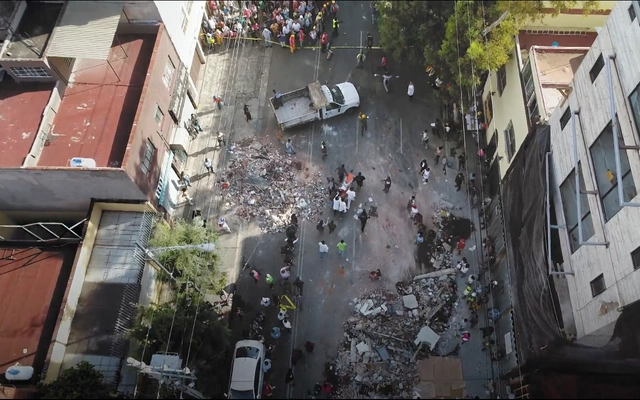
As part of The New York Times' documentary series "En los ojos de México" –where six filmmakers present a perspective on their country– Santiago Arau and Diego Rabasa present "Ciudad Herida" (Wounded City), a chronicle of the 2017 earthquake in central Mexico. Through drone footage, the film captures the strength and resilience shown during a moment of crisis.




.jpg?1525983268 "via Enfoque Informativo")
.jpg?1525983259 "via Enfoque Informativo")
.jpg?1525983252 "via Enfoque Informativo")
.jpg?1525983245 "via Enfoque Informativo")


-1.jpg?1518763923&format=webp&width=640&height=580)

_at_Cuadra_San_C....jpg?1518020946&format=webp&width=640&height=580)
_at_Cuadra_San_Cri....jpg?1518020987 "Sean Scully Wall of Light Cubed, Mexico 2018 Stone sourced locally near Mexico City © Sean Scully. Image © Felix Friedmann")
_at_Cuadra_San_Cristobal__....jpg?1518020930 "Sean Scully Landline That Pink, 2017 Oil on Aluminum © Sean Scully")
_at_Cuadra_San_C....jpg?1518020946 "Sean Scully Wall of Light Cubed, Mexico 2018 Stone sourced locally near Mexico City © Sean Scully. Image © Felix Friedmann")
_at_Cuadra_San_Cristobal__....jpg?1518020961 "Sean Scully Brown Silver Tower, 2016 Corten and Stainless Steel © Sean Scully. Image © Felix Friedmann")
_at_Cuadra_San_C....jpg?1518020946)