Mónica Arellano

Content Editor at ArchDaily Mexico. Architect by UNAM (2018). Her interests focus on exploring the relationship of the body with architecture through dance. She has collaborated with different international choreographers who explore dance and architecture as an event. Twitter / Instagram: @monicarellano_

BROWSE ALL FROM THIS AUTHOR HERE

A School to Educate with Dignity: Intervention at the Juan H. Álvarez Intercultural Bilingual Elementary School in Xochistlahuaca, Guerrero, Mexico

Subscriber Access | 

A School to Educate with Dignity: Intervention at the Juan H. Álvarez Intercultural Bilingual Elementary School in Xochistlahuaca, Guerrero, Mexico - Imagem 1 de 4A School to Educate with Dignity: Intervention at the Juan H. Álvarez Intercultural Bilingual Elementary School in Xochistlahuaca, Guerrero, Mexico - Imagem 2 de 4A School to Educate with Dignity: Intervention at the Juan H. Álvarez Intercultural Bilingual Elementary School in Xochistlahuaca, Guerrero, Mexico - Imagem 3 de 4A School to Educate with Dignity: Intervention at the Juan H. Álvarez Intercultural Bilingual Elementary School in Xochistlahuaca, Guerrero, Mexico - Imagem 4 de 4A School to Educate with Dignity: Intervention at the Juan H. Álvarez Intercultural Bilingual Elementary School in Xochistlahuaca, Guerrero, Mexico - More Images+ 17

A School to Educate with Dignity is an intervention at the Juan H. Álvarez Intercultural Bilingual Primary School in Xochistlahuaca, Guerrero, Mexico. Led by Judith Meléndrez Bayardo (M.Urb.), Arch. Antonio Plá Pérez, and Gabriel Konzevik Kabib (M.Arch.), the project arose from a request for expansions and improvements at twenty-three indigenous schools in the mountainous region of Costa Chica, Guerrero, which are affiliated with the Guerrero 50-50 Project. This program seeks to reinforce the identity of indigenous communities by preserving their native languages. Consequently, in this particular community, the native ñomndaá language carries significant weight within the educational system, and above all, in shaping cultural identity and understanding the environment. Therefore, transforming the space became essential for the architecture to contribute to this project of cultural resistance.
Carlos González Lobo, Champion of Social and Participatory Architecture in Mexico, Dies

Subscriber Access | 

Today, April 12, 2021, marked the passing of architect Carlos González Lobo, a leading proponent of social and participatory architecture in Mexico. A 1963 graduate of the National School of Architecture, he went on to earn a Master of Architecture from UNAM's Faculty of Architecture in 1995. That same year, he was awarded an honorary doctorate by the Rhode Island School of Design, later receiving a PhD in Architecture from UNAM in 2007.

Architecture Without Architects: Mexican Artist Reflects on Self-Construction in Bogotá, Colombia

Subscriber Access | 
Architecture Without Architects: Mexican Artist Reflects on Self-Construction in Bogotá, Colombia - Featured Image
"Museo Experimental El Chopo" installation. Image © Sandra Calvo

Architecture Without Architects: Mexican Artist Reflects on Self-Construction in Bogotá, Colombia - Imagem 1 de 4Architecture Without Architects: Mexican Artist Reflects on Self-Construction in Bogotá, Colombia - Imagem 2 de 4Architecture Without Architects: Mexican Artist Reflects on Self-Construction in Bogotá, Colombia - Imagem 3 de 4Architecture Without Architects: Mexican Artist Reflects on Self-Construction in Bogotá, Colombia - Imagem 4 de 4Architecture Without Architects: Mexican Artist Reflects on Self-Construction in Bogotá, Colombia - More Images+ 11

"Architecture Without Architects" is a project led by Mexican artist Sandra Calvo between 2011 and 2014 in the neighborhood of Villa Gloria—a self-built housing complex in Ciudad Bolívar, a district in southern Bogotá. Working in collaboration with a resident family, the project involved creating a thread structure that reflected their latent aspirations for their own home through design and building practices.

Women in Ibero-America: Articles and interviews reflecting on the present and future of architecture

Subscriber Access | 

Women in Ibero-America: Articles and interviews reflecting on the present and future of architecture - More Images+ 3

It is well known that since its inception, the field of architecture has been predominantly composed of white, cisgender men, who to this day continue to occupy some of the most prominent positions in both architectural practices and prestigious awards. For this and many other reasons, the struggle to bring visibility to women in architecture has always been present, responding to the specific demands of each era and winning increasingly significant battles. However, inequalities persist, making it a challenging profession for women—and even more so for women of color, Indigenous women, Latinas, and those from disadvantaged economic backgrounds.

Mexican studio Escobedo-Soliz, winner of the 2020 Fritz Höger Award for Brick Architecture

Mexican studio Escobedo-Soliz, winner of the 2020 Fritz Höger Award for Brick Architecture - Image 1 of 4Mexican studio Escobedo-Soliz, winner of the 2020 Fritz Höger Award for Brick Architecture - Image 2 of 4Mexican studio Escobedo-Soliz, winner of the 2020 Fritz Höger Award for Brick Architecture - Image 3 of 4Mexican studio Escobedo-Soliz, winner of the 2020 Fritz Höger Award for Brick Architecture - Image 4 of 4Mexican studio Escobedo-Soliz, winner of the 2020 Fritz Höger Award for Brick Architecture - More Images

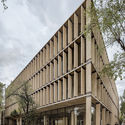
The renowned Fritz Höger Award for Brick Architecture announced the winners of its 2020 edition, which recognizes architectural practices from around the world for their outstanding achievements in brick construction. With nearly 600 projects submitted once again and a strong international response, the competition—now in its fifth edition—is one of Germany's most important architecture awards.

Architecture in Mexico: Projects to Understand the Territory of Veracruzof_veracruz_territory_or_territory_of_veracruz_translate_directly.

Subscriber Access | 

Architecture in Mexico: Projects to Understand the Territory of Veracruzof_veracruz_territory_or_territory_of_veracruz_translate_directly. - More Images+ 22

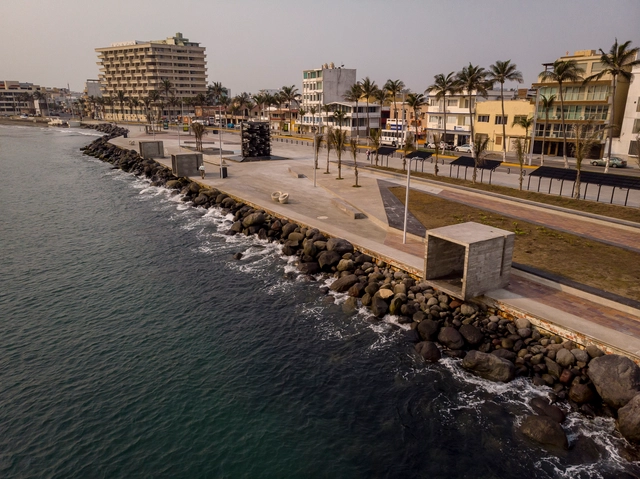
Veracruz is a state located in eastern México, bordered by the states of Tamaulipas, Tabasco, Chiapas, Oaxaca, Puebla, Hidalgo, and San Luis Potosí, and facing the Gulf of Mexico. Covering an area of 71,820 km², it is the country's third most populous state.

Friar Gabriel Chávez de la Mora Receives the 2020 National Architecture Award in Mexico

Friar Gabriel Chávez de la Mora Receives the 2020 National Architecture Award in Mexico - Imagem 1 de 4Friar Gabriel Chávez de la Mora Receives the 2020 National Architecture Award in Mexico - Imagem 2 de 4Friar Gabriel Chávez de la Mora Receives the 2020 National Architecture Award in Mexico - Imagem 3 de 4Friar Gabriel Chávez de la Mora Receives the 2020 National Architecture Award in Mexico - Imagem 4 de 4Friar Gabriel Chávez de la Mora Receives the 2020 National Architecture Award in Mexico - More Images+ 5

The Federal Government and the Association of Engineers and Architects of Mexico will award the 2020 National Architecture Award to Guadalajara-born architect Fray Gabriel Chávez de la Mora, who at 91 has stood out for his 175 projects over a 65-year career.

Fernanda Canales presents "After the House: Privacy in a Shared World" at the 2021 Venice Biennale

Subscriber Access | 

Fernanda Canales presents "After the House: Privacy in a Shared World" at the 2021 Venice Biennale - 1 的图像 4Fernanda Canales presents "After the House: Privacy in a Shared World" at the 2021 Venice Biennale - 2 的图像 4Fernanda Canales presents "After the House: Privacy in a Shared World" at the 2021 Venice Biennale - 3 的图像 4Fernanda Canales presents "After the House: Privacy in a Shared World" at the 2021 Venice Biennale - 4 的图像 4Fernanda Canales presents After the House: Privacy in a Shared World at the 2021 Venice Biennale - More Images+ 13

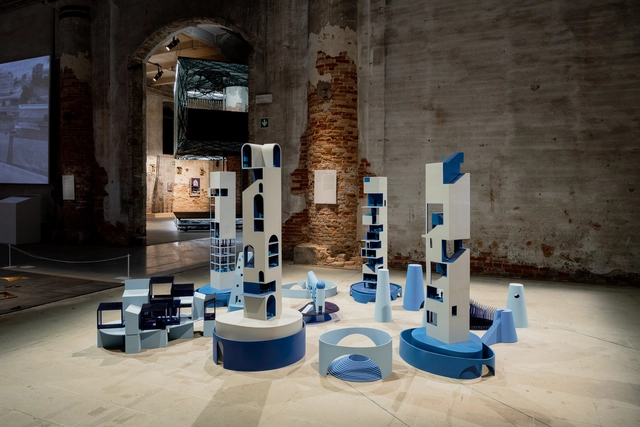
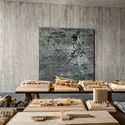
As an invited contributor, Mexican architect Fernanda Canales presents the exhibition After the House as part of the cultural program of the 17th International Architecture Exhibition - La Biennale di Venezia, curated by Hashim Sarkis. The exhibition features four primary models showing housing projects designed as a reinterpretation of vecindades—multi-family urban housing with mixed residential units arranged around courtyards with shared amenities.

Manuel Cervantes Estudio presents an exhibition and monograph compiling 10 years of their career

Manuel Cervantes Estudio presents an exhibition and monograph compiling 10 years of their career - Image 1 of 4Manuel Cervantes Estudio presents an exhibition and monograph compiling 10 years of their career - Image 2 of 4Manuel Cervantes Estudio presents an exhibition and monograph compiling 10 years of their career - Image 3 of 4Manuel Cervantes Estudio presents an exhibition and monograph compiling 10 years of their career - Image 4 of 4Manuel Cervantes Estudio presents an exhibition and monograph compiling 10 years of their career - More Images+ 7

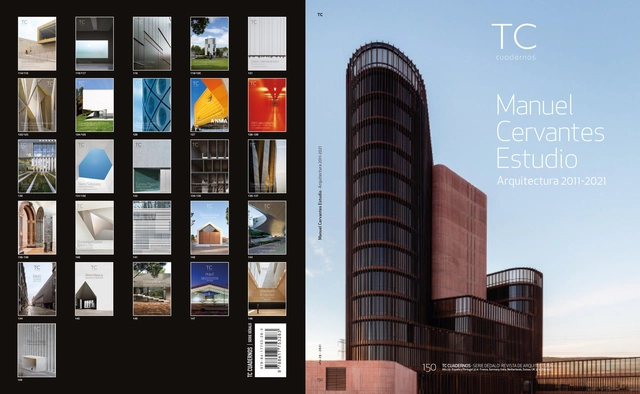
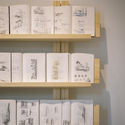
To mark ten years of work, Manuel Cervantes Estudio presents its latest monograph, published by TC Cuadernos, alongside an exhibition in Guadalajara, Jalisco. The showcase features a series of sketches created by Mexican architect Manuel Cervantes between 2008 and 2021.

Fernanda Canales: "When we improve a house, we improve the city"

Subscriber Access | 

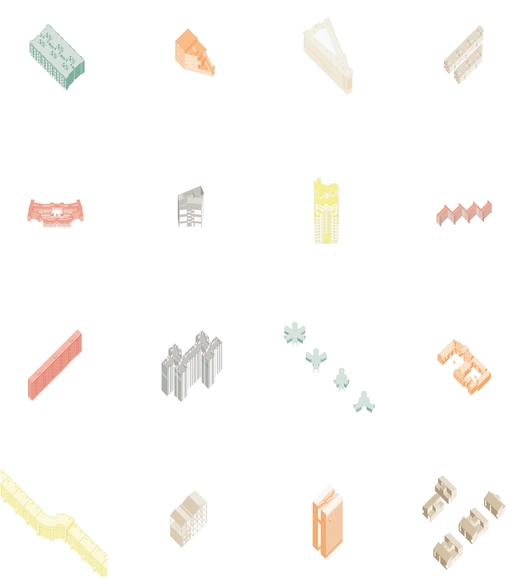
Mexican architect Fernanda Canales presents her new book "Shared Structures – Private Spaces: Housing in Mexico," which explores the relationship between rooms, people, and cities. Centered on the modern culture of dwelling in Mexico, the research is developed in two parts: a series of texts addressing housing, and an analysis of 70 collective housing projects built over the last hundred years, interwoven with a compendium of quotes from architects involved in the field during this same period, such as Luis Barragán, Juan O’Gorman, Mario Pani, Alberto Kalach, Frida Escobedo, and Mauricio Rocha.

Houses Without Homes in Mexico: The Reality of 'Social Housing' Strategies

Subscriber Access | 

Houses Without Homes in Mexico: The Reality of 'Social Housing' Strategies - 1 的图像 4Houses Without Homes in Mexico: The Reality of 'Social Housing' Strategies - 2 的图像 4Houses Without Homes in Mexico: The Reality of 'Social Housing' Strategies - 3 的图像 4Houses Without Homes in Mexico: The Reality of 'Social Housing' Strategies - 4 的图像 4Houses Without Homes in Mexico: The Reality of 'Social Housing' Strategies - More Images+ 6

Ciudad Juárez is an industrial city located on the northern border with the United States, directly across from El Paso, Texas. Over the years, Juárez's economy has been dominated by the ‘maquiladora’ industry, and it was once considered one of the most violent cities in the world due to a wave of crime that took hold from 2008 to 2012. In 2020, the National Workers' Housing Fund Institute (Infonavit) reported that there are 17,871 abandoned homes in Ciudad Juárez, leading the country's municipal rankings and contributing to a total of 650,000 abandoned houses nationwide.

Discover Estudio MMX's proposal for the Metropolitan Forest of Madrid

Discover Estudio MMX's proposal for the Metropolitan Forest of Madrid - Image 1 of 4Discover Estudio MMX's proposal for the Metropolitan Forest of Madrid - Image 2 of 4Discover Estudio MMX's proposal for the Metropolitan Forest of Madrid - Image 3 of 4Discover Estudio MMX's proposal for the Metropolitan Forest of Madrid - Image 4 of 4Discover Estudio MMX's proposal for the Metropolitan Forest of Madrid - More Images+ 8

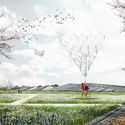
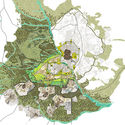
In July 2020, an ideas competition was held for the design and creation of a Metropolitan Forest in Madrid, Spain. Organized by the Madrid City Council, whose urban planning policy aims for green transformation, the project envisions a global forest belt that seeks geographical continuity by linking established areas with others showing high potential for development.

Architecture in Mexico: Houses to Understand the Territory of Nayarit

Subscriber Access | 

Architecture in Mexico: Houses to Understand the Territory of Nayarit - Imagem 1 de 4Architecture in Mexico: Houses to Understand the Territory of Nayarit - Imagem 2 de 4Architecture in Mexico: Houses to Understand the Territory of Nayarit - Imagem 3 de 4Architecture in Mexico: Houses to Understand the Territory of Nayarit - Imagem 4 de 4Architecture in Mexico: Houses to Understand the Territory of Nayarit - More Images+ 4

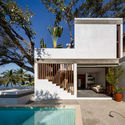
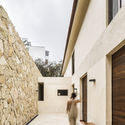
Nayarit is a state located in western Mexico, bordered by the states of Sinaloa, Durango, Zacatecas, and Jalisco, and facing the Pacific Ocean. With an area of 27,815 km², it is the country's ninth-smallest state. Its capital and most populous city is Tepic. Other notable localities include Nuevo Vallarta, Valle de Banderas, Ixtlán del Río, San Blas, Santiago Ixcuintla, Acaponeta, Compostela, Jala, Santa María del Oro, Rosamorada, Xalisco, San Pedro Lagunillas, Tecuala, and Huajicori.

Renzo Piano to Design the Chapultepec Contemporary Pavilion in Mexico City

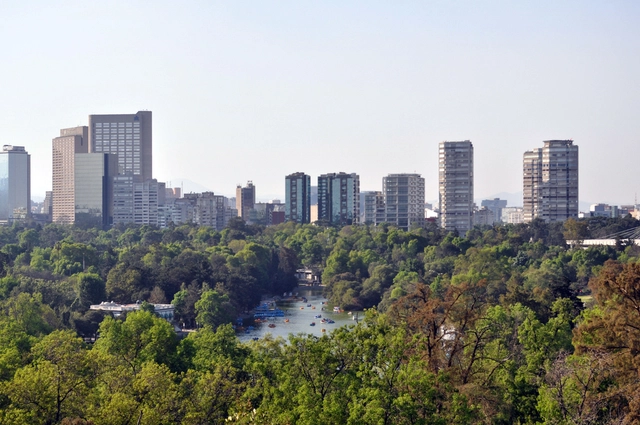
Mexico's Federal Ministry of Culture has announced that renowned Italian architect and 1998 Pritzker Prize laureate Renzo Piano will develop the conceptual design for the Mexican Contemporary Pavilion. The project will be built in the First Section of Chapultepec Forest as part of the "Chapultepec Forest: Nature and Culture" master plan, and will be funded by businessman Agustín Coppel and the Probosque México Trust.

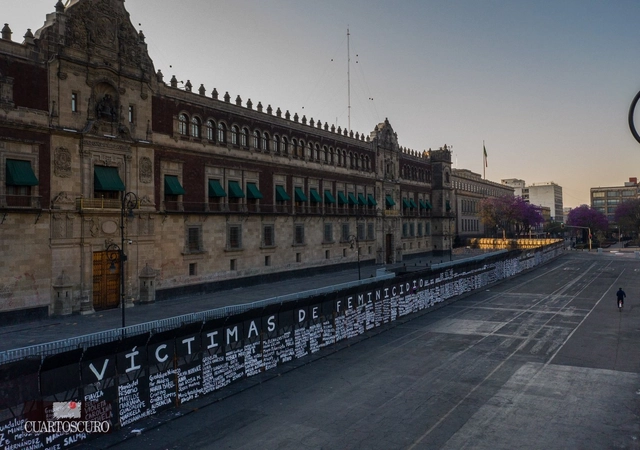
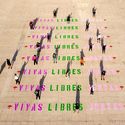
Memorial to Victims of Femicide Created in Mexico City's Public Spaces

Memorial to Victims of Femicide Created in Mexico City's Public Spaces - Image 2 of 4Memorial to Victims of Femicide Created in Mexico City's Public Spaces - Image 3 of 4Memorial to Victims of Femicide Created in Mexico City's Public Spaces - Image 4 of 4Memorial to Victims of Femicide Created in Mexico City's Public Spaces - Image 5 of 4Memorial to Victims of Femicide Created in Mexico City's Public Spaces - More Images+ 11

On March 8, 2021, various demonstrations were held in Mexico City to mark International Women's Day (#8M), drawing attention to and demanding justice for the rising wave of daily femicides across the country. Over recent years, this crisis has triggered major protests, such as those on August 16, 2019, and March 8, 2020, where thousands of women gathered to protest through both peaceful and disruptive actions. These demonstrations transformed public spaces, resulting in damage to streets, public transit, and—most notably during the August 16, 2019 march—the Angel of Independence monument, which is still undergoing restoration. This damage sparked a massive backlash that discredited the feminist movement, prioritizing property damage over the core demands of the protests.

A Mexico More Bicycle-Friendly than Denmark: Maps Explore Bicycle Use in the Country

Subscriber Access | 
A Mexico More Bicycle-Friendly than Denmark: Maps Explore Bicycle Use in the Country - Featured Image
20 cities with more than 500,000 inhabitants with the highest percentage of households using bicycles as a means of transportation. Image © Adrián Acevedo

A Mexico More Bicycle-Friendly than Denmark: Maps Explore Bicycle Use in the Country - Imagem 1 de 4A Mexico More Bicycle-Friendly than Denmark: Maps Explore Bicycle Use in the Country - Imagem 2 de 4A Mexico More Bicycle-Friendly than Denmark: Maps Explore Bicycle Use in the Country - Imagem 3 de 4A Mexico More Bicycle-Friendly than Denmark: Maps Explore Bicycle Use in the Country - Imagem 4 de 4A Mexico More Bicycle-Friendly than Denmark: Maps Explore Bicycle Use in the Country - More Images

Throughout history, the bicycle has endured as a means of transportation, evolving in various ways. In recent years (and even prior to the COVID-19 pandemic), however, its popularity has surged, specifically in major cities. In rural areas, by contrast, it has always been one of the primary modes of transportation due to the lack of other infrastructure. In Mexico, there are regions that have historically been highly bicycle-centric. While cycling is often associated with being a trendy mode of transportation, the reality is that its use is concentrated among low-income groups across towns, municipalities, and even entire states. Unfortunately, investment in cycling infrastructure in Mexico remains consistently low.

Onnis Luque presents "Undercover," a visual record of Mexico City after the September 19 earthquake

Subscriber Access | 

Onnis Luque presents "Undercover," a visual record of Mexico City after the September 19 earthquake - Imagen 1 de 4Onnis Luque presents "Undercover," a visual record of Mexico City after the September 19 earthquake - Imagen 2 de 4Onnis Luque presents "Undercover," a visual record of Mexico City after the September 19 earthquake - Imagen 3 de 4Onnis Luque presents "Undercover," a visual record of Mexico City after the September 19 earthquake - Imagen 4 de 4Onnis Luque presents Undercover, a visual record of Mexico City after the September 19 earthquake - More Images+ 7

As part of an investigation prompted by the September 19, 2017 earthquake in Mexico City, Mexican photographer Onnis Luque presents the book “Undercover,” published by the imprint The Velvet Cell (TVC) América Latina. The book features a series of photographs depicting damaged buildings shrouded in a kind of black veil, which was installed to prevent structural debris from collapsing. These images, in turn, are accompanied by texts that guide the reader, revealing diverse issues that extend beyond architecture to address social and political aspects from this unique vantage point.

7 Historic Palaces Around the World Reconstructed in Renders

Subscriber Access | 

7 Historic Palaces Around the World Reconstructed in Renders - Image 1 of 47 Historic Palaces Around the World Reconstructed in Renders - Image 2 of 47 Historic Palaces Around the World Reconstructed in Renders - Image 3 of 47 Historic Palaces Around the World Reconstructed in Renders - Image 4 of 47 Historic Palaces Around the World Reconstructed in Renders - More Images+ 16

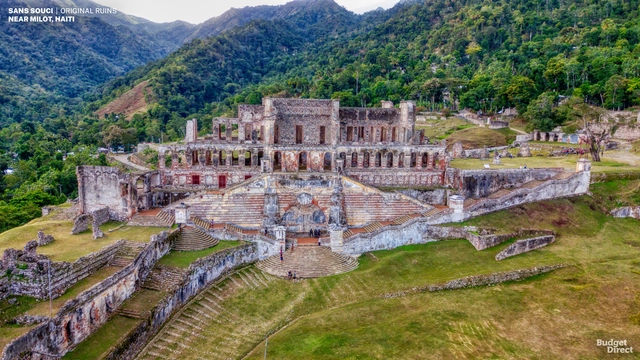
Due to COVID-19 pandemic restrictions, global tourism ground to a halt for over a year, yet the desire to seek the inspiration that comes from traveling and experiencing new places remained. While experiencing spaces firsthand is undoubtedly one of the best ways to study architecture, reconstructing these structures through drawings and visualizations serves as another valuable educational tool, fostering a deeper awareness of the intricate details that compose them.