Javier García Librero

Architect and Master`s Degree in Architectural Design. Interested in the history of architecture, education and design. Twitter / Instagram: @j_garcialibrero

BROWSE ALL FROM THIS AUTHOR HERE

The CSCAE presents the 2017 Spanish Architecture and Urbanism Awards at the Wanda Metropolitano

On May 18, the Superior Council of the Colleges of Architects of Spain presented the Spanish Architecture Awards (PAE) and Spanish Urbanism Awards (PUE), which were decided in October 2017. Along with the Gold Medal, both awards are among the most prestigious honors in the Spanish architecture sector. Through these accolades, the CSCAE recognizes architectural and urban excellence, as well as the determination and perseverance of institutions in promoting high-quality work despite the severe economic crisis of recent years.

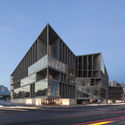
The awards ceremony, attended by more than 400 people, was held at the recently opened Wanda Metropolitano stadium. Designed by Seville-based Cruz y Ortiz Architects, the venue served as the home of architecture and Spanish architects for the evening.
The CSCAE presents the 2017 Spanish Architecture and Urbanism Awards at the Wanda Metropolitano - Imagen 1 de 4The CSCAE presents the 2017 Spanish Architecture and Urbanism Awards at the Wanda Metropolitano - Imagen 2 de 4The CSCAE presents the 2017 Spanish Architecture and Urbanism Awards at the Wanda Metropolitano - Imagen 5 de 4The CSCAE presents the 2017 Spanish Architecture and Urbanism Awards at the Wanda Metropolitano - Imagen 6 de 4The CSCAE presents the 2017 Spanish Architecture and Urbanism Awards at the Wanda Metropolitano - More Images+ 5

Discover 'The End of the Arenal Effect,' the comic that won a special mention at Europan 14

Subscriber Access | 

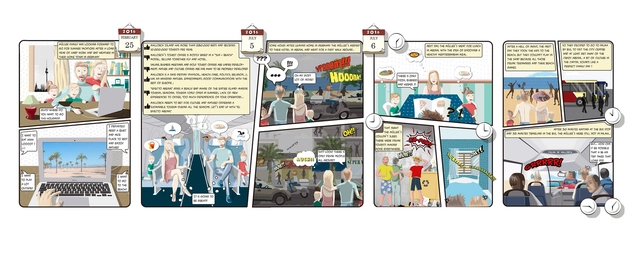
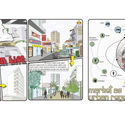
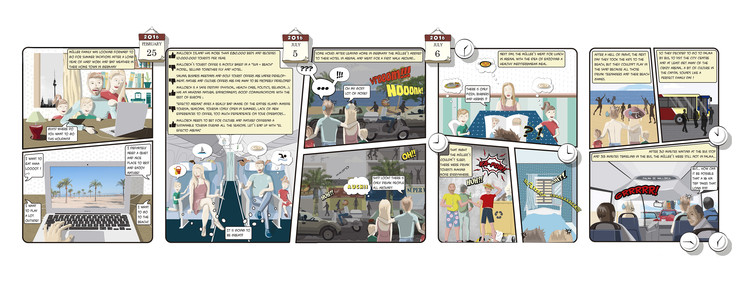
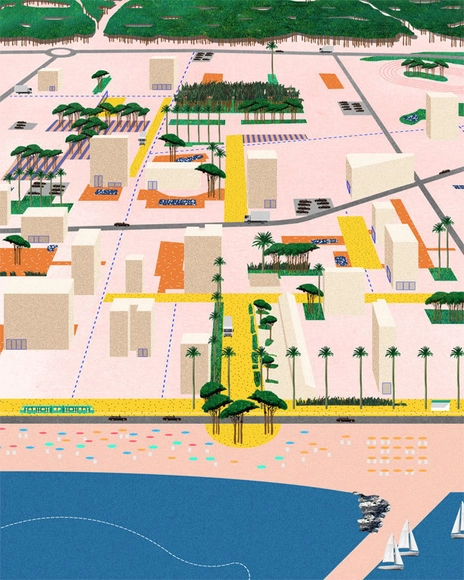
La propuesta El Final del “Efecto Arenal” presentada por el equipo de OOIIO Arquitectura ha obtenido una Mención Especial en el “Europan 14”, el concurso de urbanismo para jóvenes arquitectos más importante a nivel internacional en la actualidad. El proyecto destaca por su representación gráfica a través de un cómic, explorando nuevas formas de comunicación arquitectónica. 

El emplazamiento propuesto por el concurso es uno de los ejes marcados por el Plan General vigente de la localidad de El Arenal (Playa de Palma de Mallorca) para su peatonalización y su puesta en valor, mejorando la conexión de la playa con el barrio en el que viven permanente sus habitantes. En el entorno hay una serie de problemas urbanísticos como un centro comercial en desuso que sin embargo presenta un gran potencial como contenedor de futuras actividades y es el elemento de rótula entre el mundo turístico y el mundo local. 

Discover 'The End of the Arenal Effect,' the comic that won a special mention at Europan 14 - Imagen 1 de 4Discover 'The End of the Arenal Effect,' the comic that won a special mention at Europan 14 - Imagen 2 de 4Discover 'The End of the Arenal Effect,' the comic that won a special mention at Europan 14 - Imagen 3 de 4Discover 'The End of the Arenal Effect,' the comic that won a special mention at Europan 14 - Imagen 4 de 4Discover 'The End of the Arenal Effect,' the comic that won a special mention at Europan 14 - More Images+ 10

10 doctoral theses on great architects of 20th-century Spanish architecture

Subscriber Access | 

“A thesis is like a pig; everything in it can be put to use,” concluded Umberto Eco in his book How to Write a Thesis. Indeed, these research projects, developed through four or five years of intense effort and sacrifice, become extraordinary tools and inexhaustible sources of information for both students and professionals looking to delve into a specific topic within their field of knowledge.

In Spain, the 2008 economic crisis triggered a notable increase in the number of architects who chose to pursue a doctoral thesis as a way to continue their academic training and expand their career options. Coupled with the rigorous training that Spanish architects typically receive, this has led to a vast body of exceptionally high-quality research, serving as an invaluable reference resource for both students and practitioners.

This article compiles 10 doctoral theses focused on major Spanish architects whose careers spanned the 20th century and who, for various reasons, left an indelible mark on the history of Spanish architecture during this period.

Explore Barcelona's hidden architectural treasures on these architect-guided tours

Subscriber Access | 

Barcelona is an ideal city, boasting a surprisingly rich cultural scene, vibrant neighborhoods full of life, miles of beaches, and an idyllic year-round climate. Yet, without a doubt, it is its architecture that stands as a must-see for visitors and residents alike. The Sagrada Família, Park Güell, and Casa Milà are some of the most famous architectural landmarks and, consequently, the most visited by the tourists arriving daily in this magnificent city.

While there is growing interest in exploring the architecture that lies beyond the city's major icons and symbols, many tourists still bypass—or are simply unaware of—brilliant contemporary works such as Jordi Badia's Can Framis Museum, or the recent restoration of Sala Beckett by architects Flores & Prats, which received a jury mention in the 2017 Spanish Architecture Awards.

Explore Barcelona's hidden architectural treasures on these architect-guided tours - Imagen 1 de 4Explore Barcelona's hidden architectural treasures on these architect-guided tours - Imagen 2 de 4Explore Barcelona's hidden architectural treasures on these architect-guided tours - Imagen 3 de 4Explore Barcelona's hidden architectural treasures on these architect-guided tours - Imagen 4 de 4Explore Barcelona's hidden architectural treasures on these architect-guided tours - More Images+ 6

Ruin Experience: A Dialogue Between Architecture and Nature Through the Senses

Subscriber Access | 

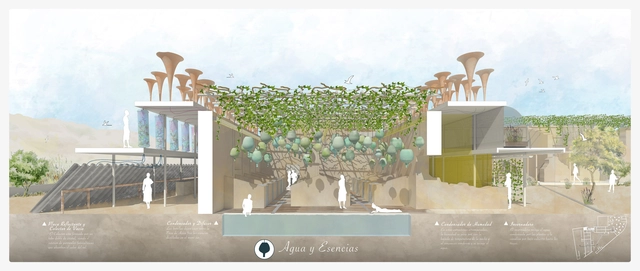
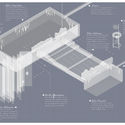
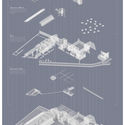
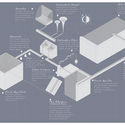
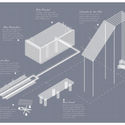
The Ruin Experience project, developed by architect Sergio Navarro García, proposes an intervention in the ruined buildings scattered across the countryside of Lorca, Murcia (Spain), where the local population gradually abandoned these robust houses to move to the city. The project offers an alternative approach to intervention, engaging directly with the environment and leveraging its resources to create sensory complexes where people interact with nature through architecture.

El Mesillo, the site selected for the intervention, is a unique, hidden enclave in the municipality of Lorca, defined by a direct and deep-seated relationship between its inhabitants and nature through agriculture. Historically, this bond was even closer, giving rise to the creation and use of entirely natural creams and treatments. Water, soil, air, sun, essential oils, homemade lotions and concoctions, fruits, vegetables, and, of course, a proper siesta, served as home remedies for minor ailments and daily stress.

Ruin Experience: A Dialogue Between Architecture and Nature Through the Senses - Image 1 of 4Ruin Experience: A Dialogue Between Architecture and Nature Through the Senses - Image 2 of 4Ruin Experience: A Dialogue Between Architecture and Nature Through the Senses - Image 3 of 4Ruin Experience: A Dialogue Between Architecture and Nature Through the Senses - Image 4 of 4Ruin Experience: A Dialogue Between Architecture and Nature Through the Senses - More Images+ 22

The future of Spanish architecture runs through Granada

Subscriber Access | 

It was in Granada, specifically at the Alhambra Palace, where on October 14 and 15, 1952, a group of Spanish architects including Miguel Fisac, Secundino Zuazo, and Fernando Chueca met to reflect on and establish a new direction and foundation for modern Spanish architecture. The outcomes of that meeting were summarized in a document whose tenets remain remarkably relevant today, known as the Alhambra Manifesto [pdf].

Sixty-five years later, under vastly different historical, social, and cultural circumstances, architects from across Spain are gathering once again in Granada for the III National Congress on the Future of the Architect. Running from yesterday, Thursday, April 11, to tomorrow, Saturday, April 13, the event serves as a platform to share experiences, analyze the current state of the profession, and debate the future possibilities of this exciting field.

José Luis Vallejo: 'The training of the architect remains the same even though society has changed'

Subscriber Access | 

During the recent XIX Architecture Biennial of Chile, we spoke with Spanish architect José Luis Vallejo, co-founder of Ecosistema Urbano. The Columbia GSAPP academic reflected on addressing the problems of the contemporary city through new horizontal citizen participation tools that can offer solutions tailored to the dynamic, constantly changing reality of our urban environments.

Vallejo is critical of the education and current role of architecture schools in addressing the real-world problems of cities and society. "Our academic training was highly disciplinary; interestingly, 20 years later, in a society that has changed radically, it remains exactly the same environment in which architects are still being educated," he comments.

José Luis Vallejo: 'The training of the architect remains the same even though society has changed' - Image 1 of 4José Luis Vallejo: 'The training of the architect remains the same even though society has changed' - Image 2 of 4José Luis Vallejo: 'The training of the architect remains the same even though society has changed' - Image 3 of 4José Luis Vallejo: 'The training of the architect remains the same even though society has changed' - Image 4 of 4José Luis Vallejo: 'The training of the architect remains the same even though society has changed' - More Images

Exorcity, the treatise on the new millennial architecture

Subscriber Access | 

Exorcity presents itself as the treatise on millennial architecture. It features 35 radical and subversive projects by daring students, all set within the urban context of Madrid. These are 35 projects in which the city is understood as a testing ground and a playground for thought. Elegance, violence, reason, seduction, chance, desire, emotion, power, dreams, and love come together here to challenge, alter, and stimulate the reader both visually and intellectually. It offers a fascinating, fresh vision from the young architects who will design the future of Madrid and Spain. 

As such, Exorcity represents an effort to give visibility to the necessary transformation that architecture has been undergoing in academia in recent years. This transformation is driven by a new generation of architects—defined as digital natives—who are responding and providing disruptive, intelligent solutions to the complex, difficult challenges of the urban context. 

Exorcity, the treatise on the new millennial architecture - Imagen 1 de 4Exorcity, the treatise on the new millennial architecture - Imagen 2 de 4Exorcity, the treatise on the new millennial architecture - Imagen 3 de 4Exorcity, the treatise on the new millennial architecture - Imagen 4 de 4Exorcity, the treatise on the new millennial architecture - More Images+ 26

ETSAM presents a free online course on structural projects

Engineers and architects looking to integrate structural design techniques into their architectural projects will find interest in this free online course: professors from the Department of Structural Engineering and Building Physics at the School of Architecture of the Universidad Politécnica de Madrid (ETSAM) are offering the course “Structural Design: Learning Through Case Studies” through the Ibero-American digital platform Miriadax.

The course offers case-study-based learning, allowing students to draw their own design conclusions. To do so, the curriculum explains the structural design process of ten buildings of increasing complexity, starting with residential and small institutional buildings and ending with more complex projects featuring structural solutions for large spaces.

Young Spanish architecture triumphs at EUROPAN 14

Once again, the EUROPAN competition for urban and architectural ideas—which aims to deepen knowledge and research in the fields of habitat and urban planning—has highlighted the high caliber of Spanish architecture and its young architects. Through their hard work and dedication, these professionals deliver outstanding proposals with high levels of creativity, providing coherent and effective solutions to the contemporary challenges facing our cities.

Indeed, the jury for this latest edition of EUROPAN 14 awarded five first prizes, seven second prizes, and ten special mentions to projects by young architects under 40 submitted for the Spanish sites in this cycle: Alcoy, Barcelona, La Bazana, Madrid, Playa de Palma, and Torrelavega. A total of 165 teams submitted proposals in Spain.

Young Spanish architecture triumphs at EUROPAN 14 - 1 的图像 4Young Spanish architecture triumphs at EUROPAN 14 - 2 的图像 4Young Spanish architecture triumphs at EUROPAN 14 - 3 的图像 4Young Spanish architecture triumphs at EUROPAN 14 - 4 的图像 4Young Spanish architecture triumphs at EUROPAN 14 - More Images

Barcelona residents spend up to 43% of their income on rent

Subscriber Access | 

The Metropolitan Housing Observatory of Barcelona, established to provide both the public and public administrations with the information and tools necessary to evaluate and design housing policies, has released the first results of its work conducted during 2017.

The report reveals concerning results, shedding light on the complex and problematic reality faced by many residents who find it difficult or simply impossible to afford the high rents currently being reached in Barcelona and virtually all other Spanish cities.

Madrid nominates the Paseo del Prado and El Retiro for the UNESCO World Heritage List

The Spanish Historical Heritage Council has approved the nomination of the Paseo del Prado and the Retiro for potential inclusion on the World Heritage List. This nomination will be officially submitted to UNESCO by Spain before February 1, 2019, and will be reviewed and evaluated by the World Heritage Committee in 2020.

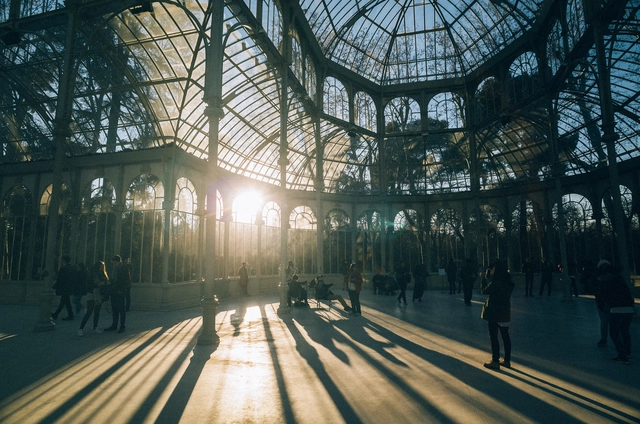
The property proposed for inscription is located in the heart of Madrid and can be classified as a designed cultural landscape that has evolved over the centuries. Its origins lie in the explicit desire to provide the city with a place to enjoy nature without leaving the city—a vision later expanded to include a core Enlightenment goal: disseminating the Arts and Sciences for the education and instruction of the public, without class distinction.

Madrid nominates the Paseo del Prado and El Retiro for the UNESCO World Heritage List - Image 1 of 4Madrid nominates the Paseo del Prado and El Retiro for the UNESCO World Heritage List - Image 2 of 4Madrid nominates the Paseo del Prado and El Retiro for the UNESCO World Heritage List - Image 3 of 4Madrid nominates the Paseo del Prado and El Retiro for the UNESCO World Heritage List - Image 4 of 4Madrid nominates the Paseo del Prado and El Retiro for the UNESCO World Heritage List - More Images+ 3

Architect Azucena Herránz wins the competition to design the logo for the 100th anniversary of the Madrid Metro

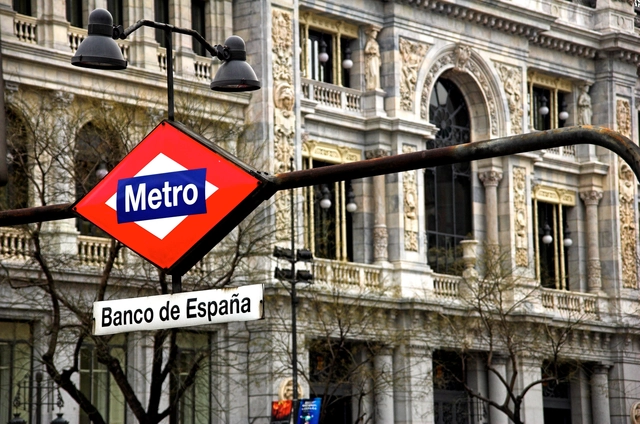
In 2019, Madrid Metro (Spain) will mark 100 years since the opening of its first line, which ran between Puerta del Sol station and the station located at the Cuatro Caminos depots. Designed by architect Antonio Palacios, the depots are currently at risk of demolition.

To commemorate this milestone, Madrid Metro launched a public call for ideas last November to design a logo that will serve as the corporate image for all centennial celebrations.

Guillermo Santomà, protagonist of the fifth issue of Arquetipos

Subscriber Access | 

Arquetipos, the digital magazine published by the Fundación Arquia, has released a new issue centered on an interview with designer Guillermo Santomà, conducted by Moisés Puente and featuring photography by José Hevia. This issue also includes other articles related to the featured designer, touching upon figures such as Le Corbusier, Arne Jacobsen, and Buckminster Fuller.

For this edition, Moisés Puente draws upon, copies, and poses the very same questions from L. Amic’s famous 1972 interview with Charles Eames, titled “What is design?”, which served as the conceptual foundation for the exhibition held at the Musée des Arts Décoratifs in Paris that same year. This “copying” of the interview serves dual purposes: on one hand, it nods to the interviewee himself, who employs this very strategy in his own work process; on the other, it invites readers to engage in an intriguing play of parallels and temporal links between Eames’s historical reflections on design and those offered today, 45 years later, by Santomà. 

Guillermo Santomà, protagonist of the fifth issue of Arquetipos - Image 1 of 4Guillermo Santomà, protagonist of the fifth issue of Arquetipos - Image 2 of 4Guillermo Santomà, protagonist of the fifth issue of Arquetipos - Image 3 of 4Guillermo Santomà, protagonist of the fifth issue of Arquetipos - Image 4 of 4Guillermo Santomà, protagonist of the fifth issue of Arquetipos - More Images+ 4

Four ephemeral installations bring visibility to FICMEC 2018 in Tenerife

Subscriber Access | 

Last May, the Canary Islands International Environmental Film Festival (FICMEC) celebrated its twentieth edition in Garachico, a small coastal town in northern Tenerife. On this occasion, a group of students from the School of Architecture at the Universidad Europea de Canarias participated in the festival by designing and constructing a series of four ephemeral architectural installations that boldly colonized iconic spots along Garachico's waterfront promenade.

Through four interventions, the students transformed the promenade with the dual goal of raising visibility for the festival and increasing public awareness of the impact of our daily habits on the environment.

Explore the proposals below.

Erik Harley explores our globalized and urbanized world through Google Earth

Subscriber Access | 

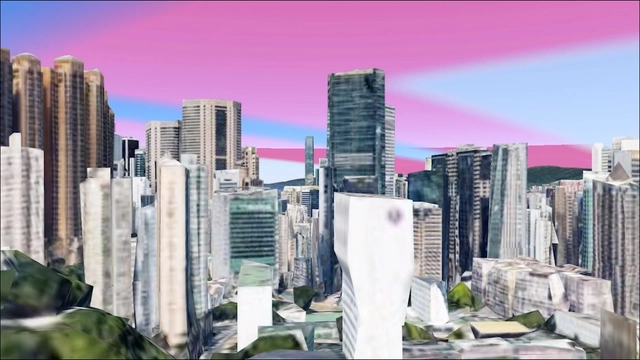
Coexist is the new work by Erik Harley, an audiovisual artist and urban studies expert from the University of Barcelona, created for Biel Blancafort, a Spanish music producer based in Barcelona.

The music video uses digital imagery from Google Earth paired with electronic music to explore the built condition of our globalized world and the way we understand the environment as we construct and digitize it. Theoretically grounded in the ideas of British geographer and social theorist David Harvey, the video critiques the continuous and unlimited growth of our cities, which leads to design solutions driven by financial arguments and executed rapidly while the next development is already being planned.

Erik Harley explores our globalized and urbanized world through Google Earth - Imagem 1 de 4Erik Harley explores our globalized and urbanized world through Google Earth - Imagem 2 de 4Erik Harley explores our globalized and urbanized world through Google Earth - Imagem 3 de 4Erik Harley explores our globalized and urbanized world through Google Earth - Imagem 4 de 4Erik Harley explores our globalized and urbanized world through Google Earth - More Images+ 1

The demolished buildings of San Sebastián close the first edition of MUGAK

Subscriber Access | 

On Friday, December 22, 2017, the inaugural MUGAK Basque Country International Architecture Biennial opened the exhibition "The City We Lost: Urban Heritage Management in San Sebastián, 1950-2017" at the Santa Teresa Convent in San Sebastián, Spain. The exhibition showcases recognizable local buildings that have disappeared over the last few decades. 

Curated by the Áncora association, the exhibition traverses San Sebastián's neighborhoods to examine a city that now exists only in collective memory—specifically, buildings lost over the past seven decades. Stretching from Martutene to Igeldo, and including Alza, Amara, El Antiguo, and Ibaeta, the survey goes beyond the city's iconic heritage, looking past San Sebastián's most prominent areas to highlight other architectural works.

The demolished buildings of San Sebastián close the first edition of MUGAK - Imagen 1 de 4The demolished buildings of San Sebastián close the first edition of MUGAK - Imagen 2 de 4The demolished buildings of San Sebastián close the first edition of MUGAK - Imagen 3 de 4The demolished buildings of San Sebastián close the first edition of MUGAK - Imagen 4 de 4The demolished buildings of San Sebastián close the first edition of MUGAK - More Images+ 15

Milan and Sáenz de Oíza, Protagonists of the 15th Madrid Architecture Week

From September 28 to October 7, Madrid will host the 15th Architecture Week, organized by the Official Association of Architects of Madrid (COAM) and the COAM Architecture Foundation, in collaboration with the Madrid City Council and the Embassy of Italy, with ArchDaily as a media partner. This year's edition will feature Milan as the guest city, following in the footsteps of Paris, New York, and Berlin in previous years.

With this new edition of Architecture Week, COAM's primary goal is to continue bringing architecture and urban development closer to society as a whole, while showcasing the valuable architectural heritage that makes Madrid one of the world's leading capitals for the discipline.