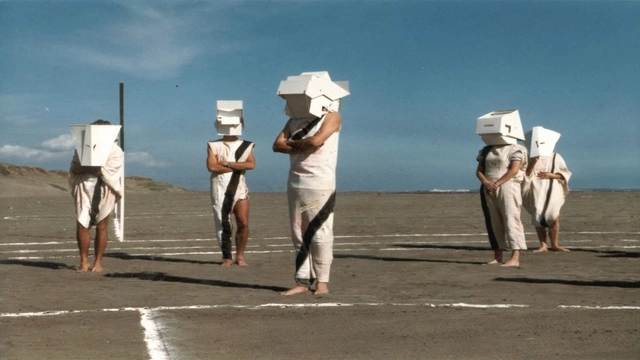
"Domingos Libro" is hosted by Carmelo from Enorme Studio, delving into forgotten architectural publications, books, and architecture magazines from the 1960s, 70s, and 80s that hide the most fascinating stories behind them.
After a hiatus in 2022, the series returned with episode 19, titled “Always Young,” which tells the story of Ettore Sottsass Jr. Now, it presents "No One Is a Prophet in Their Own Land," a tribute to the recently deceased master of architecture Ricardo Bofill.
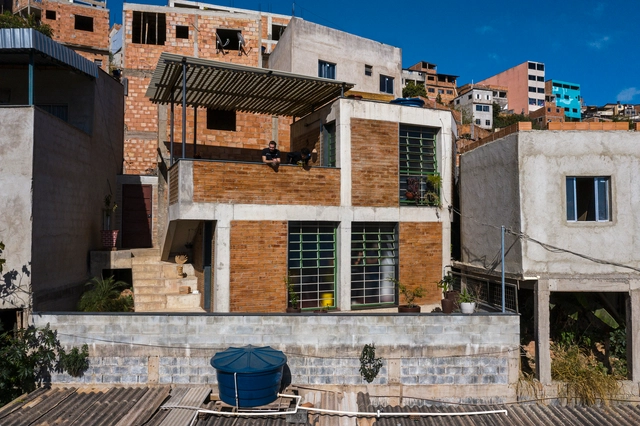
"Architecture and urbanism have the opportunity to offer solutions that involve looking beyond the discipline itself, so that the margins and boundaries of necessity lead us to seek actions outside of standard practice. Positioning ourselves on the margins allows us to see new alternatives, expand the practice, and have a perspective that is not central, but peripheral," say Anna Vergés and Guillem Augé (UNDO), curators of the XII Ibero-American Biennial of Architecture and Urbanism, whose central theme is "Habitar al margen" (Living on the Margins).
"I Book on Sundays" is hosted by Carmelo of Enorme Studio, delving into forgotten architectural publications, books, and architecture magazines from the '60s, '70s, and '80s that harbor the most fascinating stories.
Following a hiatus in 2022, the series returned with Episode 19, titled “Always Young”, telling the story of Ettore Sottsass Jr., and "No One Is a Prophet in Their Own Land", a tribute to the late master of architecture, Ricardo Bofill. Now, he brings us "Only the Best Products Go to the Museum", the first part of a two-part episode dedicated to the American "architects" of SITE—James Wines, Alison Sky, and Michelle Stone—and how they elevated BEST showrooms to the pinnacle of art.
What are the stories of the first Ibero-American women architects? This is the central question we seek to answer in celebration of this month's ArchDaily topic: Women in Architecture.
In seeking to present their motivations, inspirations, and career paths, we conducted research to bring visibility and recognition to several figures who have historically been overlooked. Meet Doris Clark Núñez, Guadalupe Ibarra, Matilde Ucelay Maórtua, Filandia Pizzul, Dora Riedel, Luz Amorocho, María Luisa Dehesa, Arinda da Cruz Sobral, and Julia Guarino below.
'Ciudad Abierta de Amereida' de Andrés Tapia Urzúa, presentado en ediciones anteriores de ArqFilmFest . Image Cortesía de Arqfilmfest
To celebrate the first decade of ArqFilmFest, Santiago Architecture Film Festival, various members of its community—including architects, cultural managers, film critics, academics, among otherprofessionals—were invited to answer the question: What do we talk about when we talk about film and architecture?
Journalist and film critic Christian Ramírez responds with "Filmed Space, Inhabited Space," reflecting on the relationship between the recorded and the built; architect Martin Schmidt Radic presents "Reflections of the Future," addressing projections over time; and sociologist and cultural manager Julia Ramos responds with "10 Years of Narrating the City," exploring the importance of fostering exchange between film and architecture. Read the full columns below.
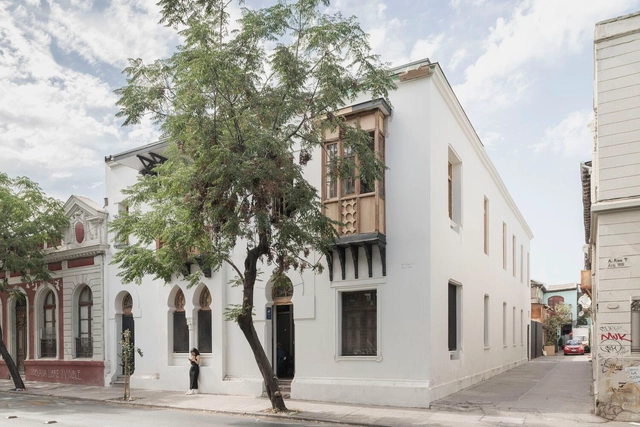
The FestiAtlas CoMún invites reflection on architecture, public space, and the city. It encourages visitors to explore the Casa de la Cultura, a historic building that spans a Buenos Aires city block, through installations, exhibitions, gatherings, and activities by various collectives that present new ways of approaching the idea of the "common."
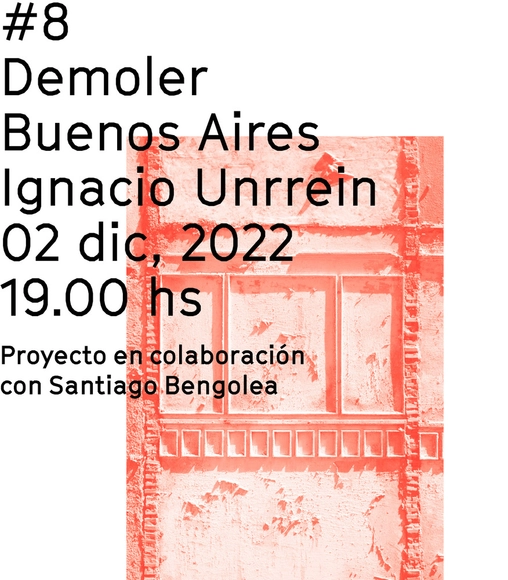
Demoler Buenos Aires is part of a series of surveys that Ignacio Unrrein has been conducting throughout the City of Buenos Aires, focusing on walking as an aesthetic practice and the recognition of urban "anarchitectures" in the vein of Gordon Matta-Clark.
'Domingos Libro' is an outreach project presented by Carmelo Rodríguez of Enorme Studio, delving into forgotten architectural publications—books and magazines from the 1960s, 70s, and 80s that harbor the most fascinating backstories.
From January 14 to 22, 2023, the XXII Chile Architecture and Urbanism Biennial will finally take place in the area surrounding Palacio de La Moneda, Santiago. The theme of this edition, "Vulnerable Habitats," seeks to address the country's urgent challenges surrounding the housing deficit and access to housing, along with the vulnerability of cities and territories reflected in their public spaces, heritage, and environmental issues.
The Architects Association of Chile along with the Ministry of Cultures, Arts, and Heritage, organizers of this event—which held its previous edition in 2019—have recently announced the results of their open calls: 50 works and projects will be part of the National Architecture Exhibition, and 36 initiatives will join the Meetings and Debates Program. See the complete list below.
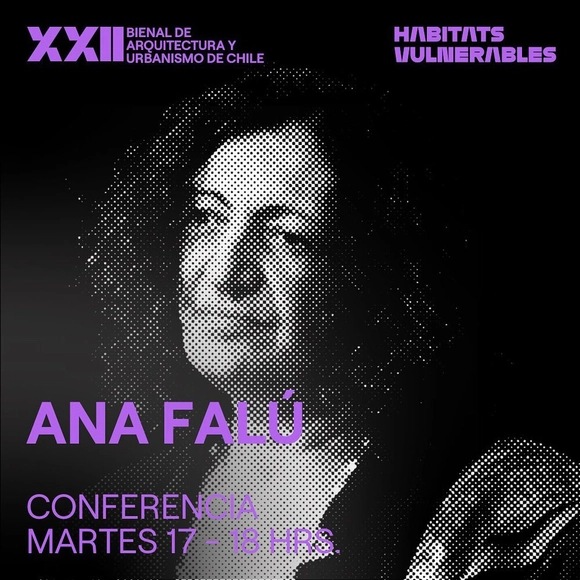
Ana Falú will give a lecture this Tuesday, January 17, at 6:00 PM as part of the XXII Biennial of Architecture and Urbanism of Chile: 'Vulnerable Habitats.' The event will take place in the temporary inflatable structure designed by Smiljan Radic at Plaza Bulnes, Santiago.
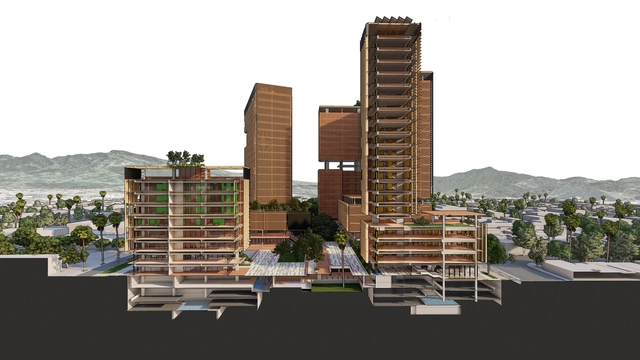
In December 2022, the Government of the Republic of Costa Rica launched an architectural and urban ideas competition for the area where the first phase of Ciudad Gobierno will be developed—an urban renewal project in downtown San José that aims to transform nearly four city blocks of the capital with office, retail, and public spaces.
At the end of February 2023, the winning proposal was announced from among 28 submitted designs to serve as a model for the building complex that will house 18 public institutions west of Plaza González Víquez. Designed by Venezuela-based Micucci Arquitectos Asociados, the winning project is titled "Metropolitan Civic Park."
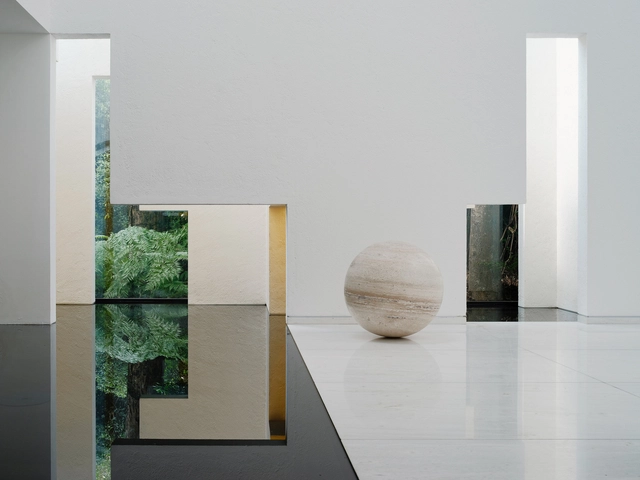
Today is the day to meet the finalists of ODA2023, the award celebrating the best architecture in the Spanish-speaking world. Our expert jury—you, the readers—has selected 15 of your favorite projects from nearly 1,000 architectural works built across Latin America and Spain.
Now in its fifteenth year, this award has become a true tradition. It is an open invitation to all our readers to recognize the projects published in 2022 that inspired them and that represent the identity of their local contexts in a globalized planet—shaping how architecture is made in Latin America and Spain within an increasingly heterogeneous and multicultural world.
A week ago, we announced the 15 finalist projects for the 2023 Building of the Year Award—a recognition of the best architecture in Spanish. Our expert jury—that is, you, our readers—selected an initial shortlist of 15 projects from nearly 1,000 works of architecture built across Latin America and Spain, before proceeding to a final vote that resulted in 3 projects representing the very best of the architecture that inspires us, defines us, and leaves its mark.
Today, the winners of the 2023 ODA are finally revealed!
From fire in caves to street lighting in cities, lighting has evolved steadily alongside technological advancements—and in recent years, it has begun to change even more significantly due to a growing awareness of its impact on the environment and human health. Today, automated LEDs are commonplace in workspaces and homes, improving both energy efficiency and well-being and comfort. Meanwhile, public squares and streets are increasingly integrating sensors and software configurations to enhance safety and mobility. With the global urban population projected to reach 68% by 2050, urban lighting will undoubtedly become an even more critical factor to consider.
However, to make the most of these opportunities, we must view lighting as part of a holistic vision and work together to create better solutions. What does the future of lighting look like? We posed this question to our readers. After reviewing a vast number of comments and opinions from construction professionals, students, and architecture enthusiasts alike, it was surprising to find so much common ground and shared visions. There is a clear consensus on the importance of going a step beyond the status quo without increasing light pollution—while being more mindful of all living things. Discover the main perspectives below.
Reflecting on contemporary housing is perhaps one of the most compelling and relevant undertakings of our time. In a rapidly changing world—where technology advances at a breakneck pace, populations grow, and resources become increasingly scarce—it is vital to reconsider how we live and how we can do so better.
Housing is not just the place where we live. It is a reflection of our society, our culture, and our aspirations. It is a space that influences our quality of life, our health, and our well-being. And in a world changing at an unprecedented pace—where technology advances by leaps and bounds, population grows, and resources become scarce—it is crucial to reflect on how we inhabit our homes and how we can make them better.
Throughout the month of April, ArchDaily opened up the debate on the topic of contemporary housing. We extended an invitation to our readers to join the discussion on its current state and future. After reviewing an immense number of comments and opinions from construction professionals, students, and architecture enthusiasts alike, we were surprised to find a strong consensus: above all, contemporary housing speaks as much to adaptability, innovation, and diversity as it does to real estate speculation, a lack of adequate public policies, and economic inequality. Read the main viewpoints in detail below.
We present a challenge: building with less water. The construction process consumes a massive amount of water resources, and it is time to rethink how we can reduce this environmental impact.
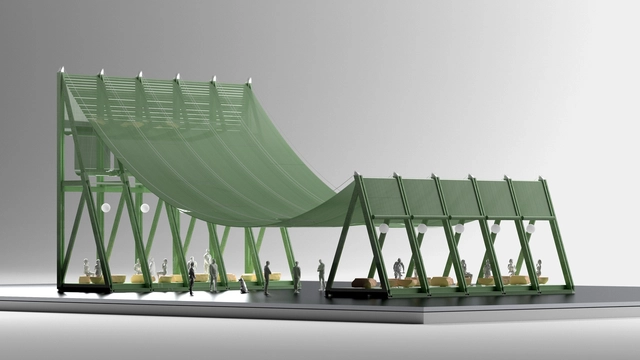
Mediterráneo de Manuel Bouzas, proyecto ganador para diseñar el pabellón de València. Image Cortesía de TAC! Festival de Arquitectura Urbana 2023
The upcoming TAC! Urban Architecture Festival announced that the two winning projects of its ideas competition are "Mediterráneo" by Manuel Bouzas and "Lost Forest" by Julia Ruiz-Cabello Subiela and Santiago Del Águila.