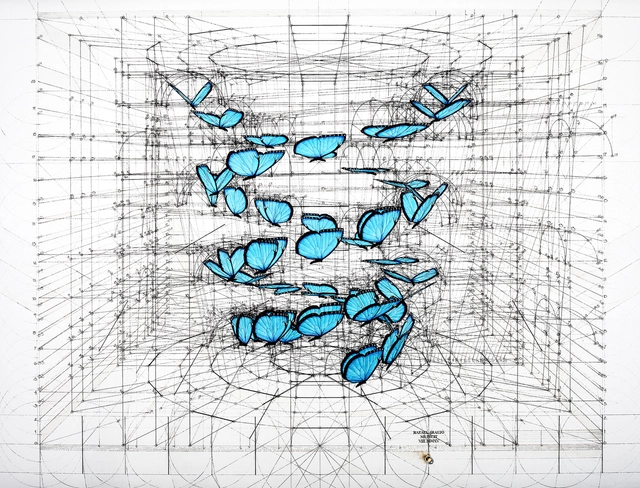
Rafael Araujo is a Venezuelan architect and illustrator who began observing intelligent patterns in nature when he was only fifteen years old. For over 40 years, he has been drawing them entirely by hand, equipped with only a pencil, a compass, a ruler, and a protractor.
In the following interview, we delve into his motivations and reflections on geometric representation systems, examining their application in the fields of design and architecture.
"Domingos Libro" is hosted by Carmelo from Enorme Studio, where every two weeks he takes a deep dive into forgotten architectural publications—books and magazines from the '60s, '70s, and '80s with the most fascinating stories behind them.
In this episode, titled "Just What Is Necessary," he discusses Thomas Gordon Smith's 1988 book "Classical Architecture: Rule & Invention" and how two columns disappeared from his iconic Tuscan and Laurentian Houses just two years after their completion.
Last week we announced the 15 finalist projects for the 2021 Obra del Año Award, which since 2008 has celebrated the best built architecture in Latin America and Spain, calling on our jury of experts—you, our readers—to choose your favorite built projects from nearly 1,000 works published in 2020.
Today, the day has come to announce the winners of ODA2021!
The 2021 Obra del Año Award is brought to you by Dornbracht, renowned for its leading architectural designs, which can be found in bathrooms and kitchens worldwide.
How do we design spaces that are healthy for both our minds and our bodies? That is the main question we seek to answer this March as we address our monthly topic, “Indoor Well-Being.”
"Domingos Libro" is hosted by Carmelo from Enorme Studio. Every two weeks, he delves into forgotten architectural publications, books, and magazines from the 1960s, 70s, and 80s that carry the most fascinating backstories.
In this episode, titled "Signs of Regret," he discusses Mario Pisani's 1988 book "Fuksas. Architetto" and how the featured projects—all collaborations between the Italian architect and Anna Maria Sacconi—have vanished from his monographs, almost as if they had disappeared from the face of the earth.
Case Study House 22. Image via Flickr user: mbtrama Licensed under CC BY 2.0
Between 1945 and 1966, the Case Study Houses program, following the Weißenhof-siedlung exposition, commissioned a study of economic, easy-to-build houses. The study included the creation of 36 prototypes that were to be built leading up to post-war residential development. The initiative by John Entenza, editor of Arts & Architecture magazine, brought a team to Los Angeles that featured some of the biggest names in architecture at the time, including Richard Neutra, Charles & Ray Eames, Pierre Koenig, and Eero Saarinen, among others.
The program's experiment not only defined the modern home and set it apart from its predecessors, but it also pioneered new construction materials and methods in residential development that continue to influence international architecture to this day. Take a detailed look at some of the program's most emblematic work together with recommendations for facing contemporary challenges.
Lucía C. Pérez Moreno is the principal investigator of the MuWo - Women in Spanish (Post)Modern Architectural Culture (1965-2000) project. A statistical study broken down by gender, it aims to rigorously document the trajectory of female architects over four decades spanning late Francoism and the consolidation of democracy in Spain. The following interview reveals the relevance of conducting this type of analysis, the arduous work process involved, and its key findings.
How do we design spaces that are healthy for both our minds and our bodies? That is the core question we will address this March by exploring our monthly theme, “Well-Being in Interior Spaces.”
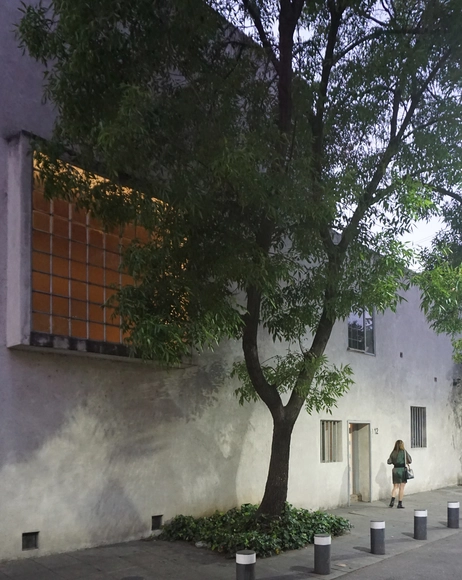
On March 9, what would have been Luis Barragán's 119th birthday, we commemorate Mexico's most celebrated architect and discuss his winning of the 1980 Pritzker Prize.
In many cases, I haven't been able to decide whether a building full of trees fits into the "sustainable" category. In fact, I've often had to make the argument that such a building is far from it.
It seems that the vast majority of contemporary marketing for sustainable architecture operates under the guise of greenwashing. What's more, the line between what truly creates healthier and more sustainable living spaces and what doesn't is often a blurred one.
Fotografías de la casa construida. Image Cortesía de Igor Fracalossi
To mark the 60th anniversary of the iconic Jean Mermoz House—a precursor of sorts to the ideas of the Open City in Ritoque—architect Igor Fracalossi proposes a reconstruction of its wooden formwork system.
Primer Lugar Rungue. Image Cortesía de Red Trenzando
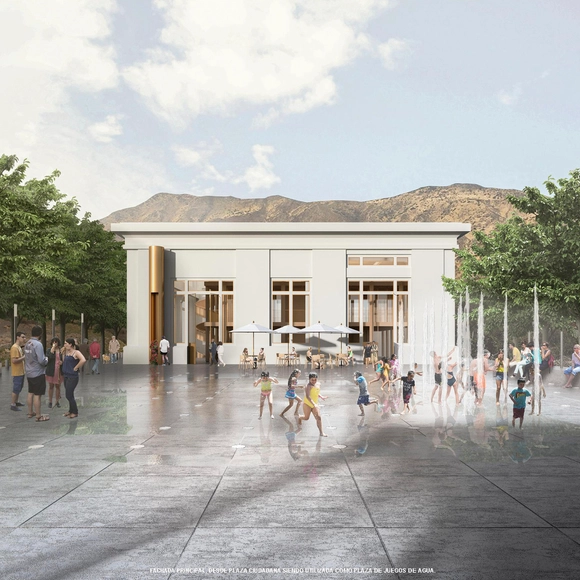
Trenzando is a territorial cooperation platform based on the reuse of the railway system. It seeks to create greater development opportunities in non-metropolitan areas, strengthening local identities and decentralizing access to knowledge and technologies. To this end, they invited architects, students, and interdisciplinary teams to participate in the architectural ideas competition "Rehabilitation of Railway Stations / Trenzando Network," which aimed to promote the recovery of the architectural heritage of railways in four Chilean localities: Rungue (Metropolitan Region), Ocoa (Valparaíso Region), Yumbel, and San Rosendo (Biobío Region).
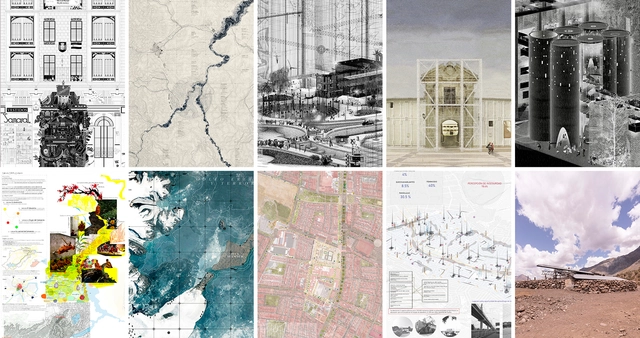
The 10 Best Student Projects in Latin America and Spain
To showcase the valuable academic production of Latin American and Spanish universities, we launched an open call this year, inviting architecture students to submit their thesis projects completed in 2020.
Following a thorough review of 305 submissions, our editorial team selected and highlighted 10 projects that demonstrate rigorous critical thinking in response to their chosen issues. The selection process not only valued projects that delivered the best possible architecture through efficient design suited to their context, program, and users, but also those demonstrating significant attention to human scale, experimentation, and novel ways of approaching architecture in cities. Additionally, we recognize 10 honorable mentions whose immense dedication and academic quality made them impossible to overlook.
Peripheria Films has shared the first episode of its documentary series "Se vende" (For Sale), a production that examines the impact of tourism and real estate development on the Costa del Sol (Málaga).