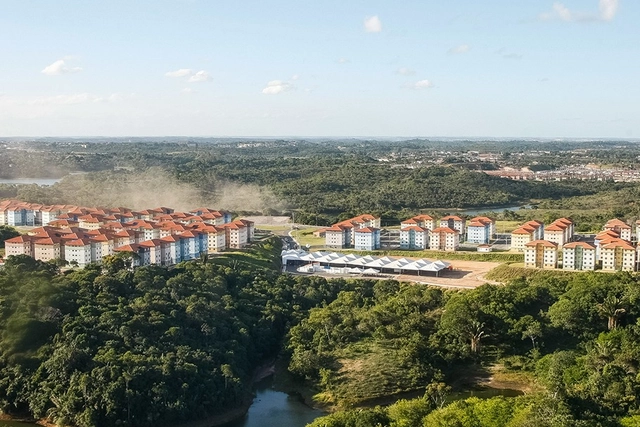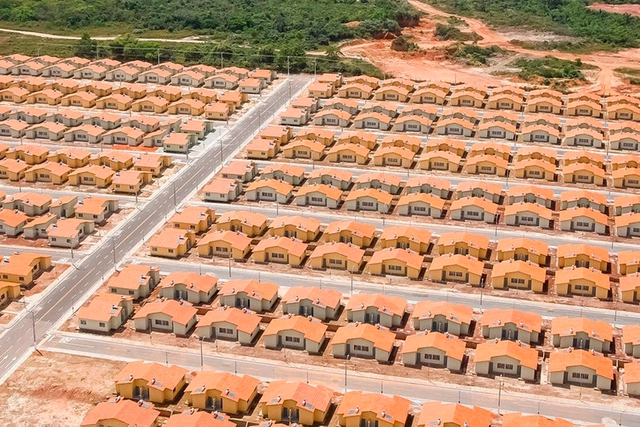
Minha Casa, Minha Vida in São Luís. Image: Palácio do Planalto/Isac Nóbrega
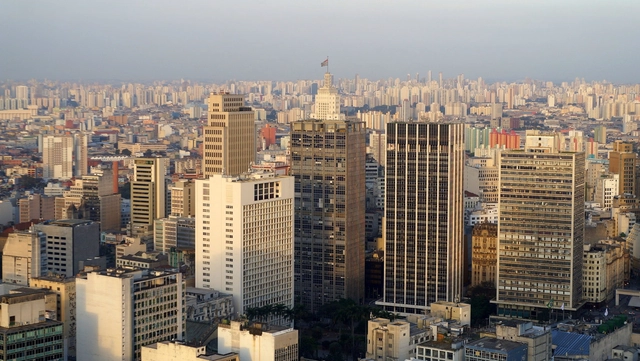
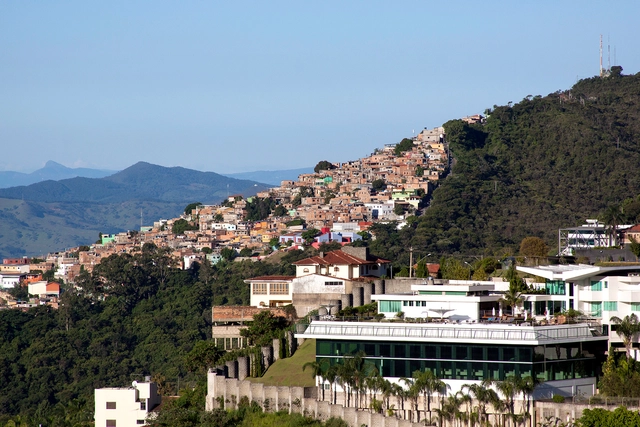
3D-printed houses. Prefabricated houses. “Open-source” houses. Minha Casa, Minha Vida. From technological panaceas to government programs, countless solutions aim to resolve the housing deficit by building houses. The problem with this strategy is that the housing shortage is not a shortage of houses, but of apartments.
Although Juscelino Kubitschek is remembered for executing the project for Brasília, he was not its creator. The political will to build a new capital in the country's interior dates back to 1808, driven by the desire to elevate Brazil's international standing and symbolize its post-independence development. This developmentalist ethos, or rather the pursuit of the new, underpinned the arguments of most advocates for the relocation, each proposing a different approach.
In the popular imagination, *cortiços* (tenement houses) represented the worst of urban housing in Brazilian cities. Deeply rooted in the national culture and immortalized in Aluísio Azevedo’s classic novel, *cortiços* were depicted as unsanitary, dilapidated dwellings where disease proliferated, the margins of society lived, and landlords exploited tenants with extortionate rents.
Street market pastel in São Paulo. Photo: Anthony Ling
Anyone who has ever been to the beaches of Rio de Janeiro has certainly seen vendors selling grilled *queijo coalho* (curd cheese) or grilled shrimp, sweet mate tea, and Globo biscuits—classic snacks of the Rio shoreline. In São Paulo, open-air markets serve sugarcane juice and fried *pastel*, a local adaptation of a dish originally brought by Chinese immigrants and popularized by Japanese immigrants. In Minas Gerais, there is *pão de queijo* (cheese bread) and pastel, also filled with cheese. In Salvador, it is impossible not to mention *acarajé* (with or without hot sauce), which has been declared an intangible cultural heritage asset by IPHAN. The capital of Bahia even has its own Street Food Guide, reflecting the immense culinary diversity found in the city.
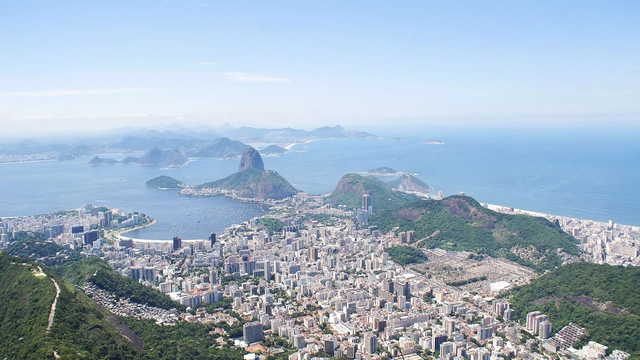
Rio de Janeiro. Photo: Jaime Spaniol, via Unsplash. CC License
In the book “Order Without Design”, Alain Bertaud mentions that indicators are crucial in urban management to give cities a real-time view of what is happening within them. One interesting indicator related to housing affordability is the so-called “Price/Income Ratio.” This is essentially the average home price in a city divided by the average resident's income. It is a highly generic indicator that does not account for differences between properties, such as location, nor does it address rental housing (still a minority in Brazil). Nonetheless, it provides a general overview of housing affordability in a city.
“How much does a subway line cost?” is a question frequently asked when discussing high-capacity rapid transit solutions for Brazilian cities. However, the cost of implementing rail projects varies enormously across different global geographies.
For example, a rail line in New York costs about twenty times more per kilometer than one in Seoul, reaching a budget of $6.4 billion for a segment of just 2.6 kilometers in the second phase of the Second Avenue Subway in northern Manhattan. Geographical factors, or even the high built density of the American metropolis, are insufficient to explain such a massive disparity in construction costs.
CCTV Headquarters in Beijing. Image courtesy of Caos Planejado
Hundreds of towers repeat across a hazy horizon. Traditional buildings crumble, while others have been rebuilt into tourist shops. Colorful Lamborghinis share sluggish traffic with old taxis, laborers' tricycles, and executives riding yellow bikes from Ofo, the world's largest dockless bike-sharing company. Some pedestrians wear masks to filter the polluted air, others carry shopping bags, others spit on the ground or walk the streets in pajamas. Street vendors are extremely rare, in contrast to the police and military personnel seen on almost every corner.
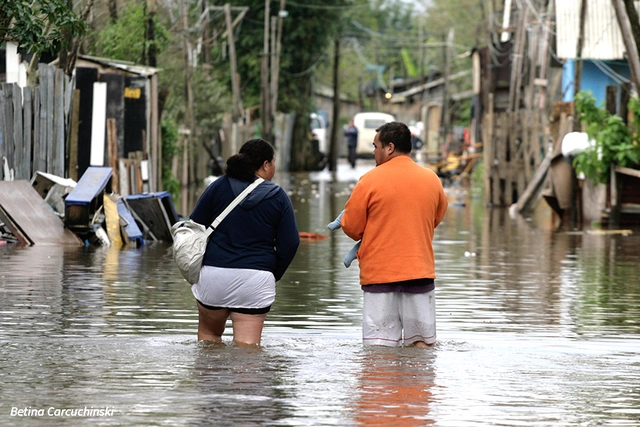
In recent days, a series of reports and articles correctly diagnosed the cause of the recent floods in the state capitals of Belo Horizonte, São Paulo and Porto Alegre, as well as in smaller cities such as Iconha, in Espírito Santo. The primary cause of these disasters was the urbanization of our cities—both planned and unplanned—which amplified the potential damage.
From my hotel room, it was possible to see the roofs of the Forbidden City, though only as a faint shape through the haze blanketing the landscape. Beijing (or Peking, depending on the language or spelling) is one of the most polluted cities in the world, covered by a constant smog produced not only by automobiles—which account for 70% of the city's air pollution—but also by factories, coal-fired power plants, and sandstorms from neighboring regions. It looked like a cloudy day, but in reality, there was not a single cloud in the sky.
Fear of the economic recession caused by the COVID-19 pandemic left supermarket shelves empty worldwide. Photo by John Camero, via Unsplash
Cities offer opportunity, diversity, and economies of scale, which ultimately attract more residents and retroactively drive their growth. Despite decades of predictions foretelling the demise of cities due to the telephone, the internet, videoconferencing, or virtual reality, cities and face-to-face interactions continue to grow. Large urban areas continue to draw more and more people. Driven by more than just tourism, the travel industry has also grown year after year, demonstrating how much people want to be physically present where things are happening—whether for meetings, events, concerts, or simply to gather with friends and family.
On a recent trip to the United States, looking out the airplane window while taking off from Tampa, Florida, I was struck by the pristine green landscape of the American suburb. Neatly organized rows of seemingly identical trees blanketed the flat terrain like a green carpet. To some, this abundance of green might look like a dream of environmentally integrated sustainability.
Nothing could be further from the truth. The American suburb, based on the outdated concept of the “garden city,” was designed to favor the automobile, low-density single-family housing, and single-use zoning. This model virtually rules out active transportation (walking or cycling) and makes mass transit—which relies on density and walkability—wholly unviable.