Anthony Ling

BROWSE ALL FROM THIS AUTHOR HERE

Condominium Buildings, a Barrier to Urban Redevelopment

Subscriber Access | 

In the film Aquarius, directed by Kleber Mendonça Filho, the character Clara, played by Sônia Braga, refuses to sell her apartment—located in a condominium building—to a real estate developer. Her neighbors, on the other hand, accept the deal. In an article for Estadão, economist Pedro Fernando Nery views the case through a lens opposite to the cinematic narrative: instead of a hero resisting unscrupulous real estate capital with no respect for Recife's coastal landscape, Clara is actually the villain.

How to create accessible cities for children

Subscriber Access | 

While studying and traveling through cities around the world, one of the most striking urban scenes I witnessed was a square in Tokyo filled with uniformed children playing during their school recess. The square had only a low fence, yet a diverse range of people (like myself) could mingle and interact among the children. Childhood independence in Japan is world-renowned and was recently depicted in the Netflix series "Old Enough," where children under six run errands outside the home alone, without their parents. While these might be ordinary scenes for a Tokyo resident, for someone with a different urban reference point, the question "how is this possible?" immediately arises, so far removed is it from the reality of most of our large cities.

How to create accessible cities for children - Imagen 1 de 4How to create accessible cities for children - Imagen 2 de 4How to create accessible cities for children - Imagen 3 de 4How to create accessible cities for children - Imagen 4 de 4How to create accessible cities for children - More Images+ 2

Infrastructure, public spaces, and zoning: what Tokyo can teach Brazilian cities

Subscriber Access | 

Tokyo is a chaotic city, in the sense that it did not develop from city-wide coordinated urban planning. By the 18th century, it already had around 1 million inhabitants, with most of the population living in conditions similar to modern Brazilian favelas. Tokyo's dense suburbs resemble Brazilian peripheries, with low-rise but closely packed buildings on narrow plots and a wide variety of uses. Furthermore, Tokyo features a multiplicity of architectural typologies, different modes of transportation sharing the same space, and—not unlike Brazilian cities—billboards and exposed overhead wires clashing with the urban landscape.

What are smart cities within the Brazilian reality?

Subscriber Access | 

Smart Cities, or smart cities, are increasingly in the spotlight, yet we can hardly describe exactly what they are.

Are they cities that manage to adopt, in a decentralized way, the array of new urban service apps from various providers that are increasingly present in our daily lives?

Or are they those that hire a major corporation to manage and monitor all urban services from a massive, centralized command center?

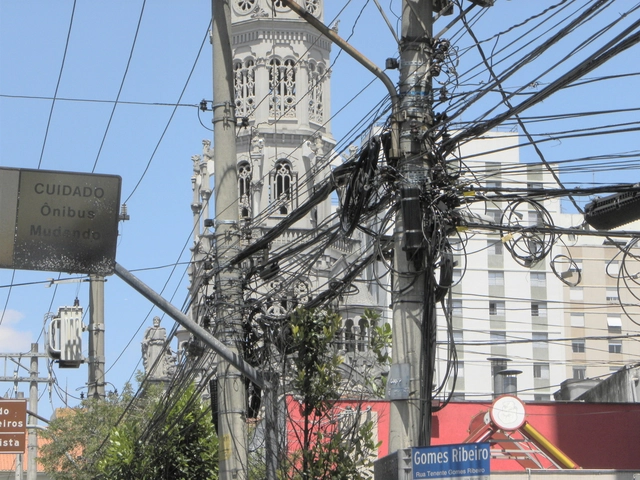
How to solve the problem of overhead wiring?

Subscriber Access | 

About 14% of the population of Porto Alegre, nearly 200,000 people, live in favelas, classified by IBGE as "subnormal agglomerations." These residents typically lack guaranteed property rights and do not have access to basic public utilities and services such as sanitation, drainage networks, or street lighting. Around 4,000 people experience homelessness. The city's public transit system, which carries over 20 million passengers per month, is facing the worst crisis in its history, with unsustainable operations. Our public spaces are dominated by cars, whose drivers enjoy the privilege of parking for free on public streets. Dumpsters, which are meant to receive only organic waste and non-recyclables, end up filled with all kinds of trash, undermining proper waste collection in the city.

Which cities build the most housing?

Subscriber Access | 

One of the main objectives of this website is to disseminate ideas that enable cities to have more affordable housing. There are several indicators that can be useful in observing and analyzing a city's housing market, such as the price-to-income ratio, which we covered in a previous article. While no single indicator is perfect, they can provide guidance regarding the scale or direction of a given real estate market.
6 Series to Understand and Love Cities

Subscriber Access | 

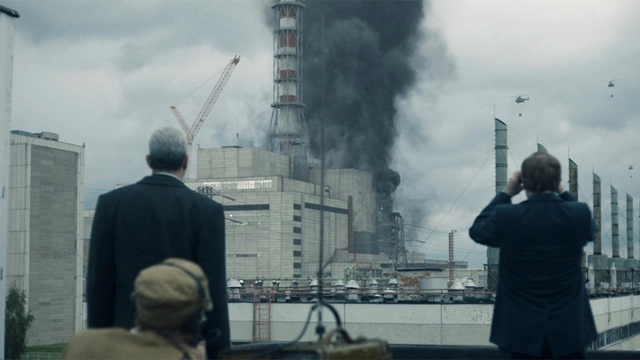
One of the most engaging ways to learn about cities is through movies and series. Below, Anthony Ling from the platform Caos Planejado shares six recommendations for online series to learn about Brazilian communities, Soviet cities, and other corners of the world.

The Urbanization of Shanghai: A Showcase for a New China

Subscriber Access | 

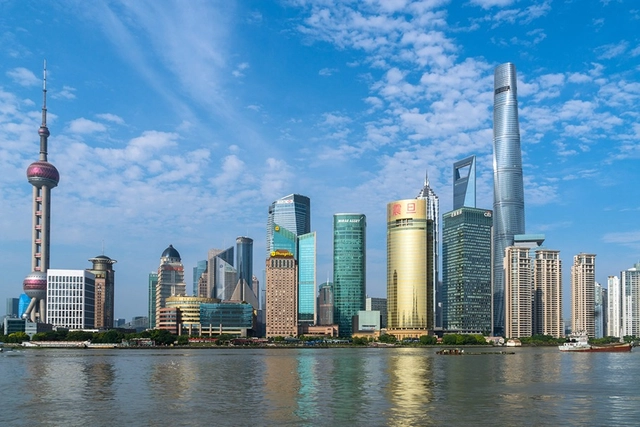
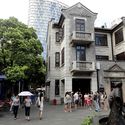
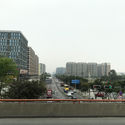
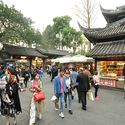
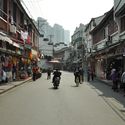
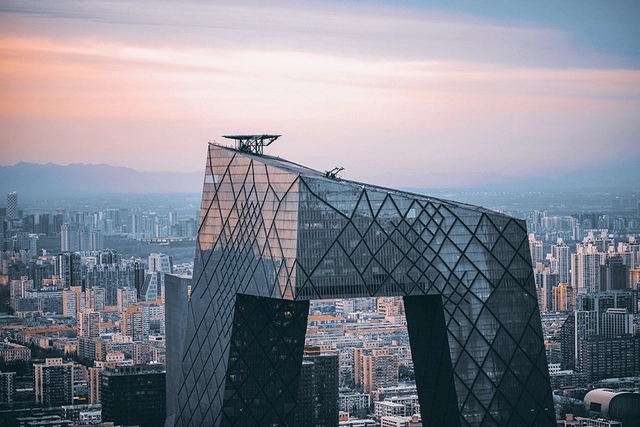
In 2013, the film *Her*, in which the protagonist falls in love with an operating system, sought to depict a not-so-distant future of a relatively dystopian reality. Although the city depicted was likely a futuristic Los Angeles, the filming actually took place in Shanghai. After visiting the city, I believe this was a wise decision, given the pervasive atmosphere that constantly evokes this very theme. I remember standing on a massive circular pedestrian overpass above the Mingzhu roundabout, which connects major avenues in the heart of Pudong, Shanghai's current financial district. Ahead of me, I saw the bizarre Oriental Pearl Tower, a 467-meter-tall TV tower built by a Chinese state-owned enterprise in 1994. Looking back and up at the Shanghai Tower—the second-tallest building on the planet at an impressive 632 meters—the impact was even greater. This is Shanghai's image to the world, the showcase of a new China, breaking paradigms and reaching for the sky.
The Urbanization of Shanghai: A Showcase for a New China - Imagem 1 de 4The Urbanization of Shanghai: A Showcase for a New China - Imagem 2 de 4The Urbanization of Shanghai: A Showcase for a New China - Imagem 3 de 4The Urbanization of Shanghai: A Showcase for a New China - Imagem 4 de 4The Urbanization of Shanghai: A Showcase for a New China - More Images+ 4

What the diary of a favela resident reveals about urban poverty in Brazil

Subscriber Access | 

In the book “Quarto de Despejo – Diário de Uma Favelada” (published in English as Child of the Dark), Carolina Maria de Jesus recounts, in poetic and dramatic everyday language, the harsh reality of life as a waste picker living in the former Canindé favela in São Paulo, which at the time had about 50,000 residents.

Published in 1960, her text is considered a milestone in Black women's writing in Brazil and has been translated into more than thirteen languages. Carolina's entries offer a unique perspective on the extremely precarious living conditions of a favela resident in late-1950s Brazil—a narrative previously ignored or simply unknown to the general public, let alone to policymakers.

The promotion of (in)equality through urban planning

Subscriber Access | 

Urban planning is a vital tool for reducing inequality and promoting equity in cities. In Brazil, prioritizing these goals is even more urgent given not only the country's deep social disparities as a whole, but also the stark divide in access to opportunities, infrastructure, and urban services—which ultimately defines true access to the city itself.

Yet, while many believe that urban inequality stems from a lack of planning—as if it were merely a product of chance—the reality is that, historically and to this day, urban planning has often exacerbated inequalities rather than mitigating them.

The promotion of (in)equality through urban planning - Imagem 1 de 4The promotion of (in)equality through urban planning - Imagem 2 de 4The promotion of (in)equality through urban planning - Imagem 3 de 4The promotion of (in)equality through urban planning - Imagem 4 de 4The promotion of (in)equality through urban planning - More Images+ 3

Are there more homes without people than people without homes?

Subscriber Access | 

Are there more homes without people than people without homes? This recurring claim had already been described as a “myth” by urban planner Nabil Bonduki in 2018, but the persistent suggestion of a simplistic formula for solving the housing crisis deserves to be addressed once again. Recently, an article in Folha de São Paulo by urban planner Alexandre Benoit suggested that the approximately 300,000 vacant properties in São Paulo could be designated to “eradicate the city’s housing deficit.”

The Forbidden Factors of Urban Densification

Subscriber Access | 

In urban planning, population density is a subject that sparks discussion, doubt, and debate. A common point of confusion, for instance, is conflating built density (the amount of built area in a given location) or even building height with population density (the number of residents in a given location).

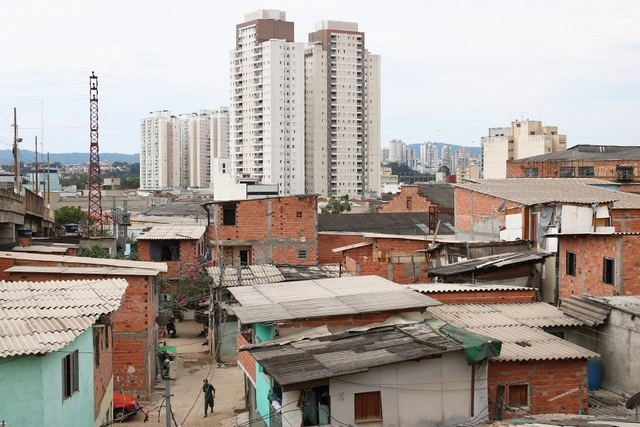
In New York, for example, Midtown Manhattan has perhaps the city's highest concentration of skyscrapers, despite having a population density of "only" 18,000 residents/km²—less than half of the Upper West Side, which boasts 44,000 residents/km² with lower but predominantly residential buildings, whereas Midtown has fewer residential buildings. In Brazil, this discrepancy is far more extreme: the densest neighborhoods in major Brazilian cities tend to be the most horizontal, as they consist of informal settlements (favelas) with small housing units, minimal space between structures, and larger families living in (or cohabiting) these units.

What is the “original character” of a neighborhood?

Subscriber Access | 

The remarkable research paper “A Long History of a Short Block,” by Bill Easterly, Laura Freschi, and Steven Pennings, analyzed the development of a block on Greene Street in New York's SoHo neighborhood over four centuries. Throughout this period, the city remained in a constant state of development, demonstrating that the question “What is the ‘original character’ of a neighborhood?” is far more difficult to answer than it seems.

To begin with, the skyscraper-filled Manhattan we know today is a relatively recent development in its history. Before the Dutch arrived in what they would call “New Amsterdam” in 1625, the region was dominated by forests and wetlands—a rich ecosystem that even included bears and wolves.

São Paulo needs more space

Subscriber Access | 

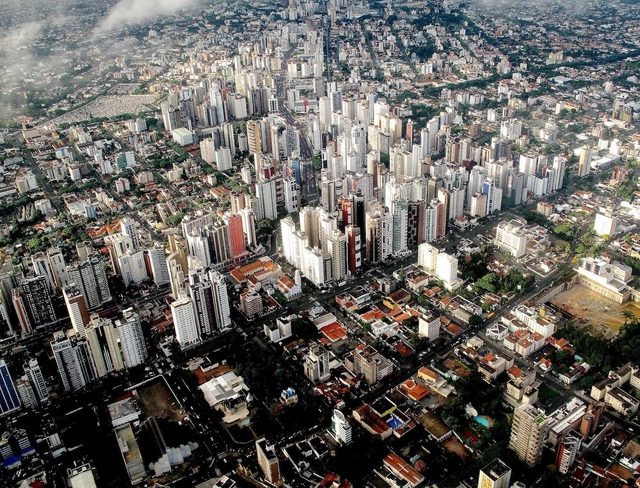
Verticalization and population density are poorly understood aspects of our cities. Contrary to popular belief, a more vertical city is not necessarily a denser one. In Brazil, favelas and semi-formal housing make up some of the densest urban areas. These consist of small dwellings built close together, often home to multiple families. Conversely, there are neighborhoods with many high-rises and few people. These buildings may be commercial, with no residents, or they may contain large apartments, small families, and expansive open space around them. Few realize that Cidade Ademar, a low-rise residential district in southern São Paulo, is twice as dense as the high-rise jungle of Itaim Bibi.

Do you know what “real estate speculation” is?

Subscriber Access | 

Real estate speculation is undoubtedly the greatest villain singled out by those who study, inhabit, or are simply interested in cities today. It gets blamed for practically every urban problem: whether a city is too dense or too sprawling, choked with traffic or prohibitively expensive; whether local politics are corrupt or the poor are marginalized to the periphery; whether corporations profit from public investments or public infrastructure lies idle; whether historic heritage is destroyed, new buildings alter the cityscape, or informal settlements are burned down. The list is endless.

Reevaluating housing policy: access to housing through infrastructure

Subscriber Access | 

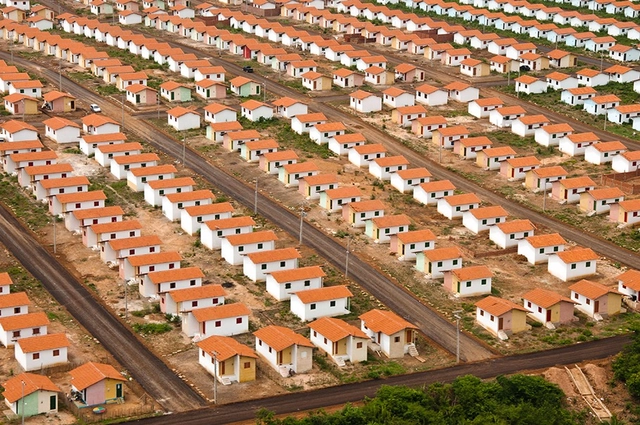
The Minha Casa, Minha Vida (MCMV) program was a cornerstone of federal housing policy under recent administrations. By financing new affordable housing, MCMV incentivizes developers to build in areas far from urban centers. This occurs because performance metrics focus solely on the number of units delivered, creating a strong economic incentive for developers to build far from downtown areas, where land is cheaper. Consequently, many of these developments are distant from job opportunities and basic services, as well as isolated from public mass transit networks, which are structurally unsuited to serve low-density peripheral areas.

Why are our cities so ugly?

Subscriber Access | 

Urban Brazil is deeply ugly. Why did this happen? Some blame "the absence of urban planning and zoning, manipulated height limits, and the nefarious power of contractors and builders influencing the drafting of master plans."

Goiânia: The Brazilian metropolis solving the housing deficit

Subscriber Access | 

On flat terrain, where the horizon is visible in every direction, buildings with over forty stories rise across different areas of the city. Recently, a fifty-story building was completed; at 191 meters (626 feet) high, it is the tallest in the country. While some criticize this development model for its impact on the landscape, in a capital with rapid population growth, one would expect the cost of housing to rise steadily, along with the housing deficit. This, however, is not the case in Goiânia.