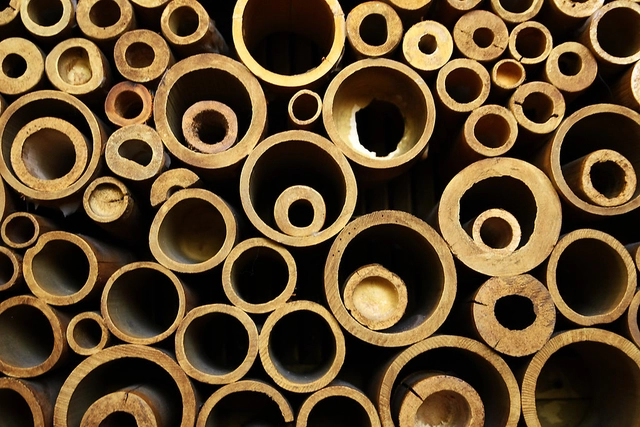
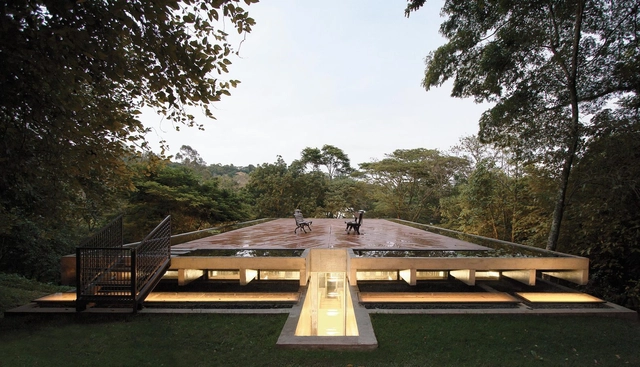
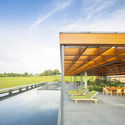
In the world of architecture, technical solutions designed for indoor comfort are frequently transformed into expressive features or unique design details. This is especially true of reflecting pools—features that significantly improve thermal comfort in buildings while simultaneously serving as elements of aesthetic interest, creating striking moments wherever they are implemented.
Habitações irregulares no Largo da Igreja do Rosário Acervo Pessoal Arquiteto André Pina. Image Cortesia de Escola da Cidade
Between 1985 and 1989, the city of Olinda (Pernambuco) served as the pilot site for a federal program that was to be implemented in 48 other Brazilian cities. Among other goals, this program sought to provide social housing in built environments and preserve local memory and ways of life by ensuring the permanence of traditional residents. Though still little known in the history of cultural heritage and social housing policies in Brazil, this plan points the way toward managing territories based on the social and cultural practices of their inhabitants.
Although zoning regulations point toward necessary densification and the subsequent verticalization of residential buildings in urban centers—seeking greater efficiency and access to urban infrastructure—something escapes this purely rational plan and enters the subjective sphere when we think of single-story houses.
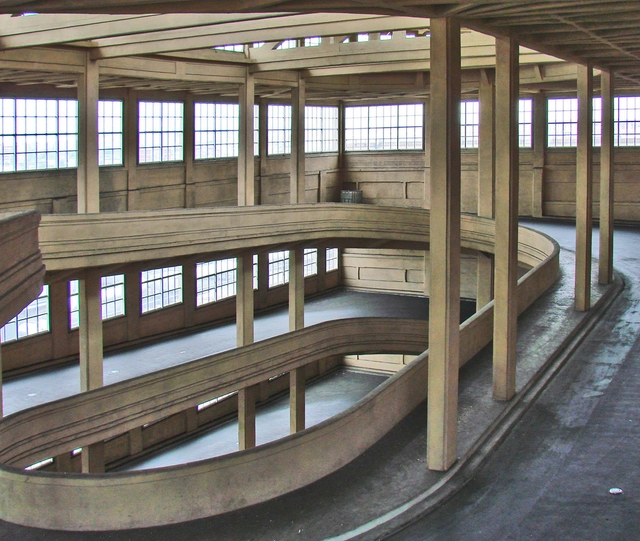
Ramps leading to the roof. Photo: Jean-Pierre Dalbéra, via Flickr; Creative Commons license
The design for the Fiat factory in the Lingotto district of Turin, Italy, was developed by engineer Giacomo Mattè-Trucco in 1915. Construction began the following year and was carried out in stages until its completion in 1923. Inspired by Fordism, a manufacturing model that emerged in the United States in the 1910s, the factory was designed with an upward-moving assembly line. Upon reaching the roof, the completed cars were ready to be tested on a track approximately 1 km long.
The so-called “right of protocol” is a legal anomaly today, as it allows private real estate developers to choose which legislation applies to their projects. This mechanism was established in the 1970s, prior to key democratic advancements, particularly those concerning the social function of property and rights to an ecologically balanced environment, housing, and cultural heritage. Today, maintaining this “right” of protocol delays the implementation of changes envisioned by new urban planning laws designed to correct the everyday dysfunctions of the city, such as flooding.
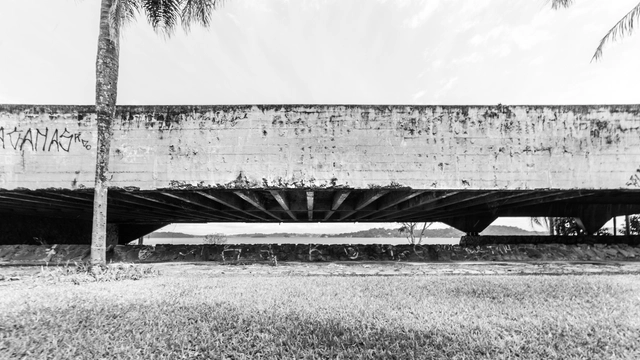
Architectural photographer Guilherme Pucci shared with us his photo essay of the boat garage that is part of the Santa Paula Yacht Club complex, designed by architect João Batista Vilanova Artigas in the early 1960s and closed in the mid-1980s. Currently, the building, one of the icons of São Paulo's modern architecture, located on the shores of the Guarapiranga Reservoir in the southern zone of the city of São Paulo, is in a state of disrepair and abandonment.
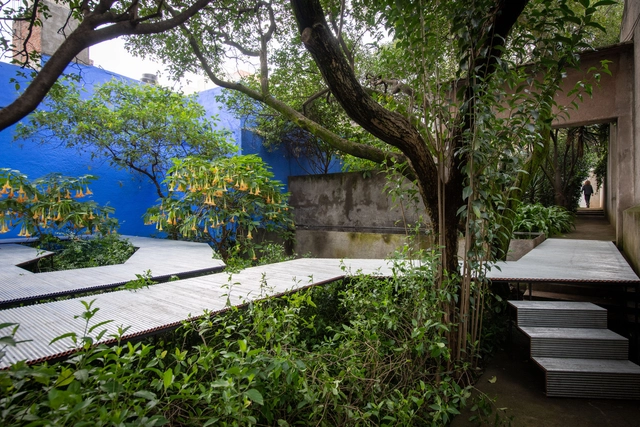
As part of the cultural programming of Jardín 17—a space designed by Luis Barragán as an extension of his house-studio that has hosted various academic programs from around the world for the past 20 years—Japanese architect Go Hasegawa has designed the installation Flying Carpet: a pavilion suspended in the middle of Barragán's garden.
Many authors address the importance of the street to vitality in urban space. Streets are public open spaces, typically bordered by the buildings that shape them. We rarely realize it, but it is through this open space that we appropriate the city, and where the experience of walking takes place.
https://www.archdaily.com/1122890/the-street-in-the-constitution-of-urban-spaceAnthony Ling, Rogerio Goldfeld Cardeman e David Cardeman
Given that 90% of cities are built without architects and urban planners, who are the real architects imagining and building the world we want to live in? What modes of production, materials, and forms of relationship and social reproduction are practiced by these collectives, pointing the way toward possible, inclusive, diverse, just, and ecological futures? What architectures exist to foster freedom, collaboration, co-responsibility, and care—for oneself, for others, and for the spaces we inhabit?
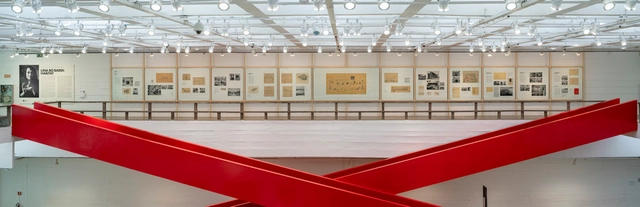
For three years, the Museu de Arte de São Paulo (MASP) has dedicated its program of exhibitions and seminars to annual themes. In 2016, the museum presented Histories of Childhood; in 2017, Histories of Sexuality; and in 2018, Afro-Atlantic Histories, which drew record attendance and was named "Best in Show" of 2018 by The New York Times.
In 2019, however, MASP is focusing on women with Women's Histories, Feminist Histories. The year began with two solo exhibitions by female artists, Lúcia Laguna and Sonia Gomes, at the intersection of both themes, closing the cycle of Afro-Atlantic Histories and launching Women's Histories.
Public authorities must make use of planning instruments available by law to promote coordinated land management and, thus, guarantee access to the city for all. Photo: Mariana Gil/WRI Brasil
From the ground up, we build our cities. The places where we live, work, walk, and spend our lives are all built on the same surface. Land is one of a city's most valuable assets, and promoting the coordinated management of this territory is essential to ensuring that everyone has their place and that it is equitably distributed.
BONDUKI, N. G. Os Pioneiros da Habitação Social - Inventário da Produção Pública no Brasil entre 1930 e 1964. São Paulo: Editora UNESP, 2014.. Image Cortesia de PC3 - Pensamento Crítico e Cidade Contemporânea
The complex is located on Santa Cruz Street in Vila Mariana, near Gregori Warchavchik's Modernist House, and consists of 23 three-story blocks sited on a triangular plot of 61,900 m². Most of the blocks were oriented with their facades facing east-west, spaced to ensure adequate sunlight for the apartments.
https://www.archdaily.com/1122821/collective-housing-with-a-hybrid-language-santa-cruz-residential-complexPC3 - Pensamento Crítico e Cidade Contemporânea
In Helsinki, Finland, a law requires transport companies to open operational data to enable MaaS. Photo: hopkinsii, via Flickr, license CC BY-NC 2.0
We plan our daily commutes by considering multiple factors: time, cost, comfort—and, just as importantly, the ease of connecting between different modes. While the car fleet continues to grow, those who rely on public transit try to bypass deficient mobility by making smarter choices. Offering integrated solutions that move people from one point to another with maximum convenience is a path toward more humane and sustainable cities, widely recognized by mobility experts around the world.
https://www.archdaily.com/1122812/from-modal-integration-to-mobility-as-a-service-pathways-to-sustainable-transportationPaula Tanscheit, Fernando Corrêa, Guillermo Petzhold e Francisco Pasqual
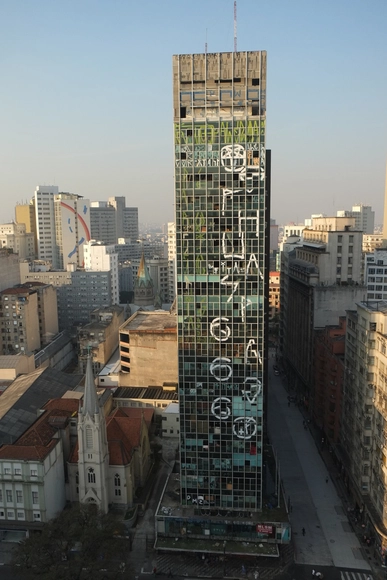
One year after the tragedy caused by the fire at the Wilton Paes de Almeida Building, we share this text originally published in 2018 in the newspaper "A Escola e a Cidade," produced by the publisher of Escola da Cidade.
https://www.archdaily.com/1122848/of-the-force-of-money-that-builds-and-destroys-beautiful-thingsIsadora de Andrade Guerreiro
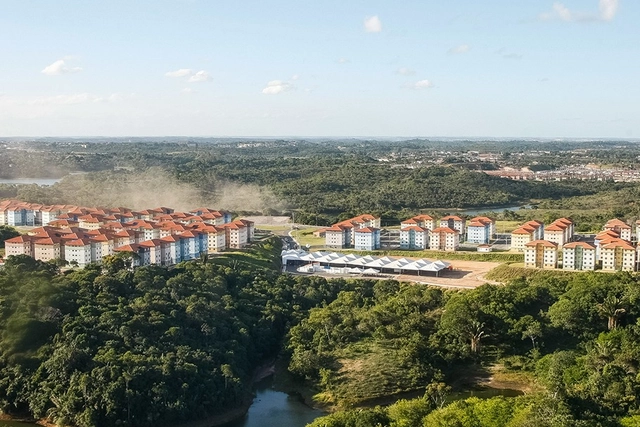
The Minha Casa, Minha Vida (MCMV) program was a cornerstone of federal housing policy under recent administrations. By financing new affordable housing, MCMV incentivizes developers to build in areas far from urban centers. This occurs because performance metrics focus solely on the number of units delivered, creating a strong economic incentive for developers to build far from downtown areas, where land is cheaper. Consequently, many of these developments are distant from job opportunities and basic services, as well as isolated from public mass transit networks, which are structurally unsuited to serve low-density peripheral areas.
Inverse City uses the urban morphology of central São Paulo and its adjacent districts as its primary structure and raw material, providing a foundation for the creation of a new space-time. This space-time allows us to explore and deconstruct the city we know.
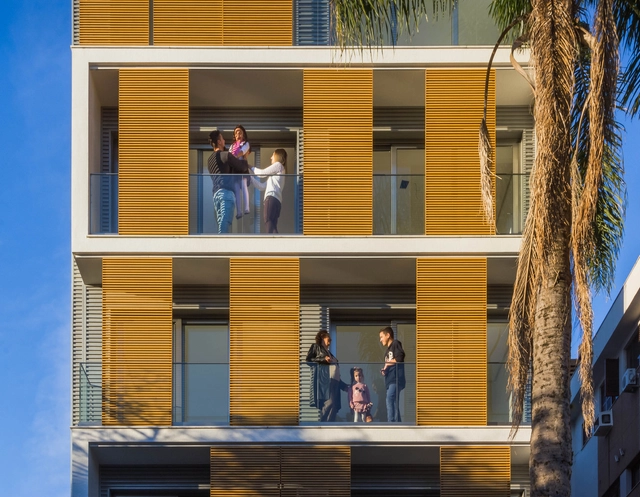
As extreme weather events become increasingly common worldwide, brises-soleil and perforated cladding have become effective options for creating a second skin on building facades, protecting interiors and creating unique atmospheres through the interplay of light and shadow.
Each building and facade orientation requires a distinct solution—whether fixed or operable, and in various materials. However, certain general guidelines can help streamline the selection process. We spoke with the experts at Hunter Douglas to identify the most critical considerations.
Videos
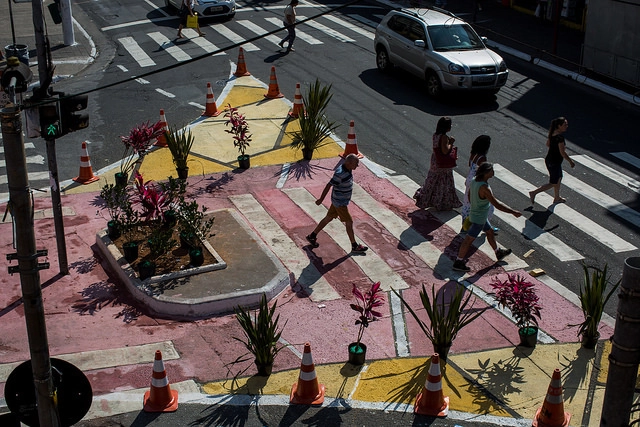
Temporary interventions can transform the landscape and the use of public space (Photo: Victor Moriyama/WRI Brasil)
No one knows a street or a neighborhood as well as the people who live there. Each place has its own peculiarities, potential, and challenges. Consequently, local-scale solutions can be created by citizens themselves, increasing both the efficiency and community buy-in of the project. Cities around the world have been adapting their legal frameworks to establish public policies that facilitate and foster citizen participation in transformative initiatives.
Educational Landscape is a data visualization project featuring an interactive interface based on a dot-density map that represents the population aged 25 or older, classified by educational attainment.
For the past four years, Avenida Paulista has come alive with color, dance, music, and a vibrant flow of pedestrians and cyclists on Sundays and holidays. This is the result of mobilization by civil society organizations and the public, which in 2015 led the São Paulo Municipal Government to establish the Paulista Aberta Program as part of the city's Ruas Abertas (Open Streets) initiative. Since then, one of the state capital's busiest avenues has served as a stage for economic, cultural, and leisure activities, while providing a vast, free space for physical exercise.
https://www.archdaily.com/1122953/paulista-aberta-the-impacts-on-visitors-and-residents-after-four-years-of-the-programITDP Brasil
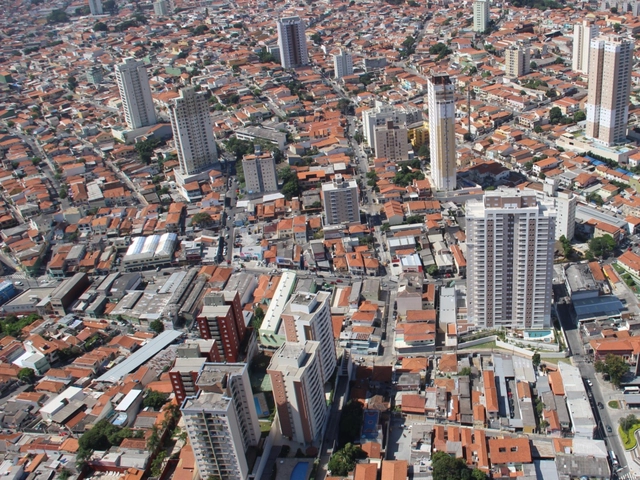
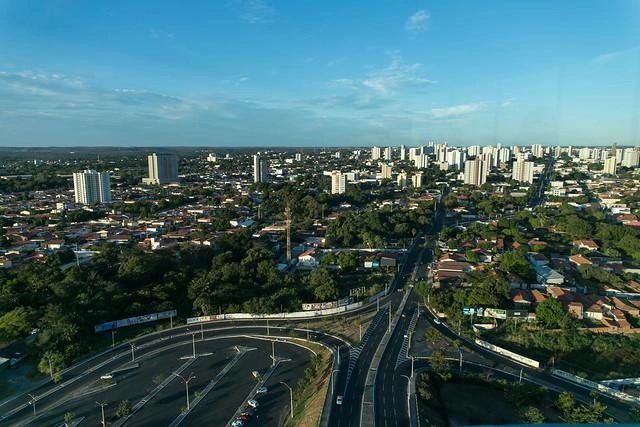
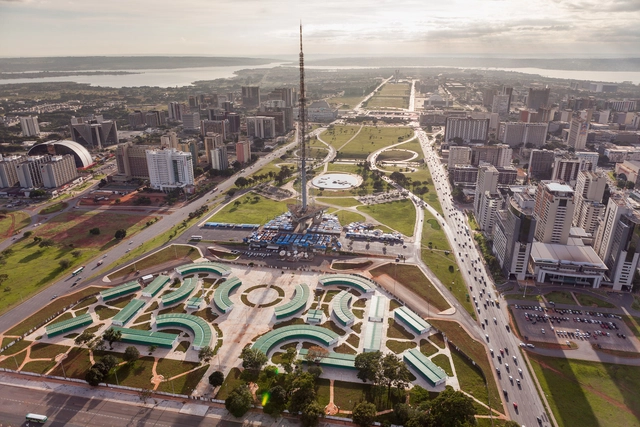
In recent years, documenting architecture and cities through photography has undergone a swift and surprising transformation. Professional and amateur photographers have been seeking new perspectives, going beyond what the human eye can see at street level. In this pursuit, aerial photography—which captures a bird's-eye view—is layered with aesthetic intentions that reveal an intimate and breathtaking look at cities and landscapes.
Discussions surrounding women's access to higher education and the labor market in general are of central importance when considering ways to establish more equitable living conditions and active roles in contemporary society. Although grounded in censuses and surveys linked to the formal labor market, this reflection provides a general baseline of women's current conditions in the face of difficulties stemming from the lingering legacy of a patriarchal and moralistic structure of professional hierarchies, where the leading figures are, and historically have been, men.
jeffsmallwood on Visual hunt / CC BY-NC-SA. Image via Visual Hunt
The Bamboo Experimentation Laboratory at UNESP - Bauru has shared with us the work developed by architect Roberval Bráz Padovan, who researched bamboo construction joints. In addition to analyzing various connection possibilities, Padovan concludes by proposing a joint component for space trusses. The thesis was presented in 2010 at the School of Architecture, Arts, and Communication of UNESP - Bauru, advised by Prof. Dr. Marco Antônio dos Reis Pereira and co-advised by Prof. Dr. Paula da Cruz Landim. Read the author's abstract below.
https://www.archdaily.com/1122961/bamboo-in-architecture-structural-connection-designPedro Vada



2.jpg?1565106025&format=webp&width=640&height=580)


.jpg?1556661663)





.jpg?1566476218&format=webp&width=640&height=580)