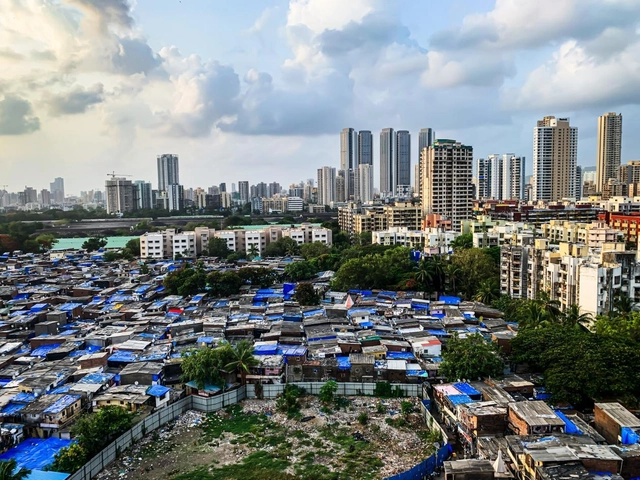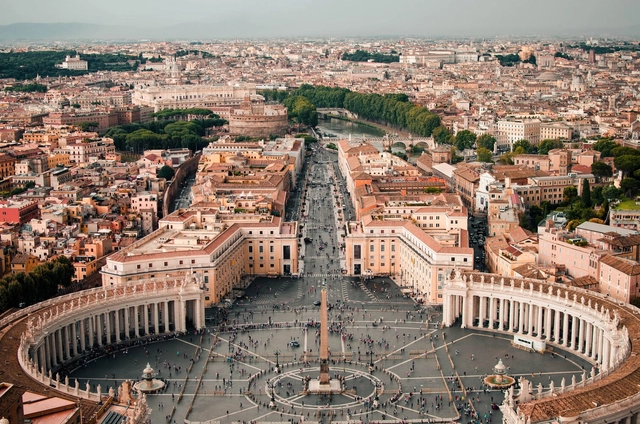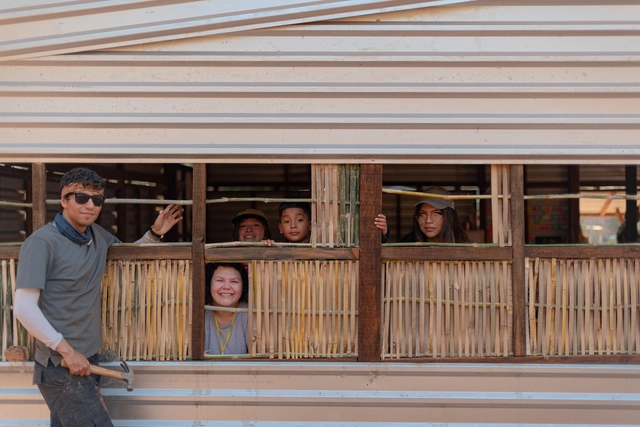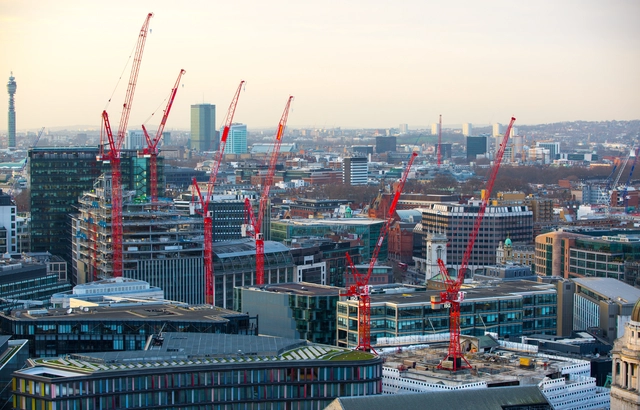
An estimated one billion urban residents live in informal settlements. These settlements have grown in response to rapid population growth and a lack of affordable, higher-quality alternatives. They are "informal" because they do not comply with government regulations. Historically, the official response was typically intimidation or, if they were not highly visible, neglect.
There are many ways to introduce more greenery into our homes and cities, such as bird-attracting trees, vegetable gardens, and medicinal plants. However, certain outdoor zones must serve as pathways, recreational areas, parking spaces, or other functions. For these areas, permeable paving offers an excellent alternative.
Through immense Greek columns, the door centered under the pediment invites one to enter either a temple or a home. The sense of smallness is undeniable. From north to south, this is a recurring scene: no upper-middle-class neighborhood escapes a neoclassical building.
Over the centuries, kitchens have undergone an interesting transformation that has dictated both their use—once frequented only by staff, today an essential social hub—and their size—shrinking from the largest room in the house to one of the smallest. Yet, regardless of size, the kitchen increasingly represents the heart of the home. An essential space, it now transcends the simple act of preparing food, becoming a place associated with leisure and togetherness. Consequently, this space must meet a series of specific demands, balancing functionality and efficiency with comfort and well-being.
November 19 marks Women's Entrepreneurship Day, prompting a reflection on the challenges of entrepreneurship as a woman.
In 2019, the Brazilian Institute of Quality and Productivity released its most recent report on Entrepreneurship in Brazil, based on the Global Entrepreneurship Monitor (GEM), a worldwide research program that assesses entrepreneurship levels across countries. In this report, which predates the COVID-19 pandemic, 88.4% of respondents stated that one of their primary motivations for starting a new business was 'to make a living because jobs are scarce.' In Brazil, micro-enterprises have gained significant ground as alternative employment, driven both by rising unemployment rates and the deregulation of labor laws and subsequent increase in 'outsourcing.'
While closely related, landscaping and gardening are distinct practices that engage with natural, living elements within the built environment. Read on to explore how each of these fields operates.
To reach the designs we know today, bathtubs have taken on countless forms. From Greek public baths and Zen Japanese ofuros to 18th-century cast-iron tubs and sophisticated modern whirlpool systems, these fixtures have been shaped and reinvented over the centuries, securing their place in history. Yet, regardless of culture or era, they have always been associated with spaces of physical and mental purification, allowing for moments of relaxation and introspection.
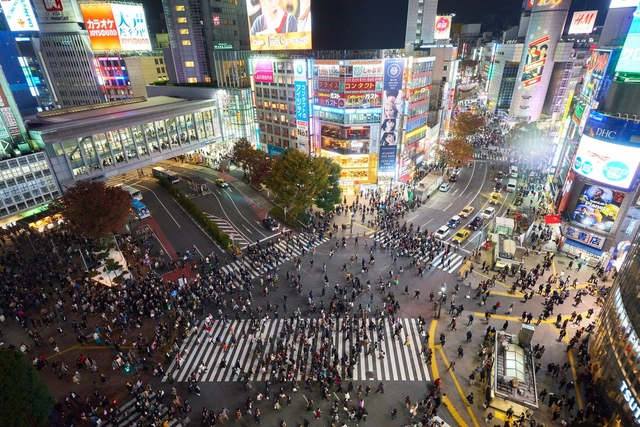
Verticalization and population density are poorly understood aspects of our cities. Contrary to popular belief, a more vertical city is not necessarily a denser one. In Brazil, favelas and semi-formal housing make up some of the densest urban areas. These consist of small dwellings built close together, often home to multiple families. Conversely, there are neighborhoods with many high-rises and few people. These buildings may be commercial, with no residents, or they may contain large apartments, small families, and expansive open space around them. Few realize that Cidade Ademar, a low-rise residential district in southern São Paulo, is twice as dense as the high-rise jungle of Itaim Bibi.
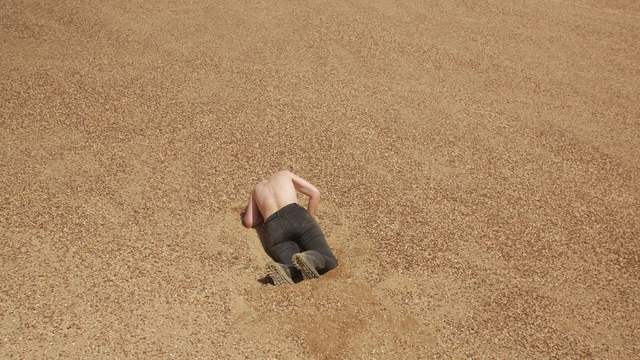
At the FIESP Cultural Center in São Paulo, Nicolás Valencia sits down with Brazilian artist Giselle Beiguelman to discuss artificial intelligence, data centers, and coup plotters, drawing from her book Políticas da Imagem, her exhibition Venenosas, Nocivas e Suspeitas, and her research project Domingo no Golpe.
https://www.archdaily.com/1080011/giselle-beiguelman-brasilia-artificial-intelligence-and-poisonous-plantsArchDaily Team
Architectural projects often strive to avoid forced cooling systems by relying on passive strategies that support cross-ventilation, solar control, and heat gain mitigation. Building orientation, the positioning of openings, louvers, and shading elements are key to reducing the reliance on air conditioning; however, in certain situations, these strategies are not enough to withstand high temperatures, making it necessary to resort to mechanical cooling technologies. Understand what it is and how to discreetly and efficiently integrate air conditioning into your home.
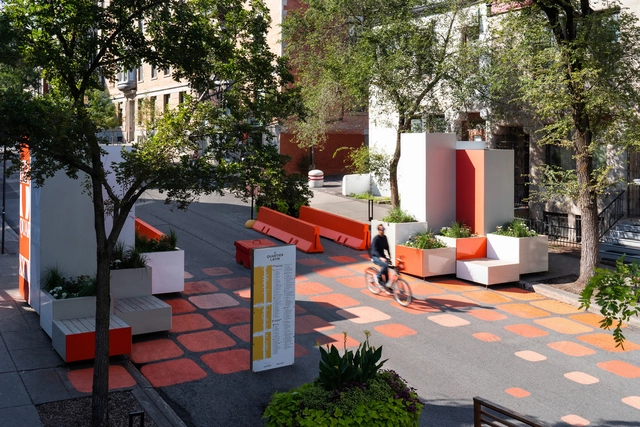
Since the onset of the Covid-19 pandemic, cycling has become an even more popular, resilient, and reliable alternative for daily travel, and temporary (or pop-up) bike lanes are increasingly common in major cities around the world. Between March and July 2020, 394 cities, states, and countries reallocated street space so people could walk and bike with greater ease, efficiency, and safety.
https://www.archdaily.com/1128568/4-ways-to-design-safe-streets-for-bicyclesNikita Luke e David Pérez-Barbosa
As summer approaches, so does the desire to enhance our homes' outdoor spaces. Whether for sunbathing, enjoying the breeze, or gathering with friends, areas like patios, backyards, and balconies can be highly versatile depending on how they are occupied. With this in mind, we have compiled some essential tips to help you make the most of these spaces.
Natural elements, people, and their culture—as assertions of architecture and social organization, alongside an incisive relationship with the river—shape an architecture with an Amazonian character. This research encompasses the study of the social and symbolic knowledge acquired over the years by the riverine communities of Marajó Island and its consequences on the materiality of local constructions, which have undergone changes over the last few decades.
https://www.archdaily.com/1128516/amphibious-lives-the-influence-of-cities-transforms-riverine-architectureAna Clara Marin
In describing the process of spatial structuring in the city of São Paulo, Professor Flávio Villaça notes that its growth between the construction of the São Paulo Railway in 1867 and the early 20th century was predominantly geared toward the bourgeoisie. At the time, the working classes did not yet constitute a significant market for urban land.
Integrantes do Coletivo Prende La Vela em manifestação na Avenida Paulista. Image Cortesia de Prende La Vela
From cross-border movement to intra-urban displacement, the migrant population shapes and transforms the landscapes and dynamics of sociability established in the territories they inhabit. The city, a space where different perspectives meet and clash, intensifies this dynamic by receiving migratory flows and welcoming the various actors in this process in distinct ways. Latin American migrant women—a diverse group in terms of race, gender identity, sexual orientation, and class—challenge conservative logic as they move across national borders and urban territories. Within this reality, migrants organized in collectives assert their demands and claim their participation in the city through expressions of their cultures of origin.
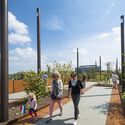
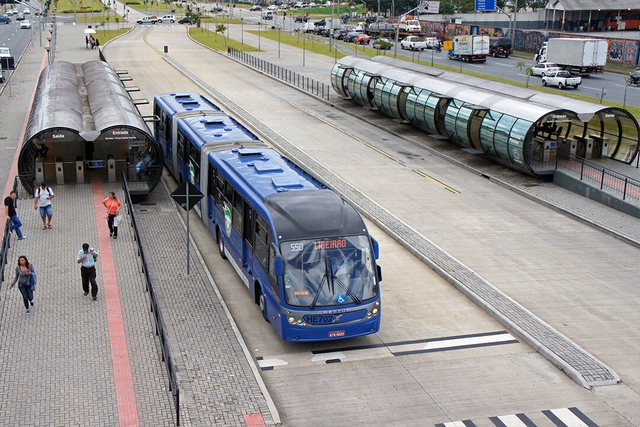
Before we are drivers or cyclists, we are all pedestrians. Designing safer ways to navigate on foot, while also offering opportunities for leisure and contemplation for passersby, means conceiving a fairer city that offers a better quality of life—one that respects all its citizens and prioritizes their well-being. Accordingly, we have gathered here several parks, crossings, and pedestrian bridges designed exclusively for non-motorized use.
Photomontage based on the work "Invisible in the Visible: Five Essays for São Paulo." Image courtesy of Luiz Sakata.
Every year, we host a call for submissions for final graduation projects from our audience, open to all Portuguese-speaking countries. In doing so, we aim to select the projects we find most compelling, presenting inspiring visions and sparking debates in the fields of architecture and urbanism.
Dona Auxiliadora, treasure hunter of Praça Dom Orione. Image by the author
The exercise of observing a space, taking into account its historical, social, and sensory complexities, is an act that should be part of the daily life of those who practice architecture. This act qualifies actions that engage with that spatiality. Consequently, using architecture as a tool to understand the dynamics of the environments we frequent becomes essential.
As one of the primary modes of transport in history, rail transportation has helped move people, raw materials, and products since the Industrial Revolution. Widely used throughout the world, railways had their first trial in Brazil during the 1850s in Rio de Janeiro, expanding across the territory until they were gradually phased out over time. Today, we face a major challenge in keeping their memory alive.
Another year draws to a close, and with it comes another list reviewing the most memorable moments of the last twelve months. This time, we analyze the photos that garnered the highest engagement (likes, comments, shares, and saves) on ArchDaily Brasil's Instagram.
In Brazil, urban problems associated with urban growth and poverty, driven particularly by the informality of land occupation and the precariousness of infrastructure and urban services, have proved to be an insurmountable challenge for public authorities.
Despite past efforts, low-income housing access has largely been achieved through self-built housing and the relaxed enforcement of land subdivision, use, and occupation regulations.
Architecture is one of the oldest professions in the world, with its origins, as we understand them today, dating back to the dawn of humanity. Historically, however, architectural education was initially passed down collectively through oral traditions and practical, hands-on learning from one generation to the next. With the rise of Fine Arts schools and universities, this training became institutionalized and evolved into the academic models we know today.
Play, as a human activity, is a multidimensional practice: it stems from biology, is socially transmitted, and is situated within the architectural realm. Within this interrelation, while play introduces dynamics and narratives that invite us to explore alternative ways of inhabiting the world, architectural projects provide the physical and sensory support needed to unlock these possibilities, with play structures serving as the medium connecting the two. Consequently, a defining relationship emerges between play, the built environment, and its evolution over time.
https://www.archdaily.com/1080015/architecture-and-play-structures-how-are-play-spaces-evolving-in-urban-environmentsEnrique Tovar
University of Aberdeen New Library / schmidt hammer lassen architects. Photo courtesy of Schmidt Hammer Lassen Architects
Contrast can be widely used in architecture as a tool to highlight what we want to showcase. Do we want to emphasize an entrance? Make the project stand out from its surroundings? Turn our architecture into a landmark in the urban—or rural—landscape? Do we need to create symbolism? Ensure legibility? How do we achieve this? How do we "shine a light" on something?
Whatever we want to highlight is amplified through comparison—by means of an exaggerated, antagonistic contrast. Intentionally, we can intensify the use of darkness to emphasize a single light source, framing a staircase in a dramatic and theatrical way. Or we can introduce solid, opaque walls to make a light, transparent entrance stand out.