This article by Miguel Paredes Maldonado was originally published with the title "House, City, Territory: A Collective Investigation into the Transformations of Contemporary Urban Living" in issue No. 31 of Dearq journal on September 1, 2021 (DOI: https://doi.org/10.18389/dearq31.2021.02).
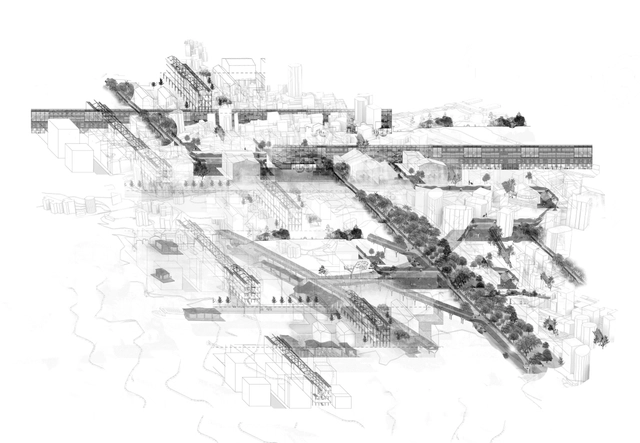
The article explores the interscalar relationships recently established between the domestic realm of housing and the collective spheres of the city and territory, viewed through the lens of developing new “urban commons.” This exploration is framed as a collective research project based on participation in architectural competitions and developed within a pedagogical framework at the University of Edinburgh (United Kingdom) between September and December 2020. Its findings highlight the pronounced infrastructural basis of contemporary urban living and identify the primary processes of transfer between the domestic and collective domains across a series of urban housing scenarios.
We present this article as part of a joint collaboration to help disseminate the research, analysis, and opinions developed by the national and international academic community on architecture, urban issues, and related fields.
After a year delay due to the Covid-19 pandemic, Tokyo Olympics started at the end of July. In this edition, three new modalities debuted in the biggest competition in the world: 3x3 basketball, surfing and skateboarding. Bringing medals to countries such as Japan, United States, Brazil, Australia, Russia, Serbia, China and Latvia, and involving a large number of athletes and nations, these sports carry urban culture in their movements and histories and are an important part of relationships in the city.
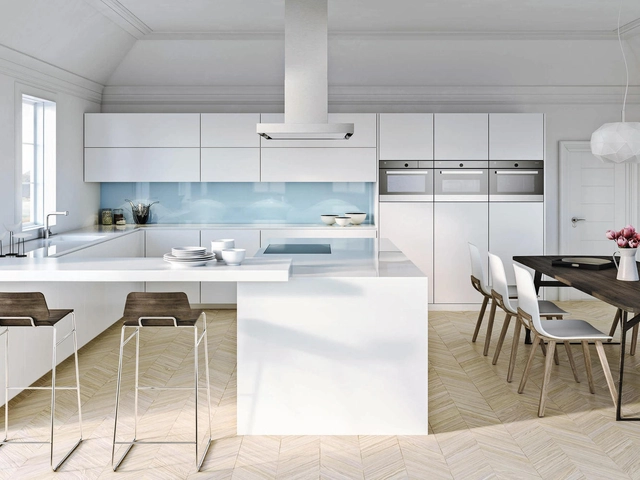
Whether it's by sharing a meal at a restaurant or preparing a home-cooked meal together, food does in fact, bring people together. With that in mind, architects placed kitchens at the heart of homes, giving residents a space to cook, dine, and spend quality time with their families and friends. However, not all homes can fit spacious kitchens, some are too small and others don't have the proper spatial configuration for it. In this interior focus, we will explore how architects and designers opted for different kitchen layouts based on different spatial and user needs.
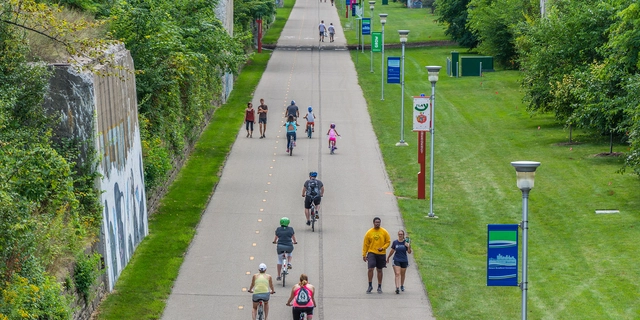
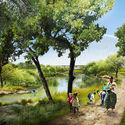
Dequindre Cut, Detroit / The High Line Network, SmithGroup. Image Courtesy of The Dirt
Decades of redlining and urban renewal, rooted in racist planning and design policies, created the conditions for gentrification to occur in American cities. But the primary concern with gentrification today is displacement, which primarily impacts marginalized communities shaped by a history of being denied access to mortgages. At the ASLA 2021 Conference on Landscape Architecture in Nashville, Matthew Williams, ASLA, with the City of Detroit’s planning department, said in his city there are concerns that new green spaces will increase the market value of homes and “price out marginalized communities.” But investment in green space doesn’t necessarily need to lead to displacement. If these projects are led by marginalized communities, they can be embraced.
Servidor Local is a connection point, a forum where dialogue takes place; it is, in essence, a sanctuary for ideas, diversity, and exchange. As a platform, it drives cultural, art, and design projects that champion narratives with a social impact, aiming to benefit the immediate environment and spread along the paths of its visitors.
"I'm an architect... now what?" must be one of the most common questions for any recent graduate holding an architecture degree. Over the years, many will find jobs in different industries that do not necessarily involve working in an office designing and building buildings.
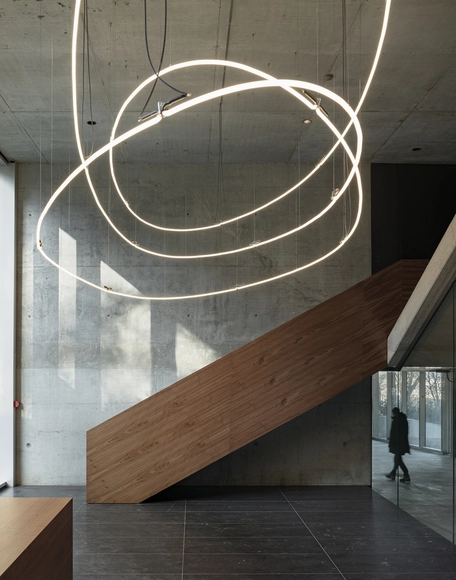
Light serves an essential purpose in architecture: to help us see. Whether it be through natural or artificial methods, rooms must be illuminated accordingly so occupants can safely inhabit them and fulfill their daily functions. When the right system is selected, light can also contribute to energy efficiency and sustainability within the building as a whole. However, apart from its evident functional and environmental value, lighting design can vastly impact the visual comfort and aesthetic tone of interiors by drawing attention to textures, enhancing colors and defining volumes. Therefore, of the many pieces involved in interior design, lighting is certainly one that can enhance or destroy a space and even affect users’ well-being, which is why it should be considered a crucial design element by itself.
In the early 1920s, a time when women could not even work without their husband's authorization, Carmen Portinho started an engineering course at the Polytechnic School of the University of Brazil. At the vanguard of the profession, as one of the first three women to graduate as engineers in Brazil, she was opening up a field in a space dominated entirely by men.
At its heart, extreme-minimalism is a rebellion against consumerism, it’s a cathartic process of learning to live without. But it’s also a decorative style in its own right – a clean world for a clean mind.
Cities face much criticism with how they handle their car population, but have you ever thought about how much land use is dedicated to surface parking lots? In fact, it may be one of the most prominent features of the postwar city in the United States. Housing, community facilities, highway infrastructure, often garner much attention, but the amount of land dedicated just to park cars is astounding.
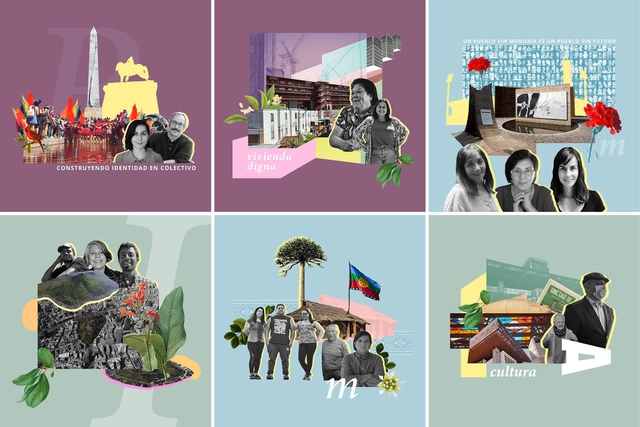
The fourth season of the podcast Causa Común—a co-production between Fundación Lepe and Fundación Aldea for the OH! Stgo festival, held in mid-January in Santiago, Chile—explores the past, present, and future of the capital, alongside the role of its inhabitants in prioritizing the common good and collaborative ways of making, inhabiting, and imagining our shared home.
Directed and coordinated by Francisca Cordero, Soledad Díaz de la Fuente, Magdalena Novoa, and Trinidad Piriz, the six-episode season examines the everyday stories, communities, monuments, and public spaces we inhabit from new perspectives. Featured topics range from the multiple identities of a public square, female leadership in housing projects, and the construction of urban memory, to island hills as socio-environmental opportunities, Mapuche urban dwelling, and the GAM building as an exponent of architecture and social change.
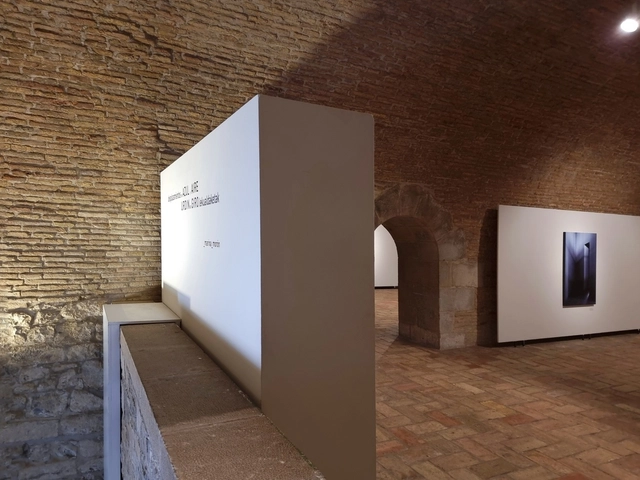
The internationally renowned art collective _marina_morón (comprising Dr. Jesús Marina, PhD in History, and architect Dr. Elena Morón, PhD) inaugurated their latest work at the Pabellón de Mixtos of La Ciudadela in the city of Pamplona. The exhibition is sponsored by the Basque-Navarrese Association of Architects and the Pamplona City Council, and will remain open to the public until March 15, 2022.
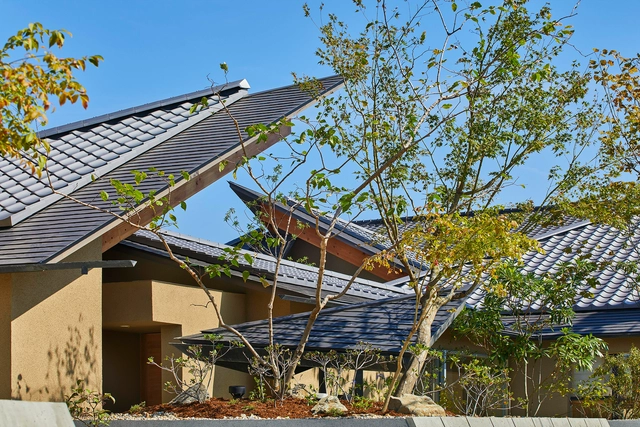
Roofs often play important roles in a project's identity. In addition to the aesthetic aspect, they play a fundamental role in protecting and closing the building. Of the existing types of coverage, pitched roofs are the most common in homes and buildings all around the world, therefore, it is necessary to ensure that they are within the parameters set out in the technical standards.
Instant City - ICSID 1971. Image Cortesía de OAB Office of Architecture in Barcelona
André Ricard and Daniel Giralt-Miracle, the member responsible for ADI/FAD, proposed the island of Ibiza as the venue for the ICSID Biennial Congress in 1971. That's how the story began. At that time, the so-called "Urquinaona Open Design Group" already existed in Barcelona. From the group, and with Carlos Ferrater at the head, they offered their help to the organization of the congress. They refused, as everything seemed to have already been organised. Together with Fernando Bendito, Ferrater asks about accommodation for the students. They still had nothing. They get the opportunity they were waiting for. Thousands of invitations are sent out to students all over the world. The number of replies was greater than the number of registered students.
The built environment we inhabit can be hostile, both on an individual architectural scale and in a wider urban context. Homeless people, for instance, are dissuaded from resting on public benches by the menacing presence of spikes and other forms of exclusionary design. From a global lens, we see the impact that borders have amidst anti-immigration hostility, imposingly exemplified by the Melilla border fence on the Morocco-Spain border. This “hostility” can be found in a large number of settlements around the world, settlements that have been formed as a result of organic migration or settlements predicated on control – like company towns.
The Thermal Energy Center at Microsoft’s headquarters in Redmond, Washington, powers the campus almost entirely through electricity provided by geothermal energy exchanges. The project acts as a pilot program for the Embodied Carbon in Construction Calculator (EC3), a free database of construction EPDs and matching building impact calculator.. Image Courtesy of NBBJ
The growing consumer demand for transparency—especially around sustainability and environmental practices—has implications for industries from apparel to healthcare products. Mars Inc. recently released a cocoa sourcing map to tackle deforestation and increase accountability, and the Fashion Transparency Index pushes apparel companies to be more forthcoming about their social and environmental efforts.
Now it’s time for the building industry, characterized by a lack of information around the materials and practices used in construction and throughout a building’s lifecycle, to catch up. The cost of inaction is too high to ignore. That’s because buildings account for 39 percent of total global carbon emissions. Traditionally, most carbon reduction efforts in the building sector focus on operational carbon—a building’s everyday energy use, which accounts for roughly 28 percent of emissions. The remaining 11 percent comes from what is often ignored: embodied carbon.
https://www.archdaily.com/976015/strategies-to-reduce-embodied-carbon-in-the-built-environmentPeter Alspach, Margaret Montgomery
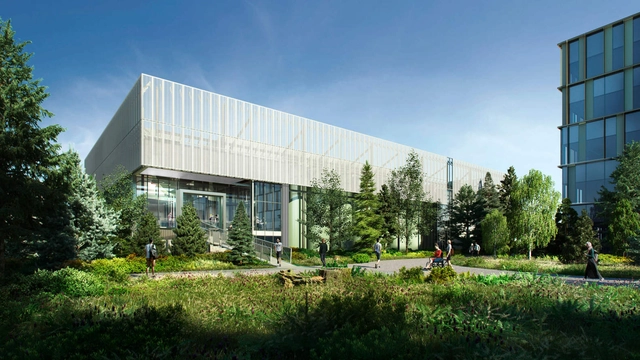
Considering focal points, biomes, and resting spaces, creating rhythm alongside architecture, and facilitating the maintenance and enjoyment of spaces are just some of the challenges of landscape design. Today, rather than serving merely as an element of spatial composition, the relationship between landscape architecture and the built environment is increasingly valued as we understand how the presence of nature benefits the health and comfort of humans and other species. Consequently, thinking about and designing the landscape has become an increasingly complex and valued endeavor.
CHINAS CHINAS is a research project conducted by FLORA. It maps a trajectory through the city of Buenos Aires, Argentina, based on a typological analysis of Chinese supermarkets. Its objective is to recognize and explore the modes of appropriation and domestic micro-scales that occur within them, demonstrating that urban architecture is shaped by everyday banalities. Ultimately, architecture takes on meaning when living conditions are defined by the people themselves. Inhabiting—beyond mere functionality—is precisely about this.
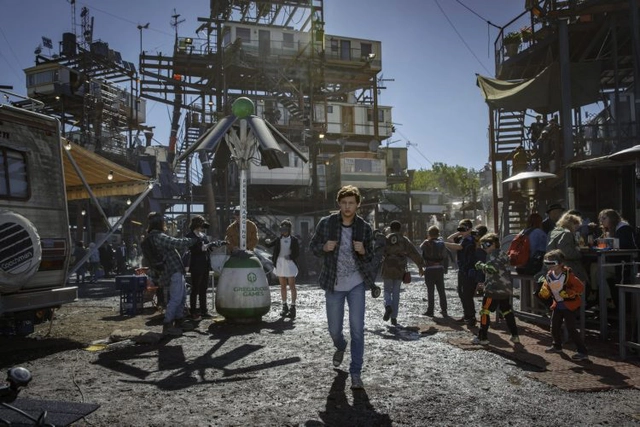
Wade walks the streets of Columbus, Ohio, the city where the film is set. Source: DubaiWeek (2018), under "fair use" terms
Cinema is an excellent tool for stimulating discussions and reflections on the spaces we inhabit, deeply engaging with architecture and urbanism through sets and locations. Films can address current issues within these fields of study and integrate them into their narratives, opening pathways for new debates.
The 2018 feature film Ready Player One, directed by Steven Spielberg, raises a series of questions about urbanism, social relations, contemporary cities, environmental conflicts, and how new technologies can interfere with an individual's relationship with public spaces. This article explores how these factors manifest in our daily lives and shape new concepts of the city.
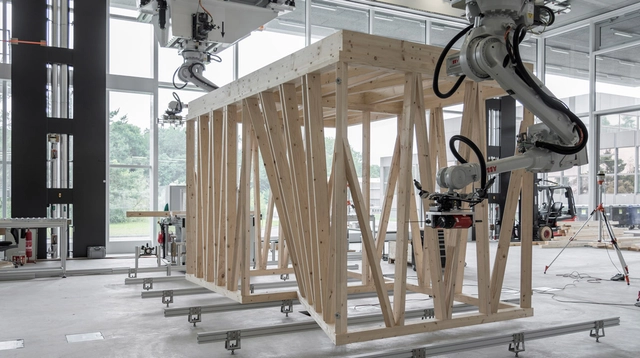
Robotic Collaboration. Image Courtesy of ETH Zurich
Digital spaces and fabrication technology have become as prominent as ever within the current state of our post-pandemic society, becoming increasingly more accessible and enabling quick and spontaneous acts of iteration and evolution. These technologies have resulted in the ability to mass-produce non-standard, highly differentiated building components within the same facility as their standardized counterpart, transforming how buildings and their respective components are conceived, designed, and represented, and how they are manufactured, assembled, and produced.
The beauty of digital fabrication is its ability to blend aspects of mass and artisanal production to the point where costs nearly disappear. Technology’s capacity to fabricate so simply and almost seamlessly raise the issues for its potential to significantly alter our current perception of architecture, thus producing the question: has the influence of mass production in architecture resulted in a loss of intentional design?
Designing a limited space like an apartment can be a genuine challenge. Creating new layouts and projects over what has already been imagined by someone else is an exercise that demands a keen eye and respect for the existing structure. In addition to this, there is the need to bring character to the space through interior design without overlooking spatial functionality, ensuring the best possible quality of life for its residents.
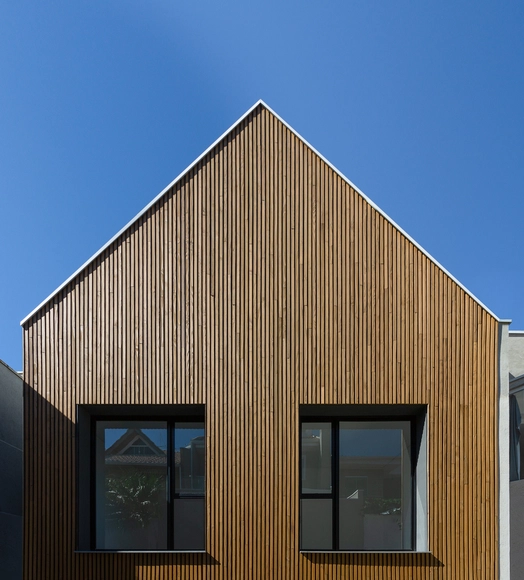
Wood is an incredibly common material in the construction industry, utilized across various stages and for multiple purposes. Below, we explore its potential to shape residential facades through 17 examples of Brazilian houses.
Following nearly 50 years of rapid urbanization, urban renewal has transitioned from an era of incremental growth to one of existing stock. Urban planning has shifted from expansion toward the high-quality renovation of existing assets to reactivate spaces. Looking back at recent adaptive reuse projects by Pritzker Prize laureates, we examine how these masters respond to today's challenges of urban stock renewal.
Videos
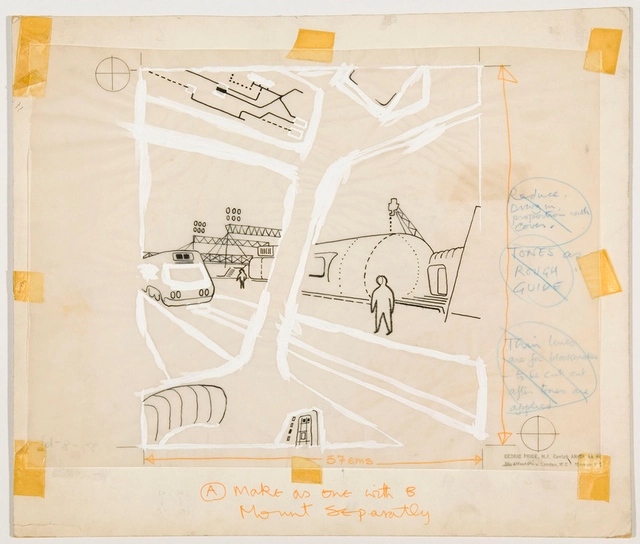
Cedric Price. Potteries Thinkbelt. Cedric Price fonds, Canadian Centre for Architecture, Montréal. Image Courtesy of CCA
All buildings move — of course, some more than others. There are a host of design considerations that architects keep in mind that allow for, or even promote movement in almost every building. But some architects fall back on their training as broad-based thinkers and problem solvers to devise solutions that literally roam the earth. From tiny homes on wheels, to train-based educational institutions, to design programs in a truck, sometimes buildings and architecture need to travel to the people it serves or to other environments. This video features a few examples on this spectrum, beginning with how architects typically deal with movement in structures and foundations, to Cedric Price’s Potteries Thinkbelt, and finally Chicago Mobile Makers, a traveling maker workshop for children founded by Maya Bird Murphy.























 .
.





.jpg?1643423986 "Villa Savoye, Le Corbusier, 1929. Image © Flickr User: End User")
.jpg?1643425181 "Villa Savoye, Le Corbusier, 1929. Image © Flickr User: End User")
_V%C3%ADctor_Pati%C3%B1o_George.jpg?1643424298 "Villa Stein, Le Corbusier, 1927. Image © Víctor Patiño George")