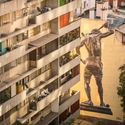
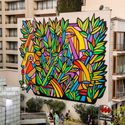
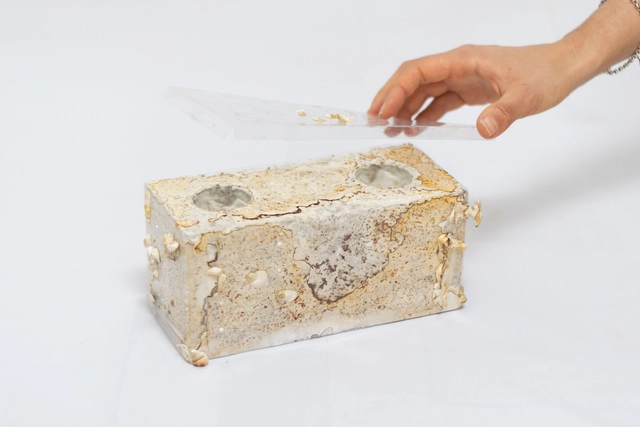
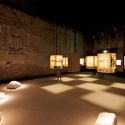
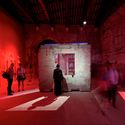
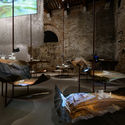
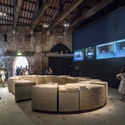
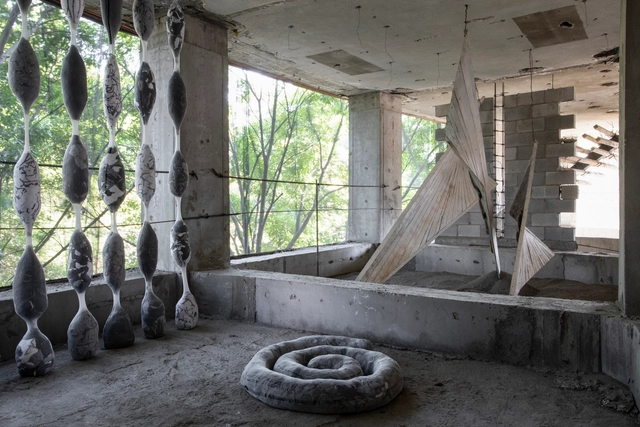
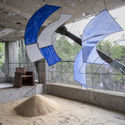
On February 8, at Torre Glorieta Cibeles and as part of Mexico City Art Week, MASA Inc. presented an exhibition showcasing pieces by Manuel Bañó, Hollie Bowden, Frida Escobedo, Héctor Esrawe, Mario García Torres, Adeline de Monseignat, Marrow, Brian Thoreen, Joe Sweeney, ROOMS Studio, EWE Studio, and VISSIO.
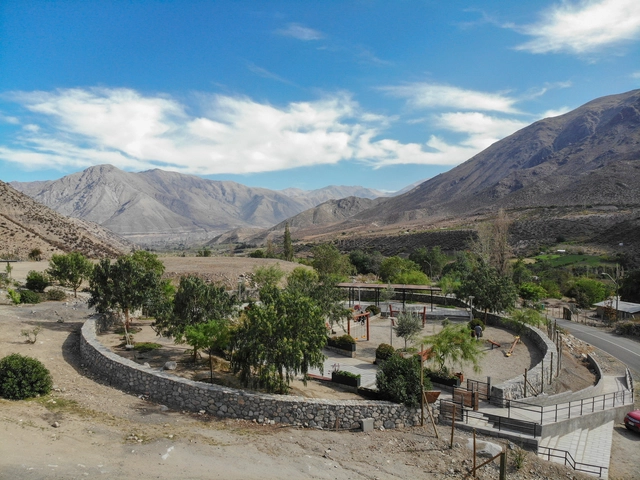
Gathering spaces in rural areas play an important role in improving the quality of life for local communities. In April 2022, Fundación Mi Parque launched the book “Rural Public Spaces: Community, Architecture, and Landscape” as both a contribution and a guide for a design discipline that seeks to highlight and address the need for meeting spaces in rural environments. The book is the culmination of five years of fieldwork, during which 37 community spaces were built, benefiting more than 26,000 residents in the Choapa Province of Chile's Coquimbo Region.
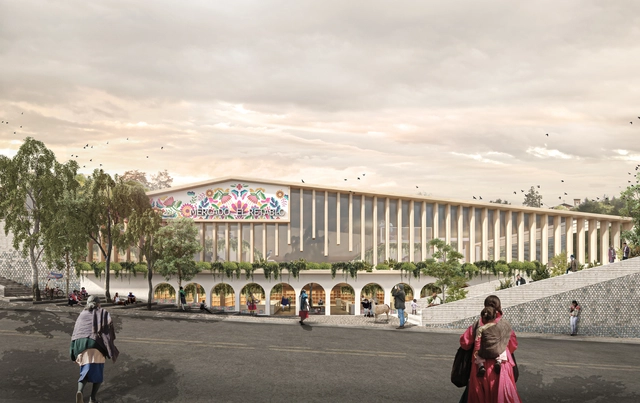
“Mercado Retablo” is the winning proposal of the II Semilla Competition organized by MURU, presenting a new design for the Playa Grau Municipal Market, located in the city of Ayacucho. Architects Santiago Nieto Valladares and Lucía Uribe Osores explain how “the market proposes quality public spaces that establish it as a gathering place, moving beyond a mere site for transit and commerce to host and foster social interaction.”
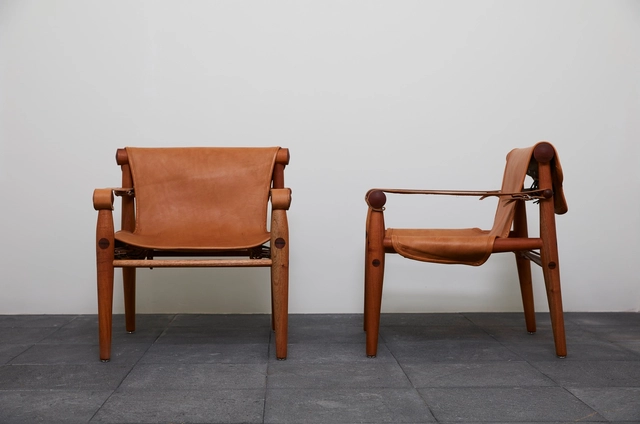
The historical memory and research project "Clásicos Mexicanos"—which recovers the work of key figures in mid-20th-century Mexican design by manufacturing some of their most iconic pieces—once again opens its doors to celebrate the work of Armando Franco (b. 1921), a key figure in the Mexican architecture and design scene.
https://www.archdaily.com/1132268/clasicos-mexicanos-presents-armando-franco-and-his-cofran-collectionArchDaily Team
Libro “Ideas de Hábitat. Arquitectura en Perú 2010-2020”. Image Cortesía de Arcadia Mediática
The bookstore and publishing house Arcadia Mediática, alongside the architecture, design, and construction magazine Arkinka, began 2022 with the launch of their first joint editorial project, “Ideas de Hábitat. Arquitectura en Perú 2010-2020”. Through built projects of varying scales and territories represented by more than four generations of architects, the book aims to showcase the finest works of contemporary architecture in Peru over the last decade.
In November 2022, the Network of Latin American Architecture Biennials REDBAAL will mark its first ten fruitful years, celebrating this milestone by launching the Fourth Edition of the Oscar Niemeyer Award for Latin American Architecture, the prestigious ON-04 Prize. This August, the jury's decision was announced, revealing the top three winners and recognizing the work of architects from Brazil and Mexico.
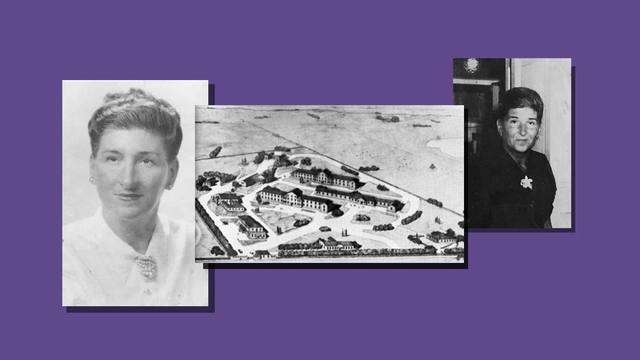
The first woman to receive an architecture degree in Argentina was Filandia Pizzul in 1928 from the University of Buenos Aires, more than 50 years after the program was first established. Starting in 1874, the architecture program operated independently of the Department of Sciences, where these studies had been housed since 1865. She was a pioneer in several fields, also becoming the first woman to complete courses at the Civil Aviation Directorate in 1928, earning pilot's license No. 181.
As part of an initiative by LIGA, an independent space founded in Mexico City in 2011 to promote contemporary Latin American architecture through exhibitions, publications, events, lectures, and workshops, the exhibition “Registro: Museo Tamayo” opened on April 21 as part of the LIGA-ARCHIVOS initiative. This iteration presents a reinterpretation of the building designed by architect Teodoro González de León and built in 1981 in the First Section of Chapultepec Forest.
The results of the XIV Yucatan Architecture Biennial have been announced. A total of 17 accolades were awarded, including 1 gold medal, 6 silver medals, and 10 honorable mentions across 15 different categories. The jury comprised architects Edgar Herrera, Manuel Herrera, Felipe Leal, and Carlos Rodríguez. Read on to discover the winners.
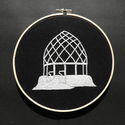
Architect Jimena Hogrebe presents “Architectural Embroidery,” an intimate project that explores the possibilities of representing and understanding architecture through the boundaries of other disciplines, framing it as a multifaceted and diverse activity. Embroidery is an ancient technique that demands abstraction and a clear understanding of what is being stitched. Above all, however, it is about pausing in time. Much like hand drawing, it connects the hand with the brain, linking reflection with memory to record and interpret architecture through an alternative narrative.
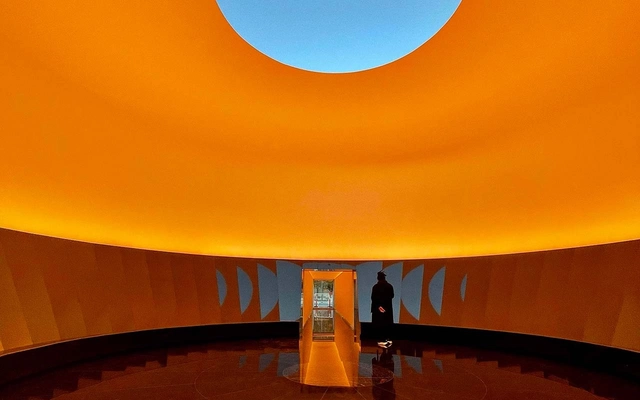
Recently, Tec de Monterrey unveiled “Skyspace: Espíritu de Luz,” an installation designed by American artist James Turrell that now joins DistritoTec in Monterrey, Mexico, as a cultural destination that enhances spatial quality through innovation. Arising from the “Light & Space” art movement, this piece was designed as an observatory to generate a unique visual experience through a sequence of lights every 12 hours, at dawn and dusk. It also serves as a tribute to the life and legacy of Don Eugenio Garza Sada and Eugenio Garza Lagüera.
Paint is synonymous with color, even when it is white. It is the simplest way to restore and correct imperfections on any surface, whether interior or exterior. Without detracting from this significant aesthetic benefit, paint also possesses composition-based properties that turn an attractive, well-finished project into a healthy building—one with a lower environmental impact throughout its life cycle.
This article by Miguel Paredes Maldonado was originally published with the title "House, City, Territory: A Collective Investigation into the Transformations of Contemporary Urban Living" in issue No. 31 of Dearq journal on September 1, 2021 (DOI: https://doi.org/10.18389/dearq31.2021.02).
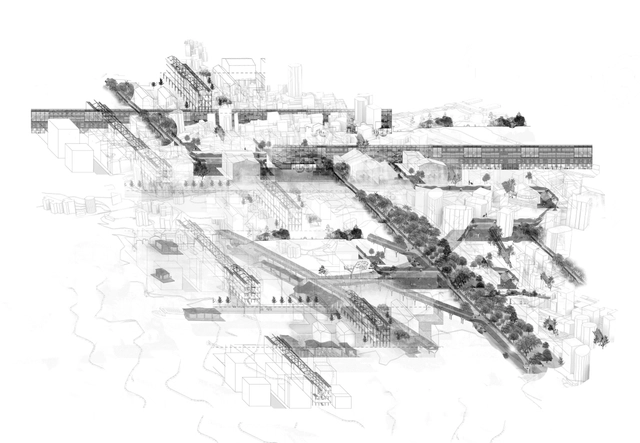
The article explores the interscalar relationships recently established between the domestic realm of housing and the collective spheres of the city and territory, viewed through the lens of developing new “urban commons.” This exploration is framed as a collective research project based on participation in architectural competitions and developed within a pedagogical framework at the University of Edinburgh (United Kingdom) between September and December 2020. Its findings highlight the pronounced infrastructural basis of contemporary urban living and identify the primary processes of transfer between the domestic and collective domains across a series of urban housing scenarios.
We present this article as part of a joint collaboration to help disseminate the research, analysis, and opinions developed by the national and international academic community on architecture, urban issues, and related fields.
What do we mean by heritage? This is one of the main questions raised by Alejandro Orellana, director of Relatos de Barrios—a Chilean project that seeks to reclaim the heritage and historical value of housing complexes, highlighting the community dimension behind the lives of their residents.
A documentary and a book are the results of their experience with the “CCU Worker Housing” in La Serena, later renamed the “Rengifo Housing Complex.” Designed in 1957 by architect Carlos Feuereisen Polanco and built in 1958 by Negochea and Vergara, it represents a characteristic housing typology of the city.
This article by Maya Orzechowska was originally published under the title "Five Principles for a Vulnerable and Intimate Architecture: Drawing Alternative Boundaries and Openings to the Home and the Self" in the 31st issue of Dearq journal on September 1, 2021 (DOI: https://doi.org/10.18389/dearq31.2021.04).
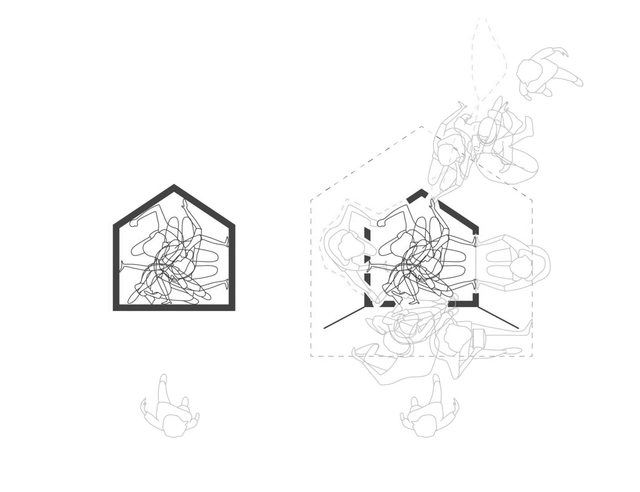
This article investigates how the boundaries and openings of the home are not separate from one another; rather, they play an active role in the politics of bodily and social health. For an increasing number of people, both the idea of the home and the reality of housing fail on a daily basis; therefore, this article seeks alternatives to the narrative of the home, of a utopian internal intimacy that endorses withdrawal, and of a non-responsible relationship toward the public realm. It suggests that the result is dystopian, concealing and exacerbating vulnerability and its resistance to change. In contrast, a vulnerable and intimate architecture focuses on the vulnerable body, drawing the uncanny, repressed, and emotional into the home.
We present it below as part of a joint collaboration to contribute to the dissemination of research, analysis, and opinion produced by the national and international academic community on architecture, urban issues, and related fields.
This article by Hugo Mondragón López and Bárbara Rozas Reinecke was originally published under the title "Contra el Olvido: La voz de Montserrat Palmer y el discurso de la arquitectura contemporánea en Chile" in issue 23 of Dearq magazine on July 1, 2018 (DOI: https://doi.org/10.18389/dearq23.2018.02).
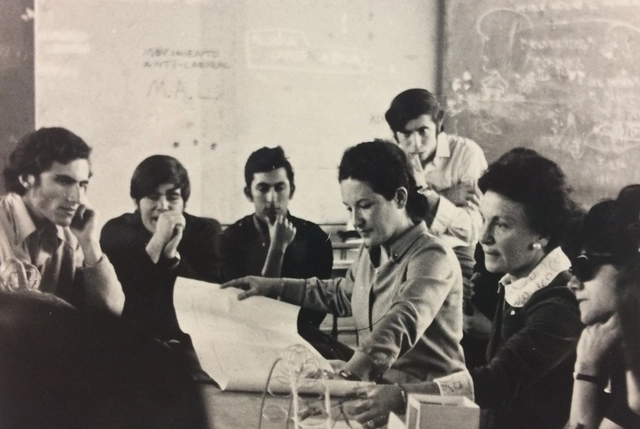
Architect, professor, researcher, editor. Montserrat Palmer Trías was an authoritative voice in Chile's architectural and cultural scene between the late 20th and early 21st centuries. Through her editorial leadership of ARQ magazine, she shaped disciplinary debates while introducing a group of Chilean architects—whose renown was forged in the pages of the publication—to the international stage. Although she nurtured the myth of a woman operating purely on intuition, it is impossible to overlook her rigorous work as a researcher. Paradoxically, a decade after stepping down as the magazine's editor-in-chief, both her figure and her contribution to post-dictatorship Chilean architecture risk falling into oblivion. This article is an attempt to prevent that from happening.
The following is presented as part of a joint collaboration to help disseminate research, analysis, and opinions produced by the national and international academic community on architecture, urban issues, and related fields.
https://www.archdaily.com/1132333/against-oblivion-montserrat-palmer-and-the-discourse-of-contemporary-architecture-in-chileHugo Mondragón López y Bárbara Rozas Reinecke
Exacerbated by the pandemic, the housing crisis has become a global phenomenon. Rising prices, lack of access, and poor housing policies have resulted in greater scarcity and precarious conditions. Chile is no exception. Indeed, according to the latest reports issued by the Chilean Chamber of Construction (CChC), there are “more than 700,000 families experiencing overcrowding and irreparable housing, in addition to 81,000 families living in informal settlements.”
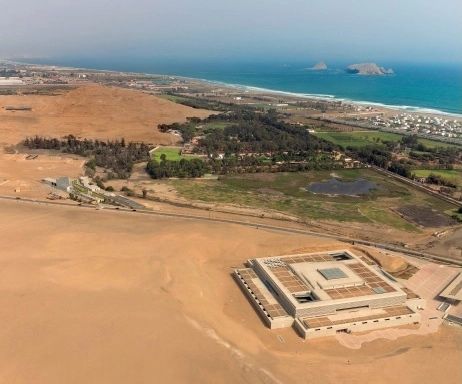
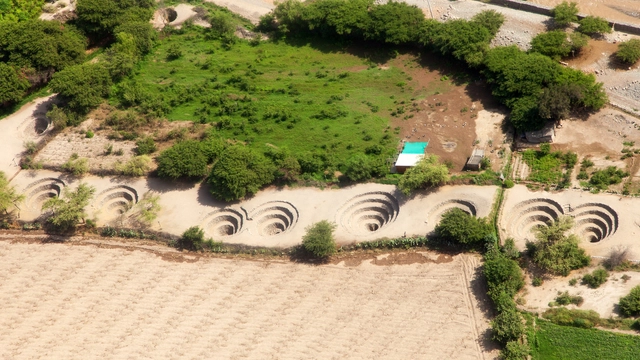
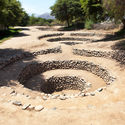
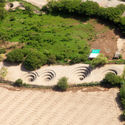
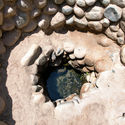
Set in the heart of one of the world's most arid deserts, the Nasca aqueducts form a hydraulic system that, for nearly two thousand years, has demonstrated advanced geological and hydrological knowledge. This system allows water to be sourced for both human consumption and agriculture, creating fertile oases in the desert. The Nasca Aqueducts represent a unique hydraulic system in the Americas, owing to their distinct design, construction technique, location, and function. They serve as an exceptional testament to the capacity of ancient societies to overcome adverse conditions, offering solutions that could be applied to the climate challenges of our time.
What could be more familiar to any human being than food? Food connects landscape with culture, emotion, history, and overall planetary health. Sharing food and cooking for others is a fundamental act of care and a way of expressing generosity and hospitality, reminding us of how much we depend on one another. Food allows us to think simply about the complex relationships of our habitat, providing a common ground for people to connect just as they would in their own homes: around the kitchen table.
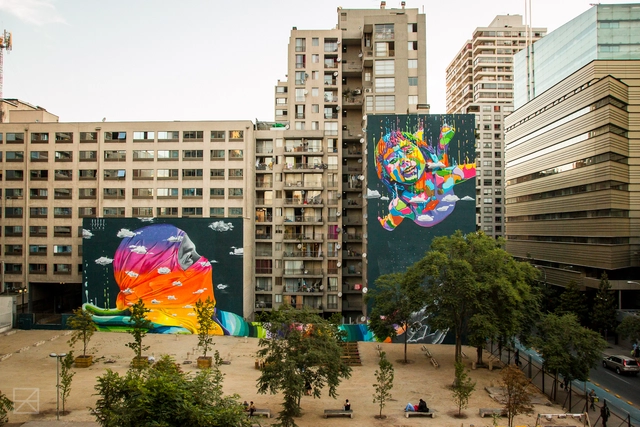
How do we experience cities? What moves us? What do we remember about them? Monuments? Museums? Are we merely tourists, or do we live the city as an experience? Art is part of the urban fabric—a way to create new paths, lifestyles, and reference points that lead us to identify the unique spaces and moments experienced within it. Art is not confined to museums; it is in the streets, on the walls, and on the buildings that shape the city. Public space dialogues with artistic expression, engaging people, neighborhoods, cities, and an interconnected world to create new modes of community within a culture that is attentive to and understands our contexts and ecosystems.
Although the construction industry has spent years making strides in new fields such as biomaterials, nanotechnology, and 3D printing, it simultaneously remains one of the slowest to adopt new technology. Many of these innovations never progress past the experimental stage. How can this situation be reversed?
As in previous years, Chile's Ministry of Cultures, Arts, and Heritage has organized the exhibition of Testimonial Spaces, the country's most recent national pavilion presented at the 2021 Venice Biennale, in the lobby of the Museum of Contemporary Art in Parque Forestal (Santiago), making it accessible to the local public.
Although the ministry's open call for each biennale typically focuses on the design of a pavilion, the brief specifies that the selected curator will be responsible for developing both a curatorial concept and an architectural proposal. Certainly, in a contemporary context, the notion of a pavilion is a highly malleable category, making the distinction established in the guidelines particularly intriguing: while a curatorial concept should clearly be associated with some relevant architectural framework, it is not necessarily an architectural proposal in and of itself.
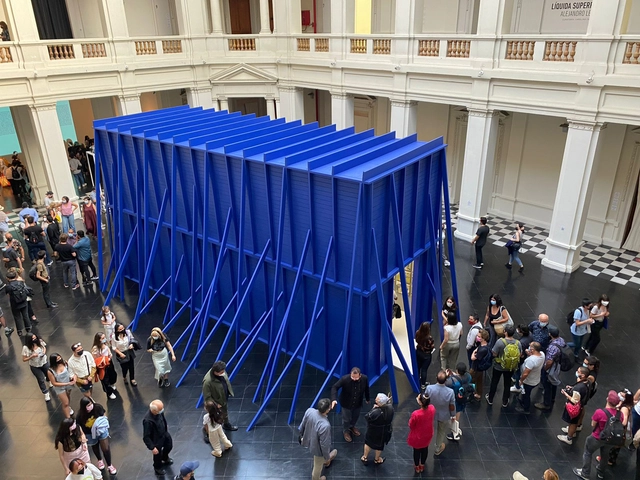
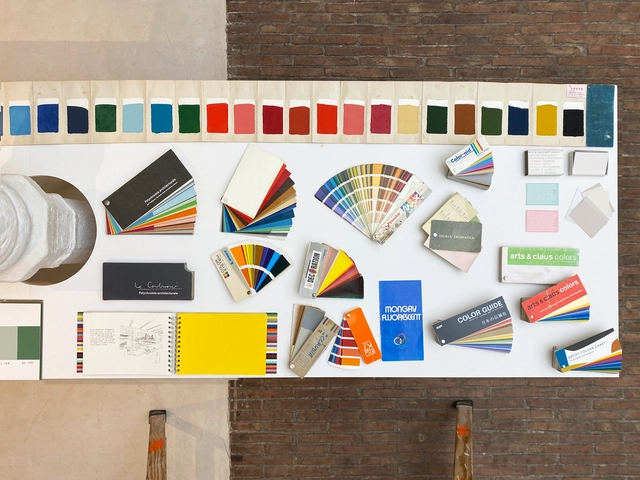
“What's color? for architects and designers” is an exhibition by the artist Claudia Valsells. Curated by Julia Ruiz-Cabello and Gonzalo de Benito, the exhibition brings together testimonials from architecture practices on the use of color in their projects. It took place from December 10 to 14, 2021, at the Pavilion space of the architecture firm PLANTEA, in Madrid. The exhibition design, mirroring the studio where the artist has worked for more than two decades to create her own color chart, shapes the space.
As part of the cultural agenda for Art Week 2022 in Mexico City, guadalajara90210—in collaboration with Michan Architecture and Luis Young—presented the exhibition "YACIMIENTOS," featuring works by 53 artists and architects. The venue, a building currently under reconstruction in the Condesa neighborhood, hosted the exhibition from February 12 to 20.
”(2).jpg?1644348981&format=webp&width=640&height=580)
”(1).jpg?1644349308 "Brian Thoreen, “Red Ribbon Circle (2022).” Image © Alejandro Ramírez")
”(3).jpg?1644349027 "Manuel Bañó, “OBJ-02 (2022).” Image © Alejandro Ramírez")

”.jpg?1644348676 "Frida Escobedo, “Creek Bench (2021).” Image © Alejandro Ramírez")
”(2).jpg?1644348981)