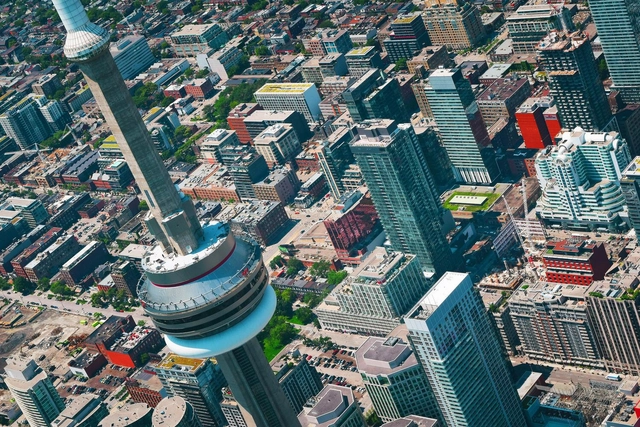
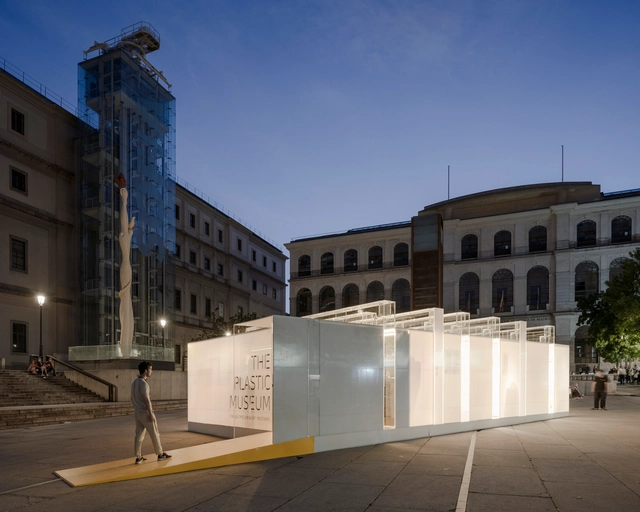
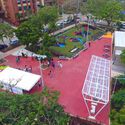
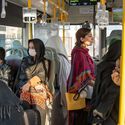
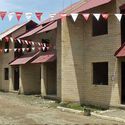
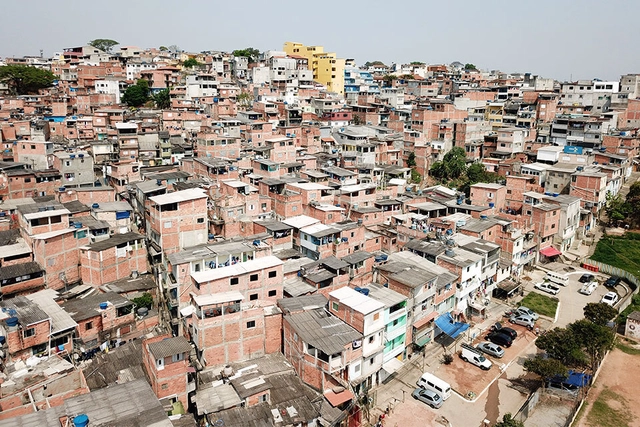
Brazil has steadily advanced the implementation of public-private partnership initiatives. The Radar PPP platform currently monitors more than 3,400 PPP and concession projects across various sectors, compared to just 625 in 2015. While public-private partnerships typically bring to mind PPP and concession contracts for public services, they are not limited to these models. A prime example is the Business Improvement District, or simply BID.
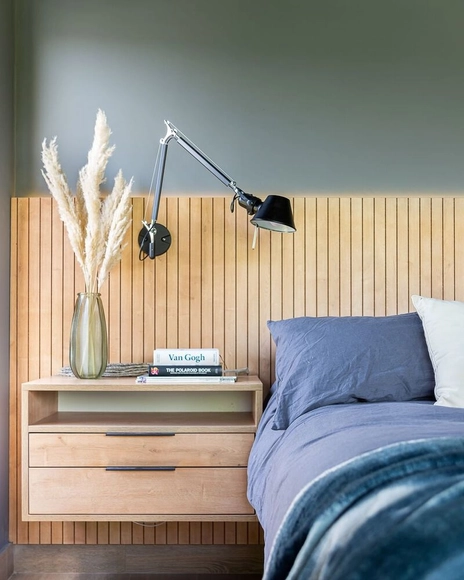
Tablero Vesto Roble Rústico con técnica de ranurado, conseguida mediante router. Posteriormente se maquillan las ranuras para disimular el sustrato MDP del tablero. Diseño de Vardeco. Image Cortesía de Arauco
There are various ways to accentuate and breathe life into a space, from adding furniture or a decorative piece to painting a wall a bold color. Yet, when it comes to elevating an interior simply, quickly, and with added texture, depth, and warmth, a grooved wood-look finish emerges as a compelling, cutting-edge solution. Indeed, it has established itself as a major trend in contemporary furniture and interior wall design, even taking center stage at the renowned Salone del Mobile Milano 2022.
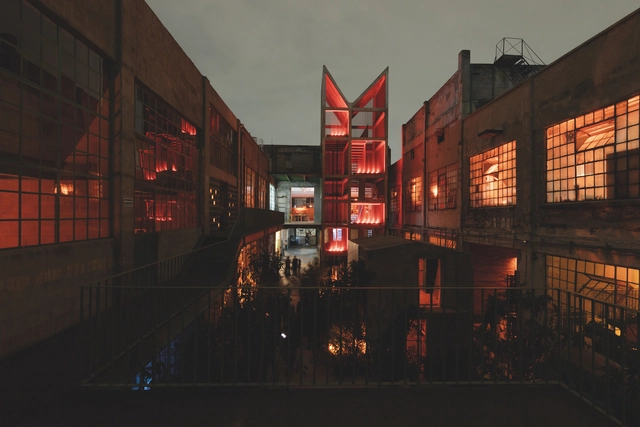
On September 23, LIGA celebrated 10 years of supporting and empowering young Latin American architects with a dinner held at its main space in Mexico City. LIGA is housed within a former textile factory (La Laguna) that originally opened in the first decade of the 19th century. Now transformed into a collaborative multi-use space designed by the architecture firm PRODUCTORA, the venue hosts independent Mexican initiatives ranging from a coffee shop and an architecture studio to a ceramics workshop.
https://www.archdaily.com/1131921/sombra-creates-a-light-installation-to-celebrate-10-years-of-liga-in-mexico-cityArchDaily Team
While the construction industry has been advancing for years in emerging fields like nanotechnology and 3D printing, it remains one of the most lagging in terms of technology adoption. Many innovations never progress past the experimental stage, and while there is a constant push to reverse this trend, we are simultaneously faced with a troubling fact: the construction industry is one of the world's largest producers of pollutants and waste.
The Mayor of Paris, Anne Hidalgo, has championed her plan to transform Paris into a "15-minute city." Photo by Pascal Weiland via Unsplash
History shows that when struck by crises and disasters, cities generally recover and emerge stronger and more resilient than before. The Great Chicago Fire famously gave rise to skyscrapers. Contagious disease outbreaks contributed to public health policies and modern sanitation practices. The devastation of World War II catalyzed unprecedented investments in housing and infrastructure.
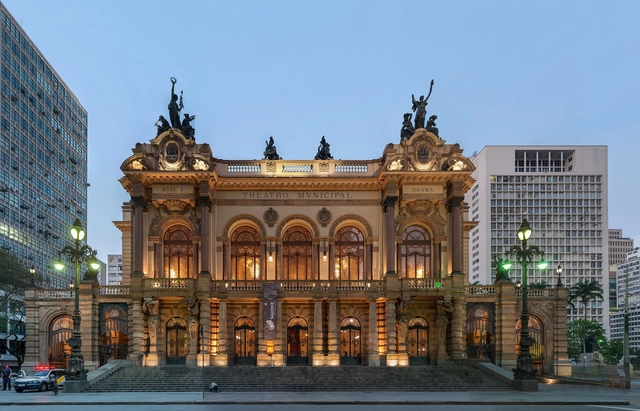
Theatro Municipal de São Paulo. Photo: By Wilfredor, CC0, via Wikimedia Commons
The centennial celebrations of the Modern Art Week have already begun. Over the past week, articles and press coverage on the subject have filled various media outlets. After all, one hundred years ago, a group of artists gathered in pursuit of an art that looked to the future and stood against the past, proposing a new way of exploring Brazilian identity in music, poetry, painting, and dance. To understand how the event shaped new directions in Brazilian culture and remains relevant today, we have compiled a guide to several spaces that celebrate the Week of '22!
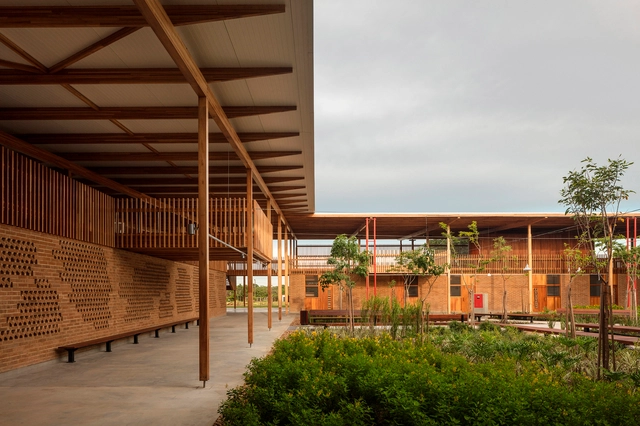
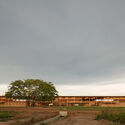
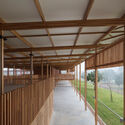
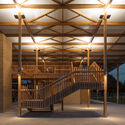
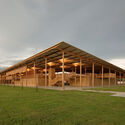
The award-winning Children Village project in Canuanã was developed by architecture firms Aleph Zero and Rosenbaum between 2016 and 2017. Located at a rural school that has been operating for nearly 40 years in Formoso do Araguaia, Tocantins, the complex serves approximately 842 boarding students. The architects were commissioned to redesign the accommodation—which consists of two identical villages, one for girls and one for boys, each designed for 270 students—and to devise an architectural solution to reorganize the students' living spaces within the school grounds.
https://www.archdaily.com/1132055/childrens-dwellings-in-canuana-an-encounter-between-vernacular-architecture-and-industrial-technologiesAlexandre Kok, Caio França, Gabriela Rudge, Lara Girardi, Lia Soares, Maria Clara Calixto, Marina Liesegang, Marina Saboya, Pedro Trama, Tamara Silberfeld e Valentina Kacelnik
Imagem: Jessely Cardoso/Prefeitura de São Paulo. Image Cortesia de Caos Planejado
As one of the most prominent economic topics on the agenda in several countries before the onset of the coronavirus pandemic in early 2020, legislation restricting the supply of new real estate in municipalities has negative impacts on both local growth and the population, whose options for housing, job access, and mobility are severely affected. Adopted by most Brazilian cities, zoning regulations—which establish criteria for land use, the size of developments that can be built in specific locations, and environmental preservation zones—also drive up property prices, as housing supply fails to keep pace with demand.
https://www.archdaily.com/1132042/zoning-restrictions-push-the-population-to-peripheral-areasSomos Cidade
The FIFA World Cup is one of the world's largest events, bringing together fans of all nationalities. Having previously been hosted across various continents, this year's tournament will take place in Qatar, a country on the Arabian Peninsula with a population of about 2.7 million people, the majority of whom are Muslim. Alongside the host nation, 31 other countries will compete for the title of world champion.
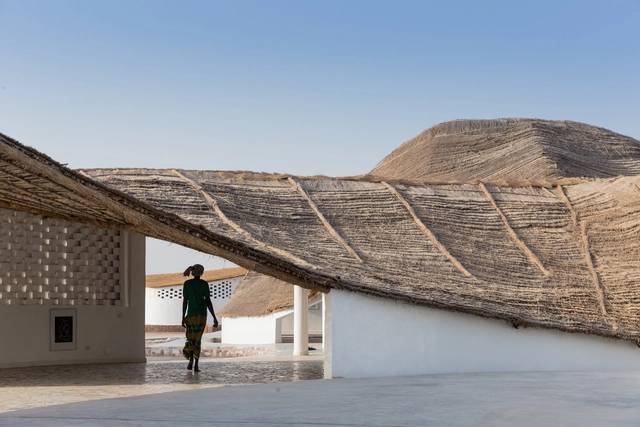
Beyond its status as a sporting event, the World Cup is also an opportunity to observe, learn about, and experience other cultures—especially for the host country. Divided into eight different groups, the first to play, from Groups A and B, will be Qatar, Ecuador, England, Iran, Senegal, the Netherlands, the United States, and Wales. Below, explore some examples of architecture from these countries.
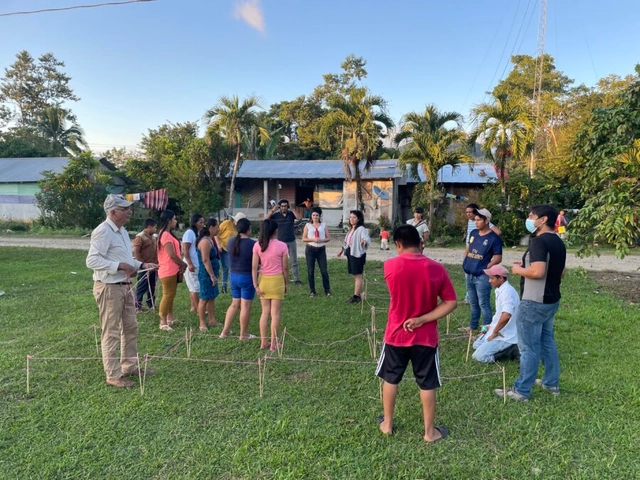
A few days ago, I had the opportunity to speak with Emilio Hernández from the Centro de Imaginación Oaxaca, one of the participants inCocina CoLaboratorio. Our conversation touched upon topics such as collective participation, the social management of habitat, altruism, racism, and many other social issues. During our chat, we addressed the nuances, highlights, and shadows surrounding welfare dependency and “aid” to communities, as well as how counterproductive and violent it can be to act from a position of privilege and top-down hierarchy.
https://www.archdaily.com/1132044/cocina-colaboratorio-social-habitat-management-in-chiapasValeria Rubio García
Founded in 2013 in São Paulo, this young transdisciplinary practice focuses on architecture, urbanism, and fine arts. Influenced by visual arts, music, theater, and everyday urban life, the firm translates these lived experiences into projects across diverse scales, briefs, and contexts.
Named after a term with multiple meanings in Portuguese—in architecture, *vão* represents the void or span between structural elements, a space to be occupied and activated by social, political, artistic, and various other interactions—the firm was founded by Anna Juni, Enk te Winkel, and Gustavo Delonero. Throughout its nearly ten-year history, it has maintained a small team, alongside occasional collaborations with friends and colleagues on specific projects.
We often see futuristic, high-tech homes or workspaces in sci-fi films: from Theodore’s apartment in Her (pictured above), where lights turn on automatically upon his arrival without a single touch, to Tony Stark in Iron Man commanding his system to connect to the network and brew coffee, or Tom Cruise in Mission: Impossible controlling lights and televisions with his voice. With the rapid evolution of technology, smart homes have turned these sci-fi visions into reality. At the forefront of this evolution is the century-old German brand Gira, whose smart home systems bring these once-cinematic concepts into everyday life.
While advanced technology promises convenience, it often introduces complexity and steep learning curves. Gira addresses this by bridging the gap between technology and user needs, designing highly intuitive, easy-to-use products that deliver ultimate comfort. With a 117-year legacy—evolving from the original toggle switch to today’s intelligent home systems and touchscreens—Gira has consistently embraced innovation. By aligning technological capability with human experience, the company has established itself as a global benchmark in smart home technology and electrical installations, operating in over 40 countries and earning numerous accolades.
In collaboration with the publisher gestalten, we have recently published our first book: The ArchDaily Guide to Good Architecture. This milestone was an opportunity to look back at the more than 40,000 projects curated over the last 15 years, drawing out their contributions to answer an ambitious question: What is good architecture?
We wanted you—our dear readers—to also confront this question through an open call for opinions. After reading through a vast number of responses from construction professionals, students, and architecture enthusiasts alike, it was surprising to find a widespread consensus: above all, good architecture does not forget why and for whom it exists. Read some of the key responses below.
I remember clearly when I began to question the types of images and architecture we consumed and debated at university, contrasting them with the actual built environment of the city I live in (CDMX). This is a type of architecture that seeks to delineate certain biased, curated aesthetic principles, disseminated through academia, digital platforms, magazines, books, and real estate developers, among others.
Considering focal points, biomes, and resting spaces, creating rhythm alongside architecture, and facilitating the maintenance and enjoyment of spaces are just some of the challenges of landscape design. Today, rather than serving merely as an element of spatial composition, the relationship between landscape architecture and the built environment is increasingly valued as we understand how the presence of nature benefits the health and comfort of humans and other species. Consequently, thinking about and designing the landscape has become an increasingly complex and valued endeavor.
Against the backdrop of a global culture steeped in consumerism, every aspect of our lives is being consumed. As the physical medium of consumer behavior, commercial architecture is undeniably a vital link in this consumer society. "Insta-worthy" spaces—embodying trends, spectacle, and the culture of the gaze—are a direct manifestation of this influence. Yet, looking back at architectural history, we must also acknowledge that the rise of consumerism has largely driven architectural development. The influx of capital and the keen interest of real estate developers have, in some ways, granted architects more opportunities to realize their creative ideals within commercial projects.
Whether in cities or rural areas, "consumer architecture" functioning as public space often serves as the most prominent gathering point. To explore how to create comfortable, inviting commercial spaces, this article presents a curated collection of the best "consumer architecture" of 2021, offering design inspiration for your next project.
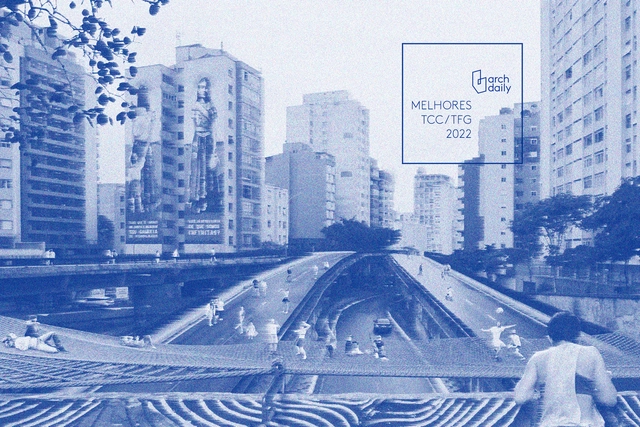
Montage created based on the work "Intentos por São Paulo: Ensaio Minhocão" by Julia Getschko
Academia has much to contribute to the fields of architecture and urbanism. Inspiring visions emerge through its research and proposals, sparking critical debates on how we perceive, occupy, and design the built environment. With this in mind, we hold an annual call for final graduation projects open to all Portuguese-speaking countries to showcase a panorama of themes and projects that we believe stood out over the past year.
Looking back at 2021, two pivotal developments exerted a transformative influence on the architectural design community.
The first was the passing of High-Tech pioneer Richard Rogers (Richard Rogers). German art historian Hans Belting once remarked: "When people call for a new art, it is architecture and design that step forward as a symbol of a new society, carrying the hope of changing living space. And as people envision changes to their living space, they themselves change as well." Rogers was among the first to step forward at the close of the 20th century. His bold, rebellious, and iconoclastic design approach unlocked a new paradigm for the urban landscape. Having practiced continuously until his retirement last year, his career was a constant testament to the critical importance of design direction. In turn, one cannot help but ask: as the giants of our era gradually depart, are we prepared to shoulder the true mission of architecture?
The second was the controversy surrounding architect Tao Lei's design on the television show Dream Home. A 1.32-million-yuan red-brick house designed for an elderly client was met with widespread online backlash, laying bare the deep friction between architectural aesthetics and daily life. It prompts us to ask: Is the aesthetic pursued by architects truly aligned with the expectations of everyday people? Can architectural design reshape public aesthetic perception? Does social class dictate design outcomes? And should a project be dismissed based on sensationalized, fragmented headlines by those who have never actually experienced the space?
"Despair, like hope, is but vanity." ArchDaily’s keyword for this year is: Cultivating internal strength and external reach.Internally (Platform Responsibility): Providing tools, inspiration, and knowledge gathered from all directions to continuously overcome, triumph, and transform, building a broader "design universe." Externally (Communication Responsibility): Stepping outside the architectural "comfort zone" to center public needs, delivering clearer insights and evidence-based processes, and crafting more creative architectural content.
https://www.archdaily.com/1132314/2022-cultivating-inside-and-out-archdailys-new-years-resolution韩爽 - HAN Shuang
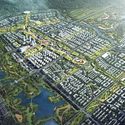
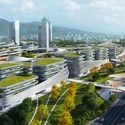
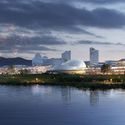
The International Solicitation for the Urban Design of the Center Area of Western China (Chongqing) Science City has officially launched! We warmly invite outstanding design teams from around the world to participate. International Solicitation for Urban Design of the Center Area of Western China (Chongqing) Science City is now open for pre-qualification! Design teams from home and abroad are welcome to participate.
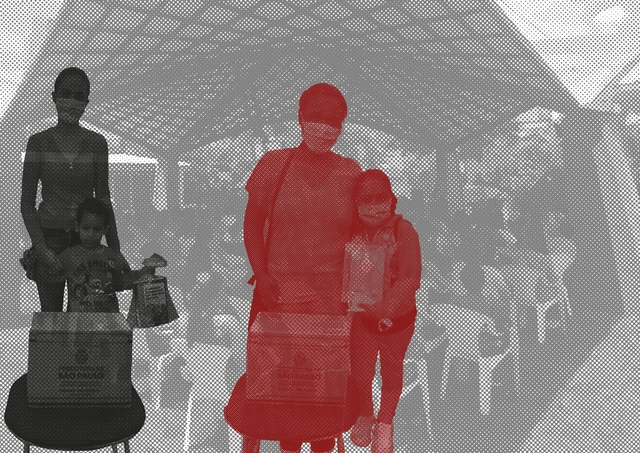
Distribution of food baskets. Collage created from images provided by MTST-Leste 1's Facebook. Own authorship
With the coronavirus pandemic, the issue of housing has taken on even greater urgency. What was already a highly relevant concern in low-income territories—where acquiring homeownership means workers are effectively recognized as integral parts of the city—gained magnitude, since the lack of minimum living conditions can be a matter of life and death, making access to adequate, well-located housing with proper infrastructure more essential than ever.
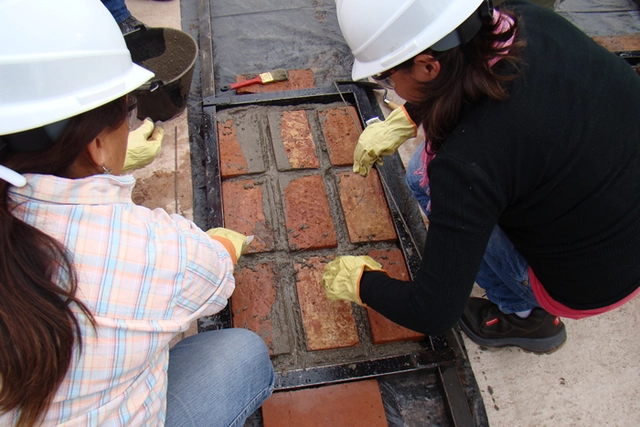
Sistema BENO: un sistema constructivo conformado por placas prefabricadas de bovedilla armada que incluyen la instalación eléctrica, muro y estructura de hormigón armado. Image Cortesía de Centro Experimental de la Vivienda Económica-AVE-CEVE-CONICET
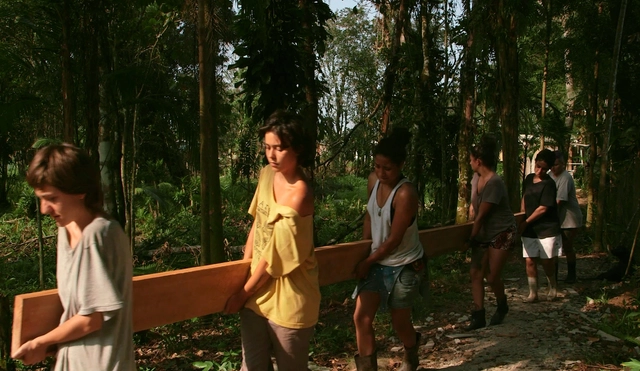
All-female volunteer construction effort (mutirão) for the home of Derick's mothers. Via Vimeo. Public Domain
Architecture and the spaces that surround us, much like art, fashion, food, and so many other aspects that support the physical and social construction of a society, play an essential role in maintaining the moral and cultural values established within it. Among built spaces, housing has perhaps played the primary role in producing and reproducing power relations both within and beyond the private sphere.
From a gender and sexuality perspective, it is within the domestic environment that we most explicitly observe the use of architecture as a moral vector, aiding in the construction of specific roles for female and male figures, and in establishing the nuclear family as the foundation of Western society.
Equipo Pilares, puntales y vigas. Image Cortesía de Colegio de Arquitectos del Perú - Regional Lima
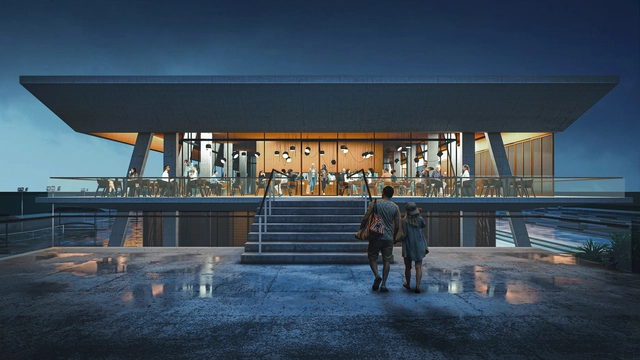
The awards ceremony for the Preliminary Design Competition for the expansion of the Country Club Villa – Chorrillos branch in Lima has taken place. The Lima Region of the Peruvian Association of Architects was invited by the institution to organize the competition, the first to be held following the guidelines of the National Competition Regulations. With 489 registered proposals, 48 formal submissions, 3 finalists, and 2 honorable mentions, the competition sought to provide the institution with design proposals for its new gym, restaurant, and service areas, in line with the club's requirements and high standards of architectural quality.
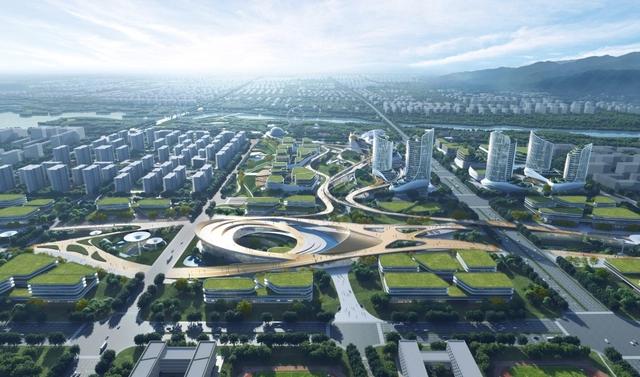
The International Competition for the Urban Design of the Core Area of Changping New Town East Zone was hosted by the People's Government of Changping District, Beijing, and the Beijing Municipal Commission of Planning and Natural Resources. Located on the east bank of the Dongsha River in Changping District, Beijing, the project encompasses a 9.1-square-kilometer planning study and ecological development plan, alongside a 1.5-square-kilometer urban design for the core area. Situated north of Beijing's city center, along the canal and at the foot of Mangshan Mountain, the East Zone of Changping New Town lies on a critical axis for northern Beijing's industrial expansion and ecological network integration. In addition to accommodating the specialized industrial clusters from southern Changping, the East Zone introduces the planning concept of "Green Spectrum," leveraging urban functions and spatial-environmental resources to maximize the synergy between ecological livability and industrial positioning.