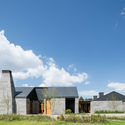
The Chilean firm of Jaime Larraín and Osvaldo Larraín is notable—among many other things—for treating facades as a unified compositional element. The architects' work includes completed buildings in the cities of Viña del Mar and Santiago, which are distinguished by the unique plastic composition of their street fronts, as well as their contribution to the urban image of their respective settings.
Their projects explore the creation of rhythm, the use of color, and repetition as compositional principles, standing out for an urban design approach that—informed by these considerations—is most clearly expressed in their collective housing projects.
Late last November, we published the winners of the second call for graduation projects in Colombia—also known as undergraduate theses—for which we received 70 submissions from 14 cities and 29 universities. Ultimately, nine projects passed the three evaluation stages, standing out for addressing current pressing issues, developing in-depth research analyses, and posing challenges for both urban and rural contexts, just as in 2016.
In this feature, we take an in-depth look at Boundary and Architecture: Relationship Between Interior and Exterior Space, a proposal developed by John Pineda Torres, Juan Salamanca Carrillo, Javier Pachón Romero, and Nathalia Sánchez Rojas, all graduates of the Universidad Piloto de Colombia.
Cuadernos del Sol, illustrations by Enrique Flores
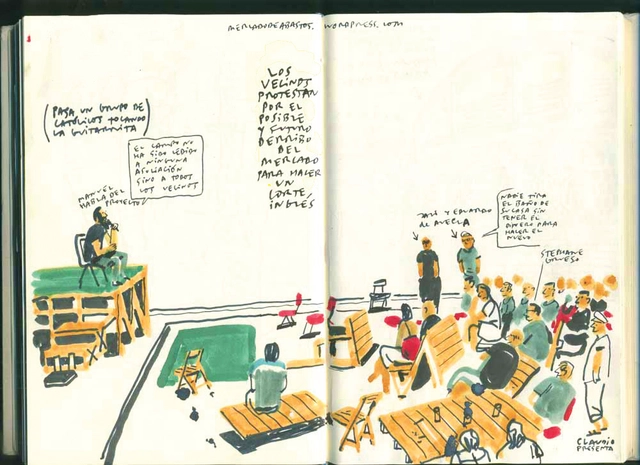
El Campo de Cebada has become a benchmark for self-management and the collective construction of public spaces, closely linked to the Spanish *acampadas* of 2011. In this article, the architecture collective Zuloark reflects on the key principles that made the experiment work.
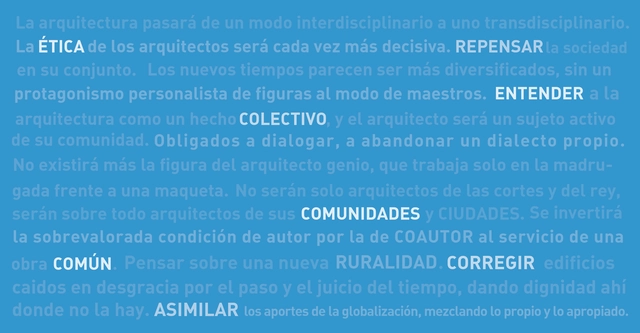
Every now and then, it is inevitable to pause, set everything aside, and simply think about the future. This necessary imaginative exercise—performed countless times throughout the history of fiction—allows us, among other things, to recognize where we stand and understand where we are going. As such, it becomes a relevant and compelling practice to apply to our own transformative and visionary discipline. We proposed this challenge to several Chilean architects, inviting them to speculate not just on the near future—already difficult to navigate in today's liquid modernity—but on a more distant horizon, framed by the question: what will be the role of architects in Chile over the next 25 years?
Their opinions and commentary, emphasizing different facets of architectural practice, share several common threads by connecting current issues and questions relevant to the 21st-century city: the human dimension—the ethical, the collective, the common—and the urban realm, in their relationships and forms of organization.
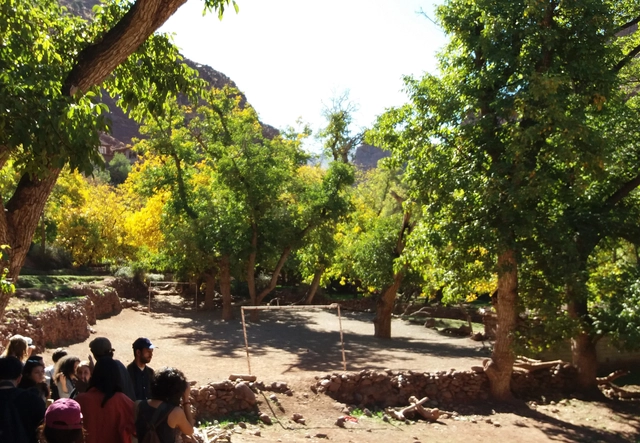
Campo de Magadoz . Image Cortesía de Colectivo ARKRIT
Architects Rafael Pina and Nicolás Maruri, from the ARKRIT Collective, reflect on the soccer fields nestled within the adobe and rammed earth settlements of Morocco's High Atlas. Having barely altered the territory, these spaces integrate and merge into the topography through minimal modifications and actions for a single, simple purpose: to play.
Construction requires mobilizing material resources and human labor, inevitably transforming the territory. Building with what is readily available is a stance that can be driven by ethics, but also by necessity. In either case, the outcome is usually economical and fitting. Resource consumption is kept to a minimum, and adaptation to the environment becomes a natural consequence.
Today, it is estimated that in Brazil alone, 30 million tons of waste are deposited annually in landfills, with São Paulo alone sending 14,000 tons of solid waste to these sites every day. [1] Unsurprisingly, landfills occupy vast tracts of land that continue to expand, posing a critical challenge for nearly every city. But what can be done once landfills reach capacity and close? Is it possible to breathe new life into these mountains of waste? What are the possibilities and necessary precautions?
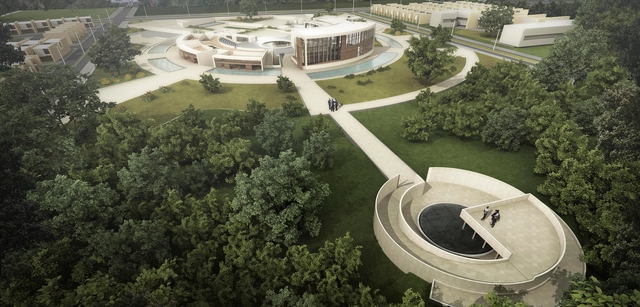
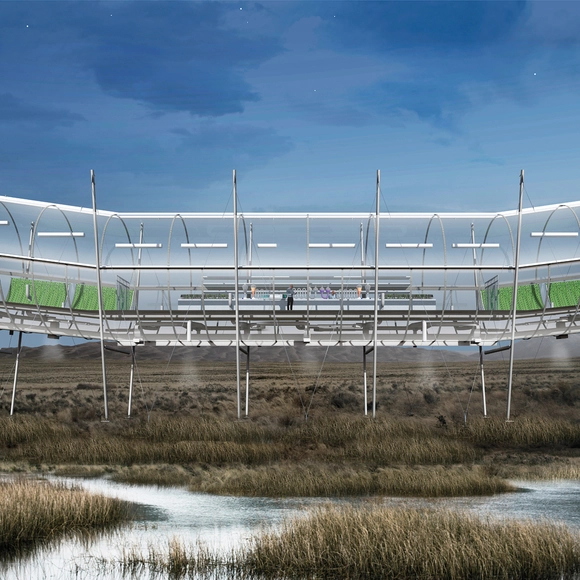
The team comprising Francesca Fuentes, Juan Andrés Hoffmann, and Kevin Gómez has been awarded an honorable mention in the XXXII CAP Chile Competition. Designed for the Tres Puentes Wetland in Punta Arenas, the project, known as "Flores del Humedal" (Wetland Flowers), seeks to generate "a physical link between the isolated territory and society, in order to facilitate interaction, knowledge, research, and conservation," according to the authors.
The competition jury explained that it is a "project that took steel structure to a highly creative level and challenged the program, proposing a new way of observing nature. At the same time, it generates a profound relationship with the territory for wetland observation."
Licensed Under CC0 Public Domain. Image via Pxhere
Writing for the Fundación Arquia Blog, architect Enrique Parra outlines the main questions asked by first-year architecture students in Spain, where, despite the ongoing crisis in the profession, it remains one of the most sought-after degrees. This article offers a chance to compare these expectations with the realities and aspirations of students in different countries.
https://www.archdaily.com/1113791/questions-an-architecture-student-in-spain-will-ask-youEnrique Parra
Videos
Experience #1. Image Cortesia de Guto Requena
The First Industrial Revolution took place in the United Kingdom in the late 18th century with the mechanization of the textile industry. Over the following decades, instead of making things solely by hand, the use of machines spread across the globe.
The Second Industrial Revolution began in the United States in the early 20th century with the assembly line, ushering in the so-called Era of Mass Production.
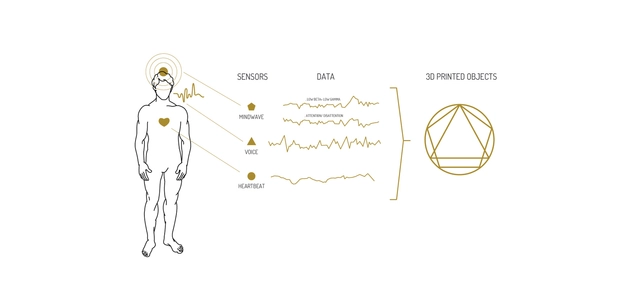
Today, we are living through a new industrial revolution, driven by digital culture and technology, with 3D printers serving as one of its key catalysts. And believe it or not, you will eventually own one. As they become increasingly affordable, these machines are capable of printing three-dimensional objects. The most common technique involves depositing and bonding, layer by layer, minute particles of materials such as plastic, ceramic, glass, or metal.
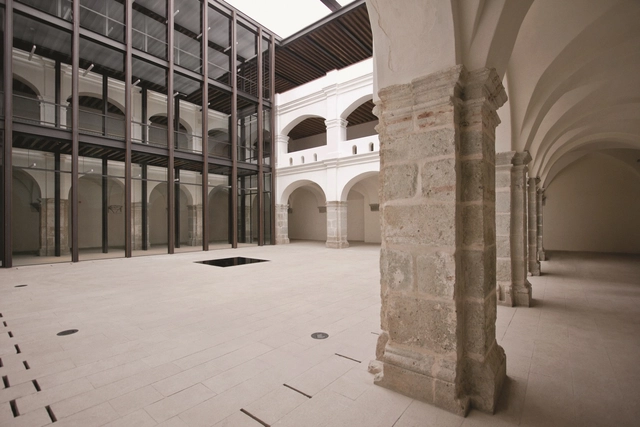
The 16th-century Monastery of Santo Domingo “San Pablo”—located in downtown Oaxaca between Independencia and Hidalgo streets—was recently transformed into the San Pablo Academic and Cultural Center (2012) through a series of interventions by the architecture firm led by Mauricio Rocha + Gabriela Carrillo.
In 2011, an improvement plan for the Historic Center of Mexico City for the years 2011–2016 was presented to UNESCO. Conceived as a joint initiative between civil society, private investment, and the government, the project led to the revitalization of a large part of the historic center and the social and physical recovery of many of the neighborhood's properties.
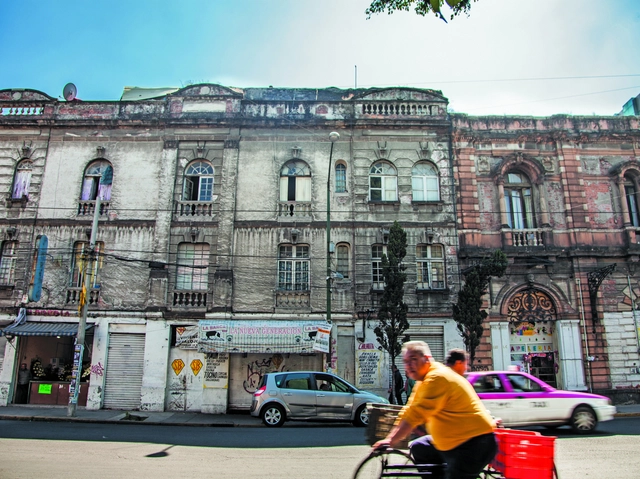
Mexico City's architectural legacy extends far beyond its Historic Center, and while the initial plan greatly benefited this area, many buildings both inside and outside Colonia Centro remain untouched. Following the 2017 earthquake, damaged buildings joined the growing list of properties already abandoned, vacant, or severely deteriorated throughout the city.
Among these, we highlight those whose rehabilitation and subsequent adaptive reuse would have the greatest impact on their surroundings, given their symbolic, architectural, and physical value.
Spain is the European country with the most "Good Practices" recognized by the URBACT program. In total, 17 good practices have been recognized across 15 cities and municipalities throughout Spain. The themes addressed by these municipalities are highly diverse, ranging from the issues chosen for intervention to the methods of implementation and the solutions proposed.
The European URBACT program was established to foster sustainable urban development and urban innovation in municipalities across Europe. As such, any city or municipality, regardless of its size, can participate in the program. Currently, 550 cities from 29 different countries and 7,000 active local stakeholders are participating.
https://www.archdaily.com/1113728/spain-is-the-european-country-with-the-most-urbact-good-practices-in-its-citiesJavier García Librero
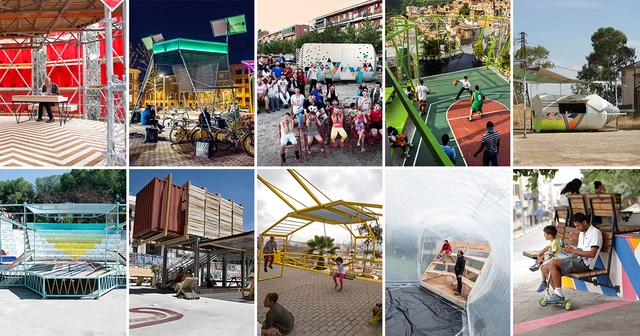
Since the installation of Speculator in 2008 —the year the Spanish real estate bubble burst— the Spanish multidisciplinary collective has been characterized by its collaborative practices, co-production processes, and civic management models. Over ten years, the numbers speak for themselves: 15 countries, 18 agreements, 29 institutions, 43 grassroots organizations, and 96 projects, including Campo de Cebada in Madrid and the La Y Cultural Hub in Caracas (Venezuela), as part of the government project Espacios de Paz.
TXP explains their methodology: "We start with a preliminary diagnosis that allows us to understand the keys, codes, and particularities of each process. We then define a context for collaborative design where the proposal is prototyped based on collective interests."
"In our practice, we propose a dynamic combination of scopes that tailors the project based on available parameters, allowing us to define a consensus-driven model that responds resiliently. We establish frameworks for collective construction that foster learning environments, serving as tools for civic appropriation and empowerment. Finally, we design management models that address the specific needs of each case, establishing protocols for use and maintenance," they add.
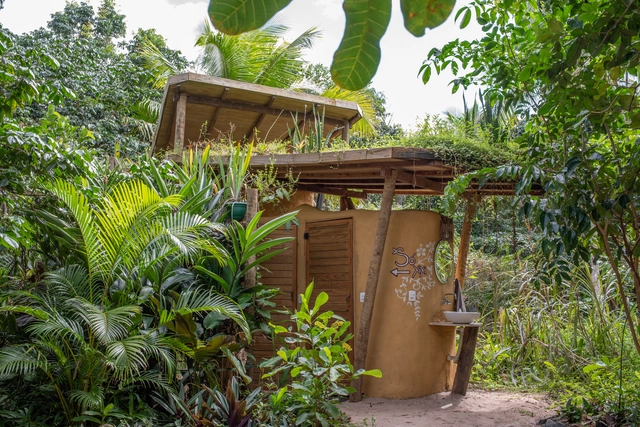
The dry toilet performs all the functions of a conventional toilet without using water, while also producing resources that can be used to fertilize crops and agroforestry projects. With various construction models available, this social technology is far more than just an alternative sanitation system. When approached as a solution within our closed-loop reality, it offers an answer to various public sanitation issues, as this single technology prevents both soil and water contamination.
Operating on the basic principle of using solar heat to raise the temperature inside the waste receptacle—thereby eliminating pathogens and producing fertilizer—ecological sanitation models are highly adaptable. They improve the environmental performance of homes and public spaces, successfully meet demands based on usage, and are easy to construct and maintain.
Today, we launch a series of publications showcasing open-access theses and dissertations that address issues relevant to Architecture and Urbanism. We recognized the need to share the remarkable academic output of our universities—which often goes unrecognized—with the widest possible audience.
In this first edition, we present the work of architect Jorge Isaac Perén Montero and his master's thesis entitled "Natural Ventilation and Lighting in the Work of João Filgueiras Lima, Lelé: Studies of the Sarah Kubitschek Network Hospitals in Fortaleza and Rio de Janeiro," advised by Professor Rosana Maria Caram at the São Carlos School of Engineering - EESC/USP.
https://www.archdaily.com/1113734/natural-ventilation-and-daylighting-in-the-work-of-joao-filgueiras-lima-lelePedro Vada
On this occasion, architect Jaime Nadal, representing the ARKRIT Collective, brings us an article that delves into the controversial demolition of the famed Casa Guzmán by architect Alejandro de la Sota—a highly praised, widely published, and iconic building of the architectural renaissance in Spain.
https://www.archdaily.com/1113722/the-demolished-guzman-house-by-alejandro-de-la-sotaJaime Nadal Irigüén
Throughout 2018, we selected thousands of projects for publication on our site, occasionally highlighting a few for their innovative techniques and materials, their integration with their context, or their community engagement. Working daily with editors in Brazil, the United States, Mexico, Chile, China, and Northern Ireland, and thanks to the extensive network we have forged with institutions worldwide, we have the tools to gain a much broader perspective on current architectural production—not only in Mexico, but globally.
Music is a vital connection to culture. While it serves as a source of entertainment, it is also a medium for communicating ideas and expressing artistic creativity. Through romantic, social, political, or historical themes, every song evokes memories and emotions.
Although there is an endless array of genres today compared to decades past, music still allows us to travel the world without leaving home through its lyrics and music videos. With this in mind, we have compiled a list of 10 songs that not only feature the names of cities in their titles, but also, through their lyrics and visual storytelling, capture the essence of each place—whether capitals or not—bringing to life the magic of their architecture and streets.