1. ArchDaily
  2. Articles

Articles

Bogota Through the Eyes of 10 Photographers

Subscriber Access | 

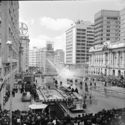
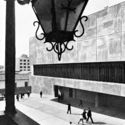
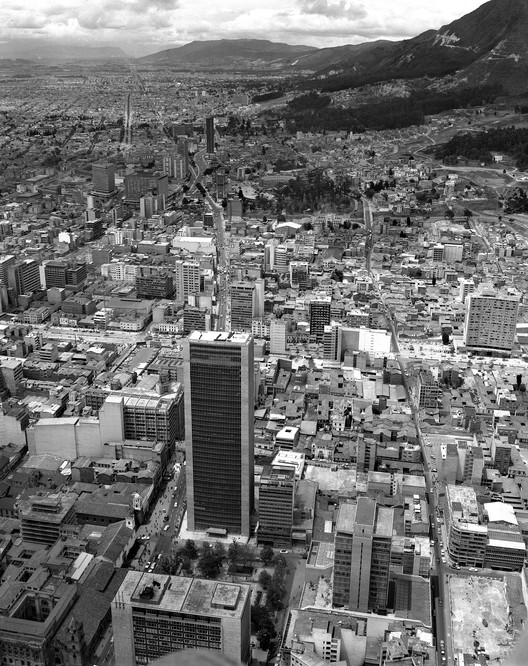
Driven by a shared interest in cities, architecture, and photography, the FORM+ research group at the Universitat Politècnica de Catalunya (UPC) and ArchDaily en Español established an editorial partnership in 2018 to showcase the research of FORM+, following the recent publication and exhibition Bogotá en la mirada de 10 fotógrafos held in the Colombian capital.

Through this collaboration, our Spanish-speaking readers discovered the work of pioneers of urban and architectural photography, drawing on research by curators María Pía Fontana (UdG), Miguel Mayorga (UPC), and Margarita Roa (USB, Cali), all members of the FORM+ group. "Photography is a form of intellectual and sensory mediation with the world, expanding our perceptual experience and renewing our visual sensitivity: an instrument to learn how to look, a resource for the creative imagination, and a means to recognize space and the built environment," the curators explained.

Below, we present the profiles of the 10 photographers featured in this editorial collaboration:

Bogota Through the Eyes of 10 Photographers - Imagem 1 de 4Bogota Through the Eyes of 10 Photographers - Imagem 2 de 4Bogota Through the Eyes of 10 Photographers - Imagem 3 de 4Bogota Through the Eyes of 10 Photographers - Imagem 4 de 4Bogota Through the Eyes of 10 Photographers - More Images+ 6

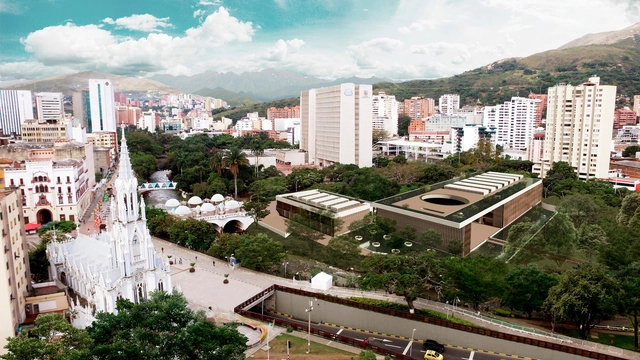
Paseo Bolívar Cultural Integration Center, a university proposal for downtown Cali

Subscriber Access | 

At the end of last November, we published the winners of the second call for graduation thesis projects in Colombia, which received 70 proposals from 14 cities and 29 universities. Ultimately, nine projects cleared all three evaluation stages, standing out for addressing pressing issues, presenting rigorous research, and proposing challenges for both urban and rural contexts, much like in 2016.

Here, we take an in-depth look at the Paseo Bolívar Cultural Integration Center, a proposal developed by Ángela Puerta Gaviria and Carolina Delgado Quintero, both graduates of the Universidad del Valle in Cali.

Brasília: A Social Architecture

Subscriber Access | 

Brasília needs no defense. Its reality asserts itself above any discourse. As Paulo Leminski wrote in his Catatau: Brasília – the joy of maps.

In these dark times for our country, criticism has resurfaced regarding the untimeliness, or mistake, of transferring the capital from Rio de Janeiro to the cerrado of the central plateau. It is a conformist argument with avant-garde pretensions, attempting to draw a parallel between the dismantling of Rio de Janeiro and the relocation of the capital.

The dust of memory makes us forget the conflicts and revolts surrounding the relocation of the capital from Bahia to Rio, which was also considered a mistake at the time. Along with the move to the new and beautiful setting of Guanabara Bay came the slave-based system and the naturalization of violence implicit in its organization. A parallel can indeed be drawn between Rio-Brasília and Bahia-Rio. Neither architecture nor a new geographical setting inherently changes the way a society organizes or governs itself.

How London proposes an inclusive city of opportunity for all

Subscriber Access | 

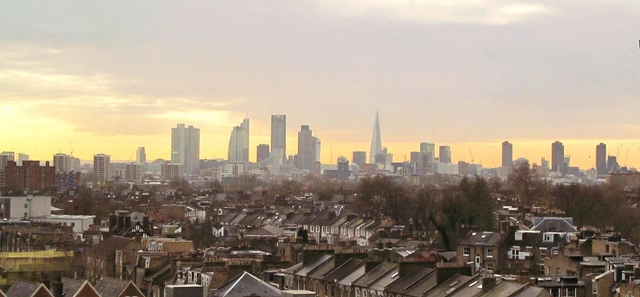
Much like in Brazil, British local authorities are also required to periodically publish and revise their master plans. Accordingly, London, under the leadership of Labour Mayor Sadiq Khan, recently released the draft of the new version of the London Plan for public consultation.

The plan's foundation is sustainable development (encompassing social, environmental, and economic advancement), followed by: principles of equal opportunity for Londoners; the reduction of income inequality; assessing climate change impacts; encouraging the use of the River Thames for passenger and freight transport; and identifying the resources available to implement the plan.

How London proposes an inclusive city of opportunity for all - Imagen 2 de 4

Two Colombian augmented reality works inhabit the public space of Los Angeles

Subscriber Access | 

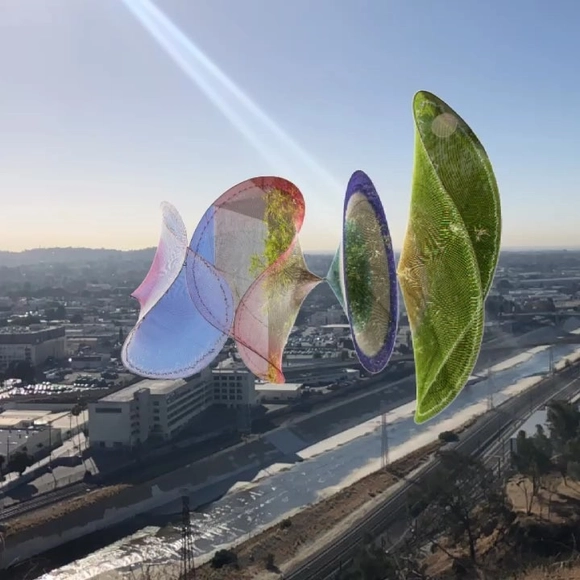
Colombian artists Carolina Caycedo and Gala Porras-Kim arrive in the United States with two augmented reality art installations. These projects seek to convey social, economic, and environmental issues through augmented reality.

These installations are part of the project “Defining line,” which leverages the reach of technology through a free mobile application, democratizing access and virtually bringing people closer to works of art.

A collective city is a feminist city

Subscriber Access | 

Fundación Arquia, along with architect Ana Asensio, invites us to reflect on how cities have been designed until recently—spaces of friction conceived without equal participation in decision-making, which consequently leads us to discuss feminism.

How to improve mobility without being 'anti-car'? The challenge of #CompleteStreets

Subscriber Access | 

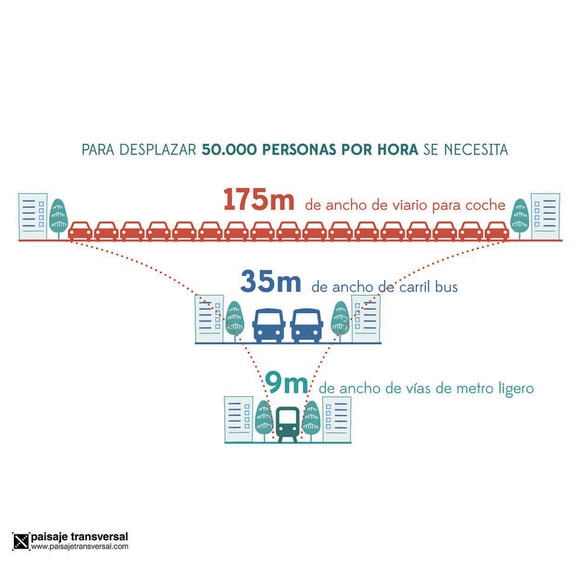
Numerous movements are demanding alternatives to current urban mobility—systems designed by and for vehicular traffic, burdened by an outdated planning mentality that centered everything around the car. Their reasons are equally diverse: improving public health, utilizing economic resources more rationally when commuting, lowering pollution levels (both noise and air), and even increasing efficiency by reducing travel times.

Yes, we are referring to the endless and inevitable daily traffic jams we have all experienced. 

If the benefits across all sectors are so clear, why haven't we implemented an alternative mobility system on our streets yet? There are several answers to this question, ranging from public resistance to change and a lack of prioritization in political agendas, to the simple fact that there is no universal, magic formula to solve every issue overnight everywhere. Once we overcome these barriers, we can begin by analyzing who currently uses the streets, who does not, and why.

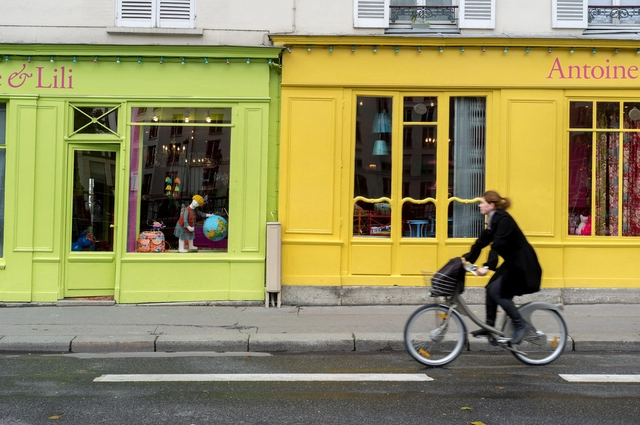
Paris, the (new) city of bicycles?

Subscriber Access | 

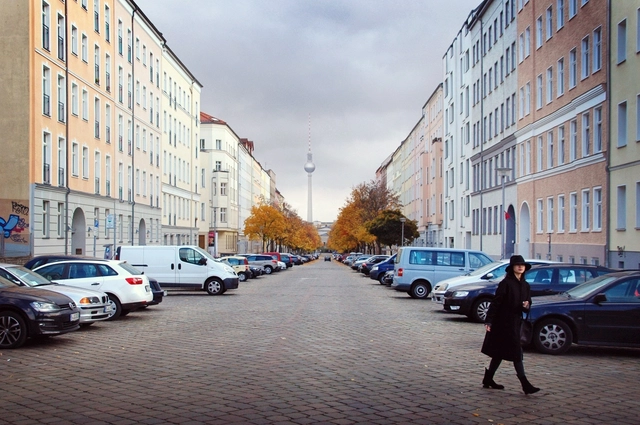
When one thinks of a “bicycle city,” Paris is certainly not the first to come to mind. Despite ongoing efforts to become more bike-friendly, the French capital is usually remembered for its efficient metro system and walkable streets. Since 2015, however, Paris has been tackling its latest challenge: becoming the “capital of urban cycling” by 2020.

Lack of accessibility is a problem, but urban sprawl is not the solution

Subscriber Access | 

Many families working long hours spend more than they can afford on housing and transportation, leaving few resources for other essentials such as food and healthcare. This is a serious problem—one that is, in part, a consequence of public policies that favor expensive housing and transportation options over more affordable alternatives.

Lack of accessibility is a problem, but urban sprawl is not the solution - 2 的图像 4

27% of public tenders require BIM methodology in Spain, according to the es.BIM commission

Subscriber Access | 

The es.BIM commission, responsible for implementing BIM methodology in Spain, has released the findings of the Fourth Report of the BIM Tender Observatory in Spain, following an analysis of public tender specifications that incorporate BIM requirements within their clauses to varying degrees.

On one hand, the report assesses the emergence of public tender documents with BIM requirements. On the other, it analyzes how BIM is integrated into these specifications through various indicators, such as the weighting of BIM in the evaluation criteria and the required levels of information.

María Behety Park, Second Place in the XXXII CAP Chile Competition

Subscriber Access | 

The team consisting of Francisca Méndez, Francisca Campos, and Lucero Arce (Universidad Mayor) has been awarded second place in the XXXII CAP Chile Competition. Designed for Punta Arenas, the project—known as María Behety Park—aims to “bring Chile to Punta Arenas,” an idea that seeks to introduce various plant species from across the country to the city as a tourist attraction, according to the authors.

The competition jury praised the project as one “that takes a bold stance through clear and powerful elements to generate wide spans, where the steel pieces shine to create three volumes that emerge like icebergs along the park. And it is precisely this clarity that demands a high level of structural resolution, which is perfectly adjustable.”

Ten tips for those who want to start working in social architecture

Subscriber Access | 

How to build a business in social architecture? CAU has compiled ten valuable tips for architects looking to work in one of the most rewarding areas of our field. 

These are the winning projects of the 2018 Arquitectura Caliente Competition awards

Subscriber Access | 

After evaluating 94 undergraduate student projects from 20 architecture schools across 8 regions of Chile, the jury of the 2018 Arquitectura Caliente Competition has announced the winning projects of its latest edition.

These projects span the entire country and encompass various typologies, ranging from urban planning to student housing, landscape designs, and emergency structural initiatives.

Below, we present the projects honored with regional distinctions:

Cloister Typology, one of the 10 winners of the 2018 Arquitectura Caliente Competition for thesis projects

Subscriber Access | 

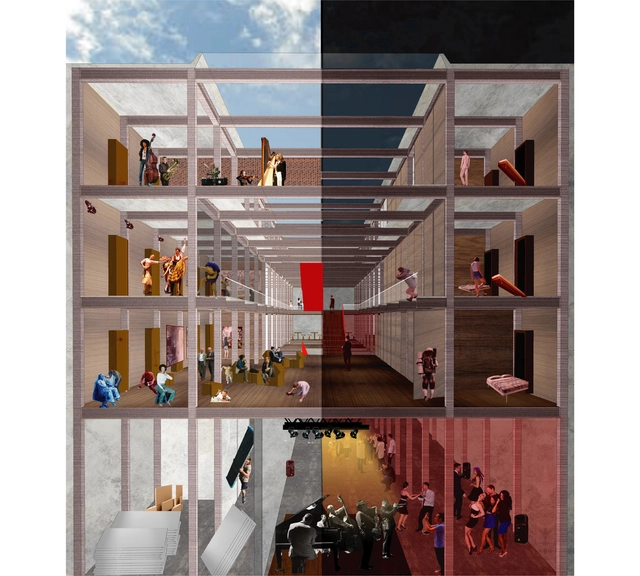
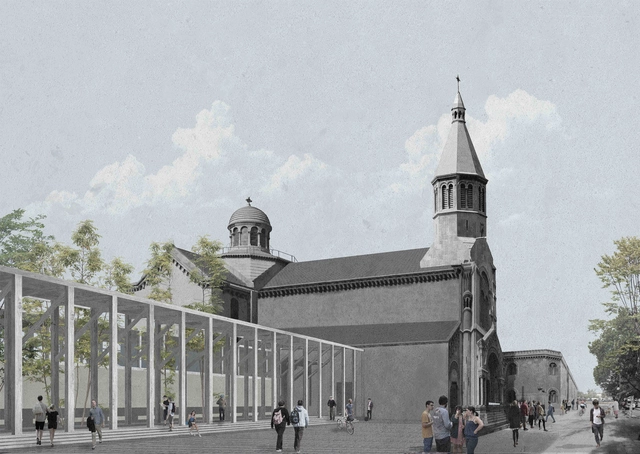
Designed by Camila Chaler, the project Cloister Typology as an Opportunity for Urban Reintegration was selected as one of the ten winners in the Thesis Project category of the 2018 Arquitectura Caliente Competition (CAC 2018), a Chilean awards program organized by Grupo Arquitectura Caliente and funded by the Ministry of Cultures, Arts, and Heritage.

Santiago's urban fabric is home to numerous religious orders. These properties (convents and monasteries) are currently facing obsolescence because they operate under outdated models. This is due to two main factors: their urban incongruity, which isolates them as inward-facing cloisters within the city, and their programmatic obsolescence relative to the scale of the buildings, driven by a decline in religious vocations.

Brazilian university leads the ranking of the best architecture programs in Latin America

Subscriber Access | 

On Wednesday, February 28, global consulting firm Quacquarelli Symonds (QS) released the 2018 edition of its established annual ranking of the world's top universities. In the field of architecture, the Massachusetts Institute of Technology (MIT) in the United States secured the top spot for the fourth consecutive year.

Looking specifically at Latin America, the list shows some changes compared to the previous year, with a Mexican university returning to the top three. Regarding Brazilian institutions, however, the same four from last year—USP, UFRJ, Unicamp, and UFRGS—remain on the list.

Discover the winning projects of the San Juan Judicial City competition, Argentina

Subscriber Access | 

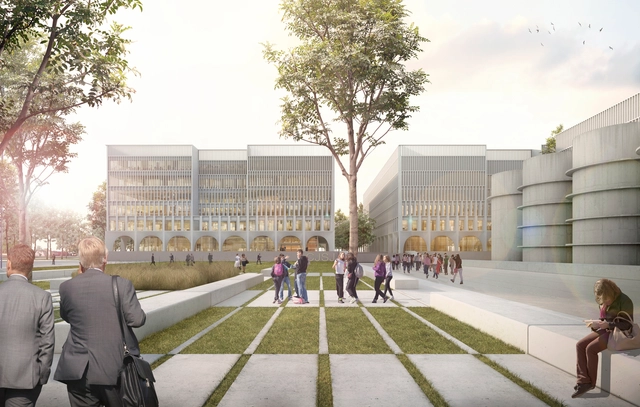
On July 9, 2018, the National Ideas Competition for the San Juan Judicial City was launched. The goal was to generate ideas for its physical realization, addressing the exponential growth of institutional structures in recent years and the proliferation of their offices, which has led to fragmentation due to the lack of a single space to house them.

Here are the three winning projects:

Donald Trump's Fear of the Void

Subscriber Access | 

What does the Swiss architect, urban planner, and Bauhaus director Hannes Meyer have to do with the eccentricity and ostentatiousness of US President Donald Trump? This article, written by the Arkrit Collective, reflects on this connection.

Syllogisms: O’Gorman House + Cave House

Subscriber Access | 

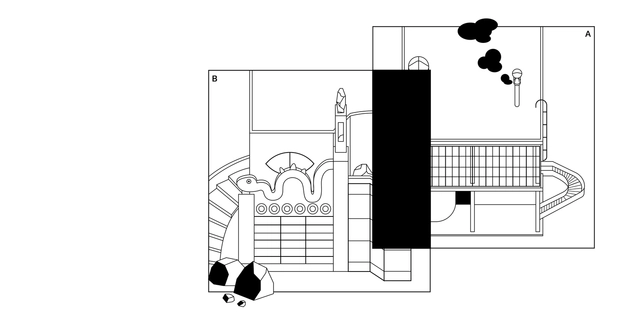
This project, combining architecture and illustration, grounds its research in archives, publications, and photographs detailing the history of modern construction in Mexico. It offers a graphic narrative of the continuities and transformations of key 20th-century works, explored through the synthesis, interpretation, and juxtaposition of their ideals. These pairings confront thought and form through deductive inference, where the sum of the parts hints at deeper meanings and critical motifs in architecture for its future reconstruction.