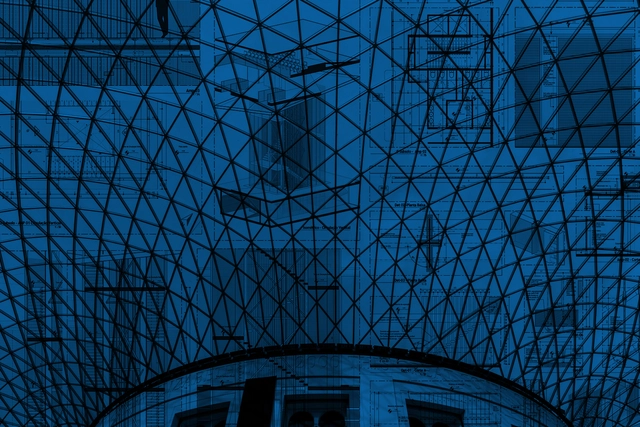
Tekôa is a space within Ekôa Park that explores solutions by bridging theory and practice. It is a hub for integrative permaculture practices based on two principles: developing a practical ecology and experimenting with low-environmental-impact solutions that yield positive social impacts, thereby inventing new ways of living, building shelter, and producing food. Sem Muros believes that to achieve an ecologically sound and socially just life, people must develop autonomy. To this end, the techniques used are simple, easily replicable, and tailored to the environmental context of the project's territory.
https://www.archdaily.com/1121765/tekoa-a-way-of-dwelling-that-integrates-permaculture-practices-bioconstruction-and-food-productionMarcella Arruda e Tomaz Lotufo
Since 1980, with the first exhibition dedicated exclusively to architecture, titled The Presence of the Past and directed by Paolo Portoghesi, the Venice Biennale has positioned itself as a turning point in the history of contemporary architecture. Since then, 16 editions have occupied the spaces of the Giardini and the Arsenale, addressing themes ranging from the fundamental elements of architecture to the future of the discipline.
Anyone who has ever taken an interest in mobility knows that the advent of the car brought about several major changes to the built environment of cities and to people's lives. These transformations have been, and continue to be, widely discussed across various fields of study. In history, for instance, the car serves as a lens for the period of industrialization; in engineering, it is key to engine technology; and in urban planning, it is studied for its role in the process of urbanization. From its invention to the present day, the car has continuously gained ground and become increasingly ubiquitous in streets and buildings, embedding itself into daily life and the popular imagination.
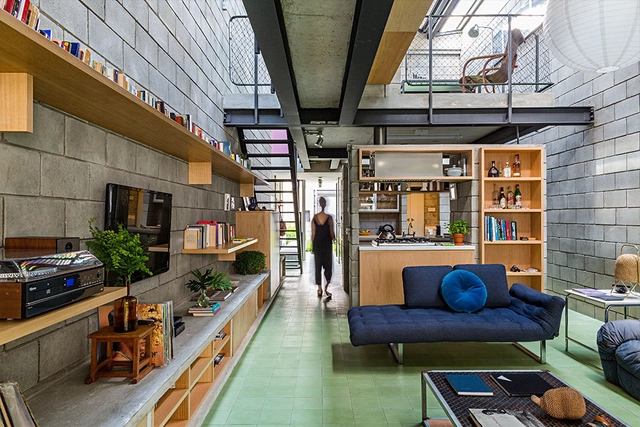
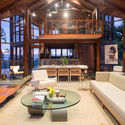
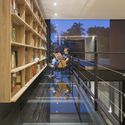
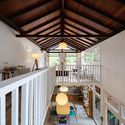
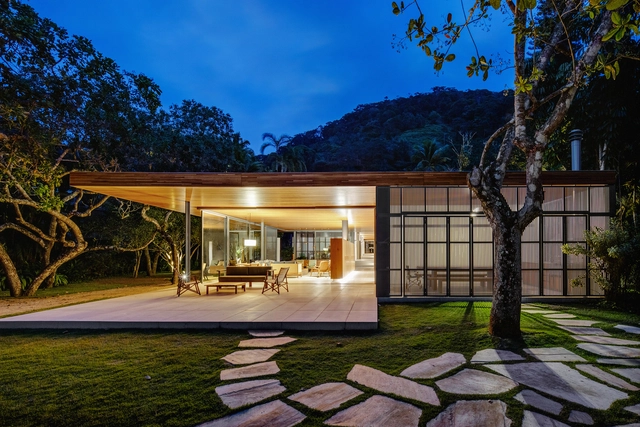
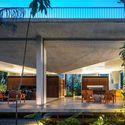
One of the constant considerations in residential design is how to divide spaces or define zones based on daily uses and dynamics without compromising the spatial quality of the building. While this exercise is inherent to architectural practice as a whole, when it comes to residential projects—particularly houses—the pursuit of comfort elements like natural light, ventilation, noise control, and privacy gains layers of complexity tied to the wide range of situations a home must accommodate.
The 12th São Paulo International Architecture Biennale took over two of the most iconic public buildings in the capital of São Paulo. A major exhibition featuring works from various parts of the world remains open until December 8 at the Centro Cultural São Paulo (CCSP), while Sesc 24 de Maio has been occupied by a dozen installations and devices designed specifically for the building and its surroundings.
Here, we present the 10 devices that transformed the space of Sesc 24 de Maio, creating tension and establishing narratives in one of the most intensely used public spaces in downtown São Paulo. The works are divided into the three axes guiding the Biennale: Everyday Tales, Everyday Materials, and Everyday Maintenance.
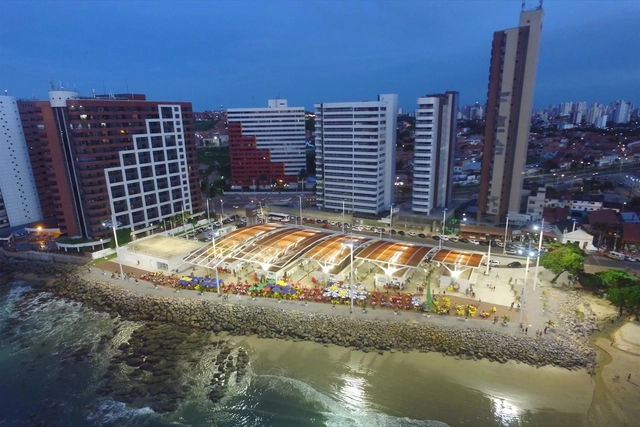
Mercado dos Peixes, Fortaleza (CE), vencedor do 10º Prêmio AsBEA de Arquitetura, na categoria Edifícios Comerciais. Projeto dos escritórios Arcosanti Arquitetura, Esdras Santos Arquitetura e Fausto Nilo Arquitetura.. Image Cortesia de CAU/BR
Architects and urban planners evaluated the services offered by CAU/BR and the state-level CAU/UFs. Out of nine services analyzed by the professionals, seven received an average score above 7 on a scale of zero to 10. These and other findings are part of the CAU Evaluation Survey conducted by the Datafolha Institute in May. The study interviewed 1,500 architects and urban planners and 500 architecture and urban planning firms by telephone to assess the effectiveness of the Council's communication channels with professionals and society, as well as to gather information to support initiatives ensuring access to the entity's information.
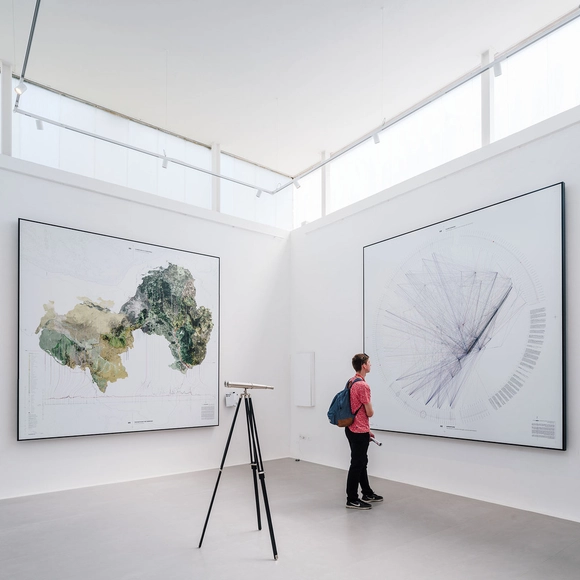
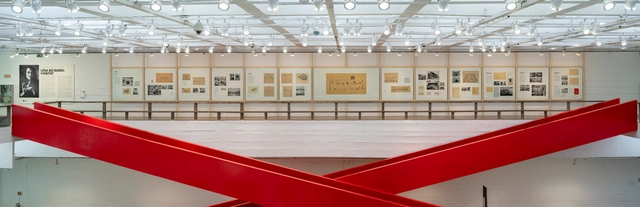
Through their narrative forms, architecture exhibitions promote the dissemination of knowledge and inquiries within the theory and practice of the discipline. Beyond the direct appreciation of a specific object or architectural ensemble by experiencing that space, architecture exhibitions present content structured through narrative paths, classifications, associations, or juxtapositions. This expands architectural knowledge, if not through in-situ experience, then through the way graphic materials are displayed. In this light, curatorial and exhibition design practices can foster new questions in the field of architecture, encouraging visitors to engage in critical reflection.
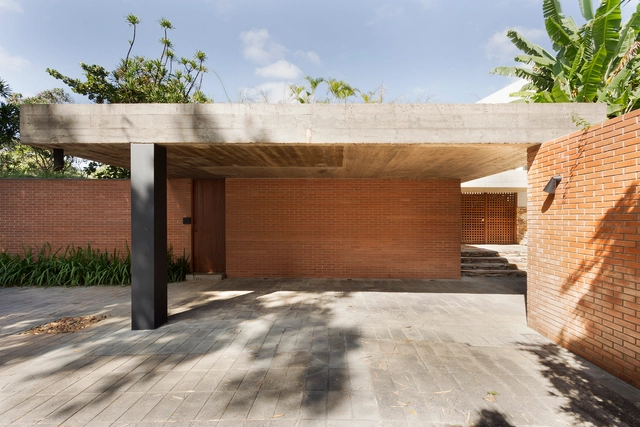
Masonry is undoubtedly one of the most widespread construction techniques in Brazil. Brick, which can serve as both structural support and building enclosure, is an expressive and highly versatile material, easy to use due to its widespread production and the general availability of labor across the country.
Since their university days, architecture students are taught that ventilating indoor spaces is crucial for removing excess heat. However, the specific conditions under which this practice actually achieves adequate thermal performance are not always clearly defined, especially regarding residential roof ventilation.
https://www.archdaily.com/1121931/design-strategies-for-housing-ventilate-the-roof-or-add-thermal-insulationAdriana Camargo de Brito
Tasked with mapping contemporary Brazilian production, the Tomie Ohtake Institute AkzoNobel Architecture Prize began its activities in 2013 with loosely defined horizons. While there was the expectation of creating an unprecedented initiative on the national stage by honoring projects built over the last decade, there was also the clear challenge of establishing a prize without categories, dealing with a broad universe of programs and comparing initiatives of widely differing scales.
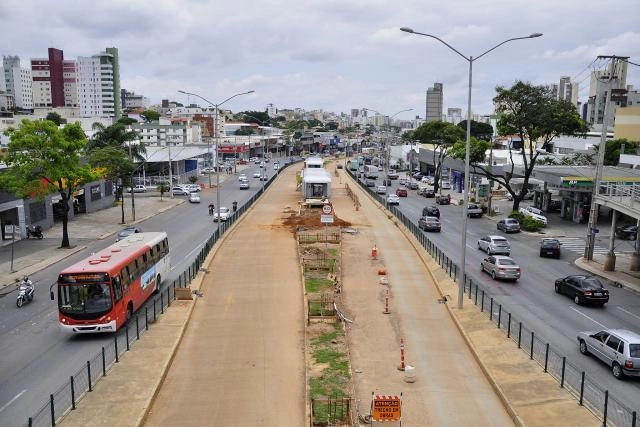
Accessibility is still a challenge for Belo Horizonte's BRT. In the image, the system is still under construction. Photo: Mariana Gil/WRI Brasil
Improving public transit requires close attention not only to vehicles and routes, but to how people access and exit them. All too often, urban planning fails to account for the diverse needs of all individuals and how they navigate a transit system.
https://www.archdaily.com/1121928/a-section-of-belo-horizontes-brt-highlights-the-importance-of-accessibilityPaula Manoela dos Santos
Reflecting on the everyday. This is the premise of the 12th São Paulo International Architecture Biennial, which opens this September in the capital. Under the theme “Everyday” (“Todo dia”), the biennial aims to address the “most trivial dimension of reality,” shedding light on the production of ordinary, common space—which is, for this very reason, fundamental to the quality of the environment we inhabit daily. Curators Vanessa Grossman and Ciro Miguel join us for a conversation about this key event, which plays a crucial role in bridging academic research, architectural practice, and society at large.
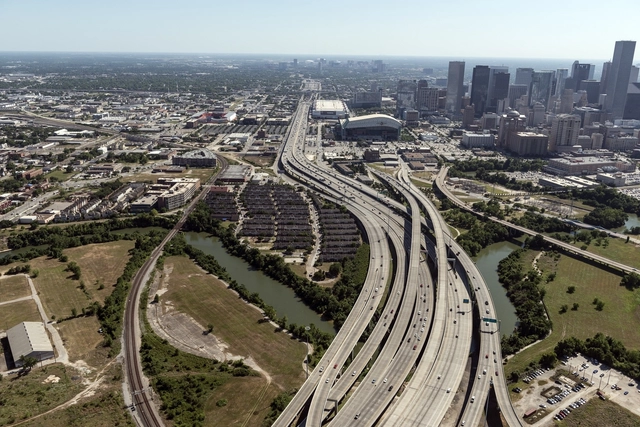
Aerial view of Houston. Courtesy of Caos Planejado
While conventional American urbanism is known to drive excessive sprawl, it is worth remembering that, ultimately, the true extent of a city's horizontal expansion lies far beyond the reach of urban planning controls.
In architectural discourse, much is discussed regarding the influence of the site where a building is situated, whether through the incorporation of surrounding elements during the design process, or through the negation or overcoming of its undesirable characteristics. Some situations make this negotiation more evident than others, especially when the natural environment is dominant. In these cases, one constantly observes the tension between natural preexistence and human intervention, as well as the possible ways to achieve harmony between the two.
Once subjugated by outlaw armed groups and devastated by the largest urban military operation in Colombia's history, the Las Independencias neighborhood, located in Medellín's Comuna 13, is today an open-air graffiti gallery of sorts, accessed via a system of electric escalators—the only ones in the world built in an informal settlement.
Eletrodutos para distribuição da rede elétrica aparente. Aplicação de papel de parede. Projeto: Apartamento 203. Image Cortesia de Apartamento 203
Also known as "dry construction," this concept is increasingly used in interior renovations. These simple solutions transform the essence of indoor spaces in a more economical and sustainable way by minimizing construction waste and, consequently, reducing the waste of money, time, and raw materials. In this guide, we have gathered 8 tips to help you design more mindful interior renovations.
Today, computer-aided design (CAD) is the most widely used system for producing technical drawings among construction professionals and academics. It became popular through AutoCAD (Autodesk) by representing geometries that translated design intent into two dimensions. Released in the 1980s, it remains highly relevant and is still used by large corporations, extending its utility through the tradition it has built over four decades in the market.
Since the 1970s, architecture has sought connections with other fields of art, looking for inspiration to break with the paradigms of the time in sculpture and painting, as well as in music and literature. In schools and professional practice, architectural projects were developed based on the study of "paintings by Vermeer, as well as those of the Cubists, the music of Bach, as well as Meredith Monk, literary fragments by Heraclitus, as well as Herman Melville's Moby-Dick and James Joyce's Finnegans Wake."[1]
.jpg?1549026286&format=webp&width=640&height=580)
.jpg?1549029133 "Cortesia de Sem Muros arquitetura integrada")
.jpg?1549029152 "Courtesy of Ekôa Park")
.jpg?1549029125 "Cortesia de Sem Muros arquitetura integrada")
.jpg?1549026266 "Courtesy of Lúcio Ventania")
.jpg?1549026286)
_Cidade_Ativa.jpg?1548766874&format=webp&width=640&height=580)


.jpg?1569867443&format=webp&width=640&height=580)


.jpg?1562845563 "House in Prumirim Beach / brro arquitetos. Image: © André Scarpa")


.jpg?1562087791&format=webp&width=640&height=580)
.jpg?1561993576 "Aplicação de revestimento sobre revestimento. DEPOIS da Reforma de Banheiro em parceria com a Leroy Merlin Brasil. Projeto: Apartamento 203. Image Cortesia de Apartamento 203")
.jpg?1561992294 "Aplicação de papel de parede. Elétrica projeta com distribuição da rede elétrica aparente. Projeto: Apartamento 203. Image Cortesia de Apartamento 203")
.jpg?1561992738 "DEPOIS da Reforma de Banheiro em parceria com a Leroy Merlin Brasil. Projeto: Apartamento 203. Image Cortesia de Apartamento 203")

.jpg?1562087791)