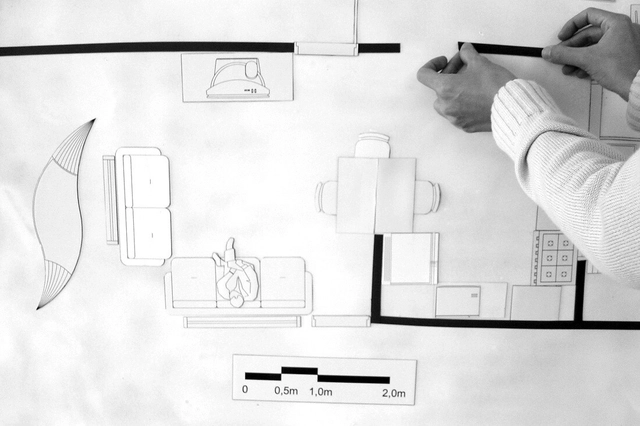
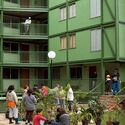
1. Via gustavhistory. 2 and 3. Courtesy of Manuel Velazco Clark personal archive. Image
Doris Mary Clark Núñez is considered the first female Peruvian architect. With a life marked by difficulties, scrutiny, and restrictions solely due to being a woman in a professional world that had traditionally been male, Clark Núñez stands as a model of activism and resistance, as well as a pursuit of subversion and paradigm shifts in traditional debates and structures. Her life was dedicated—through teaching, political action, and academia—to laying the foundation for expanding the field of influence for women in architecture.
https://www.archdaily.com/1131900/doris-clark-nunez-the-first-female-peruvian-architect-activism-and-resistanceCarolina Velásquez y Wiley Ludeña
On August 31, the Laboratorio Arte Alameda in Mexico City hosted "30/30," an audiovisual performance divided into two 30-minute segments. Blending sounds ranging from drone, noise, and techno to dream pop with live digital image processing, the performance explores the concept of memory, conceptualized as an architectural-digital space in constant motion and transformation.
At a time when a lack of public safety daily plagues Brazil's major cities, impacting how we behave in the urban environment, we must examine not only how we act within this space, but also how we build it and with what intentions we modify it.
High walls, fences, cameras, alarms, and razor wire are already part of a landscape that feels fearful, constantly seeking to "protect" private property, often to the detriment of public space appropriation.
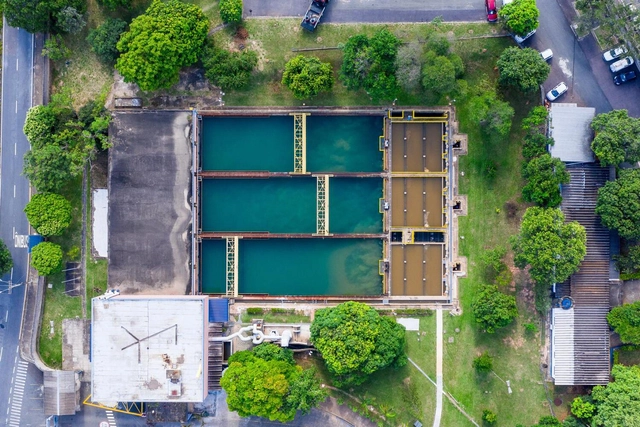
Sanasa Water Treatment Plant in Campinas, São Paulo. Photo: Renan Pissolatti/WRI Brasil
The Metropolitan Region of Campinas is one of Brazil's largest urban centers. With more than three million inhabitants and an annual GDP exceeding R$ 150 billion, it is one of the country's most dynamic economic regions.
With the aim of bringing visibility to the state terror committed during the Argentine civic-military dictatorship that began in 1976, the Secretariat of Human Rights of the National Ministry of Justice and Human Rights commissioned the Institute of Architecture and Urbanism of the National University of San Martín (IA-UNSAM) to develop an architectural proposal for a new memory space on the grounds of Campo de Mayo, in the province of Buenos Aires.
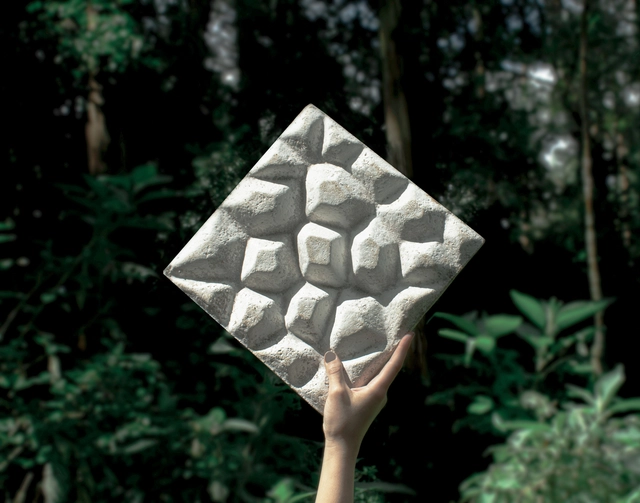
From fungi to architecture: this is how the team at Mushbio introduces their decorative cladding panel inspired by the Andes. Manufactured using parametric design, the panel is made from mushroom mycelium. Beyond contributing to cultural identity by mirroring the topography of the Ecuadorian and Latin American landscape, it offers thermo-acoustic properties, lightness, and a unique aesthetic, bringing nature into interior spaces.
Videos
Bad Bunny - "El Apagón" . Image via YouTube
As part of his recent releases over the past few months, the globally renowned reggaeton artist Bad Bunny debuted his new music video for the song "El Apagón," a track from his latest album "Un verano sin ti." Although the song was already streaming across various platforms, few anticipated that the video's release would serve as a powerful political stance on the current situation in Puerto Rico.
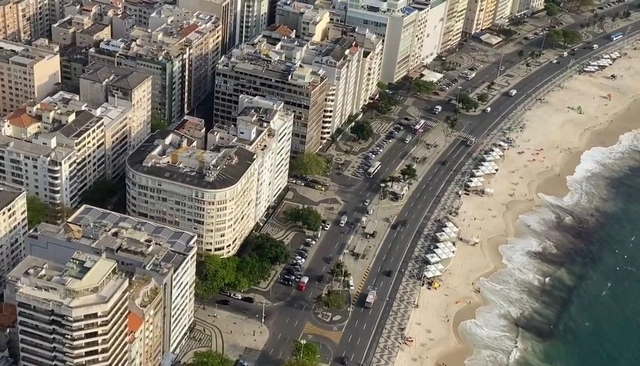
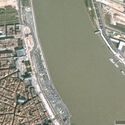
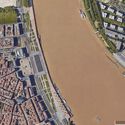
The South Zone waterfront - Publicity. Source: Rio de Janeiro City Hall
Over its 457-year history, the built landscape of Rio de Janeiro has taken shape in diverse ways. During its first few centuries, the city developed around Rua Direita (now Rua Primeiro de Março), consisting primarily of two-story row houses, typically featuring a single door and two windows on the ground floor. This layout stemmed from the measurement standard of the era, the *braça* (fathom), with plots usually measuring three *braças* wide (each *braça* equivalent to 2.2 meters). Rio's land ownership profile has always driven its urban form, and the Portuguese plot—with its narrow frontage and deep lot—defined an era and left an indelible mark on the city's development.
https://www.archdaily.com/1132169/the-urban-landscape-and-the-mathematics-of-the-cityPedro Duarte e Rogerio Goldfeld Cardeman
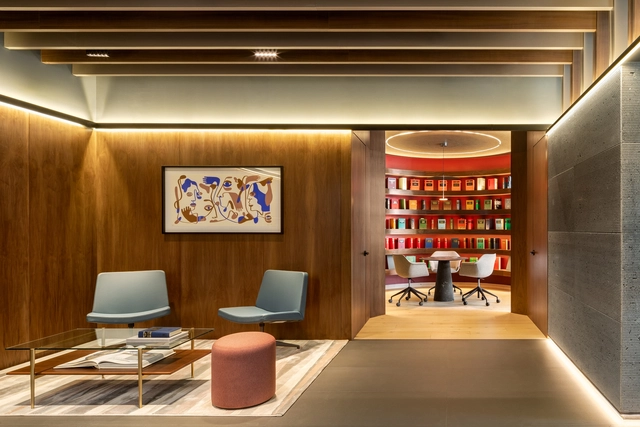
The Mexican firm Faci Leboreiro, led by Carlos Faci and Marina Leboreiro, has been recognized at the Grands Prix du Design in Quebec, Canada, for the interior design of their project Estudio Basalto, receiving the Gold Certification in the Office category. The fifteenth edition of the competition—which celebrates international excellence and exemplary practice among architects and designers—was held at the Théâtre Le Capitole before a jury of prominent professionals and academics.
While the construction industry has been advancing into new fields like nanotechnology and 3D printing for years, it is still one of the most technologically lagging sectors. Many innovations remain purely experimental, and despite constant efforts to reverse this trend, we face a troubling reality: construction is one of the world's most polluting and waste-generating industries.
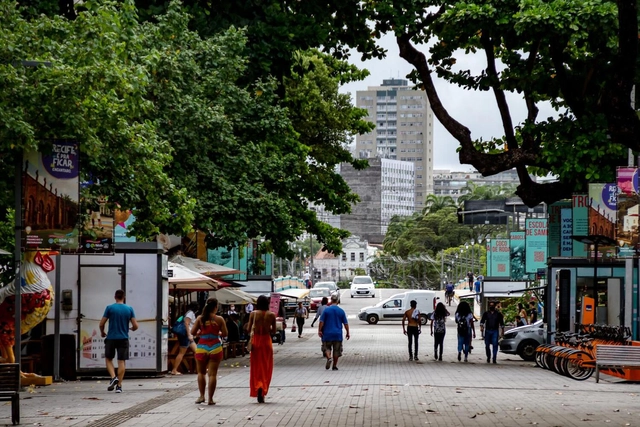
Rio Branco Avenue, in the heart of the Recife neighborhood, became pedestrian-only in 2017. Photo: Adriana Preta/WRI Brasil
Mitigating climate change and adapting to the risks of more frequent extreme events demand a rapid and radical transformation of cities worldwide, as they account for the majority of global greenhouse gas emissions. However, the impacts of a changing climate are not shared uniformly across all cities; those who feel its most intense effects are precisely the most vulnerable populations. Achieving inclusive, low-carbon urban transformations tailored to diverse urban contexts requires bringing the global climate agenda down to the local scale—to the people who live in and know their neighborhoods.
https://www.archdaily.com/1132063/two-brazilian-cities-seek-innovative-local-approaches-to-the-climate-crisisCamila Alberti, Ariadne Samios e Isadora Freire
The vulnerability found in countries on the periphery of capitalism, such as Brazil, has wide-ranging consequences that are evident both in statistics and in how the occupied territory is shaped. Peripherization and the struggle to access fundamental rights—such as healthcare, education, and housing—are among these consequences. Addressing these challenges falls to organized social groups striving to build alternatives within this context, as seen in social movements and Usina CTAH, an architectural practice dedicated to providing technical assistance to organized social groups.
For a long time, cars were the primary protagonists of major cities. This prioritization resulted in territories occupied mostly by highways, leaving them uninviting to people. In recent years, however, many cities have undergone spatial transformations, seeking to reshape their relationship with automobiles and prioritize pedestrians and the human scale.
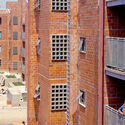
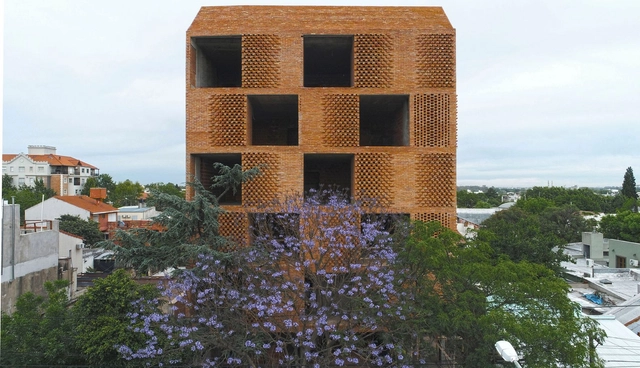
Edificio damero / Francisco Cadau Oficina de Arquitectura. Image Cortesía de Francisco Cadau Oficina de Arquitectura
During the fourth day of the 18th Buenos Aires International Biennial of Architecture, the Biennial Awards were announced, highlighting architectural projects and works developed over the last four years both nationally and internationally. Awarded by the Biennial's Steering Committee, the categories spanned from single-family housing, multi-family housing, and interior design to landscape, urban space, and public and private facilities.
According to the American Society of Heating, Refrigerating and Air-Conditioning Engineers (ASHRAE)—which organizes global data and supports research in this field—thermal comfort is defined as the condition of the mind that expresses satisfaction with the thermal environment. Why is it important to study adaptive comfort in Latin American climates? Given that 40% of the population lives in the tropics, designing architecture capable of adapting to tropical climates is essential. Consequently, in line with human-centered design, strategies must be tailored to the specific local conditions in which they are implemented.
Franco Morales, technical director of EBP Chile, who plays a cross-cutting role across the company's various departments (construction, climate change, and local energy), frequently collaborates with the CEELA Project. Following his participation in the energy retrofitting project for the Juan XXIII School in Montería, Colombia, and identifying a widespread challenge—namely, schools built without an architecture suited to their climatic context—he has begun developing a sustainable design manual for educational institutions in hot-dry and hot-humid climates.
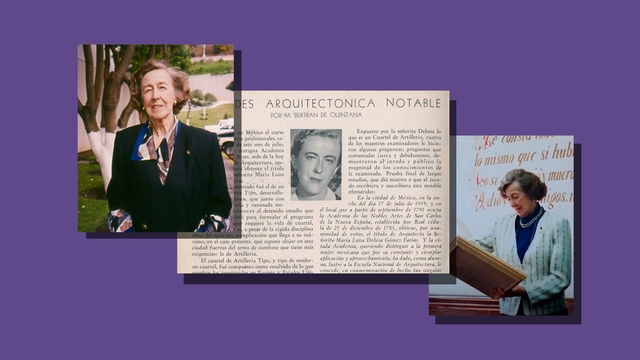
María Luisa Dehesa Gómez Farías (1912–2009) was a Mexican architect from Xalapa, Veracruz, who became the first woman in Mexico to earn a degree in architecture. Her professional training began in 1933 when she entered the Royal Academy of San Carlos. This required her to relocate to Mexico City—renting a rooftop room in Coyoacán from which she commuted by streetcar—to join a class of 113 students, only five of whom were women.
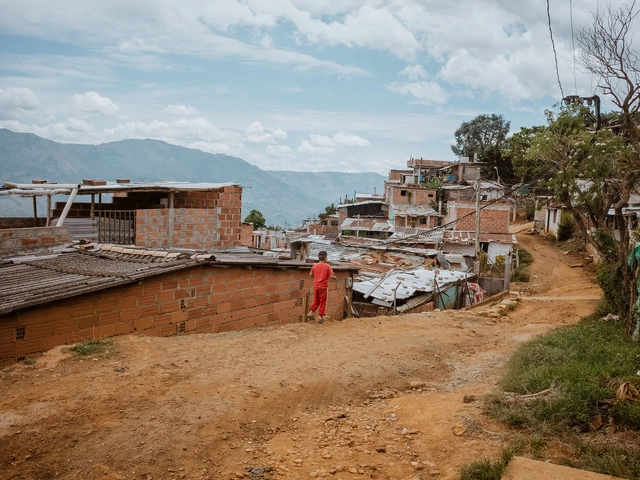
As part of the World Habitat Day celebrations, the platform SPACE10 has launched "Urbanismo Comunitario," a 20-minute documentary on informal settlements in Medellín, Colombia. Amid rapid urbanization and forced displacement, the number of people living in informal settlements is growing. The UN estimates that by 2030, three billion people will be living in these territories. The documentary examines new alternatives for housing construction in informal settlements, based on community collaboration, material innovation, and the co-development of solutions in partnership with communities.
YouTube is the social network with the highest number of monthly active users—around 2 billion, nearly double that of Instagram. As a search engine, it ranks second, behind only Google. It comes as no surprise, then, that the fashion, music, and beauty industries have embraced the platform with open arms. By contrast, design and architecture have lagged behind.