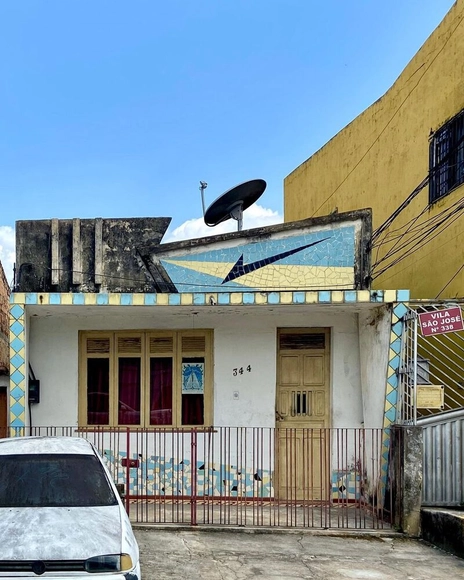
Modernism in Brazil was shaped by various facets and conceptions of progress. In architecture, one of the primary aesthetic languages used to express this was ceramic tile panels, as seen in the work of artists such as Athos Bulcão, Cândido Portinari, and Burle Marx.
In the northern region, specifically in the state of Pará, the Modernist movement arrived adapted to local standards. This was reflected in the widespread use of parapets to conceal roofs, gardens featuring native plants, wooden window frames, and facades clad in ceramic tiles, among other features. Furthermore, engineers and architects of the era, such as Ruy Meira and his nephew Alcyr Meira, designed several murals across the region using both whole and broken tiles.