Work is no longer confined to a single place. It moves. It changes. It adapts. Today, it can begin in an office, continue in an acoustic booth, pass through a shared space, and end at home. In this transition, the laptop has become a constant fixture. As work becomes increasingly mobile, spatial needs change as well.
Another year, another successful ArchDaily China Building of the Year Awards! Once more, the award has proved to be the largest architecture prize centered around people's opinion. Crowdsourced, the most relevant projects of the year were nominated and selected by our readers.
Soporte oculto para vigas - CBH. Image Cortesía de Simpson Strong Tie
In the field of architecture, wood was one of the first materials used by humans in construction, evolving and facing various challenges over the years. From the integration of new technologies in industrial production processes to ancestral techniques and materials reinterpreted in contemporary ways, timber construction continues to capture the interest of architecture and design professionals. Beyond its versatility, strength, appearance, and sustainability, cross-laminated timber, known as CLT, presents a promising future for the industry.
There are only two days left to vote for the winners of ArchDaily en Español's 2026 Obra del Año Award. The three winners will be announced on April 16, following three weeks of public voting. The 15 finalists chosen by the public showcase the breadth of recent Ibero-American architectural production, spanning Argentina, Chile, Colombia, Cuba, Ecuador, Spain, Mexico, Peru, and Uruguay.
Discover the 15 finalists and help choose the three most significant projects of the past year in Spanish-speaking countries. In this final stage, users can vote for one project per day until April 15 at 6:00 PM (GMT-4).
https://www.archdaily.com/1054513/last-days-to-vote-in-the-archdaily-en-espanol-2026-building-of-the-year-awardArchDaily Team
The announcement of the 2026 Obra do Ano Award is drawing near, with only two days left until the close of the final selection stage. The three winners will be announced on April 16, following three weeks of public voting. The 15 finalists paint a portrait of the current state of architecture according to the public, who have been voting for their favorite projects.
View the 15 finalists and join an unbiased network of jurors responsible for choosing the most relevant projects built in Portuguese-speaking countries over the past year. In this final stage, each person can vote for one project per day until April 15 at 7:00 PM (Brasília time).
https://www.archdaily.com/1054514/last-days-to-vote-for-the-finalists-of-archdaily-brasils-2026-obra-do-ano-awardArchDaily Team
Three projects have been chosen by the ArchDaily en Español community as the winners of the 2026 Obra del Año Award. Representing Peru and Ecuador, the winners were selected after three weeks of public voting from a pool of over 800 projects. The award recognizes the best of architecture in Latin America and Spain, as decided by its community.
https://www.archdaily.com/1054651/discover-the-winners-of-the-2026-archdaily-en-espanol-building-of-the-year-awardArchDaily Team
Three Brazilian projects have been chosen as the winners of the 2026 Obra do Ano Award by ArchDaily Brasil's readers. After three weeks of public voting, more than 700 projects were narrowed down to 15 finalists, concluding the process with three grand winners that represent the very best of Lusophone architecture.
https://www.archdaily.com/1054654/meet-the-winning-projects-of-archdaily-brasils-2026-building-of-the-year-awardArchDaily Team
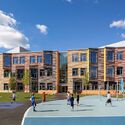
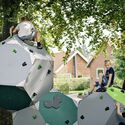
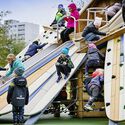
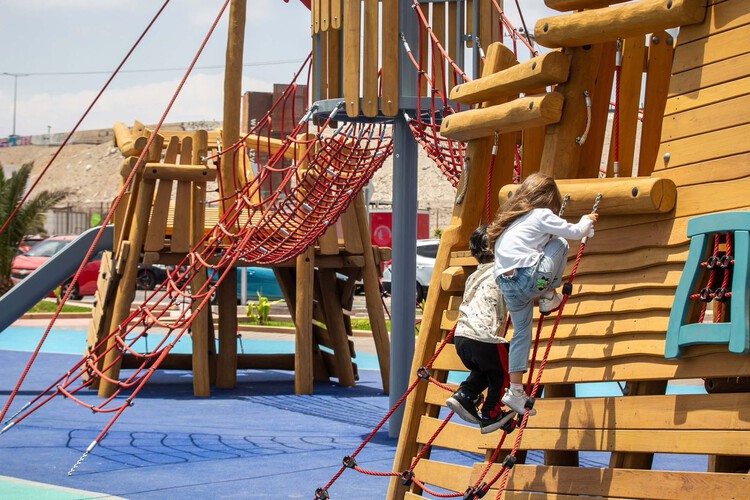
p>Understanding play as a social catalyst and an influential factor in defining public space, urban life is shaped by diverse individuals of different ages, cultures, ideologies, interests, classes, and social groups. Thinking about how play inhabits cities means thinking about all generations, and about the need to build public spaces with urban equipment designed to last and be maintained over time.
The performance of play structures invites us to review the different stages of their life cycle alongside their impact on shaping the urban environment. Analyzing the life cycle of urban play equipment involves understanding everything from materials, durability, and maintenance to the role of certifications and technologies applied in their production process, within environments that are increasingly conscious of their environmental impact.
https://www.archdaily.com/1054664/jobs-in-chengdu-and-nanjing-modum-atelier-is-hiring-architectural-design-interior-design-commercial-research-brand-communications-interns韩爽 - HAN Shuang
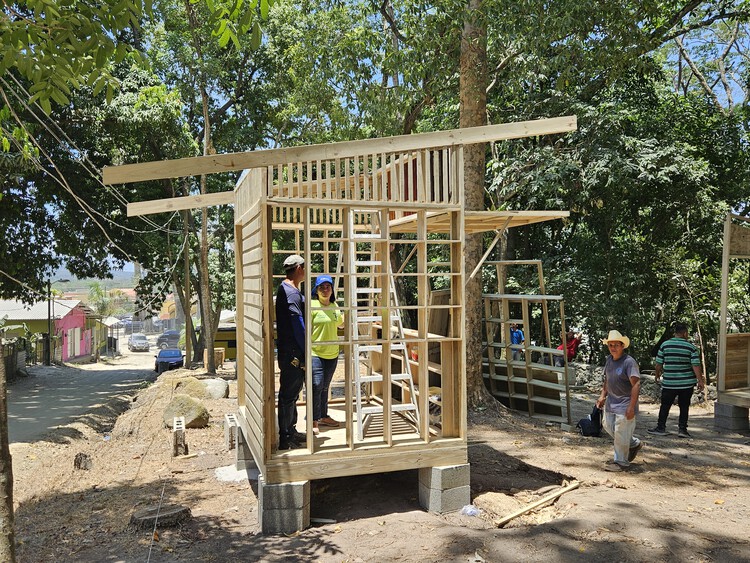
It is eight in the morning, and the car's dashboard display reads 36°C on the streets of San Pedro Sula, Honduras. The sky is almost clear: an intense blue with a few bright, drifting clouds. The air conditioning in the cars—all with tinted windows—makes you forget that upon stepping out, the warm, humid air will immediately weigh on your shoulders and break a sweat.
Puerto Cortés on the Caribbean coast is too far away for a quick dip, but in the neighborhood of Armenta, the eponymous river flows almost silently down from the Sierra del Merendón, running from west to east through gray stones. On the northern bank, tall, leafy trees along the upper edge of the ravine shade a long, dry, and dusty plaza, while thick, exposed roots give texture to the ground. The sun is less punishing.
This article by Jheisson Joseph Lasso Imbachi was originally published under the title "Habitar tras el destierro: Desplazamiento forzado y retorno como configurador de nuevos hábitats en el Putumayo" in the 30th issue of Dearq journal on May 1, 2021 (DOI: https://doi.org/10.18389/dearq30.2021.05).
It explores migration processes in the south of the country, a consequence of extractive economies that have shaped territorial organization and caused exile, forced displacement, and two lesser-studied phenomena: the settlement and permanence of the population in a host territory and the return to their place of origin. To this end, documentary and testimonial sources were studied, analyzed, and interpreted, allowing a direct approach to the community displaced by violence, in order to analyze the diverse ways of living after displacement and conclude with some considerations for future rural housing proposals that are easily accessible to the victim population.
Below, we present it as part of a joint collaboration to contribute to the dissemination of research, analysis, and opinions developed by the national and international academic community on architecture, urban issues, and related fields.
https://www.archdaily.com/1132361/inhabiting-after-exile-new-habitats-in-putumayo-colombiaJheisson Joseph Lasso Imbachi
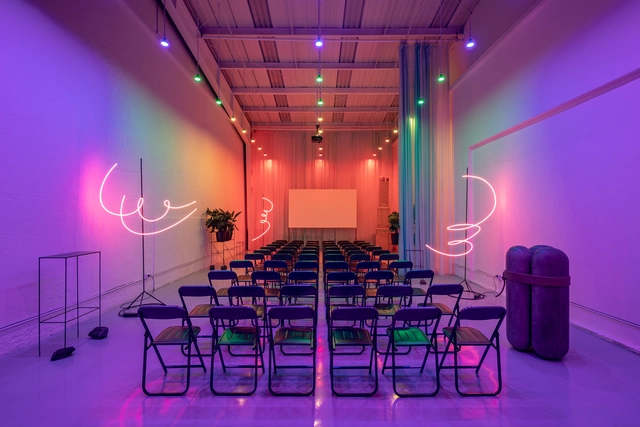
One of the defining features of cities is their undeniable capacity to bring together creative talent through multiculturalism and transdisciplinarity. Today, it is increasingly vital to generate spaces and platforms within these urban environments that serve as creative laboratories—places not only to share but, above all, to reflect on contemporary practice, viewing design not as a decontextualized entity, but as an integrated concept that bridges diverse disciplines.
Anderson Marín Vidal and Juan Sebastián García, from the research group on Sustainable and Applied Emerging Technologies (T.E.S.A.), present an analysis of the primary impacts expected from the designs for the Río Molino Waterfront (Malecón del Río Molino). Created by the architecture firm Celeste & Piedra, the project won first place in a competition organized by the Mayor's Office of Popayán and Findeter.
https://www.archdaily.com/1132507/what-the-new-waterfront-along-the-molino-river-in-popayan-colombia-will-look-likeAnderson Marín Vidal y Juan Sebastián García
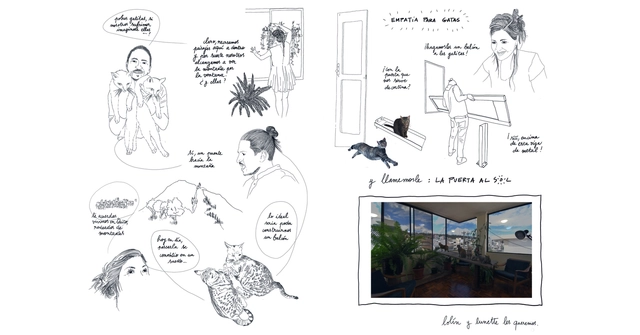
In the midst of today's information age, several Latin American architecture firms are returning to analog formats, ranging from fanzines and illustrations to manuals and postcards.
Against the backdrop of the Taller Social Latinoamericano in Colombia, we spoke with the firms Ruta 4 Taller (Colombia), Coonvite (Colombia), La Cabina de la Curiosidad (Ecuador), and República Portátil (Chile)—all of whom have, coincidentally, explored these formats in their recent work.
More than a trend, industrialization is a necessity in the construction industry. In recent years, we have witnessed its importance in increasing productivity and speed of execution—as well as reducing waste—in architectural projects. Beyond streamlining construction processes, this serial, mechanical, and standardized production increases quality and shortens delivery times. If initial project decisions incorporate the modulation of the various stages that can be industrialized within vertical and horizontal parameters, the outcome is much more efficient than if these are evaluated during construction (when it is no longer possible to reduce waste through modulation). Furthermore, by minimizing waste and reducing the consumption of energy and water resources, it also contributes to a more sustainable industry.
Architects and designers, as well as psychologists and sociologists, recognize that aesthetics and its underlying philosophy have the power to change how we perceive the world around us. Consequently, a deeper understanding of what is beautiful holds the powerful potential to alter how people respond to their environment.
Exploring the different meanings of aesthetics in architecture, from 'form follows function' to the aesthetics of the metaverse, can help us understand the potential of our physical and virtual environments on the path toward a better world.
Much has been written on the subject, from Alberto Pérez-Gómez's "The Beautiful and the Just in Architecture" to Pablo Caldera's "The Failure of Beauty." Now, however, we want to open up the debate and invite you, our readers, to share your perspectives on what makes a building or a city beautiful.
Share your thoughts in the form below. Selected responses will be published in an upcoming article.
Through the construction of a narrative fiction, this work by Federico Lagomarsino, framed around the landscape, aims to depict everything that unfolds in contemporary society when a singular event occurs—in this case, the impact of the two largest meteorites detected to date in South America.
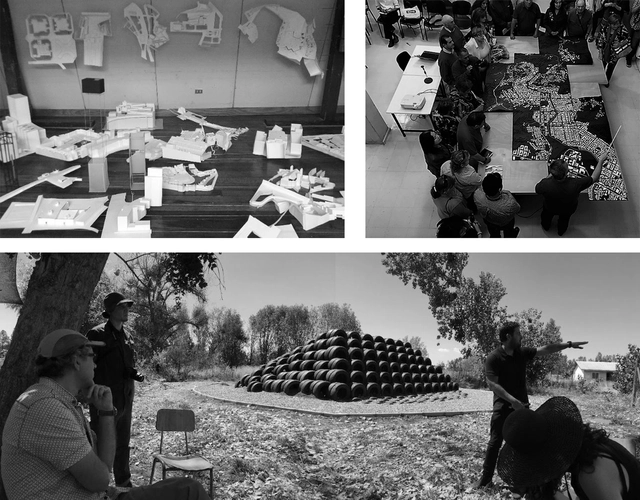
Abajo: U. de Talca. Arriba izquierda: Universidad de Valparaíso. Arriba Derecha: Taller de Barrios, GIDPRO (U. del Bío-Bío). Image Cortesía de Rodrigo Lagos Vergara y Macarena Paz Barrientos Díaz
Below, they present some of the most important points of their publication: three pedagogical actions in Chile that understand teaching as a central practice through the academic exercise of the design project.
https://www.archdaily.com/1132492/architecture-education-in-chile-1999-2019-ecological-potential-and-collective-political-senseRodrigo Lagos Vergara y Macarena Paz Barrientos Díaz












.gif?1654012767)
.jpg?1651685605&format=webp&width=640&height=580)