1. ArchDaily
  2. Architecture News

Architecture News

The Best Cities to Live in Latin America in 2023

The Economist Intelligence Unit (EIU) released a new edition of its Global Liveability Index, announcing the world's most liveable cities in 2023. Vienna has topped the ranking in four of the last five years, thanks to its stability, cultural richness, entertainment options, and reliable infrastructure. Copenhagen, Denmark, held onto second place, while Melbourne and Sydney took third and fourth, respectively. These cities were regular fixtures at the top of the list prior to the pandemic.

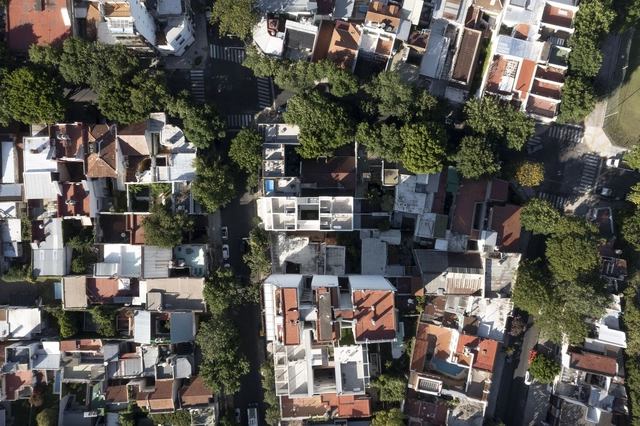
What is the situation in Latin America? Buenos Aires once again emerged as the top Latin American city to live in. Santiago, Chile, reclaimed the second-place spot it held before the social unrest, while Montevideo, Uruguay, ranked third. San Juan, Puerto Rico, followed closely with a very strong score. Conversely, Caracas in Venezuela, Aguascalientes in Mexico, and Guatemala City were among the lowest-rated in the region.
Vaillo + Irigaray Architects Design the Security and Emergency Coordination Center of Navarra, Spain

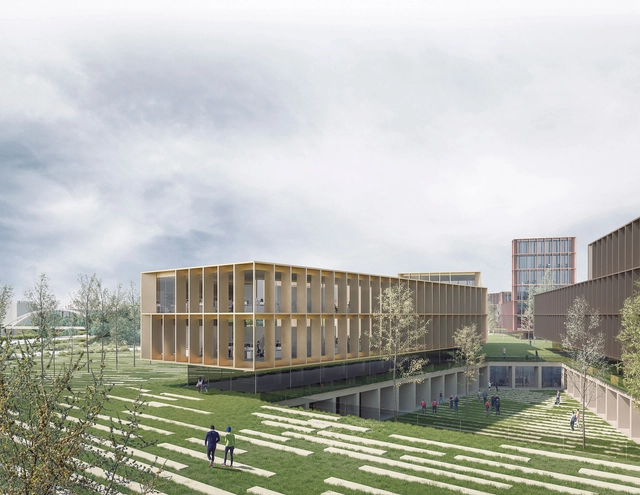
Navarre-based architecture firm Vaillo + Irigaray Architects has won the design competition for the Navarre Security and Emergency Coordination Center (CCSE) to be located in Mutilva, in the municipality of Valle de Aranguren. Led by Antonio Vaillo, Juan Luis Irigaray, and Yago Vaillo, the firm has developed projects both nationally and internationally. They currently have several projects under construction, including the Faculty of Tourism in Malaga, the Basque Ethnographic Museum in Bilbao, the Cultural Center of Letters for the Barcelona City Council in Barcelona, and the World Car Center in Vigo.

La Fuente Pavilion in Balmaceda Park: A public experience within the water

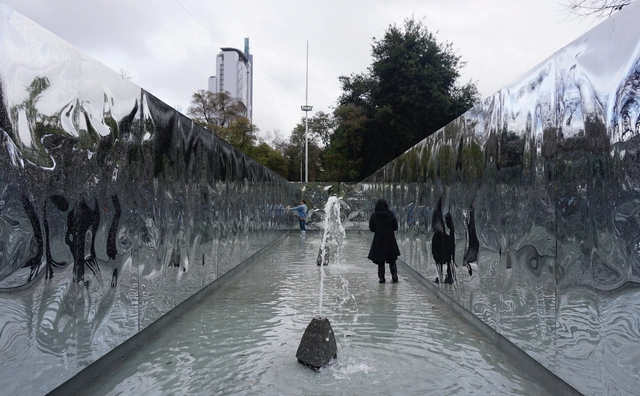
From July 11 to 16, the La Fuente Pavilion is open to the public in Balmaceda Park in Santiago, Chile. This new public space installation, designed by architect Camilo Palma (Abarca+Palma), invites visitors to engage in "contemplation and tranquility around the stimuli and sensations of water." The structure, composed of mass-produced, prefabricated building elements, sits atop the original 1931 fountain designed by Oscar Prager, Sergio Larraín, and Jorge Arteaga.

To experience the public space firsthand, ArchDaily visited the installation on a rainy day. 

São Paulo Welcomes a New Plaza Designed for Early Childhood

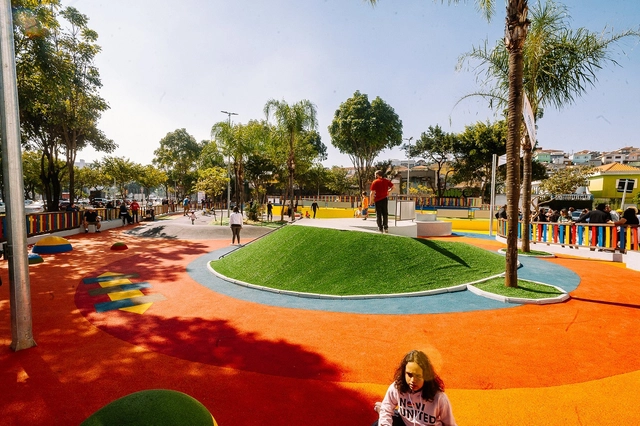
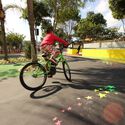
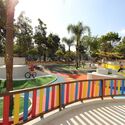
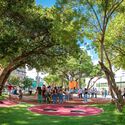
Creating a playful space designed specifically for the needs of early childhood was the goal of the São Paulo municipal government when developing its first “Concept Plaza”—recently inaugurated at São Sebastião Plaza in the Ipiranga neighborhood. Early childhood, spanning from birth to age six, is a critical period for human development. Numerous studies show that experiences in early life, starting from pregnancy, directly shape adulthood.

São Paulo Welcomes a New Plaza Designed for Early Childhood - Image 1 of 4São Paulo Welcomes a New Plaza Designed for Early Childhood - Image 2 of 4São Paulo Welcomes a New Plaza Designed for Early Childhood - Image 3 of 4São Paulo Welcomes a New Plaza Designed for Early Childhood - Image 4 of 4São Paulo Welcomes a New Plaza Designed for Early Childhood - More Images

Tower uses functional design to improve air quality in polluted cities

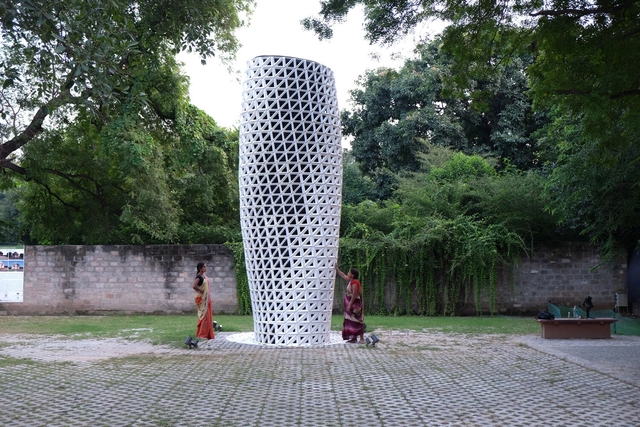
Architects Amit and Britta Knobel Gupta moved from London, England, to New Delhi, India, and confronted a severe problem: air pollution unlike anything they had ever seen. To help make the air more breathable and the city more livable, the couple developed a tower designed to purify the air through design. “Our main business is architecture; we didn't want to get into air purification,” Amit said. “But the pollution here was simply unacceptable. It’s very bad.”

And they are right. A study published by the medical journal *The Lancet* revealed that in 2019 alone, air pollution caused nearly 1.6 million deaths in India. New Delhi is regularly shrouded in smog, with vehicle emissions, crop burning, and coal-fired power plants all contributing to the decline in the city's quality of life. It was against this backdrop that the newcomers decided to take action.

Portuguese project "Fertile Futures" explores the use of water to imagine resilient futures.

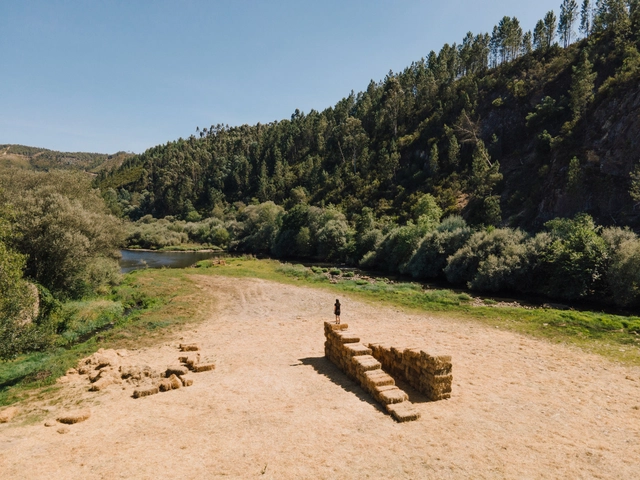
The project Fertile Futures, the Portuguese representation at the 2023 Venice Architecture Biennale, organized an International Summer Seminar in July in the municipality of Fundão, promoting alternative approaches to architecture and highlighting the project's promising future. The seminar aimed to foster thematic awareness, collaborative experiences, and an expanded field of action among the participants.

Portuguese project "Fertile Futures" explores the use of water to imagine resilient futures. - 1 的图像 4Portuguese project "Fertile Futures" explores the use of water to imagine resilient futures. - 2 的图像 4Portuguese project "Fertile Futures" explores the use of water to imagine resilient futures. - 3 的图像 4Portuguese project "Fertile Futures" explores the use of water to imagine resilient futures. - 4 的图像 4Portuguese project Fertile Futures explores the use of water to imagine resilient futures. - More Images+ 1

Norman Foster Foundation and Holcim develop modular shelters for the well-being of refugees

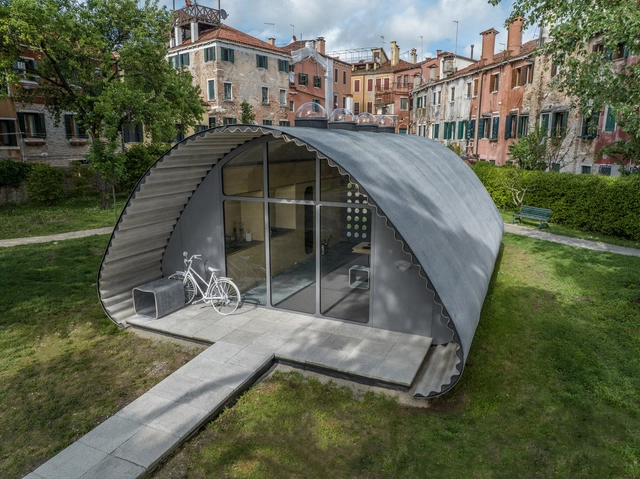
Many people are in need of shelter. War, extreme weather events, and famine... Unfortunately, these crises are frequent and lead to large-scale migration. Welcoming individuals in extremely vulnerable situations is a challenge. Ensuring comfort, well-being, and dignity is a humanitarian imperative. Today, there are around 103 million displaced people worldwide, and climate change could significantly increase this number.

Web series presents a journey through the architectural history of Curitiba

The web series Atemporal ‑ A arquitetura permanece features a compilation of nine episodes depicting the various architectural movements that have shaped the history of Curitiba. Launched in 2020, the project spans from the earliest architectural impacts on the city during the colonial era and the influence of immigrants, to Eclectic architecture, Art Deco, and the first glimpses of Modernism, culminating in a denser vertical growth and an internationally recognized urban plan.

Social Wooden Housing in Uruguay: On the Path Towards Innovation in Socially-Conscious Architecture

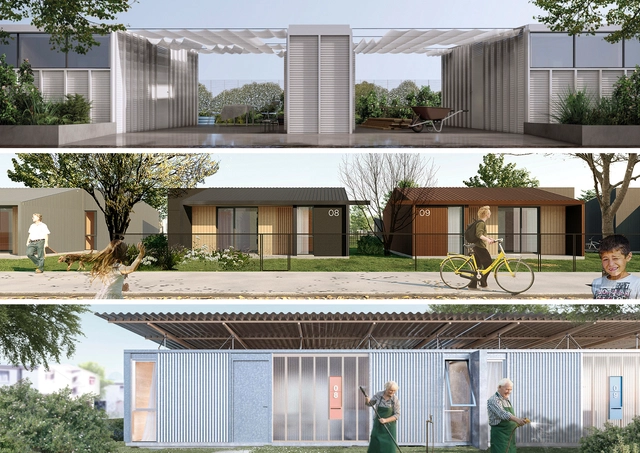
Organized by the Ministry of Housing and Territorial Planning of Uruguay (MVOT) and MEVIR, with the support of the Inter-American Development Bank (BID), the International Architecture Competition "Wood: Innovating Social Interest Architecture" involved submitting proposals for new types of wooden housing extensions. These could be either paired or standalone single-level structures, to be built by MEVIR in a demonstration set of 20 social interest houses within the town of Tranqueras, Rivera Department, Uruguay.

Connectivity and expansion: the Santiago Metro expands its lines and stations

Santiago de Chile's metro system is undergoing a major connectivity upgrade. On the surface, construction has begun at several stations across the city, including two new exits at Tobalaba station that connect to the new MUT Mercado Urbano de Tobalaba. Below ground, equally significant changes are taking place: the extension of Lines 2 and 3, and the announcement of Lines 7 and 9.

Times intertwine in the exhibition “Taib: A History of Theater” by the Goma Oficina collective at Casa do Povo

An apparent fragility shapes the design of the set built for the exhibition Taib: A History of the Theater, about the Brazilian Yiddish Art Theater (Teatro de Arte Israelita Brasileiro), founded in 1960 and built in the basement of Casa do Povo, a cultural center in Bom Retiro, São Paulo. With exhibition design by the collective Goma Oficina — a transdisciplinary design, architecture, and art association — the theater is staged on the first floor, presenting the powerful history of survival and re-existence of Jewish poetry despite the persecution and violence of the Nazi regime until the end of World War II.

CAU launches call for submissions seeking ideas on the future of architects

Through August 31, 2023, CAU Brasil will accept proposals for papers on the theme of Education, Professional Scope, and Practice. The goal is to discuss ideas that answer the question: What kind of architect do we need and what kind of architect do we want? Selected papers will be presented during CAU's 2nd National Seminar on Education, Professional Scope, and Practice. The free, hybrid event is organized by the Education and Training Commission of the Council of Architecture and Urbanism of Brazil (CEF-CAU/BR) and is scheduled to take place from September 18 to 20 in Brasília.

New book by Romano Guerra features 24 unpublished interviews with Brazilian and international architectural historians and critics

On August 24, Romano Guerra Editora will release the book Arquitetura e escrita: relatos do ofício, which brings together twenty-four interviews with Brazilian and international architectural historians and critics from various theoretical and professional backgrounds, academic disciplines, and generations. Mostly previously unpublished, the interviews were conducted both in response to local interest in the subjects and to reflect the global momentum of theoretical and historiographical debates in the field over recent decades.

Gru.a Receives the Di Tella Architecture Award: Emerging Practices 2023

The firm gru.a, established in Rio de Janeiro in 2013 by Caio Calafate and Pedro Varella, has developed small-scale projects and installations, focusing particularly on the intersection of art, architecture, and infrastructure. Notable works include the installation La playa y el Tiempo and the Abrigo Alto and Academia shelters.

On Monday, August 14, the Di Tella Architecture Prize—organized by the School of Architecture and Urban Studies (EAEU) at Universidad Torcuato Di Tella (UTDT) through its Center for Contemporary Architecture Studies (CEAC), and funded by a donation from the Instituto Di Tella—was awarded to this emerging practice.

Records of Industrialization in Brazil: IMS Paulista Opens Retrospective of Photographer Hans Gunter Flieg

One of the leading names in Brazilian photography, Hans Gunter Flieg (1923) worked in the fields of industry, advertising, and architecture. His images document the country's industrial development and verticalization, particularly in the city of São Paulo, starting in the 1940s. Through highly technically sophisticated photographs, he documented industrial facilities, machinery, buildings, and objects, challenging the boundaries between the objectivity of documentary photography and formal rigor.

Inhabiting the Territory: A Film about the Talca School of Architecture

The film Volume II: Inhabiting the Territory is part of the project From the Periphery, which comprises a trilogy of documentaries exploring various themes related to contemporary Latin American architecture.

This second installment is an audiovisual essay focusing on the academic practice of the Talca School of Architecture and its relationship with the inhabitant, the landscape, and the materiality of Chile's Central Valley through the experience of the Taller de Obras. Specifically, the narrative is set during the 2006 edition of the course, held in the town of Curtiduría under the theme of vulnerability as the workshop's central axis.

Technology allows any bus to be equipped with solar panels

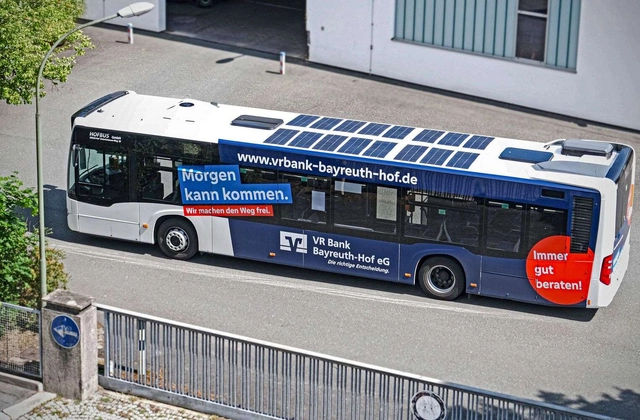
The German company Sono Motors became world-famous for developing the Sion, an electric car powered by solar energy. However, due to a lack of funding to support pre-series production, the project was terminated in February of this year, and the company’s focus is now on adapting and integrating its patented solar technology into third-party vehicles.

This business setback could be good news for the environment, since instead of focusing on individual vehicles, the business model has been restructured to serve a wide range of vehicles, including buses, trucks, and refrigerated vehicles.

Toward Urban Sustainability: The City of Rosario Is Selected for the US "Cities Forward" Program

Aiming to build a more sustainable, inclusive, and resilient future, the U.S. Department of State, ICLEI-Local Governments for Sustainability, Resilient Cities Catalyst, and the Institute of the Americas recently announced the list of Latin American, Caribbean, and U.S. cities that will participate in the “Cities Forward” program. The city of Rosario, Argentina, was selected to work in connection with Chattanooga, Tennessee, in the United States.