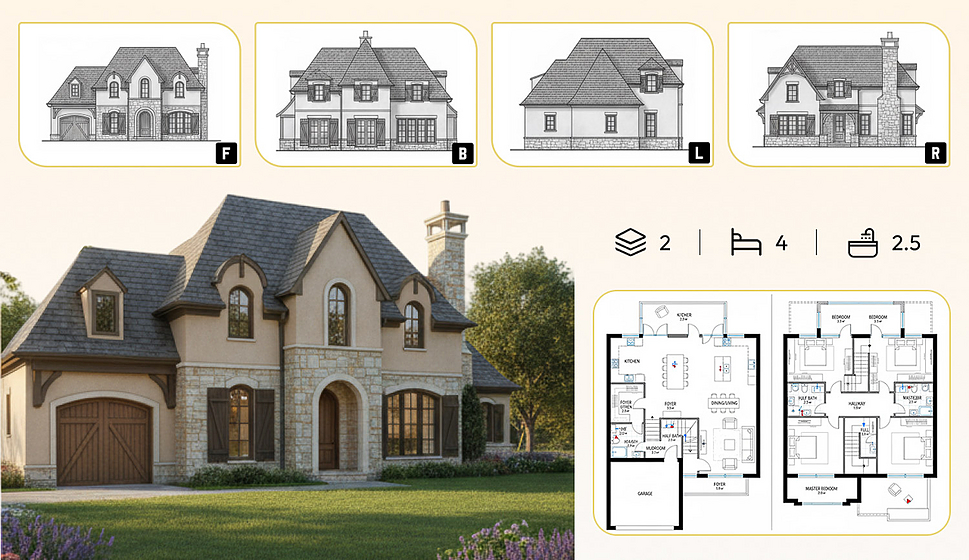
This guide covers a workflow that moves from project parameters to generated floor plans, 3D perspective views, exterior design exploration, and site context visualization, using AI tools in place of preliminary CAD and rendering work.
This guide covers a workflow that moves from project parameters to generated floor plans, 3D perspective views, exterior design exploration, and site context visualization, using AI tools in place of preliminary CAD and rendering work.
.jpg?1521471569&format=webp&width=640&height=580)
Over the past five years, Lisbon has attracted significant international attention, driving major changes in the Portuguese capital's urban life. From foreign technology investment to the promotion of cultural initiatives, these transformations are both positive and negative—a complex issue currently debated through the lens of gentrification, echoing developments in other global cities such as Berlin, Portland, and San Francisco.
On the cultural front, the city boasts an impressive diversity of initiatives, ranging from the opening of major, world-class museums—such as MAAT and Coches—to a rich culture of urban graffiti murals. This scene is supported by initiatives like the Underdogs cultural platform, which has worked with artists from around the world since 2013 to bring these paintings to the city's walls.
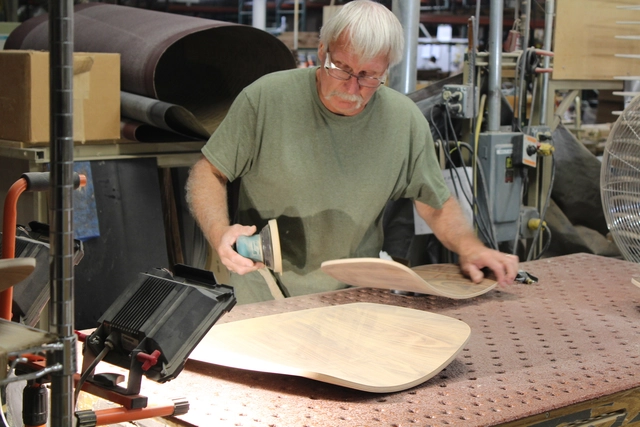
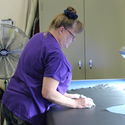
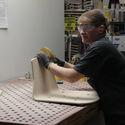
What is the manufacturing process of a chair like?
Our partners at Herman Miller opened the doors of their factories and offices in Michigan, United States, to show us the complex yet efficient design and manufacturing process of their various furniture pieces and products. During a three-day tour, we saw that their production involves a high level of detail and craftsmanship, where the experience and skill of their workers are essential.
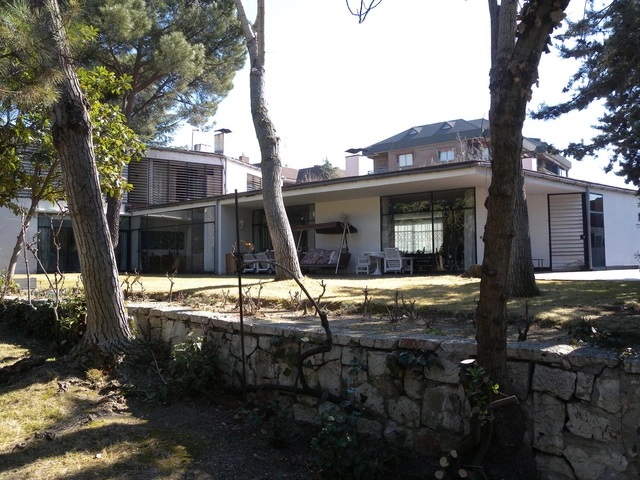
The tragic end in early 2017 of the Guzmán House, designed by architect Alejandro de la Sota, seems poised to repeat itself—this time with the Vallet de Goytisolo House, one of three works built in the capital by José Antonio Coderch (1913-1984), a prominent 20th-century Spanish architect, and his partner Manuel Valls.
According to the newspaper El Mundo, the General Directorate of Cultural Heritage of the Community of Madrid has issued a report rejecting the designation of this example of modern residential architecture—located at 5 Belisana Street in Madrid's Ciudad Lineal district—as a heritage site.
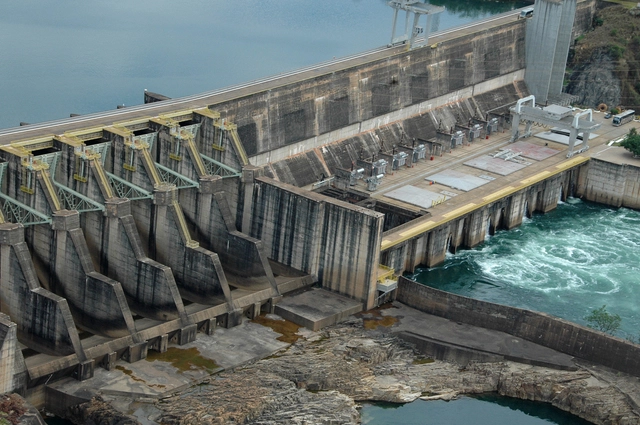
Two young entrepreneurs from Curitiba have developed a technological innovation that brings a long-held dream within reach for many Brazilians: owning a personal power plant. As reported by Tribuna do Paraná, mechanical engineers Felipe Wotecoski (31) and Juliano Rataiczyk (30) have created a device capable of generating electricity in a backyard with minimal environmental impact.
Similar in size to a four-burner stove, the micro-plant can generate up to 720 kilowatt-hours (kWh) per month—enough electricity to power three to four homes and feed the surplus back into the grid. According to the engineers, this output translates to savings of approximately R$ 500 per month on electricity bills.
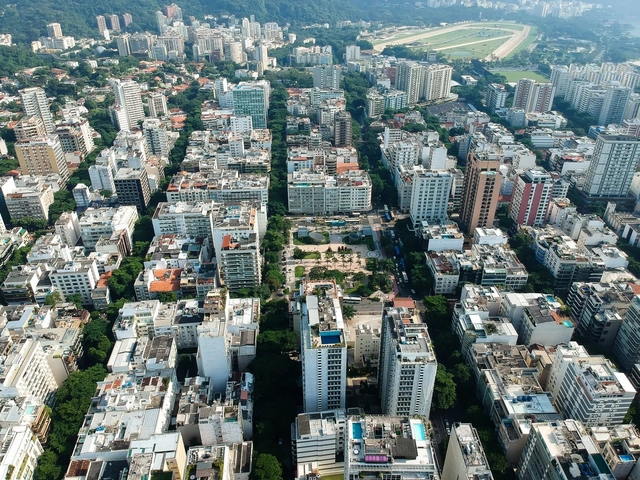
Google has launched the Environmental Insights Explorer tool to provide users with access to data and technology that can contribute to the transition toward a lower-carbon world. The information is primarily based on data already available on Google Maps.
The goal is to enable cities worldwide to calculate their greenhouse gas (GHG) inventories to facilitate climate action planning. “The inventory can help prioritize investments in the areas of greatest impact, as it highlights key emission sources or hotspots and can be used as a baseline to measure progress,” the company states on the tool's website.

The Brazilian Institute of Geography and Statistics (IBGE) released last week the 2017 edition of the Profile of Brazilian Municipalities (Munic). According to the document, fewer than half of Brazilian cities have structured planning for housing. The report points out that last year, of the country's 5,570 municipalities, 59.6% had some type of housing-directed initiative, but only 39.7% had a Municipal Housing Plan.
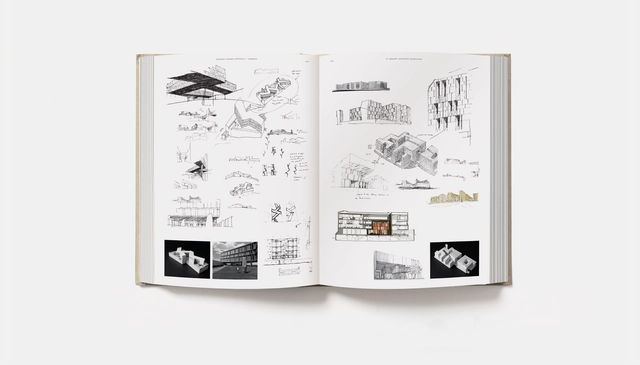
Phaidon recently published Elemental, a monograph that fully illustrates the social commitment and methods of Alejandro Aravena and his colleagues.
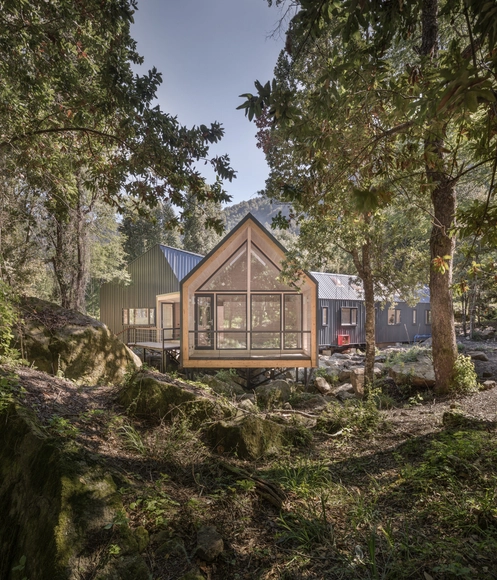
The project Casa sobre las rocas by the Chilean firm Schwember García-Huidobro Arquitectos has been recognized at the German Design Award 2019. The accolade, awarded in Germany by the Ministry of Technology, "identifies and presents unique design trends," according to the organization.
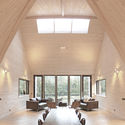
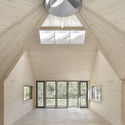
Built in a forest in the town of Cunco, Chile, Casa sobre las rocas received a Special Mention in the Architectural Design Communication category of the competition. The project is a second home that prioritizes communal areas, featuring a Y-shaped floor plan designed to optimize views and natural light.


A historical platform available online offers a look at the last one hundred years of architectural competitions in Uruguay, exploring the shape of the city its society set out to imagine.
100 Years of Architecture Competitions in Uruguay is a project created by authors Virginia Delgado, Francisco Magnone, and Marcelo Staricco (architects and design instructors, DEAPA - FADU, UdelaR) along with research advisor Mag. Arch. Diego Capandeguy.
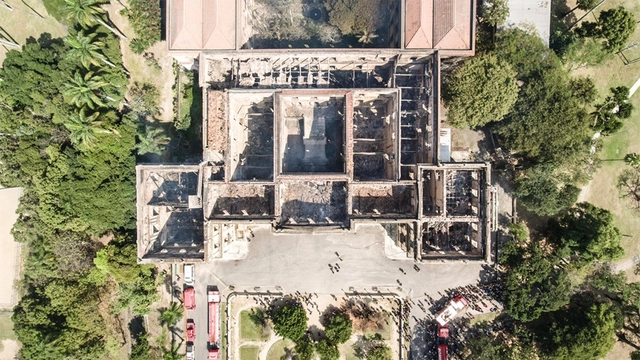
The destruction of the National Museum at Quinta da Boa Vista in Rio de Janeiro cannot go unnoticed. This tragedy must serve as a cry of "enough!" against the abandonment, neglect, and destruction of the nation's memory. The unfortunate reality is that the situation of the National Museum is not unique. Similar tragedies could happen again.
The values that define us as a society cannot turn to ashes like the National Museum. We call upon the State, architects and urban planners, universities, intellectuals, professional associations, and ultimately, Brazilian society as a whole to mobilize.
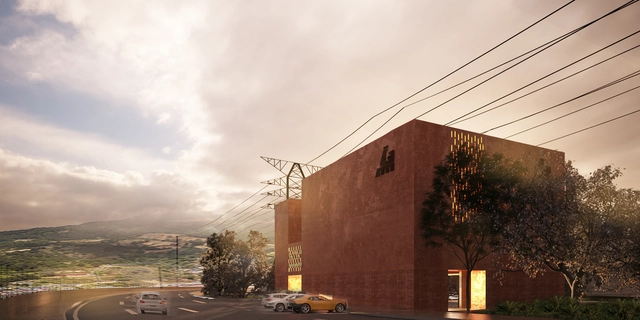
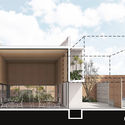
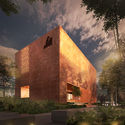
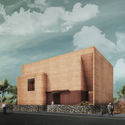
The Colegio de Arquitectos del Estado de Michoacán is a non-profit association established 54 years ago serving the city of Morelia, dedicated to heritage preservation and fostering debate on contemporary architectural production and urban development. To provide an adequate space for these activities, a competition was launched after securing a site for the new headquarters to support and foster contemporary architecture.
On November 29, the National Competition for the Headquarters Project of the Colegio de Arquitectos Michoacán, A.C. was held at its current headquarters. The jury—composed of Pedro Núñez González, Isaura González Gottdiener, Salvador Reyes Ríos, José Muñoz, Carlos Marín, and Jorge Humberto Flores Romero—evaluated 17 completely anonymous proposals.

Announced in 2016, the Cidade Matarazzo complex is currently under construction near Paulista Avenue in São Paulo. In addition to a tower designed by Jean Nouvel, the development includes the restoration of the former Matarazzo Hospital and the Santa Luzia Church, both heritage-listed by Condephaat – the Council for the Defense of Historical, Archaeological, Artistic, and Tourist Heritage of the State of São Paulo.
To protect the church's structure during excavation work, the engineering team behind the Grupo Allard development carried out a delicate procedure to keep the 1,200-ton building suspended 31 meters above the ground.

Construction of Chile's second Museum of Memory will have to wait. As reported by national newspaper La Tercera, the project designed for the city of Concepción "was not included as a priority in the 2019 budget" by the Regional Ministerial Secretariat (Seremi) of the Ministry of Public Works (MOP) of Biobío.
“We are talking about a construction project that we have estimated at nearly 4 billion pesos [USD 6 million]; it is therefore beyond what the MOP has historically built,” Daniel Escobar, regional secretary (Seremi) of Public Works, told the same outlet, adding that the budget is reaching 88 UF per square meter (2.6 million Chilean pesos). Following the shelving of the project, the mayor of Concepción, Álvaro Ortiz, questioned on Radio Cooperativa that “some technical reasons are being argued that, curiously, we did not know about before.”
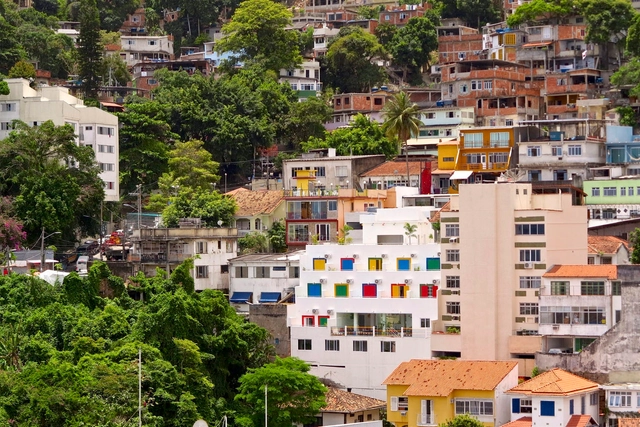
The Brazilian Institute of Geography and Statistics (IBGE) has released the publication Urbanized Areas of Brazil, which maps the urban footprints of major Brazilian cities. Covering the changes that occurred between 2011 and 2015, the study presents an overview of the country's recent urbanization process.
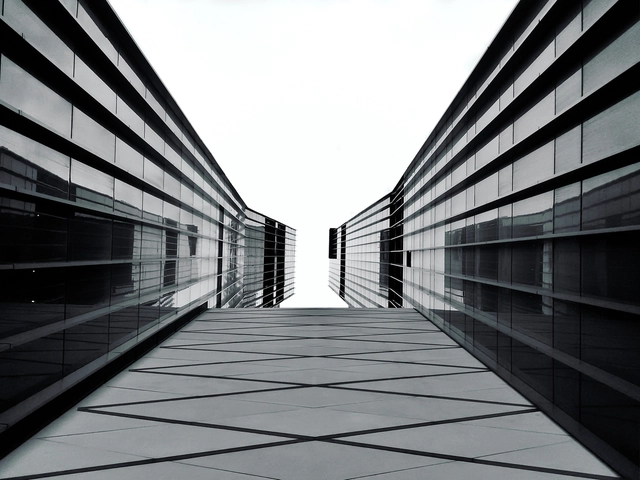
This month, we continue to celebrate the 6th anniversary of ArchDaily Mexico, an achievement made possible thanks to the hard work of our great team, as well as the relationships we have built over the years with the local architectural community and our readers.
With this in mind, this year we decided to celebrate with a contest that involved all of our readers. We wanted to discover their favorite projects in Mexico, whether classic or contemporary. We asked our readers to follow the @ArchDailyMx account on Instagram and share their favorite project with us using the hashtags #ConcursoArchDailyMx and #6AñosArchDailyMx.
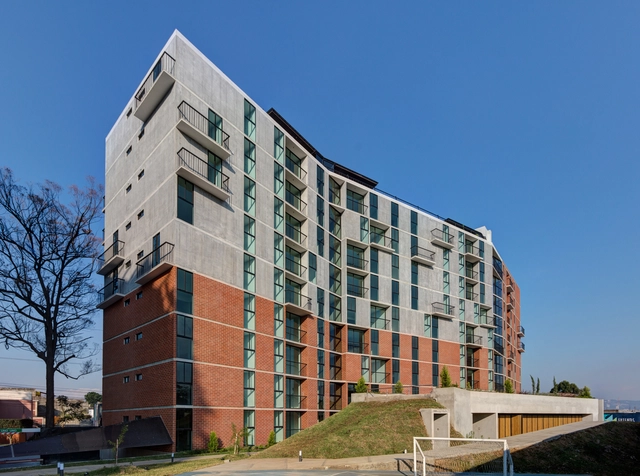
Alongside the activities and lectures held over three consecutive days at the Lux Theater in Guatemala City's historic center, the Guatemala Architecture Biennale (BAG) presented the winning works and projects of the Danta Awards on Wednesday, May 30, and Thursday, May 31.
For this edition, the organization proposed that architecture "is approached as a commitment to the public and private spheres and the power to negotiate individual or collective change to build dreams and aspirations, and even to express utopian ideals." Within this context, the jury evaluated more than 100 submitted projects from across Guatemala and the rest of Central America, recognizing parks, collective housing, gymnasiums, and renovations, among other typologies, that address the vision outlined by BAG 2018.
All winning projects in the professional category will be registered and sponsored to participate in the XXI Pan-American Architecture Biennale of Quito 2018, where they will be exhibited alongside projects from across the Americas and evaluated by the Biennale's jury.
.jpg?1533572922&format=webp&width=640&height=580)
An affordable, eco-friendly housing research project is being developed in Maputo, the capital of Mozambique, one of the poorest countries in the world. Named "Casas Melhoradas" (Improved Houses), the project is a partnership between the KADK (Royal Danish Academy of Fine Arts) School of Architecture, the Mozambican NGO Estamos, and Architects Without Borders. The goal is to develop low-cost, dignified housing with minimal environmental impact.
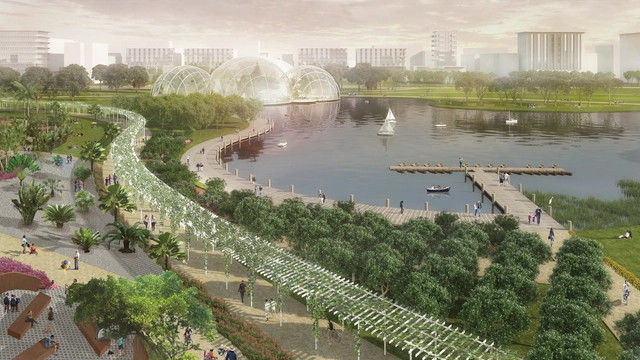
José Joaquín de Olmedo Airport—Ecuador's second busiest—will relocate to the outskirts of Guayaquil in 2022, freeing up 240 hectares in the city center. In response to the unprecedented urban opportunity presented by this relocation, the firm Perkins Eastman has revealed the first images of Nueva Ciudad, a 2-million-square-meter master plan in Guayaquil.
Stephen Forneris, head of the Ecuador office, explained that the project "can be a catalyst for economic growth, cultural activities, and entertainment; it will be the spark that begins Guayaquil's journey to becoming the city of the future."
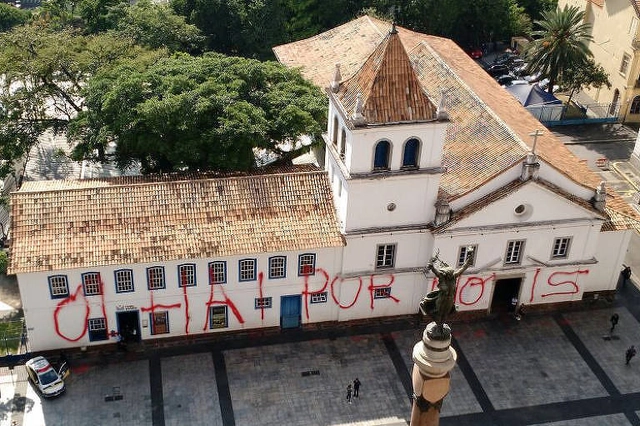
One of São Paulo's primary historical and tourist landmarks, the Pateo do Collegio—the founding site of the state capital—awoke with its facade covered in graffiti. "Olhai por nois" [Look out for us] is the phrase that, in red letters, covers the facade of the Museum of Sacred Art and the chapel of the complex, which belongs to the Society of Jesus.
Under Brazil's environmental crimes law, defacing monuments is a crime, and perpetrators can face up to one year in prison. At the time of publication, those responsible for the act had not been identified by the Metropolitan Civil Guard.
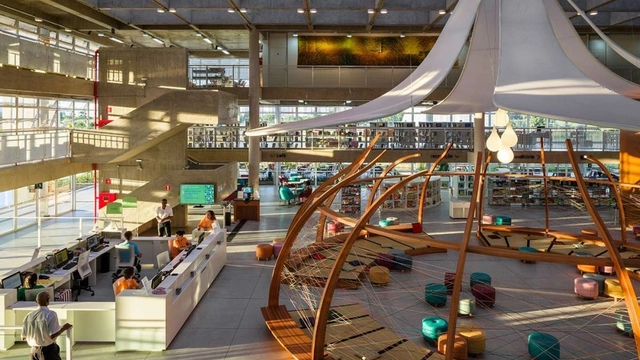
The Villa-Lobos Park Library (BVL), in the western zone of São Paulo, is one of five finalists for the best public library award from the International Federation of Library Associations and Institutions (IFLA), the industry's most prominent international organization. The Villa-Lobos Park Library was built on the site of a former open-air landfill. The revitalization of the area led to the creation of a free-entry, open-access reading space, modeled after the São Paulo Library in Youth Park (Parque da Juventude), which has also competed for another international award.
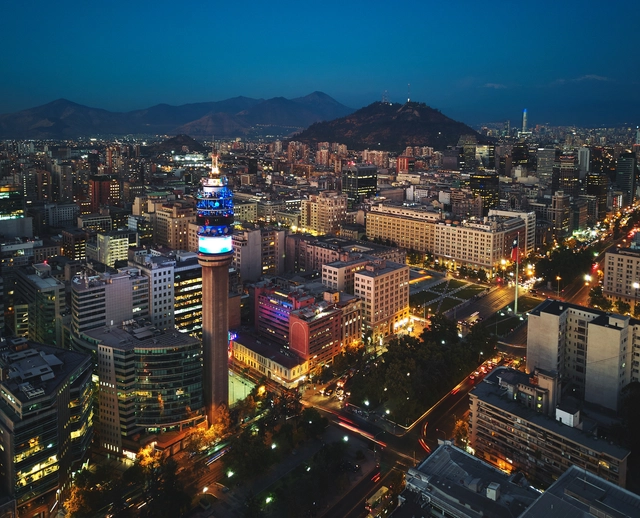
Public attention turned to the protests in Puchuncaví and Quintero, municipalities designated as a "sacrifice zone" due to the presence of 15 major energy, chemical, and fuel companies, while Santiago works on the opening of a new green lung in the city center. This week is dedicated to the environment in this edition of La ciudad chilena en la prensa, the ArchDaily section where we cover what is happening in Chilean cities.
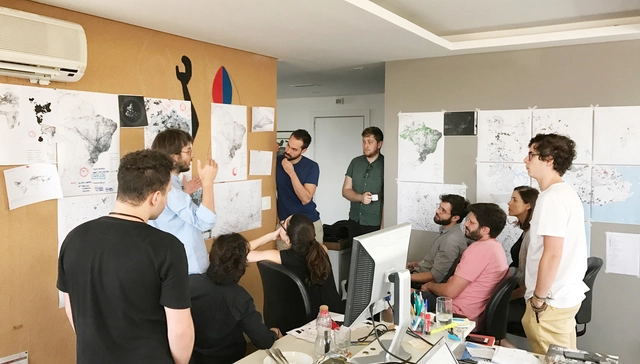
With the 2018 Venice Architecture Biennale approaching, ArchDaily Brasil interviewed the curators of the Brazilian pavilion – Laura González Fierro, Sol Camacho, Gabriel Kozlowski, and Marcelo Maia Rosa – to better understand their curatorial proposal and clarify details of public participation in this endeavor.
Read the interview below:
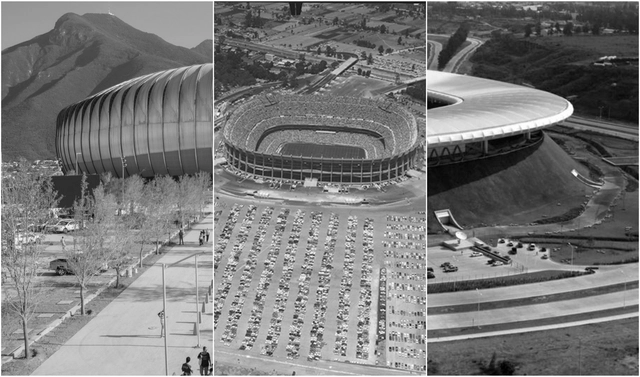
A few days ago, FIFA announced that Mexico, the United States, and Canada will host the 2026 World Cup. The news came as a surprise to some, as it will be the first World Cup to be played across three countries, featuring a new format with 48 teams divided into 16 groups of three. Consequently, further details on the organization will not be available until 2020, when FIFA is scheduled to announce the event's logistics.
Knowing that many of our readers are fans of both soccer and Mexican architecture, we present this special feature on the three Mexican stadiums that will host the 2026 World Cup. Don't miss it!
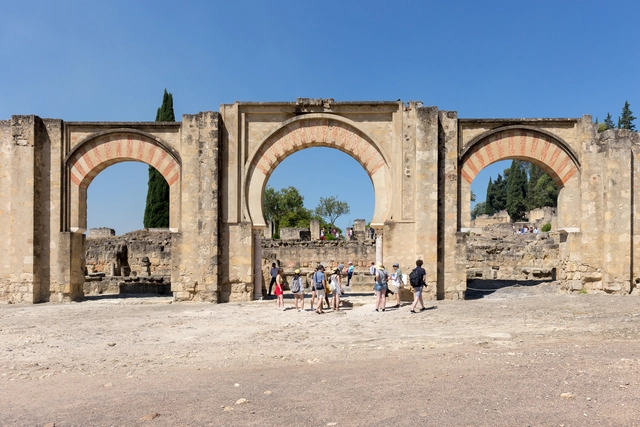
UNESCO has added 19 new sites to the World Heritage List, including the Caliphate City of Medina Azahara (Córdoba, Spain) during its recent 42nd session held in Manama, the capital of Bahrain.
The report prepared ahead of the session includes the evaluation and final conclusions of the International Council on Monuments and Sites (ICOMOS). Following a comparative analysis conducted both nationally and internationally, the council concluded that, alongside Medina Azahara, only Samarra (Iraq) stands as a well-preserved example of a caliphate city. Furthermore, among all caliphate cities, Medina Azahara is the only one that provides evidence of the culture and knowledge of the Islamic civilization that reached Europe.
.jpg?1521471591 "Artista: AkaCorleone. Ano: 2015. Foto de André Santos. Image Cortesia de Undergdogs")
.jpg?1521471603 "Artista: AkaCorleone. Ano: 2016. Foto de José Pando Lucas. Image Cortesia de Undergdogs")
.jpg?1521472289 "Artista: Shepard Fairey. Ano: 2017. Foto de Jon Furlong. Image Cortesia de Undergdogs")
.jpg?1521472210 "Artista: Shepard Fairey. Ano: 2017. Foto de Jon Furlong. Image Cortesia de Undergdogs")
.jpg?1521471569)