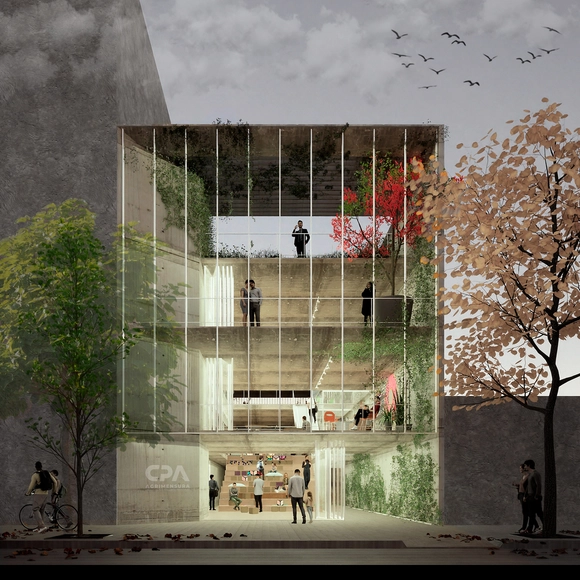
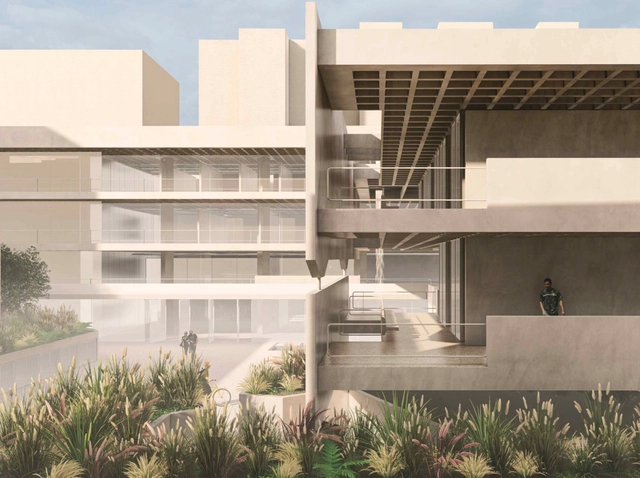
Primer Premio. Image Cortesía de OP Arquitectos (Marcela Orcaje - Gonzalo Pérez)
Organized by the Association of Architects of the Province of Buenos Aires (District I) and promoted by the Association of Land Surveyors of La Plata, the Provincial Preliminary Design Competition was launched for a new headquarters building for the Association of Land Surveyors of La Plata. Seeking to transform the workspaces of the Professional Council of Land Surveying of the Province of Buenos Aires – District V, the initiative aimed to rethink and design new spaces that foster exchange across multiple activities, opening the Association to both professionals in the discipline and the community.
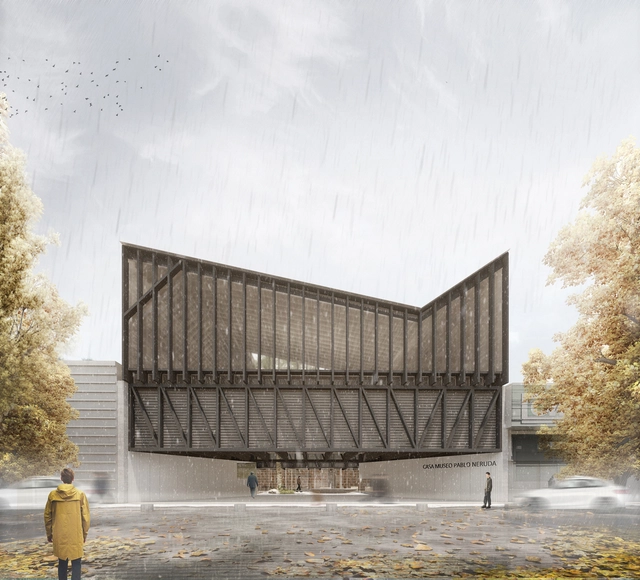
Primer Premio. Image Cortesía de Searle Puga Arquitectos, Pablo Montecinos y Giancarlo Acosta
The Municipality of Temuco launched a design competition for the new Young Pablo Neruda House Museum in Temuco, Araucanía Region, Chile. Highlighting Neruda's childhood memories and his formative years as a poet on the site, the competition sought proposals that integrate architecture and the environment into a cultural destination.
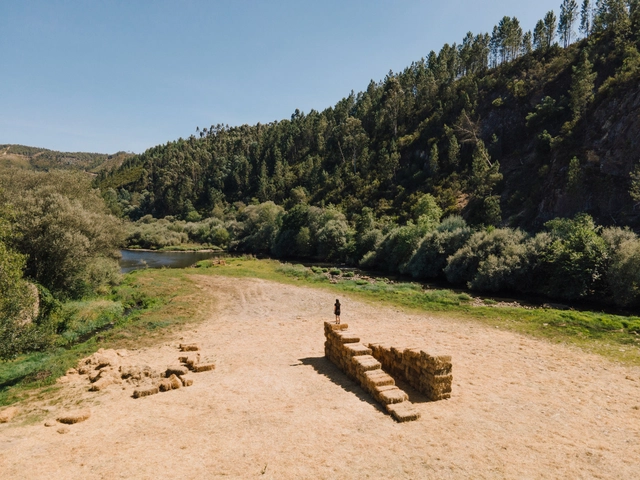
The project Fertile Futures, the Portuguese representation at the 2023 Venice Architecture Biennale, organized an International Summer Seminar in July in the municipality of Fundão, promoting alternative approaches to architecture and highlighting the project's promising future. The seminar aimed to foster thematic awareness, collaborative experiences, and an expanded field of action among the participants.
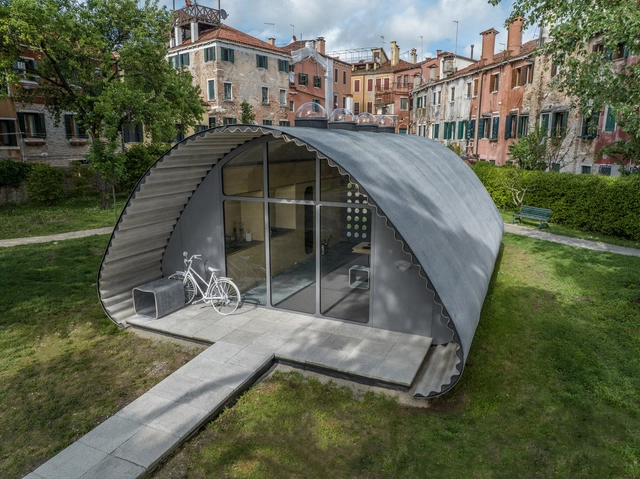
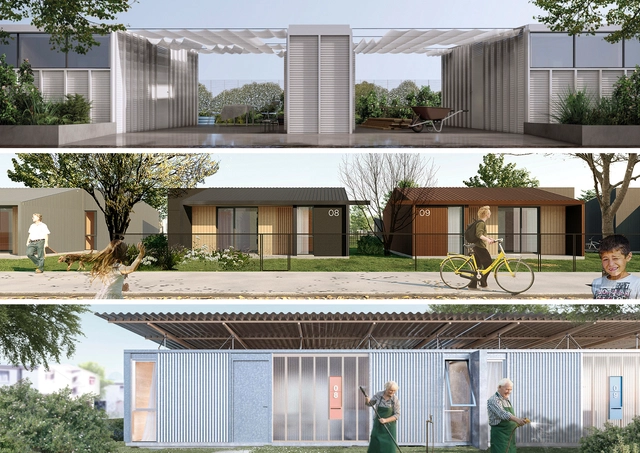
Many people are in need of shelter. War, extreme weather events, and famine... Unfortunately, these crises are frequent and lead to large-scale migration. Welcoming individuals in extremely vulnerable situations is a challenge. Ensuring comfort, well-being, and dignity is a humanitarian imperative. Today, there are around 103 million displaced people worldwide, and climate change could significantly increase this number.
The web series Atemporal ‑ A arquitetura permanece features a compilation of nine episodes depicting the various architectural movements that have shaped the history of Curitiba. Launched in 2020, the project spans from the earliest architectural impacts on the city during the colonial era and the influence of immigrants, to Eclectic architecture, Art Deco, and the first glimpses of Modernism, culminating in a denser vertical growth and an internationally recognized urban plan.
https://www.archdaily.com/1136035/web-series-presents-a-journey-through-the-architectural-history-of-curitibaArchDaily Team
Organized by the Ministry of Housing and Territorial Planning of Uruguay (MVOT) and MEVIR, with the support of the Inter-American Development Bank (BID), the International Architecture Competition "Wood: Innovating Social Interest Architecture" involved submitting proposals for new types of wooden housing extensions. These could be either paired or standalone single-level structures, to be built by MEVIR in a demonstration set of 20 social interest houses within the town of Tranqueras, Rivera Department, Uruguay.
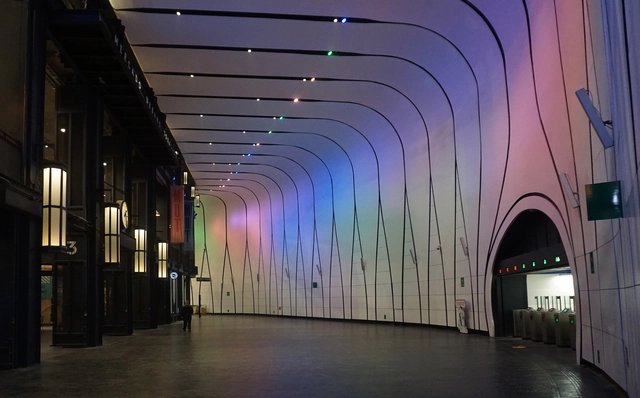
Santiago de Chile's metro system is undergoing a major connectivity upgrade. On the surface, construction has begun at several stations across the city, including two new exits at Tobalaba station that connect to the new MUT Mercado Urbano de Tobalaba. Below ground, equally significant changes are taking place: the extension of Lines 2 and 3, and the announcement of Lines 7 and 9.
Martha Pomasonco, winner of the 2023 RIBA Norman Foster Travelling Scholarship. Image via RIBA
The Royal Institute of British Architects (RIBA) has announced that Martha Pomasonco, from the University of Lima in Peru, has been selected as the winner of the 2023 RIBA Norman Foster Travelling Scholarship in recognition of her outstanding project, "Upgraded Barrios" (Barrios Mejorados).
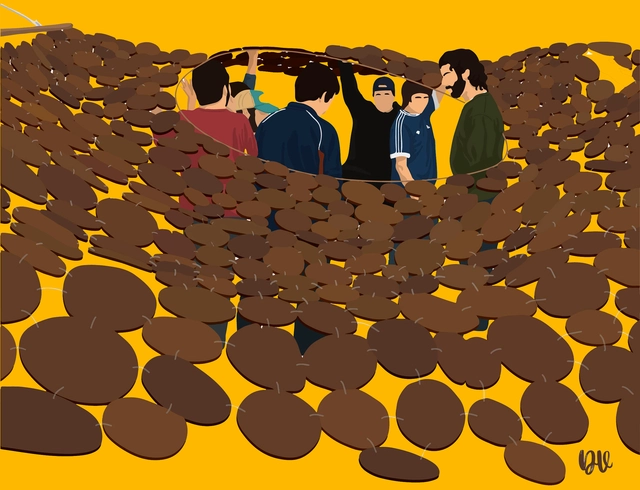
An apparent fragility shapes the design of the set built for the exhibition Taib: A History of the Theater, about the Brazilian Yiddish Art Theater (Teatro de Arte Israelita Brasileiro), founded in 1960 and built in the basement of Casa do Povo, a cultural center in Bom Retiro, São Paulo. With exhibition design by the collective Goma Oficina — a transdisciplinary design, architecture, and art association — the theater is staged on the first floor, presenting the powerful history of survival and re-existence of Jewish poetry despite the persecution and violence of the Nazi regime until the end of World War II.
blōma project by SPBR Arquitetos in Curitiba. Courtesy of SPBR Arquitetos
The "Kilometer Zero" concept has been gaining popularity in contemporary architecture, promoting environmentally conscious approaches to reducing carbon emissions. One application of this concept is the blōma project by SPBR arquitetos, led by Angelo Bucci. The São Paulo-based firm's first project in Curitiba, the residential building was designed to prioritize local resources and labor.
https://www.archdaily.com/1135911/spbr-arquitetos-designs-a-residential-building-based-on-the-kilometer-zero-concept-in-curitibaArchDaily Team
Through August 31, 2023, CAU Brasil will accept proposals for papers on the theme of Education, Professional Scope, and Practice. The goal is to discuss ideas that answer the question: What kind of architect do we need and what kind of architect do we want? Selected papers will be presented during CAU's 2nd National Seminar on Education, Professional Scope, and Practice. The free, hybrid event is organized by the Education and Training Commission of the Council of Architecture and Urbanism of Brazil (CEF-CAU/BR) and is scheduled to take place from September 18 to 20 in Brasília.
On August 24, Romano Guerra Editora will release the book Arquitetura e escrita: relatos do ofício, which brings together twenty-four interviews with Brazilian and international architectural historians and critics from various theoretical and professional backgrounds, academic disciplines, and generations. Mostly previously unpublished, the interviews were conducted both in response to local interest in the subjects and to reflect the global momentum of theoretical and historiographical debates in the field over recent decades.
https://www.archdaily.com/1135908/new-book-by-romano-guerra-features-24-unpublished-interviews-with-brazilian-and-international-architectural-historians-and-criticsArchDaily Team
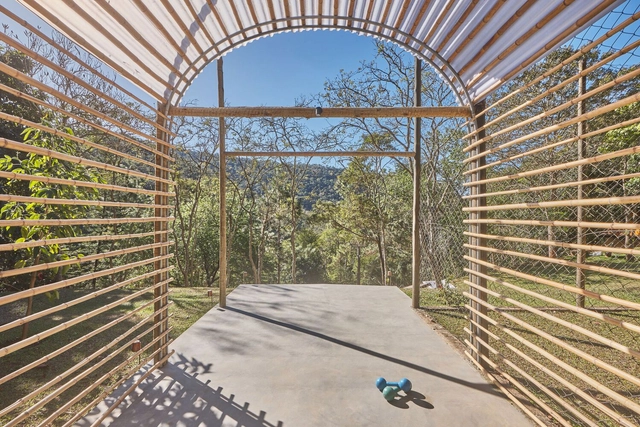
The firm gru.a, established in Rio de Janeiro in 2013 by Caio Calafate and Pedro Varella, has developed small-scale projects and installations, focusing particularly on the intersection of art, architecture, and infrastructure. Notable works include the installation La playa y el Tiempo and the Abrigo Alto and Academia shelters.
On Monday, August 14, the Di Tella Architecture Prize—organized by the School of Architecture and Urban Studies (EAEU) at Universidad Torcuato Di Tella (UTDT) through its Center for Contemporary Architecture Studies (CEAC), and funded by a donation from the Instituto Di Tella—was awarded to this emerging practice.
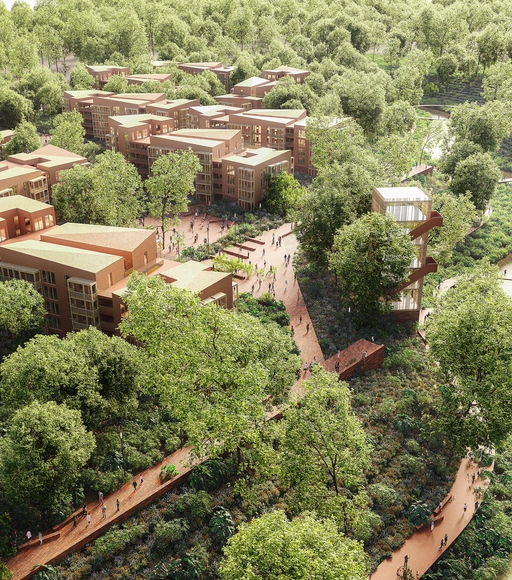
The Mayor's Office of Bucaramanga, together with the Colombian Society of Architects, sought innovative proposals for the orderly and sustainable development of Bucaramanga's urban peripheries in Colombia. Through viable, long-term management, financial, social participation, and regulatory models, the initiative aimed to foster the creation of a “Nuevo Norte” (New North) as a key central hub for the city and its metropolitan area, serving as an epicenter for inclusive, cohesive, productive, biodiverse, connected communities with high-quality habitats.
The public ideas competition for the territorial occupation model of the municipality's North Border aimed to gather urban proposals that integrate the needs and opportunities of both rural and urban environments. In this competition, the jury—composed of José Alejandro Gómez Suárez, Giovanna Vittoria Spera Velásquez, Helga María Rivas Ardila, Diana Wiesner Ceballos, and Manuel Sánchez Ruiz—awarded first prize to TA – El Taller De Arquitectos. Read on to learn more about the winning project.
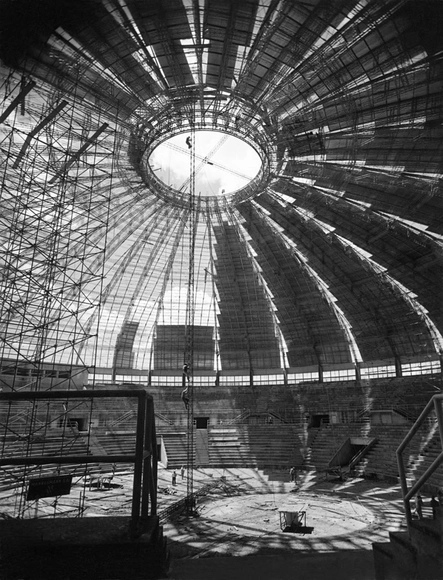
Roof of the Ibirapuera gymnasium with aluminum panels. São Paulo, c. 1955. Credit: Hans Gunter Flieg / IMS
One of the leading names in Brazilian photography, Hans Gunter Flieg (1923) worked in the fields of industry, advertising, and architecture. His images document the country's industrial development and verticalization, particularly in the city of São Paulo, starting in the 1940s. Through highly technically sophisticated photographs, he documented industrial facilities, machinery, buildings, and objects, challenging the boundaries between the objectivity of documentary photography and formal rigor.
https://www.archdaily.com/1136036/records-of-industrialization-in-brazil-ims-paulista-opens-retrospective-of-photographer-hans-gunter-fliegArchDaily Team
The film Volume II: Inhabiting the Territory is part of the project From the Periphery, which comprises a trilogy of documentaries exploring various themes related to contemporary Latin American architecture.
This second installment is an audiovisual essay focusing on the academic practice of the Talca School of Architecture and its relationship with the inhabitant, the landscape, and the materiality of Chile's Central Valley through the experience of the Taller de Obras. Specifically, the narrative is set during the 2006 edition of the course, held in the town of Curtiduría under the theme of vulnerability as the workshop's central axis.
The US Cities Forward program selects various municipalities in the Western Hemisphere requiring urban assistance based on environmental, economic, and social criteria, focusing on the concepts of "sustainability, inclusion, and resilience." The initiative recently announced the 24 cities that will participate from this year through 2026, engaging in peer-to-peer learning with US cities while gaining access to tools and funding to achieve their sustainability goals.
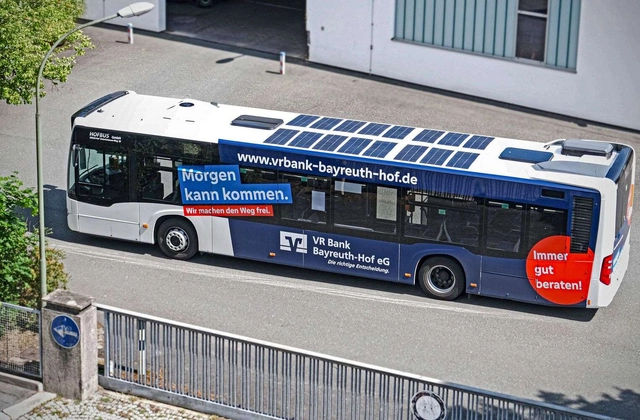
The first bus to be equipped with solar modules is running in the German city of Hof, in northeastern Bavaria. Photo: Sono Motors
The German company Sono Motors became world-famous for developing the Sion, an electric car powered by solar energy. However, due to a lack of funding to support pre-series production, the project was terminated in February of this year, and the company’s focus is now on adapting and integrating its patented solar technology into third-party vehicles.
This business setback could be good news for the environment, since instead of focusing on individual vehicles, the business model has been restructured to serve a wide range of vehicles, including buses, trucks, and refrigerated vehicles.
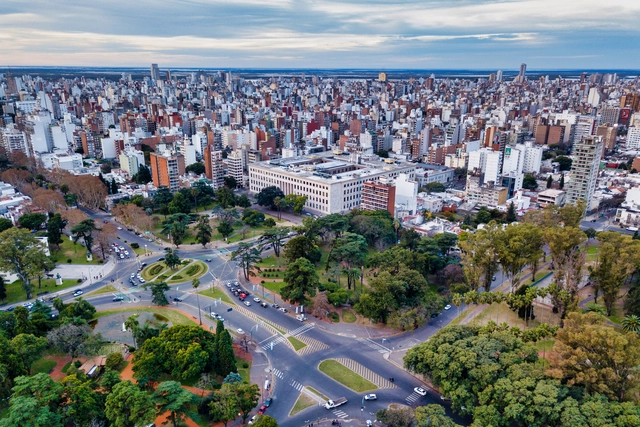
Aerial view of Independencia Park and the city skyline in Rosario, Santa Fe, Argentina. Image by buteo. Image via Shutterstock
Aiming to build a more sustainable, inclusive, and resilient future, the U.S. Department of State, ICLEI-Local Governments for Sustainability, Resilient Cities Catalyst, and the Institute of the Americas recently announced the list of Latin American, Caribbean, and U.S. cities that will participate in the “Cities Forward” program. The city of Rosario, Argentina, was selected to work in connection with Chattanooga, Tennessee, in the United States.
A Drug Rehabilitation Center in the Cracolândia region of São Paulo. This was the theme of the first design competition organized by Labideias, open to students and recent graduates in architecture and urbanism with up to two years since graduation.
Architecture can play a critical role in questioning existing possibilities. It can be a voice that, through the built environment, proposes more humanized, creative, and inclusive approaches. Based on this premise, the organization invited participants to develop a proposal that addresses the needs of a marginalized and increasingly persecuted population. Discover the winners and honorable mentions of the #001 Labideias Competition below.
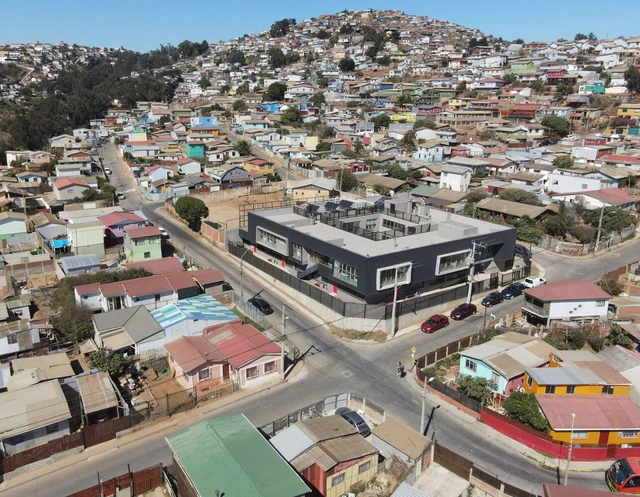
Courtesy of Raúl Goycoolea. ImageGolondrina Kindergarten and Nursery School in Valparaíso
While Chile is recognized as having one of the best education systems in Latin America, it also maintains a dual public and private system where disparities can often be significant. To address this issue, the Ministry of Education (MINEDUC) launched the Educational Reactivation Plan, which aims to allocate 100 billion Chilean pesos to preserve the infrastructure of public educational facilities.
Videos
Rio de Janeiro - Special Group samba schools perform at the Marquês de Sapucaí Sambadrome on the second day of parades (Fernando Frazão/Agência Brasil) - [CC BY 3.0 br (https://creativecommons.org/licenses/by/3.0/br/deed.en)]
Last year, the samba school Unidos da Tijuca announced the theme for its 2020 parade at the Marquês de Sapucaí: "Architecture and Urbanism." The choice was inspired by the unprecedented title Rio de Janeiro received from UNESCO as the World Capital of Architecture, as well as the city's selection to host the World Congress of Architects—an event organized by the International Union of Architects (UIA) that is expected to draw around 15,000 professionals this July. In addition to honoring architects and urban planners, the school will bring critical issues facing the field to the parade, such as the right to the city, the construction industry's role in the climate crisis, heritage preservation, and even ancestral architectural knowledge.
Primeiro Lugar. Image Cortesia de IAB-DF e Consórcio Arena BSB
The Institute of Architects of Brazil - Federal District Department and the Arena BSB Consortium have announced the results of the National Architecture and Landscape Competition for the Redevelopment of the Arena BSB Sports and Leisure Complex, which includes, among other facilities, the Mané Garrincha National Stadium.
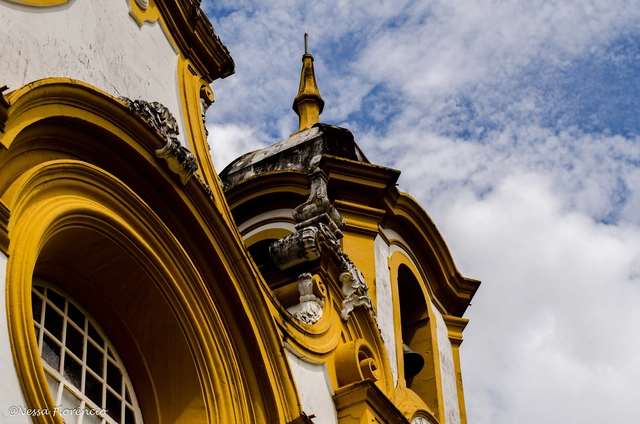
Photo: Nêssa Florencio on Visualhunt / CC BY-NC-ND
The National Institute of Historic and Artistic Heritage - Iphan has opened applications for 10 fellowships for the Professional Master's in Cultural Heritage Preservation. Interested candidates can apply until March 2, 2020.







.jpg?1578439538&format=webp&width=640&height=580)