Romullo Baratto

Romullo Baratto is an architect with a PhD from FAUUSP and Managing Editor of ArchDaily. He previously coordinated the editorial team of the 11th São Paulo Architecture Biennial and served as Managing Editor of ArchDaily Brasil, where he led the platform to win the FNA Award—the first time the honor was granted to a media outlet. He collaborated on the editing of the book "Concrete Jungle", published by gestalten, and has curated architecture exhibitions in Brazil, Chile, Denmark, and Italy, as well as delivered lectures and moderated debates in Spain, the United States, and Portugal. His doctoral thesis investigates the urban landscapes of São Paulo through cinema. His work spans academic research and editorial practice, communicating architecture through texts, interviews, lectures, curatorship, and photography. Follow him on Instagram @romullobf.

BROWSE ALL FROM THIS AUTHOR HERE

Architecture is a thankless profession. What can we do to improve this?

Subscriber Access | 

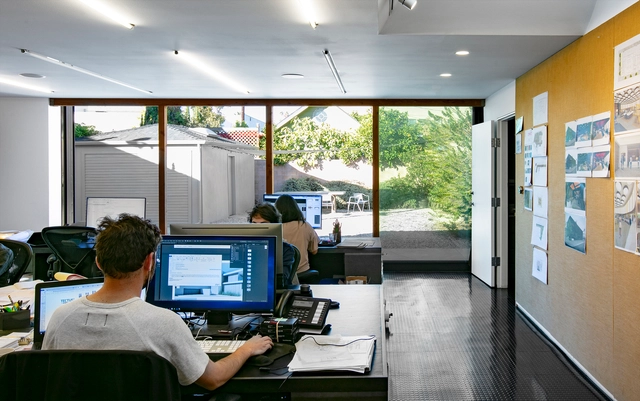
Architecture is one of the most beautiful professions—there is an undeniable romance in building the spaces where human beings dwell. It is also one of the oldest: if considered as an activity that organizes space, some form of architectural thinking can be identified dating back at least hundreds of thousands of years. Its beauty, however, is partially eclipsed by widespread frustration within the professional field in Brazil. A general lack of awareness regarding its importance to society, difficulty securing contracts, fierce competition, scarce opportunities in public projects, low-paying jobs, and a willingness to work without fees all contribute to the precarious state of architecture and urban planning.

"A Hug for Paulo": Architects and Artists Sign Letter in Support of Paulo Mendes da Rocha

Last week, Paulo Mendes da Rocha announced the donation of his entire project archive to the Casa da Arquitectura, a Portuguese institution based in Matosinhos dedicated to preserving and exhibiting architectural collections. The news was published at the time by ArchDaily and caused a stir among Brazilian architects, educators, researchers, and institutions—especially the FAUUSP, which expressed regret over Rocha's decision.

São Paulo will build a statue honoring Tebas, an enslaved 18th-century architect

Downtown São Paulo will receive a statue honoring Joaquim Pinto de Oliveira, an enslaved Black 18th-century architect known as Tebas. The announcement was made yesterday, September 10, by Mayor Bruno Covas at the São Paulo City Council. 

What is the future of living? Istituto Europeo di Design releases a report on the home of tomorrow

What does the home of the future hold for us? And for whom will it become a reality? These questions served as the guiding principles for The Future of Living - Contrasts. With a keen eye on identifying the emerging movements that shape how we will live tomorrow, the research team at the Istituto Europeo di Design used the world during the COVID-19 pandemic as their primary backdrop. Drawing from this context, rather than simply discussing housing trends, the researchers address the challenges that must be resolved to make these trends a reality for everyone, rather than a mere set of forecasts that segregate rather than create opportunities.

Winners of the 2nd Tomie Ohtake Institute Leroy Merlin Design Award Announced

The winners of the 2nd Tomie Ohtake Institute Leroy Merlin Design Award have been announced. Originally scheduled to take place in person at the Tomie Ohtake Institute alongside an exhibition of the projects, the awards were instead announced via video due to the novel coronavirus pandemic.

Winners of the 2nd Tomie Ohtake Institute Leroy Merlin Design Award Announced - Imagem 1 de 4Winners of the 2nd Tomie Ohtake Institute Leroy Merlin Design Award Announced - Imagem 2 de 4Winners of the 2nd Tomie Ohtake Institute Leroy Merlin Design Award Announced - Imagem 3 de 4Winners of the 2nd Tomie Ohtake Institute Leroy Merlin Design Award Announced - Imagem 4 de 4Winners of the 2nd Tomie Ohtake Institute Leroy Merlin Design Award Announced - More Images+ 1

Toward a Network of Architecture and Urbanism Archives in Brazil

The donation of Paulo Mendes da Rocha's archive to Casa da Arquitectura, an institution based in Matosinhos, Portugal, has sparked intense debate among architects and academics since its announcement early last week. Both opposing and supportive opinions were widely shared on social media and news outlets, and an institutional collaboration agreement between FAUUSP and Casa da Arquitectura was even proposed.

In light of the debate surrounding the preservation of architecture and urbanism collections in Brazil, IABsp published an open letter calling for a national network of archives. Read the full letter below:

Fortaleza launches program to implement micro-parks and tree-lined bike lanes

Launched last month, the Fortaleza Mais Verde program aims to create a network of micro-parks in the capital of Ceará and implement tree-lined bicycle corridors. Execution of the plan began in August.

"The purpose of the proposal is to preserve, secure, and progressively expand the green cover of the City of Fortaleza, making these areas usable for the population to enjoy," said the city's mayor, Roberto Cláudio. "We have several landscaping and urban planning initiatives underway. We expect to receive suggestions regarding this new pilot project. We want to ensure it is implemented and made irreversible," he added.

São Paulo receives urban totems for awareness, sanitization, and a memorial to Covid-19 victims

To maintain the flow of reliable information about Covid-19, facilitate hand hygiene for users, and pay tribute to the victims of the pandemic, the city of São Paulo has installed a series of multipurpose urban fixtures called “Totens Urbanos – Memorial Pró-Saúde”.

The project came to fruition following a meeting between architect Leonardo Fernandes Dias—whose design proposal won the popular vote in the international Coronavirus Design Competition by the GoDesignClass platform—and the organizers of the Rede Nacional de Apoio às Famílias e Vítimas da Covid (National Support Network for Families and Victims of Covid), an independent, voluntary civil society initiative providing specialized support. Temporary and emergency-focused in nature, the series of totems will occupy 17 high-traffic locations across the city until November.

São Paulo receives urban totems for awareness, sanitization, and a memorial to Covid-19 victims - Image 1 of 4São Paulo receives urban totems for awareness, sanitization, and a memorial to Covid-19 victims - Image 2 of 4São Paulo receives urban totems for awareness, sanitization, and a memorial to Covid-19 victims - Image 3 of 4São Paulo receives urban totems for awareness, sanitization, and a memorial to Covid-19 victims - Image 4 of 4São Paulo receives urban totems for awareness, sanitization, and a memorial to Covid-19 victims - More Images+ 6

Álvaro Siza designs new residential complex in Gallarate, Italy

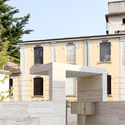
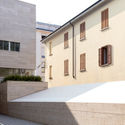
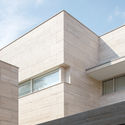
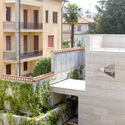
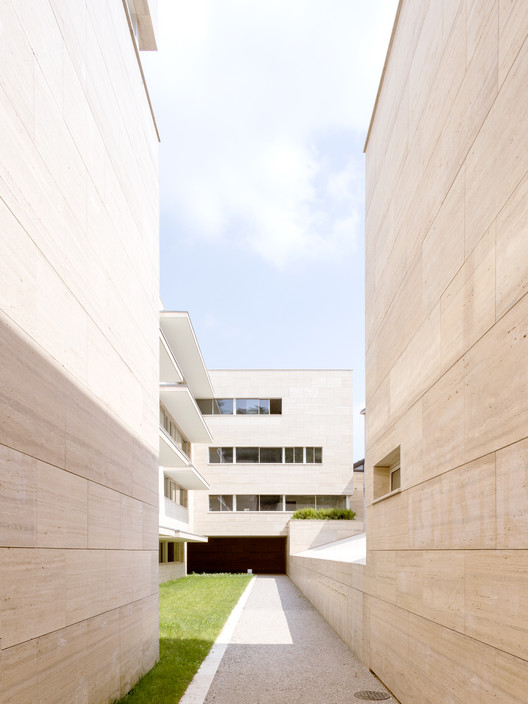
Situated on a suburban lot in Gallarate, in Italy's Lombardy region, the latest project by Álvaro Siza rises in two travertine marble blocks: a 20-unit residential complex developed in partnership with the Portuguese firm COR Arquitectos. Facing the busy Via Roma and the quiet Via Postporta, the development reinterprets two local typologies—the Lombard courtyard and the isolated villa—in a play of volumes that recalls the geometries of another Siza masterpiece, the Porto School of Architecture.

Álvaro Siza designs new residential complex in Gallarate, Italy - Imagem 1 de 4Álvaro Siza designs new residential complex in Gallarate, Italy - Imagem 2 de 4Álvaro Siza designs new residential complex in Gallarate, Italy - Imagem 3 de 4Álvaro Siza designs new residential complex in Gallarate, Italy - Imagem 4 de 4Álvaro Siza designs new residential complex in Gallarate, Italy - More Images+ 9

Body and Soul as Design: Guilherme Wisnik Interviews Ivana Wonder

Design is more than product design. It is also the construction of personas, with their bodies and souls. The natural state is just one of the design parameters. We are the design of ourselves, in permanent transformation.

Guilherme Wisnik talks with Ivana Wonder, a persona created by designer Victor Ivanon. Possessing a powerful voice and breaking down the boundaries between masculine and feminine, Ivana leads a multisensory experience of emotion and longing. From the central spotlight of a damp cabaret, this haunting and ethereal figure emerges.

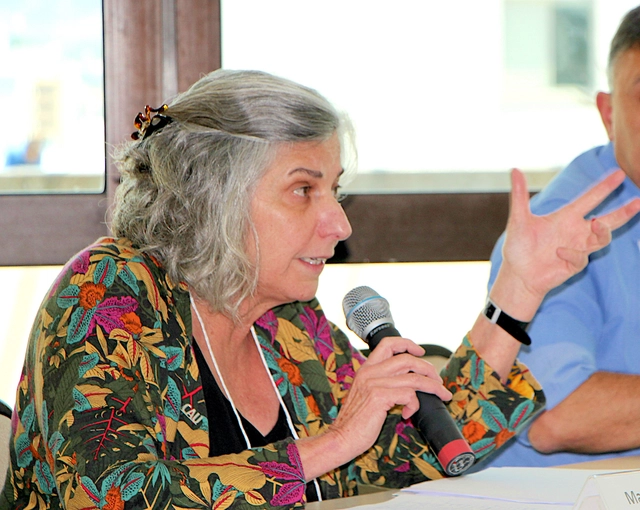
Maria Elisa Baptista is the first woman to hold the presidency of the IAB

Architect and urban planner Maria Elisa Baptista is the new President of the National Board of the IAB. She succeeds Nivaldo Andrade, whose term ended on September 26 of this year. In nearly a century of existence, this is the first time a woman has held the position.

The leadership team also includes Rafael Pavan dos Passos (National Vice President, IAB-RS), Cláudio Listher Marques Bahia (Secretary General, IAB-MG), Rosilene Guedes Souza (Administrative-Financial Director, IAB-MG), Luiz Eduardo Sarmento Araújo (Cultural Director, IAB-DF), Fernando Túlio Salva Rocha Franco (Extraordinary Vice President of Institutional Relations, IAB-SP), and Luiza Rego Dias Coelho (Extraordinary Vice President of Affirmative Action, IAB-DF).

13th São Paulo International Architecture Biennial Will Have "Reconstruction" as Its Theme

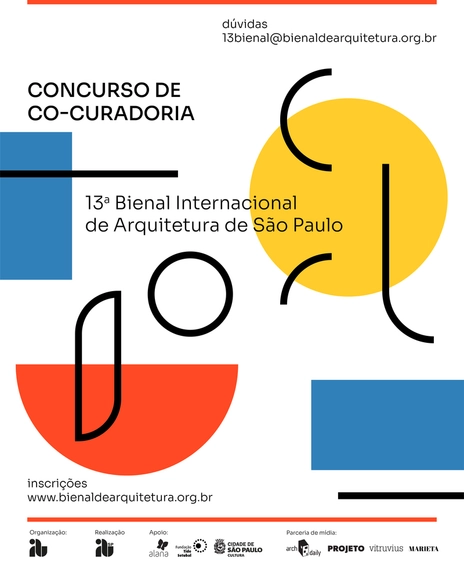
The IAB-SP, organizer of the São Paulo International Architecture Biennial, following a public consultation on the open call guidelines from October 10 to 25, is launching a competition on November 4 to select the co-curatorial team for the 13th Biennial, which will take place in 2022. Proposals can be submitted through the Biennial's website until January 24, 2021. This edition features a 12-member committee, which includes IAB representatives from other Brazilian states to ensure a diverse perspective in overseeing the event, which has both national and international reach.

The Virus and the Return of the State: Guilherme Wisnik Interviews Economist Laura Carvalho

The Covid-19 pandemic has brought unprecedented consequences for the global economy. In Brazil, it hit an economy that had barely recovered from the 2015–16 recession. However, responding to the crisis requires not only easing budget rules, but rethinking the very role of the state to address historical deficiencies that the pandemic has laid bare.

Guilherme Wisnik talks with Laura Carvalho, professor at the School of Economics and Administration of the University of São Paulo and holder of a PhD in economics from the New School for Social Research. She writes biweekly for the newspaper Nexo and is the author of "Valsa Brasileira: do boom ao caos econômico" (Todavia, 2018) and "Curto-Circuito: o vírus e a volta do Estado" (Todavia, 2020).

For a Just and Inclusive City: Guilherme Wisnik in Conversation with Carmen Silva

The struggle for the right to the city is deeply tied to the right to decent, permanent, and accessible housing. This involves downtown building revitalization projects driven by broad social participation, particularly by women who are heads of households—initiatives that serve as scalable models across the city. Guilherme Wisnik speaks with Carmen Silva, a Black woman from Northeast Brazil and an activist for the right to the city. A leader of the Movimento Sem-Teto do Centro (MSTC), she served as a Municipal Housing Councilor for two terms, and during the same period, she coordinated the Participatory Council of the Sé region.

UIA2021RIO Announces the Results of the Maré-Cidade International Competition

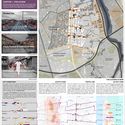
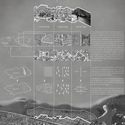
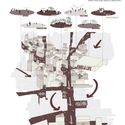
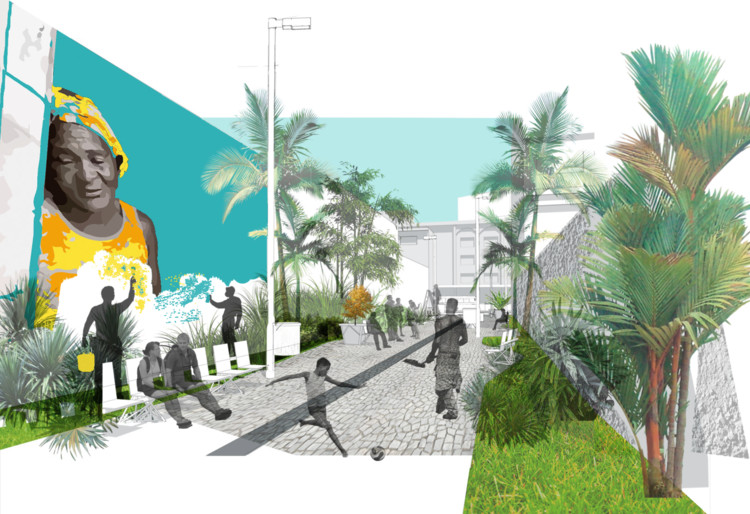
The jury of the Maré-City International Competition, organized by the 27th World Congress of Architects – UIA2021RIO, has selected the three winning projects and three honorable mentions. The choice was not easy: out of 180 entries from places as diverse as Germany, China, Egypt, Brazil, Russia, Poland, Turkey, Colombia, France, Portugal, Oman, and Ukraine, the jury shortlisted 28 finalists before deciding on the winners. Chinese entrants represent the majority of the awardees, securing first and second place, as well as the Roberto Burle Marx and Demetre Anastassakis honorable mentions. Third place went to a project by Brazilian students from São Paulo, while the Luiz Paulo Conde honorable mention was awarded to a project by students from Bogotá, Colombia.

UIA2021RIO Announces the Results of the Maré-Cidade International Competition - Image 1 of 4UIA2021RIO Announces the Results of the Maré-Cidade International Competition - Image 2 of 4UIA2021RIO Announces the Results of the Maré-Cidade International Competition - Image 3 of 4UIA2021RIO Announces the Results of the Maré-Cidade International Competition - Image 4 of 4UIA2021RIO Announces the Results of the Maré-Cidade International Competition - More Images+ 2

Luminar Project launches app, books, and maps of heritage-listed neighborhoods by Iphan in Santa Catarina

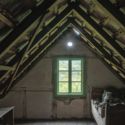
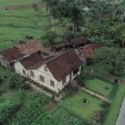
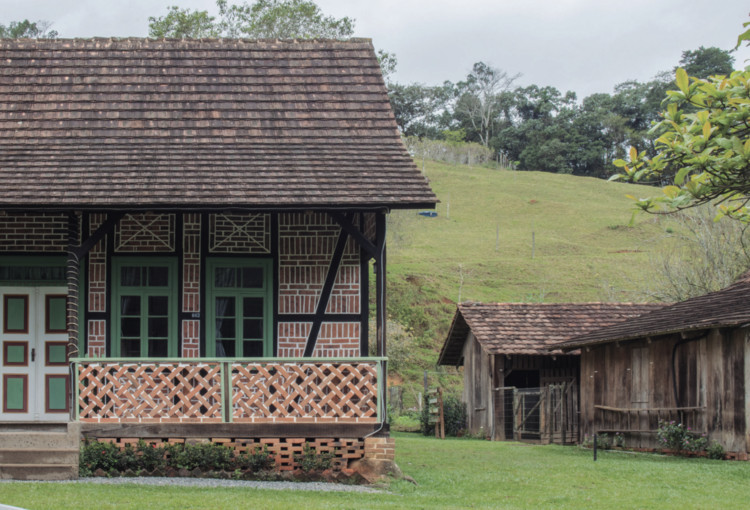
A watercolor-illustrated tourist map, a mobile application available for Android and iOS, and two books gathering stories from the neighborhoods of Rio da Luz, in Jaraguá do Sul, and Testo Alto, in Pomerode—both in Santa Catarina—comprise the Projeto Lumiar. The initiative will launch these products online at 7:00 PM this Thursday, the 8th. The result of two years of research with local communities, the launch event is supported by the National Historic and Artistic Heritage Institute (Iphan).

Luminar Project launches app, books, and maps of heritage-listed neighborhoods by Iphan in Santa Catarina - Imagen 1 de 4Luminar Project launches app, books, and maps of heritage-listed neighborhoods by Iphan in Santa Catarina - Imagen 2 de 4Luminar Project launches app, books, and maps of heritage-listed neighborhoods by Iphan in Santa Catarina - Imagen 3 de 4Luminar Project launches app, books, and maps of heritage-listed neighborhoods by Iphan in Santa Catarina - Imagen 4 de 4Luminar Project launches app, books, and maps of heritage-listed neighborhoods by Iphan in Santa Catarina - More Images

FNA names Maria Inês Sugai Architect and Urban Planner of the Year

Maria Inês Sugai is the 2020 Architect and Urban Planner of the Year. The award is presented annually by the National Federation of Architects and Urban Planners (FNA) to professionals who stand out for their work dedicated to the development of the profession and of Brazilian cities. Holding a bachelor's, master's, and doctorate degree from FAU-USP, with specializations in Urban and Regional Development and the Use and Conservation of Natural Resources from UFSC, the professor's nomination was supported by the Union of Architects and Urban Planners of Santa Catarina (SASC). Maria Inês Sugai is currently a professor in undergraduate and graduate programs at UFSC and the author of articles and books, including “Espaço e Desigualdade” (Space and Inequality). She also served as a member of the Santa Catarina State Council of Cities.

Six good examples of social housing in Brazil

Subscriber Access | 

Criticism of the most common models of social housing (HIS) in Brazil is quite frequent. Indeed, these critiques are generally well-founded, given the architectural and urbanistic deficiencies of most completed developments—particularly those built in areas far from urban centers, which deny residents their right to the city.

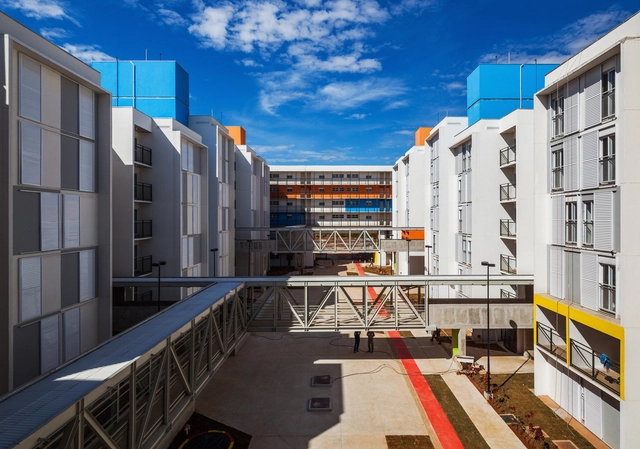
There are, however, successful examples: projects built on the premises of access to urban infrastructure, connectivity with the immediate surroundings, construction efficiency, environmental comfort, and healthy living conditions inside the housing units. Below, we have compiled six examples of social housing—designed by Biselli Katchborian Arquitetos, Jirau Arquitetura, MMBB Arquitetos, H+F Arquitetos, Boldarini Arquitetura e Urbanismo, and Vigliecca & Associados—that offer compelling solutions to such a complex and delicate program.

Six good examples of social housing in Brazil - Imagem 1 de 4Six good examples of social housing in Brazil - Imagem 2 de 4Six good examples of social housing in Brazil - Imagem 3 de 4Six good examples of social housing in Brazil - Imagem 4 de 4Six good examples of social housing in Brazil - More Images+ 14