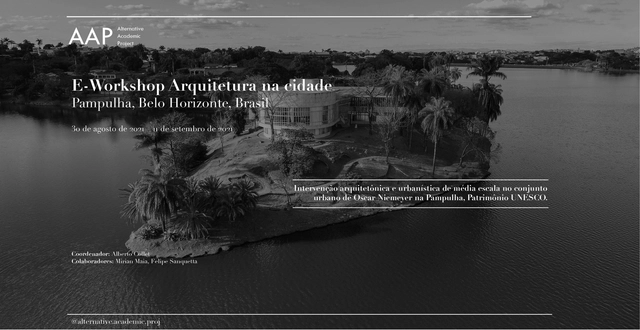
E-Workshop: Architecture in the City
Pampulha, Belo Horizonte, Brazil
E-Workshop: Architecture in the City
Pampulha, Belo Horizonte, Brazil
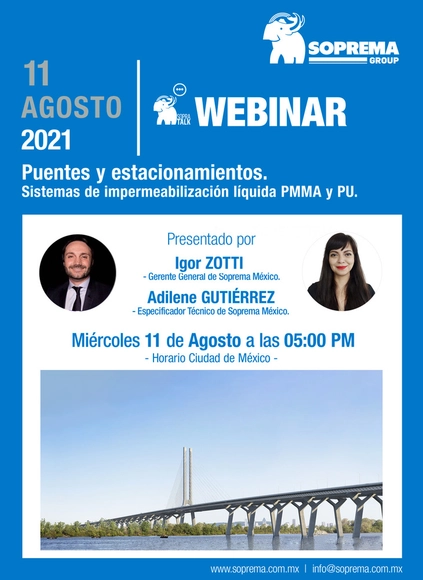
On Wednesday, August 11, at 5:00 PM (Mexico City time), Igor Zotti, General Manager of Soprema Mexico, and Adilene Gutiérrez, Technical Specifier at Soprema Mexico, will present an introduction to PMMA and PU liquid waterproofing systems for bridges and parking structures.
The Institute for Advanced Architecture of Catalonia (IAAC) with the Advanced Architecture Group and the BUILD Solutions project partners are proud to announce the Design with Nature Contest, a global platform to experiment and rethink urban environments in response to today’s global challenges.

Do you design the future? The Green Concept Award 2022 is now open for submissions!

Festival Fugaz, an urban intervention festival in Greater Concepción, seeks to recognize and promote the territory as a space of diverse cultural expression and identity. Through a series of artistic activities that encourage community occupation of public space, the festival aims to foster citizen participation in open cultural events and revalue the characteristic elements of Greater Concepción's physical heritage as fundamental settings for urban life.

The focus of this competition, the fifty-block area east of downtown Los Angeles known as Skid Row, contains one of the largest stable homeless populations in the United States. Established in the 1930s during the Great Depression, Skid Row’s population has ranged over the years between 4,000 to 8,000 inhabitants with the 2019 population count being 4,757, an 11% increase over the previous year. Given the impact of Covid-19, the Skid Row population is expected to not only significantly increase in the coming months but to be critically at risk due to health concerns. Lacking the ability to afford personal protection supplies and inability to maintain social distancing, the occupants of Skid Row are one of the most susceptible populations in Los Angeles and southern California.
More than a year into the COVID-19 pandemic, it is clear that cities—and their citizens—have undergone significant changes. Adapting to new ways of using public space, leveraging these areas to address the pandemic's toll, staying home, rethinking workspaces, city-provided facilities, and our modes of mobility—among many others—will remain challenges as we await further progress in vaccination efforts.

Construction is the most obvious reward for an architectural project, but very often in order to make things buildable, architects have to sacrifice innovation and creativity and surrender to business as usual. Non Architecture launches an award to honour those projects that didn’t take that approach and are unbuilt and unbuildable, either because they were designed to stay as such, or because their innovative charge brought them into the realm of the unpractical. We want to reward their innovative and experimental character with an award, organized in 4 categories – Urban, Landscape, Architecture and Aspatial.

How do we define “home”? Although our ideas about home are constantly being rethought, the careful examination of “home” has recently come to the attention of architects and nonarchitects alike. In recent times, almost everyone has had to confront their perspective of “home” as these spaces have evolved to incorporate so many aspects of our daily lives.
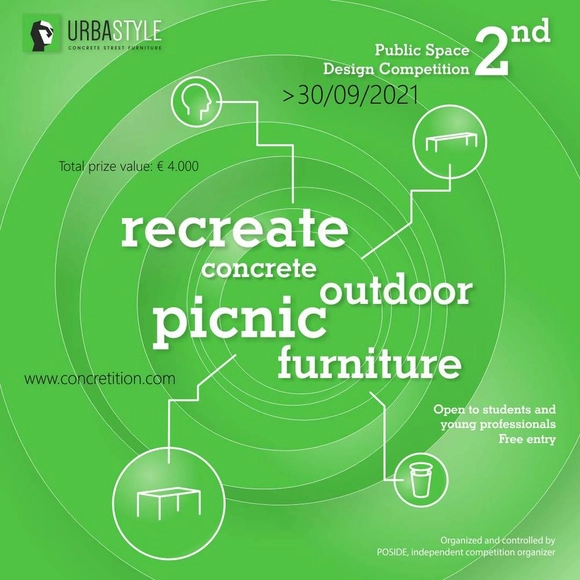
Public Space Design Competition, “Recreate Concrete Outdoor Picnic Furniture”
is the second international open competition of ideas to reveal talents and fresh ideas that can benefit to the community sponsored by leading precast concrete company URBASTYLE : www.urbastyle.com

Award ceremony will be held at the summit ArchEurasia in Yekaterinburg (Russia)
The competition of architecture and design Eurasian Prize 2021 drew entries from 29 countries.
Accepting entries for the international competition of architecture and design Eurasian Prize 2021 completed. Competition results up will take place on November 19, 2021 in Yekaterinburg, we will pleased to announce the winners and the best projects.
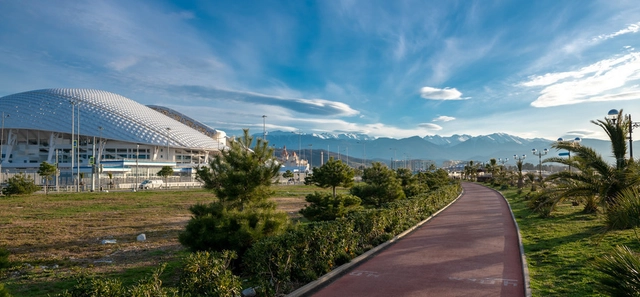
Sirius, the first federal territory in Russia, is initiating the competition for an urban design concept of its 7,5 kilometre long seafront promenade. The open call for teams and individual candidates from Russia and beyond is launched on the competition website. This competition is organized by VEB.RF, The Center for Urban Studies of the Sirius University of Science and Technology, Strelka KB, ProGorod.

Building is one of very few endeavours that are physically connected to the surface of the earth, fixed and enduring. Nevertheless, for centuries, especially in the West, we have considered ourselves separate and above nature, drifting away, defining our own systems and order, and using the ground as a nothing more than a passive foundation. Other times we sought connection, drawing on nature for ritual and religion, fortified protection, and ecological balance.

Within the academic dialogue and reflection space 'Del territorio al Detalle,' which brings together architecture professors, students, and renowned architects, the spin-off 'Del territorio al detalle .re' explores, through informal conversations with key figures, the thesis that a territory's richness stems from its ability to renew itself by activating its own disused spaces, thereby transforming them into challenges and resources.

Portuguese Houses, Indeed!
With @nmsarquitectura

What are the principles of timber structural design? How can one understand and develop structural arrangements? How can structural stability be ensured and elements pre-dimensioned? Which construction systems are most suitable for a given project? How can one begin projects involving long spans or tall timber buildings? This course aims to address these and other key questions to assist architects, engineers, builders, and others interested in using timber as a structural material.
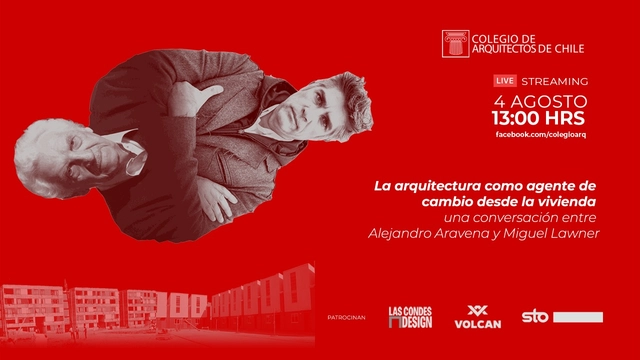
The Colegio de Arquitectos de Chile is celebrating another anniversary with a series of free, fully online activities. The milestone begins on Wednesday, August 4—marking 79 years since the enactment of Law 7.211, which established the College in 1942—and kicks off Architecture Month.

Preserving Genius: How to Save Frank Lloyd Wright Buildings. REALLY Save Them.