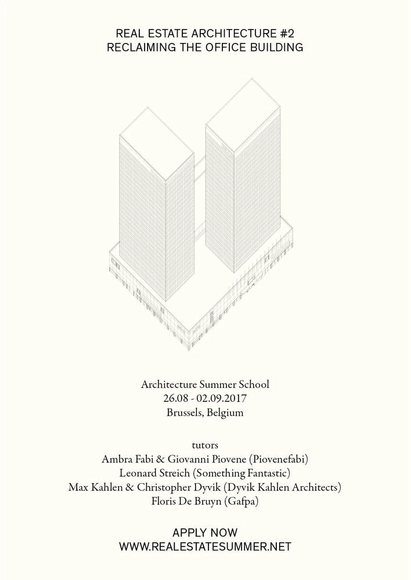
The international Summer School will take place in Brussels from from August 26th to September 2nd. Forty students and recently graduated architects will be invited to rethink the future of the office buildings, products of the real estate boom of the 1960s. Participants will be led by four talented architects: Piovenefabi (Milan), Gafpa (Ghent), Something Fantastic (Berlin) and Dyvik Kahlen (London).
Merging expert knowledge of timber construction with cutting-edge robotic fabrication technologies we will explore the creative potential of prototyping complex and large-scale timber structures with digital tools resulting in the construction of a roof structure for the temporary foundry building for the Hooke Park Campus.
Our weapons of choice- the chainsaw and bandsaw- will gain an augmented level of precision and control when wielded by the large Kuka KR150 robot. Through rigorous physical testing, we will prototype connection details utilizing the extraordinary precision and flexibility of multi-axis robotic machining.
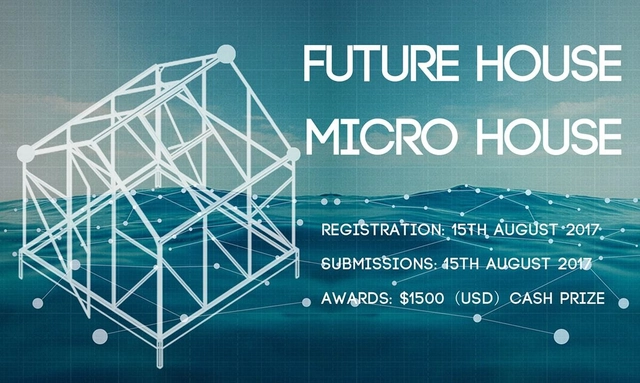
This international architectural idea competition invites all architecture students, young architects, and professionals related to architecture studies to develop and submit compelling ideas for the design of a Micro House. The competition seeks the creation of a Micro House with ideas and concepts in architectural design with site planning. Micro houses are the focal point in a broader system to address issues, concerns, and problems of the current day.
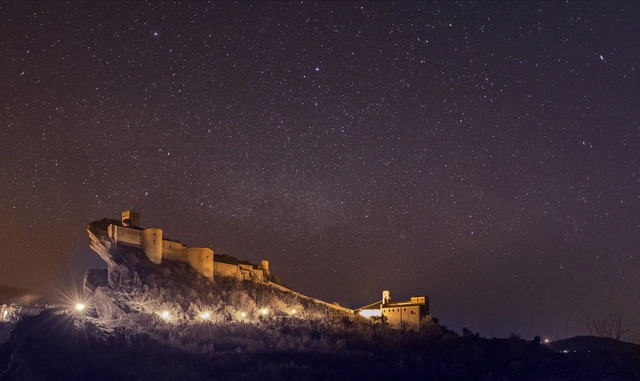
YAC – Young Architects Competitions –launches Observatory Houses, a € 20,000 cash prize open architectural competition aiming at the design of a hotel-observatory in the area of the castle of Roccascalegna, in Central Italy. The competition is in cooperation with the Italian State Property Agency – Italian Government, Italian Exhibition Group, the Municipality of Roccascalegna, Casabella, Associazione Italiana Confindustria Alberghi. The internationally-renowned jury gathers, among others, Enrique Sobejano, Rodrigo Duque Motta, Simon Frommenwiler co-founder of HHF Architects, Nicodemos Tsolakis, Felix Perasso from Snohetta. A total of € 20.000 in prize money will be awarded and winner projects will be published on international architecture and design platforms.
The Dutch use cycling in combination with trains to connect regions. Other nations are using cycling to make historical city centres liveable again. But what if cycling became the key organizing principle for urban growth and the design of new buildings?
This publication focuses on the shift from building for construction’s sake to that of building for progress. After decades of extraordinary development and urbanization, Chinese cities have arrived at a stage of ‘New Normal’. Urban development is now shifting from quantity-driven to quality-driven, with art and culture as a tasty topping for countless developments.
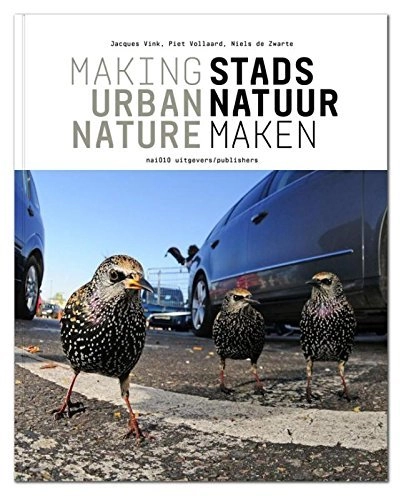
The city is a rich habitat of great biodiversity. Many animal and plant species are now more common in cities than in rural areas. However, urban nature is fragile, and threatened by the tendency of planners and policymakers to see the city exclusively as a habitat for people. Nature-inclusive design, which considers nature an integral part of the urban organism and an important part of a city’s quality of life (for human and nonhuman residents), is a pioneer practice that has only recently started to become part of urban planning.
OASE 98 explores the historical foundation of the concept of narration in reading and designing the urban landscape, in search of the relevance of narrative methods to today’s practice. This issue presents a new angle on the work of (landscape) architects and urban planners of the 1960s and 1970s (Edmund Bacon, Kevin Lynch and Jacques Simon) and of today (Günter Vogt, Anke Schmidt and Bas Smets), and sheds light on recent experiments in academia. OASE 98 presents narration as a means with which to reposition design and the designer as a mediator between the expert and the inhabitant, addressing issues such as bodily experience, socio-spatial fragmentation and participation.
Every two years, Archiprix International invites all 1,700 university-level courses in the field of architecture, urban planning and landscape architecture to select their best graduation projects and submit these for participation. This publication displays a representative selection of the projects submitted, including the nominees and winners chosen by an independent jury, and the favourites chosen by the participants themselves, supplemented by a representative selection that offers a picture of the range of designs and the graphical distribution across all continents.
Where there are vacancies, there is room for new uses, such as housing and leisure and health-care facilities. This often results in surprising combinations, such as a school or a community centre in a factory complex, a shop in a church or a recreation area in a military zone. Reuse, Redevelop and Design presents 20 inspiring redevelopment projects. The book addresses the story behind the success of redevelopment in essays on heritage policy, public-private partnerships, financing and design.
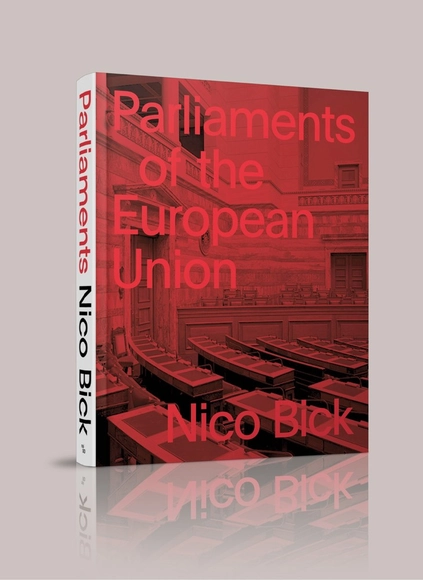
In Parliaments of the European Union Dutch photographer Nico Bick presents a unique photographic view of the plenary chambers where the European democracy is actually realized. The book features photographs of the plenary chamber in the parliaments of the twenty-eight European Union member states and the two European Parliaments in Brussels and Strasbourg. Each plenary chamber is photographed from one viewpoint, from the floor itself, in three or four photographs and presented in a triptych or tetraptych fold out. As a series this project makes the European democratic landscape and its significance visible.
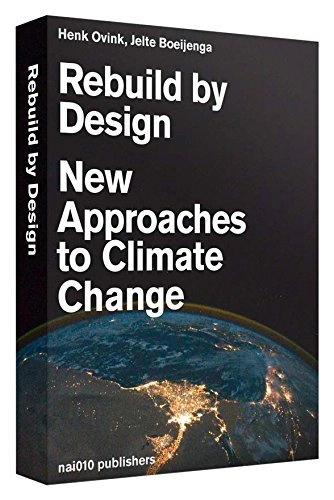
Rebuild by Design was developed for the Presidential Hurricane Sandy Rebuilding Task Force, a response to the destruction that followed Hurricane Sandy hitting the Northeast coast of the United States in October and November of 2012. Using an innovative, design-driven process based on the design competition model, Rebuild by Design places local communities and civic leaders at the heart of a robust, interdisciplinary creative process to generate implementable solutions for building more resilient regions. Its signal initiative was the Hurricane Sandy Design Competition, which produced ten visionary design proposals addressing the intersection of physical, social and ecological resiliency.
Lessons for Students in Architecture, written by Dutch architect and educator Herman Hertzberger (born 1932), was first published in 1991 as an elaborated version of lectures Hertzberger had given since 1973 at Delft University of Technology. Since its first edition, the book has become a classic for students the world over; this immensely successful volume has gone through many reprints and has also been published in Japanese, German, Italian, Portuguese, Taiwanese, Dutch, Greek, Chinese, French, Polish and Persian.
How can places you go to other than your workplace or your home, such as libraries, idea hubs, cultural centres, parks, start-up cafés and other indispensable public spaces, so-called ‘third places’, make a valuable contribution to a vital society , now and in the future? How to Make a Relevant Public Space answers these questions from different angles, based on the five most important developments within the public space.
Supported by numerous interviews and primary data, this book points out the threats posed by typical large-scale projects of single SOEs (state owned enterprises), and further shows alternative development potentials that match the long-term socioeconomic demand, by learning from self-evolving SOE areas shaped by the combined forces of various public and private stakeholders.
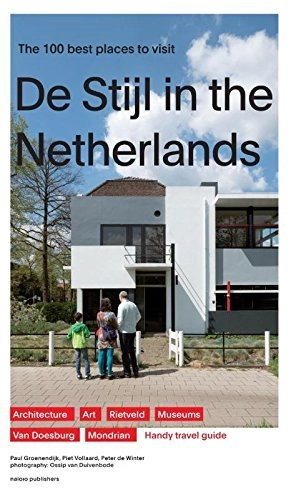
The Dutch art movement De Stijl and its eponymous magazine have long exerted a strong influence on art and architecture, at home in the Netherlands and abroad. Published on the occasion of De Stijl’s centenary anniversary, the Guide to De Stijl in the Netherlands: The 100 Best Spots to Visit is the first publication to assemble, in a single practical and accessible guide, the 100 most important buildings, monuments and places of interest related to De Stijl.
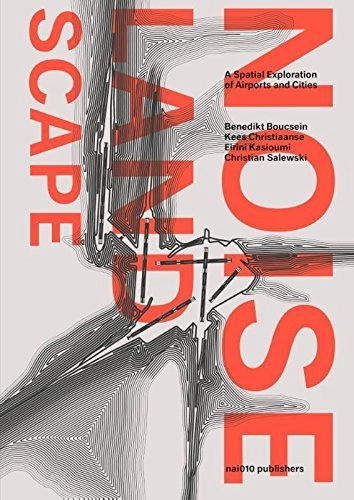
The expansive areas around large airports, affected by noise, infrastructure, and transient forms of architecture, have until now not been researched as a phenomenon. But these noise landscapes are emerging worldwide, often surpassing the neighbouring city in size, and sometimes rivalling it in economic importance. On the basis of eight European case studies (Amsterdam, Zurich, London-Heathrow, Frankfurt, Munich, Madrid and the two Paris airports) this book provides the first account of how these landscapes emerged as the result of technical determinations, what is taking place in them, and how they can be interpreted.
The Netherlands has many thousands of dikes. A pivotal element in the Dutch landscape and one of the oldest features of the country's extensive water management program, the dikes of the Netherlands have significant cultural, historical and environmental value. But despite their importance to the history, economy and culture of the Netherlands (and their contemporary international relevance as the world scrambles to develop and implement effective flood-control strategies), Dutch dikes have never been properly mapped out or systematically studied. Many of them fail to meet current safety standards, though they are still a ubiquitous presence in the Dutch landscape.