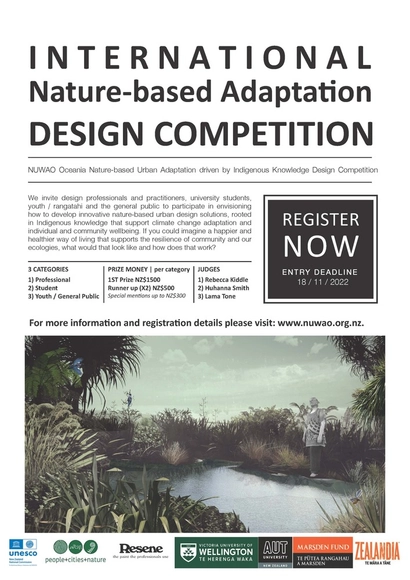
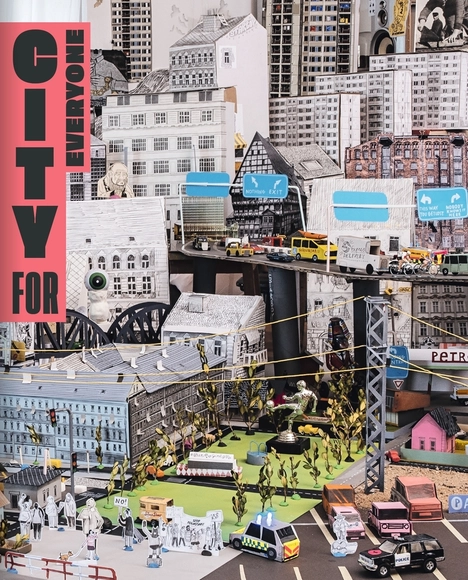
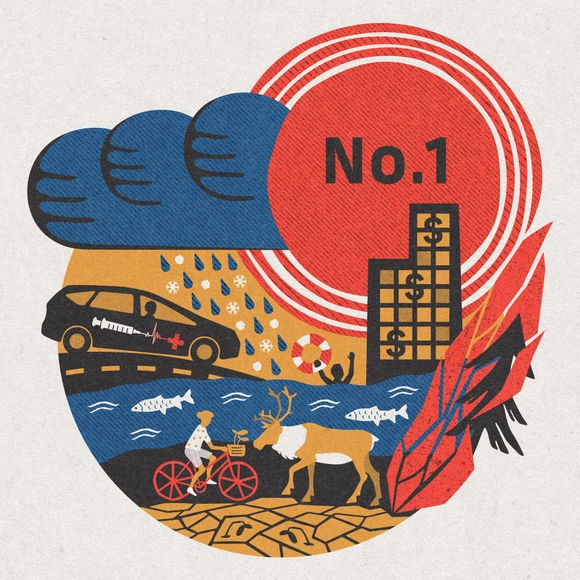
We invite design professionals and practitioners, university students, youth / rangatahi and the general public to participate in envisioning how to develop innovative nature-based urban design solutions, driven by Indigenous knowledge that support climate change adaptation and individual and community wellbeing. If you could imagine a happier and healthier way of living that supports the resilience of community and our ecologies, what would that look like and how does that work?
The Stanley Picker Gallery at Kingston University is seeking to appoint two contemporary practitioners to the Stanley Picker Fellowships in Design & Fine Art 2022.
Vileda Next Generation Ironing Board New product design contest on Desall.com: Vileda is looking for an innovative ironing board concept dedicated to non-professional users and characterised by premium features and an ability to immediately differentiate itself from competing products and current market standards.
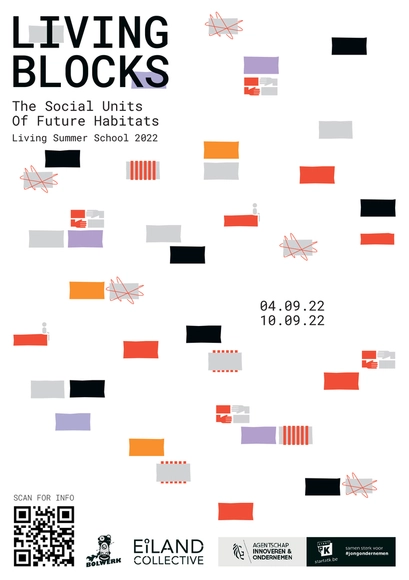
The Living Summer School (LSS) is a yearly week-long educational program promoting social and territorial innovation in and around the city of Kortrijk, Flanders.
The aim of this competition is to encourage students to brainstorm design solutions for issues that plague the world and mankind. The problem can be of any nature ranging from design problems to environmental problems. You have no constraints as to what you can design or redesign, it can be a product, a building, a space, a neighborhood, a city, or even a new type of technology.
Tamayouz is delighted to invite students of architecture, urban design, urban planning, architecture technology and landscape design worldwide to register and submit their graduation projects. An independent international jury will review all entries and select the winners of Tamayouz International Graduation Projects Award.
DigitalFUTURES is a global online platform that seeks to democratize access to education and foster the dissemination of critical and reflective thinking regarding architecture and design. Through free weekly events, it addresses the latest developments in computational design, robotic fabrication, and related fields, including theoretical, environmental, and social concerns.
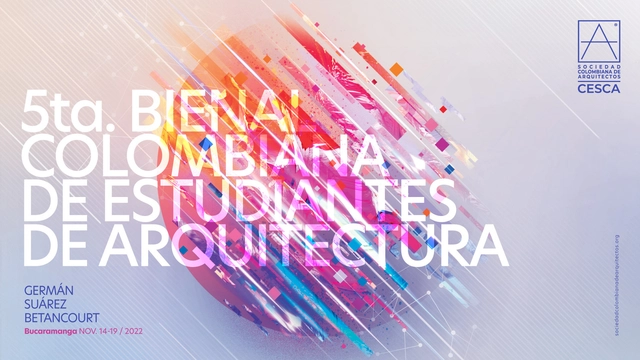
The Colombian Biennial of Architecture Students is a competition established by the Colombian Society of Architects that seeks to highlight and promote the professional practice of architecture by showcasing the best projects from students across the country's various architecture schools.
A new book titled “NEW INDIAN ARCHITECTURE: 1947-2020", authored by Chandigarh-based architect Sarbjit Bahga and published by White Falcon Publishing, has recently been launched. It is one of the few Indian architecture publications in the post-Independence era. It features 104 projects designed by 15 foreign and 66 Indian architects. These projects have been grouped into 11 categories, i.e., Religious Buildings (5 Projects), Memorial Buildings (9 Projects), Cultural Buildings (14 Projects), Sports Buildings (6 Projects), Tourism and Recreational Buildings (9 Projects), Public Infrastructure (4 Projects), Agricultural Buildings (7 Projects), Residential Buildings (7 Projects), Educational Buildings (29 Projects), Healthcare Buildings (6 Projects), and Office Buildings (8 Projects). The projects are arranged in chronological order in each group so that changes and trends can become self-evident immediately.
The creative process in design through which one arrives at the realisation of the object is the theme of MCA Design's exhibition 'L'atelier del Design: oggetti, materiali, esperienze', hosted at the Milan headquarters of MCA - Mario Cucinella Architects. The exhibition occupies the first of the three levels of the old Opificio from the 1930s, now a creative breeding ground for architects, engineers, designers, and the young professionals attending the SOS - School of Sustainability master course.
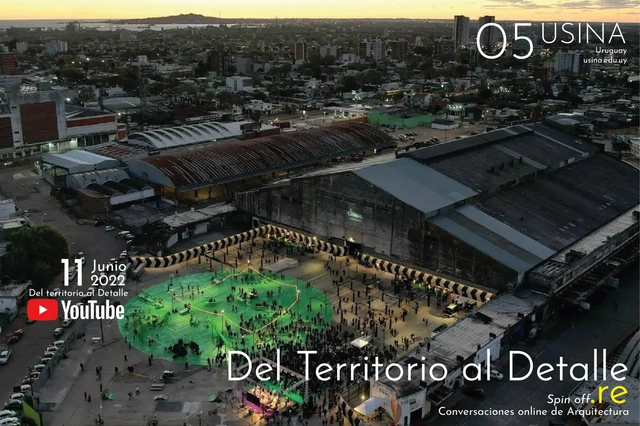
As part of the academic dialogue and reflection space "From Territory to Detail," which brings together architecture professors, students, and renowned architects, the spin-off "From Territory to Detail .re" explores—through informal conversations with key figures—the thesis that a territory's richness stems from its capacity for renewal, activating its own disused spaces to transform them into challenges and resources.
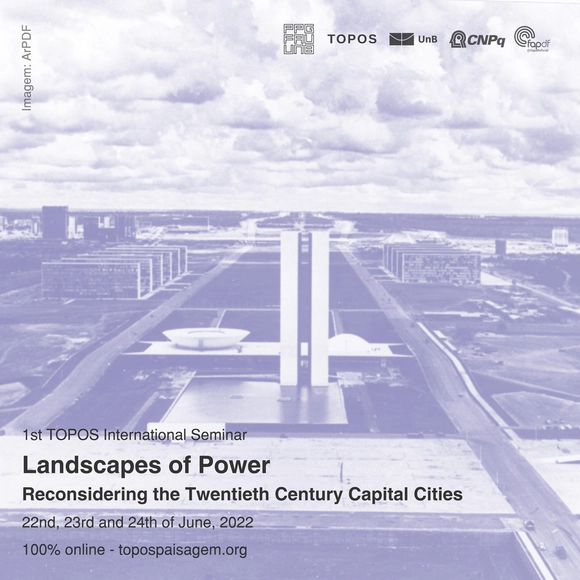
The Twentieth Century witnessed an ambitious range of planning schemes for new towns and capital cities. While these projects were driven by diverse political, economic, and geographic conditions, many of them shared an enthusiasm for landscape as a medium of urbanism. Given the widely documented and generally accepted shortcomings of modern planning, many of these cities are seen as failures in social, environmental, and cultural terms.
.The best artists of Ukraine will present their works at the annual international art fair in the ancient city of Bodrum. The fair was organized in 2021 by the governor of Mugla Orhan Tavli, the governor of Bodrum Belikir Yilmaz and the mayor of Bodrum Ahmet Aras.This year the event was organized by Demis Fair Hussein Bay. The Bodrum Art Fair will take place in the cultural center of Herodotus in two stages. The first art lovers will be able to visit from June 29 to July 3, 2022. Ukrainian artists such as Andriy Chyzhov, Svitlana Galdetska, Ivan Dragan, Elina Bilous, Myron Kataran and Mira Bachkur will be represented here. The works of art were created by the authors before the full-scale invasion of Russia into Ukraine, some were written under the influence of current events.. It is a reflection of artists on war, dialogue with themselves and the world. By participating in the exhibition, the artists seek to help their country and the affected Ukrainians. After all, part of the proceeds will be donated to the Mykola Petrenko Charitable Foundation for the needs of orphans from the occupied territories. At the same time, in this way the artists continue the cultural life of Ukraine and its presentation on the international cultural arena. Everyone will be able to visit the exhibition from June 29 to July 3, inclusive, at the Bodrum Herodotus Cultural and Exhibition Center Konacik
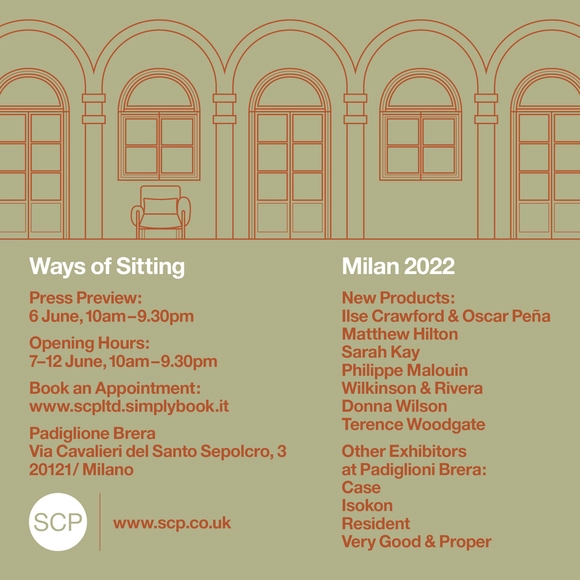
For the 60th Anniversary edition of the Milan Salone del Mobile, SCP are pleased to present an exhibition of new designs situated within the beautiful main cloisters of the San Simpliciano basilica, one of the Padiglione Brera locations, and as part of Milan’s Brera Design District and the Fuorisalone.
Join d.talks in partnership with the Calgary Public Library to discuss the role of design in shaping systemic inequity and the connection with sustainability.
This is a symposium to discuss the future of bamboo in the Haitian built environment and is organised as a joint event by Newcastle University in the UK, the University of Pittsburgh, USA and the Wynne Farm Ecological Reserve, Haiti.