Ideasforward wants to give young creative people from around the world the opportunity to express new ideas of future societies through theirinnovative and visionary proposals. We are an experimental platform seeking progressive ideas that reflect on emerging themes. We want to break mental borders and put all the visions on the table. Here, you can try an experiment, everything is possible!
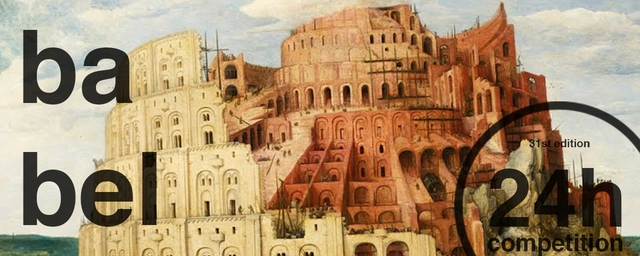
AIM OF THE COMPETITION - 24H A place where the time limit is used to stimulate your creativity. This competition aims to present architectural answers in 24h to, social problems, humanitarian causes, or utopian themes of contemporary societies. It wants to put the creative minds
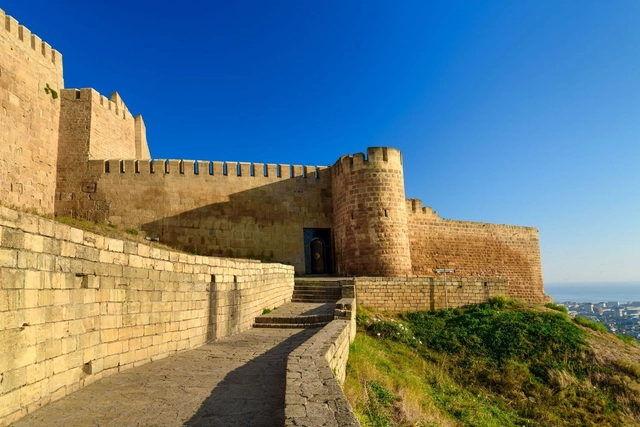
Competition is a part of a program for the development of one of the oldest towns in Russian Federation — Derbent. The master plan developed by the competitors will be an important document, which will determine the direction of socio-economic and geographical development of Derbent in the medium term. Its implementation will support Derbent’s internal transformation, the integration of the town with global processes, and an improvement in the efficiency of the use of the town’s resources. Competitors will also need to develop a concept for the development of the central public space of Derbent, the town’s embankment, which runs
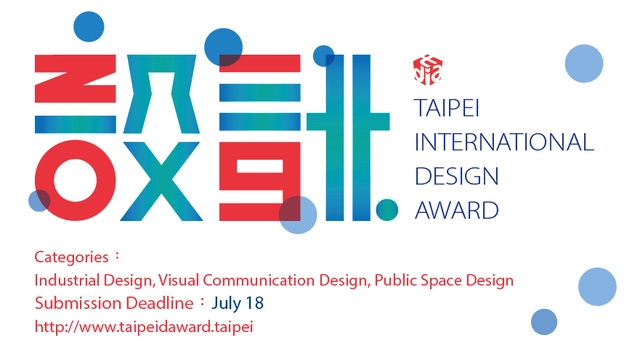
2019 Taipei International Design Award call for entries. Open until 18 July, 2019
We sincerely invite you to participate. Do not miss this opportunity.
Three categories: Industrial Design, Visual Communication Design, Public Space Design
No Entry fees
With no quantities limitation , a group maximum for 5 people
Total Prize:NT$3,800,000 (Approximately USD$122,580, subject to exchange rate) Three simple steps to submit your works : Online registration >>>> Write down the introduction of works>>>> uploading photos of your works
The Legacy of Architectural Modernism in Victoria (1945 - 1970)
1948-1970 were boom years for Victoria, not equalled until the most recent decade. The Province’s resource-based economy expanded rapidly, followed by investments in jobs and infrastructure.
Over this short period Victoria changed as its rural hinterland gave way to suburbia, Victorian and Edwardian neighbourhoods sprouted high-rise towers and multi-storey walk-ups, and plate-glass replaced terra-cotta. New high-rise densities in the urban core prompted a rethinking of urban space, the public and private realms, institutional and commercial uses. Built form drew on social psychology for innovative approaches to handling light and space.
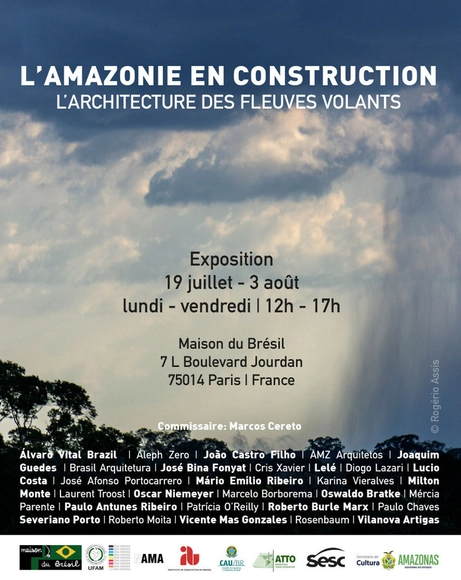
NAMA, Revista Amazônia Moderna and UFAM hold the exhibition L'Amazonie en construction: l'architecture des fleuves volants, from July 19 to August 3 at the Maison du Brésil in Paris, in commemoration of the 60th anniversary of this iconic building designed by Le Corbusier. This is the first time that the Brazilian Amazon will be exhibited in Europe from an architectural point of view. Admission is free.
The Amazon under construction is divided into two themes: the "Fantastic Amazon" and the "Concrete Amazon", which unveil not only a vision of breathtaking landscapes and territories but also the integration between them and the
Public space is under pressure – commercialized for economic interests, abused as a playground for event culture, and maneuvered into insignificance through private acts of self-staging. Is its original function as a forum for public life coming to an end? At the same time, there are ever more standards, regulations, and requirements designed to guarantee safety and functionality. Does this reduce the creative possibilities for new architecture to react to the specifics of the location? If so, how are buildings being affected by these processes?
The exhibition “InnenAussen” (InsideOutside) by :mlzd searches for answers to these questions. Their installa-tion, based on
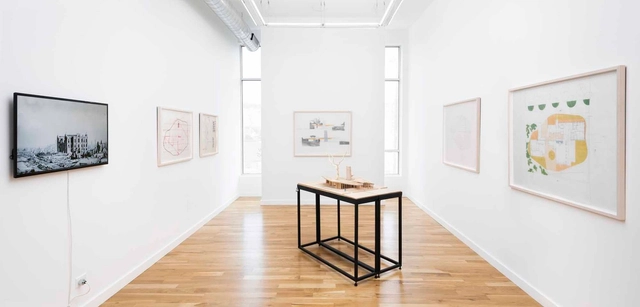
Installation view of Marshall Brown "Je est un autre" at Western Exhibitions, Chicago. Photo by James Prinz
Western Exhibitions is thrilled to present its third solo show with Marshall Brown, Je est un autre, in Galleries 1 and 2. Featuring two new projects, Brown uses the historically disruptive properties of collage and montage to create new spaces, forms, and narratives that embody new relationships between the one and the many. Je est un autre translates roughly to “I is another,” a phrase borrowed from French poet Arthur Rimbaud, and speaks to Brown’s rejection of purist or reductionist worldviews through his hybrid works. The exhibition opens on June 7th with a free and public reception from 5 to
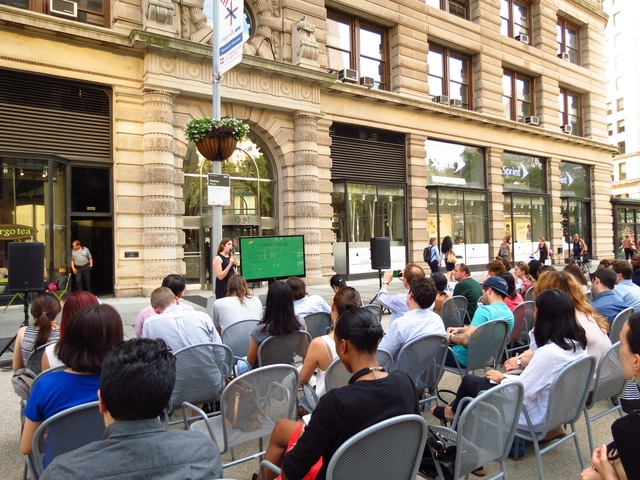
The Flatiron/23rd Street Partnership Business Improvement District (BID), in collaboration with General Assembly and local institutions and businesses, presents eight weeks of free education classes on the Flatiron South Public Plaza.
Site City Future | Van Alen Institute
Site City Future asks, how can the city design for livability while competing in a global economy? In what ways can design support the essential values that make New York a great city? What planning and design policies can promote a more inclusive approach to growth?
Site City Future will explore the impacts of future development on both the city’s physical
Background image by: André Resende, Javier Fernandez, Jessica Dias, MAA01, 2015/16
Responsive Cities is a bi-annual international symposium on the future of cities organized by the Advanced Architecture Group of IAAC. The 2019 edition focuses on “Disrupting through Circular Design” within the framework of the Creative Food Cycles (CFC) project, co-funded by the Creative Europe Programme of the European Union and developed by the Institute for Advanced Architecture of Catalonia, the Leibniz University of Hannover and the University of Genoa.
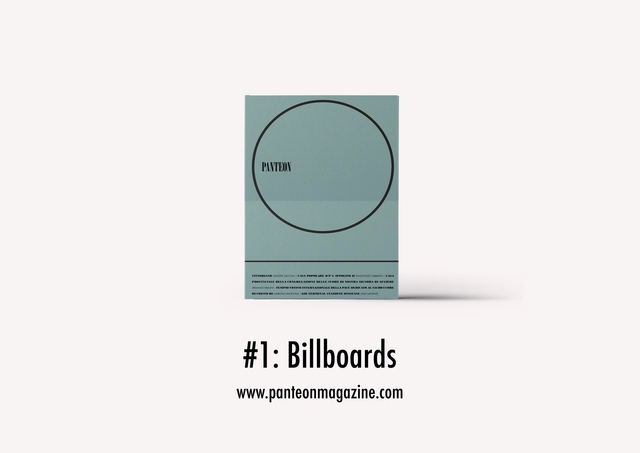
Panteon is a magazine about architecture, released twice a year. Panteon aims to be a platform for architectural debate using the city of Rome as a pretext, as an infinite warehouse from which to draw answers to a potentially infinite number of questions.
The topic of the call is "Billboards”
Panteon is an anachronistic venture: anachronistic is the content, anachronistic is the product, anachronistic is its use.
The protagonist is the architecture of the city of Rome, all built between 1911 and 1989 within the GRA, our contemporary city wall, whose analogies are arbitrary and questionable.
Panteon aims to be a platform for architectural debate using the city of Rome as a pretext, as an infinite warehouse from which to draw answers to a potentially infinite number of questions.
Videos
The Union of Moscow architects invites you to participate in the Russian competition with international participation which designed to develop the architectural concept of an eco-regeneration of the Sutoloka river.
Eco-Shore 2019
The Union of Moscow architects invites you to participate in the Russian competition with international participation which designed to develop the architectural concept of an eco-regeneration of the Sutoloka river.
The competition will be held in the framework of the 9th international festival Eco-Shore 2019. All submitted projects will be exhibited from 22 to 24 August 2019 in Ufa`s art-space Art-KVADRAT.
The major tasks that should be solved by the participants of the competition are the creation of a comfortable coastal zone, equally attractive for walking and for the placement of river infrastructure, the development of a new urban center of gravity, organically inscribed in the existing environment.
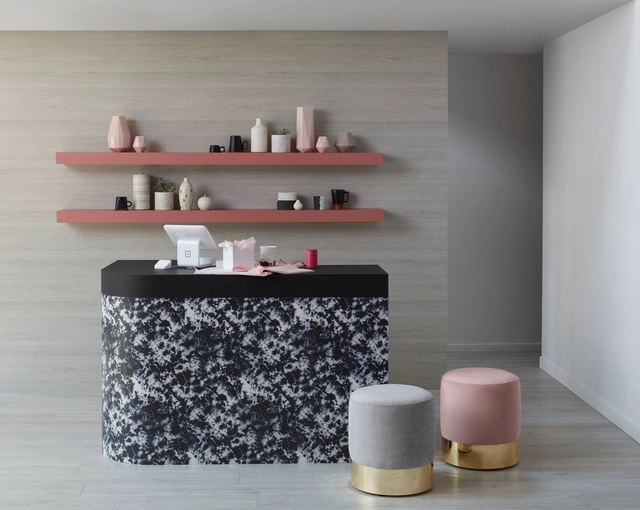
This checkout experience gets playful and functional with a colorful combination of Wilsonart® Commercial Laminate and fingerprint-resistant Traceless™ Laminate.
World leading engineered surfaces manufacturer shares three trends influencing next-generation decorative surfaces
For years, interior surface designers have drawn inspiration from their environments in order to create delightful and innovative engineered surfacing materials specified in architectural spaces. From familiar and traditional to futuristic and contemporary, design inspiration can be found all around structures, elements, and styles that surround us every day.
reSITE 2019 REGENERATE, a game-changing event on cities' regeneration
reSITE’s game-changing event brings together a global community of 50 thought leaders, architects, urbanists, and the most innovative minds to share state-of-the-art trends in sustainable architecture as well as urban planning and living. REGENERATE is a call to action offering solutions to the pressing questions arising from climate change, redevelopment, and young generation’s demands and changing values.
Within the 2019/20 program, CANactions School travels to 4 metropoles in western, northern and central Europe and explores their innovative approaches for creating more livable neighborhoods. Based on the findings, we develop new strategies for locally specific and globally relevant questions, considering spatial, economic, social and political measures.
The program is exposed to the housing context of the three European cities that are widely acclaimed for their high living quality – Amsterdam, Zurich and Helsinki, and absorbs their practices to specifically address the housing challenges of the rapidly growing Kyiv.
Machine learning heat map showing the spatial distribution of people in 51 Astor.
Join us for the release of Field Guide to Life in Urban Plazas.
The guide outlines a research effort focused on New York City, the primary location of urbanist William H. Whyte’s “Street Life Project,” which formed the basis for his seminal book and film The Social Life of Small Urban Spaces (1980). The new guide seeks to understand how different types of public spaces have changed some 40 years later. What’s changed about how people use the public realm, and what makes for successful spaces?
The project looks at 10 plazas in Manhattan constructed or renovated in the last 15 years,
A monograph on one of the most influential visionary architects of the twentieth century, Claude Parent, whose buildings and theoretical work directly influenced leading architects Hadid, Libeskind, Nouvel and Gehry.The influence of the idealistic French architect Claude Parent (1923-2016) extends far beyond the legacy he left in iconic commercial and residential built works such as the Villa Drusch in Versailles (1963), the church of Sainte-Bernadette du Banlay in Nevers (1966), and GEM shopping centre in Sens (1970). Movement was at the heart of Parent's vision, and is nowhere more evident than in his drawings, many of which are published in
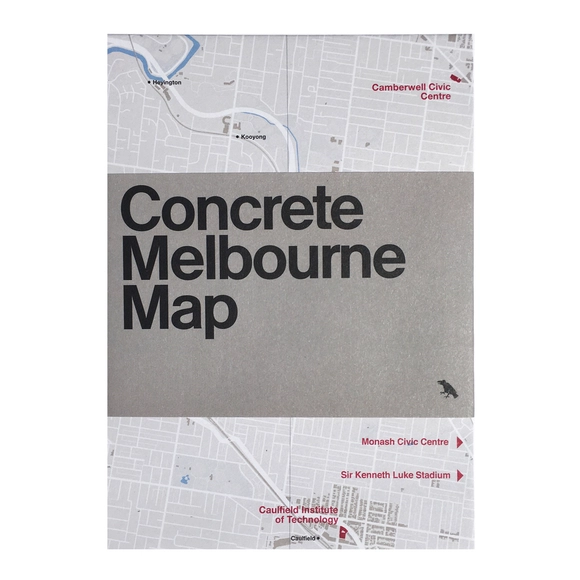
Two-sided guide featuring a map of Melbourne’s finest concrete and Brutalist buildings. The reverse includes details for fifty buildings, an introduction by Glenn Harper, the editor of Blue Crow Media's Brutalist Sydney Map, and original photography by Clinton Weaver.
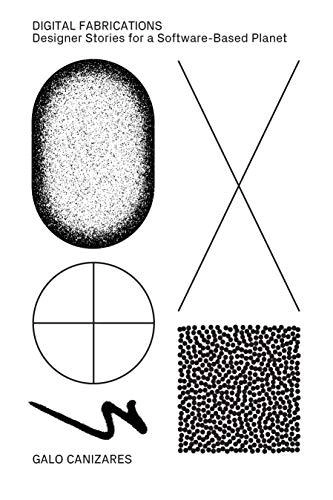
Digital Fabrications is a collection of essays and half-true stories about design software and hardware. Written from the perspective of architectural design, each piece expands on emerging trends, devices, foibles, and phenomena engendered by an increased reliance on interactions with interfaces in the discipline. The essays ask, how do we characterize our post-digital design labor? What are the politics of design software? How is architecture adapting to a world largely dependent on platforms and scripts? What are the spatial mechanisms of the internet and VR? Using storytelling techniques, this book accepts that software is everywhere, and narrows in on a