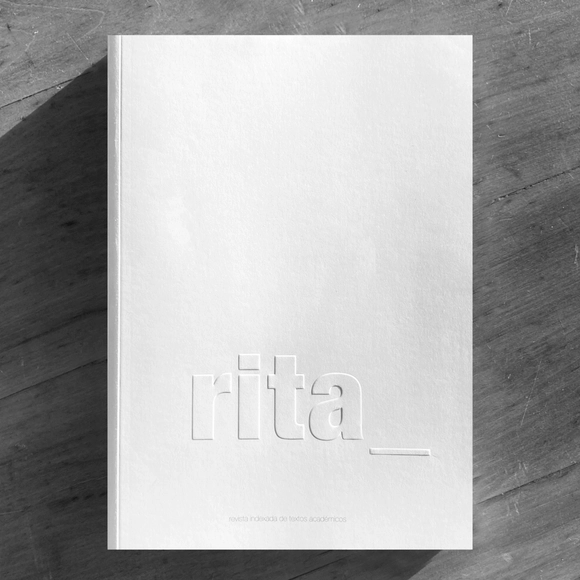
With its 16th issue, rita_ magazine begins a new chapter, featuring a new team, a new format, and a new website!
With its 16th issue, rita_ magazine begins a new chapter, featuring a new team, a new format, and a new website!
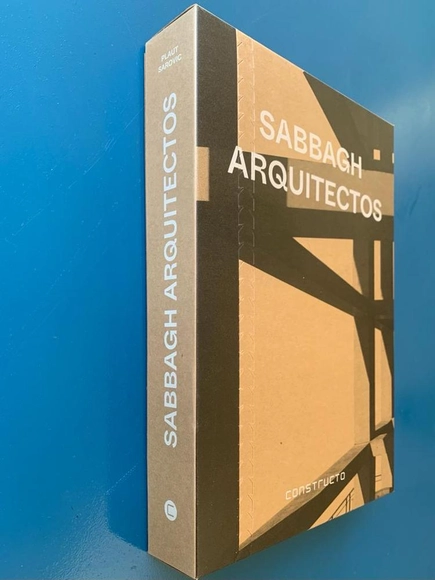
The monograph Sabbagh Arquitectos is one of those essential books that, until now, did not exist. It offers a look at the continuity of over 30 years of experience from what is arguably the largest and most prominent firm in Chile specializing in industrial, educational, facility, and service architecture. The book explores various scales that consistently intersect with the urban dimension, ultimately contributing to the cities and neighborhoods where these projects are situated.
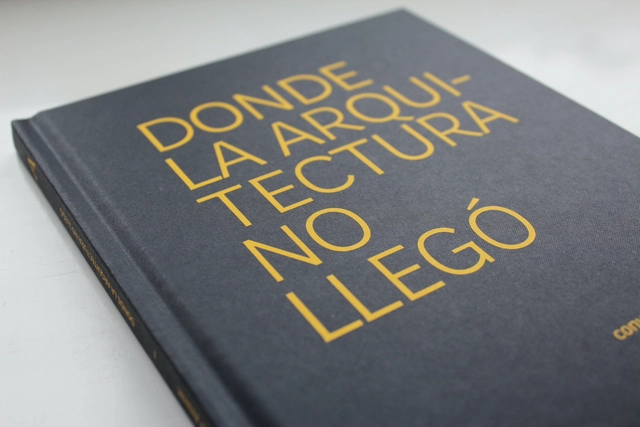
“Donde la Arquitectura No Llegó / Where Architecture Did Not Reach” is the first book (Spanish/English) in our “Open Conversations” series. In it, América al Cuadrado discusses with Grupo Talca their trajectory in creating architecture outside of conventional settings.
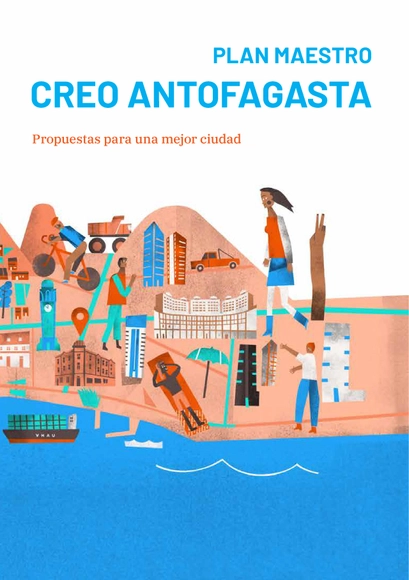
Over the past few years, through a process of citizen participation and dialogue between various public and private stakeholders, CREO Antofagasta has developed a Master Plan aimed at guiding the city's growth in alignment with the vision its residents hold for 2035.
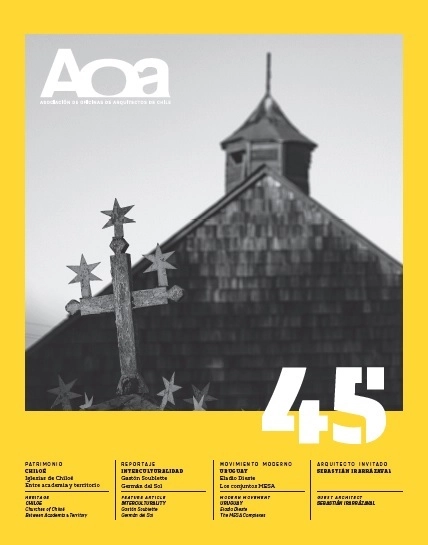
Rescuing the architectural and cultural value of the Churches of Chiloé, concluding the series on Modern Architecture in Uruguay, and addressing interculturality within the territory, geography, and heritage are all part of the contents of the 45th edition of the Association of Architecture Offices (AOA) magazine, which was recently presented.
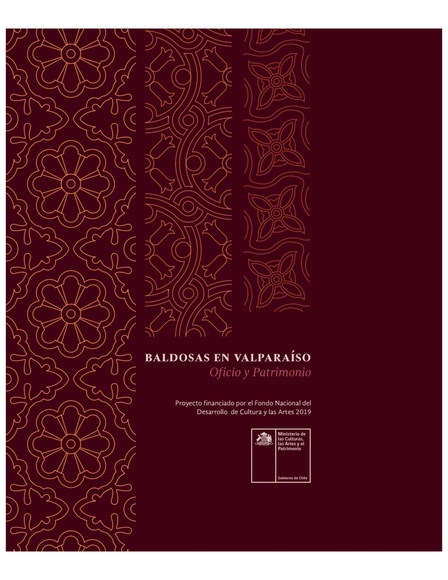
"Baldosas en Valparaíso, oficio y patrimonio" [Tiles in Valparaíso: Craft and Heritage] is a research project aimed at safeguarding the craft of hydraulic tiles—a trade with over a century of tradition in the Valparaíso Region, utilizing an artisanal technique that has remained unchanged for over 150 years of global production.
Above all, this book is an invitation. An invitation to discover a new way of seeing and thinking about the world, which in turn entails a new way of seeing and thinking about architecture. Drawing on complexity science and Edgar Morin’s complex thought, David Obon opens the door to knowledge that transcends disciplinary boundaries. It is a form of knowledge capable of recognizing the multidimensionality of our discipline—a knowledge that does not simplify, but rather reconnects, articulates, and clarifies. It is a knowledge that speaks to us of order and disorder, but above all, of creation. These insights have germinated across multiple disciplines to construct a new emerging paradigm: the paradigm of complexity.

Over the past twenty-five years, academic and disciplinary circles, as well as the field of urban policy, have witnessed a resurgence of debates and innovative experiments regarding the capacity and limitations of architecture and urbanism to operate politically. Various international courses, programs, and texts exemplify this trend; activities conducted at schools and universities such as Barcelona, Harvard, Columbia, and the Universidad de Chile illustrate this process. Meanwhile, in the realm of urban policy, Latin America has presented a series of internationally acclaimed experiences, such as Social Urbanism in Medellín, the Favela-Bairro program in Rio de Janeiro, and incremental public housing interventions in Santiago, Chile. This work analyzes the recent reinstatement of political concerns within the international academic and disciplinary agenda, exploring the conceptual implications of understanding architecture and urbanism as forms of political action.

This selection of texts represents part of the interest that the figure of Aldo Rossi has sparked over the last decade. His work was an almost constant presence in international architectural debates during the final third of the 20th century, particularly in the 1970s and 1980s; yet, it was just as uncompromisingly erased as we approached the turn of the century. These are "architects' texts"—that is, the production of thought in relation to the practice of architecture itself, clarifying how one positions oneself toward architecture and the city through one's own work. They reveal a vast territory of inquiry that is still far from being exhausted.

In this collection of essays, architect Josep Llinàs experiments with new formats, such as Instagram stories, answering to no one but the heroes featured in his narrative. Ever-present is the work of Josep Maria Jujol—who dents, twists, and blurs everything he touches—a body of work far removed from any Calvinist work ethic, which Llinàs links to folk wisdom and, ultimately, to the behavior of a child. Beyond Jujol, other figures emerge: from Alejandro de la Sota to José Antonio Coderch, from David Lynch to Peter Handke, from his grandson to his parents, and from there to his great-grandparents... Meanwhile, never losing his smile, he draws, cuts paper, builds models and collages, and writes stories for the sheer joy of it—his status as a septuagenarian having liberated him from work as a form of punishment—only to channel them back into his architectural practice.
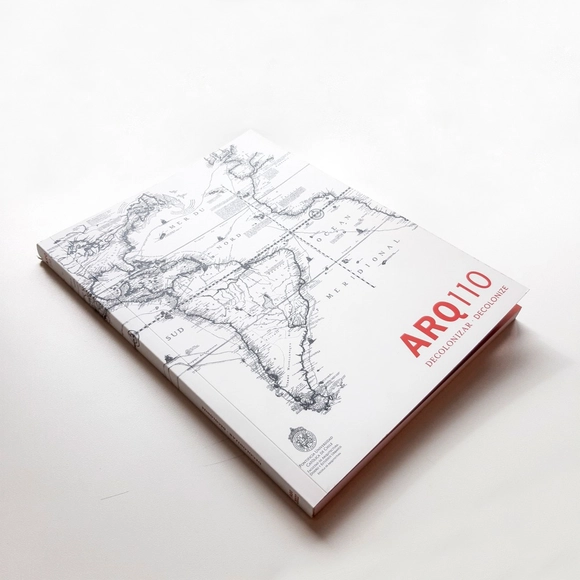
We present the 110th edition of ARQ magazine. Titled 'Decolonizing,' the issue opens a discussion around a simple question: What does it mean to decolonize architecture?

This book is a compilation of essays in which architect Uriel Fogué reflects, through the lens of architecture, on some of the most urgent challenges of our time. In an era threatened by climate change, ecological challenges, and the looming horizon of a potential end of the world, architecture emerges as a crucial framework—not (only) for finding solutions, but for exploring, experimenting with, and testing other fantastic potentials for life, driven by desire.
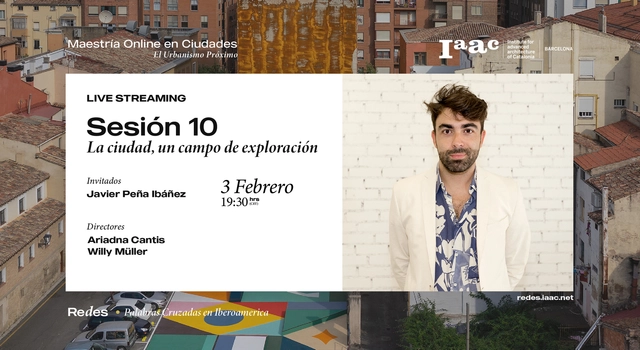
“The City, a Field of Exploration” is the topic of the ninth Redes IAAC session, an open, online event broadcast via streaming.
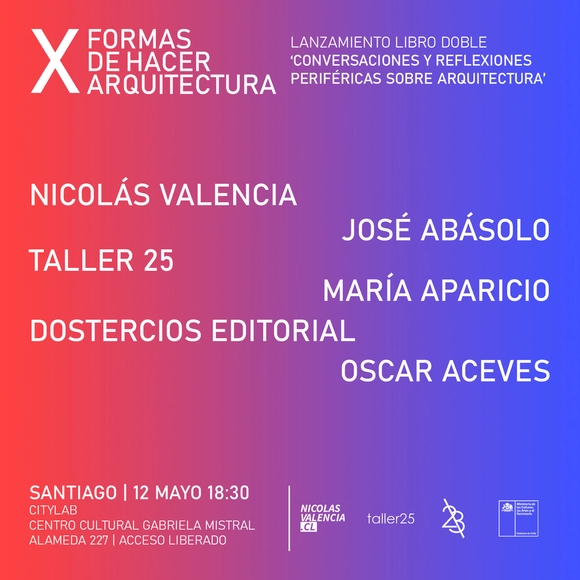
Published by Dostercios Editorial, "#XFORMAS: Conversaciones y reflexiones periféricas sobre arquitectura" is the first double book by Chilean architects Nicolás Valencia, Fabiola González, and Yair Estay, co-founders of X Formas de Hacer Arquitectura (#XFORMAS).
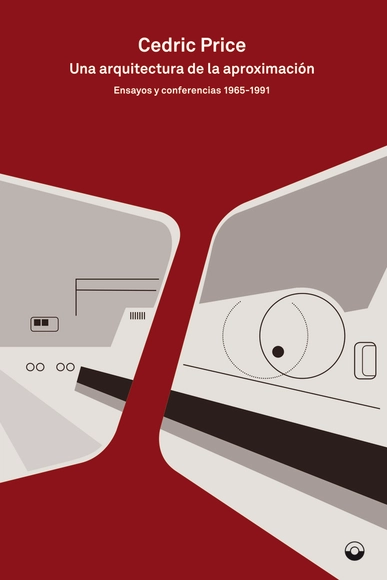
This book brings together, for the first time in Spanish, more than twenty writings and lectures by British architect Cedric Price. Drawn from diverse sources, Price’s texts reveal an exceptional understanding of architecture, filtered through a critical and complex—yet honest and ironic—personality.

Interior architecture today operates at the intersection of physical and mediated spaces, such as those of mass communication, digital platforms, or the visual arts. If we consider any form of representation as potential architecture—from writing to photography, from drawing to film—this essay addresses contemporary interiors as "expanded media" platforms that belong to different places and temporalities, reaffirming the role of interior architecture in the construction of contemporaneity.
"Everyone knows that myths never really happened, yet they are always happening. Now, they continue not only through the adventures of ancient heroes but also by making their way into the ubiquitous and most popular stories of contemporary film, games, and literature." - Olga Tokarczuk.

The decline of monasticism as a historical movement coincides with what Hannah Arendt proposes as the fundamental paradigm shift upon which modernity was built: "The inversion of the hierarchical order between the vita contemplativa and the vita activa." By elevating action to the highest state of the human condition, contemplation lost its traditional meaning and surrendered its honorary position as a source of access to truth.