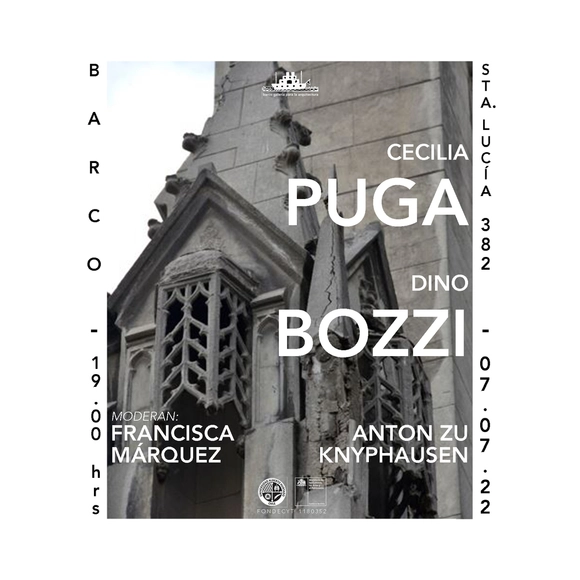
As part of our "Urban Ruins" series, developed in collaboration with anthropologist Francisca Márquez and the UAH, we will host a conversation this Thursday, July 7, at 7:00 PM with architects Cecilia Puga and Dino Bozzi regarding design approaches to ruins and the challenges of conservation.
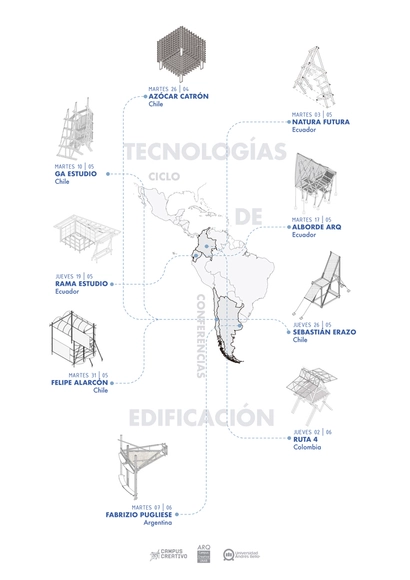
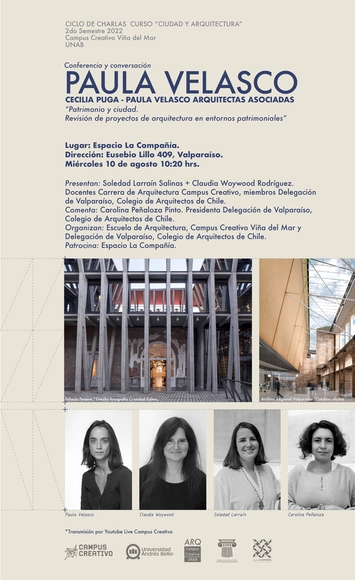
On Wednesday, August 10, at 10:20 AM, the first session of a lecture series will take place, organized by the School of Architecture at the Universidad Andrés Bello's Campus Creativo. The series is led by professors Claudia Woywood and Soledad Larraín in collaboration with the Valparaíso Zonal Delegation of the College of Architects and with the participation of Espacio La Compañía, as part of the "City and Architecture" course.
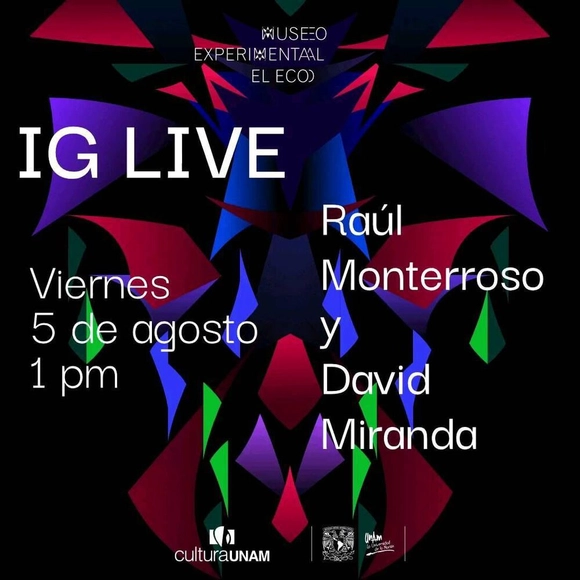
This Friday, August 5, at 1:00 PM, David Miranda and Raúl Monterroso will discuss their contribution to Re_vista 05 of the Museo Experimental El Eco, titled "Modern Dreams, Magical Realisms, and Other Fantasies of Yesterday and Today."
"For Mies, modern architecture in the age of industrialization required a renewal of the art of building from within. This could not be achieved by inventing a new formal language, nor by turning architecture toward technology, as many of his modern colleagues assumed. In his view, the modern architect had to recover the intrinsic value of architectural phenomena and fuse them with new life, rather than abandoning architectural values in the name of a new era. From this perspective, Mies combined, for example, classical monumentality and modern transparency, using marble or travertine in combination with modern steel and glass construction.
Mies’s attempt to explore the architectural potential of modern steel construction and the language of formal abstraction was not dedicated to rationalization, but to a new measure of spatial freedom. To achieve this, in the late 1920s, Mies developed his concept of the dialogue between opposites and their morphological transformation, brilliantly implemented in the 1929 Barcelona Pavilion. Later, in his American work, Mies transformed modern steel construction into a classical tectonic framework for an open, column-free space." - Fritz Neumeyer
Videos
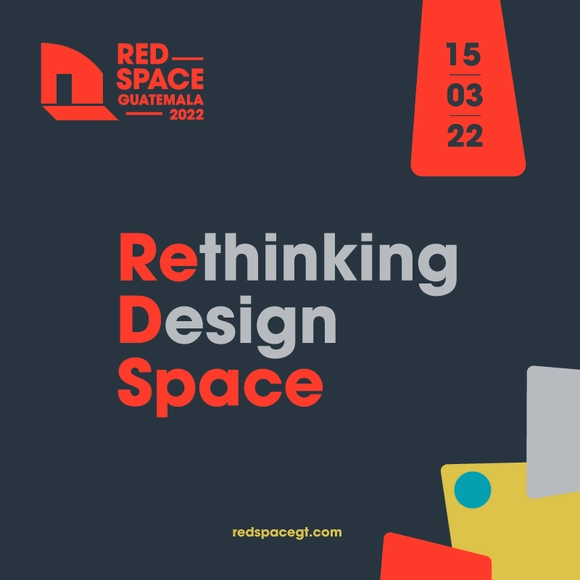
Visit www.redspacegt.com for more information on the various activities
Starting March 15, Guatemala will host its first-ever biennial event dedicated to the best of Guatemalan design: Red Space, organized by the Guatemalan Interior Design Association (ASODI). This significant event will cover topics in architecture, interior design, sculpture, painting, and the latest trends in decor. It will be a month filled with design in Guatemala.
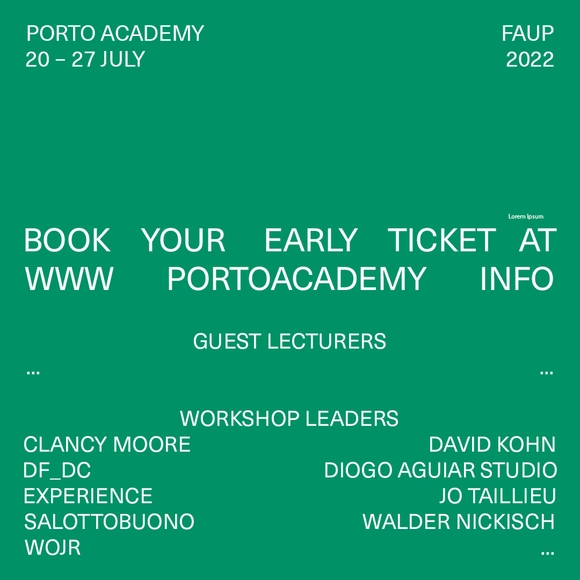
Porto Academy is the result of a profound passion for architecture as a discipline. It was established in 2013 as a manifesto of pluralism and opportunity, rooted in close engagement with a wide range of architects, artists, and curators.
A ceremony to welcome new members and honor our Lifetime and Honorary Members, an exhibition and discussion on the CA Bulletin (1944-1963), the presentation of the CA Awards and Distinctions, and a keynote lecture by the new National Architecture Prize winner are among the activities with which the Colegio de Arquitectos de Chile will commemorate its 80th anniversary, all of which will be free and hybrid.
Solo tendrás piedras is an exhibition developed by artist Alejandra Prieto in collaboration with architect Francisco Díaz. The project explores reflections on lithium, an element capable of regulating psychological imbalances such as bipolar disorder while simultaneously storing potential energy in the form of batteries.
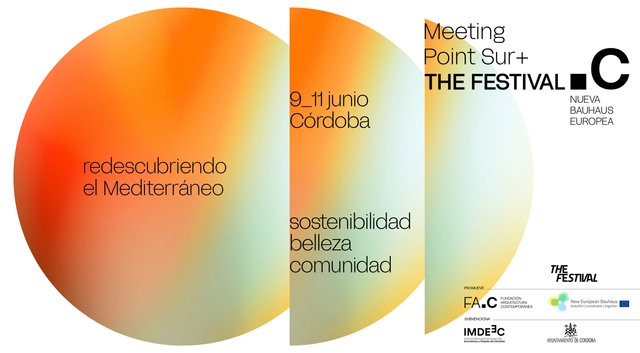
The Contemporary Architecture Foundation (FAC), as a Spanish partner of the New European Bauhaus (NEB), is organizing the NEB Meeting Point Sur+ Festival as a program of parallel events to the New European Bauhaus Festival in Córdoba, Spain.
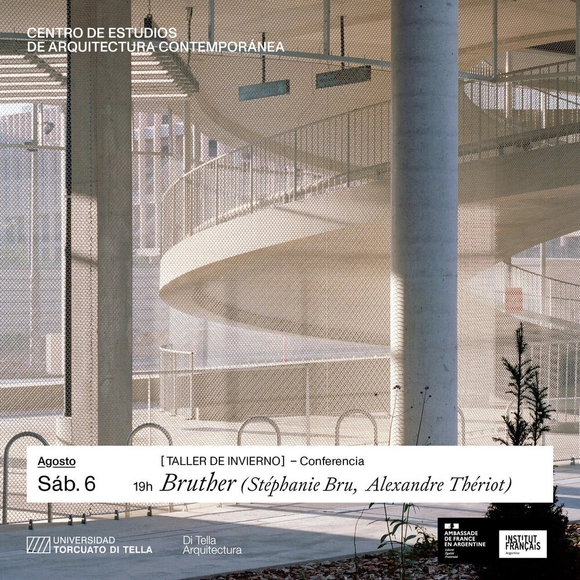
This Saturday, August 6, at 7:00 PM, the Bruther (Stéphanie Bru, Alexandre Theriot) conference will take place, organized by the Center for Studies of Contemporary Architecture (CEAC) at the Universidad Torcuato Di Tella, with an introduction by Marcelo Faiden.
Denver Art Museum, Machado-Silvetti, 2016-2019, Denver, Colorado, USA. Photography: James Florio.
Organized by the Center for Studies of Contemporary Architecture, with an introduction by Juan José Cruces, Rector of UTDT, the keynote lecture by Jorge Silvetti will take place.
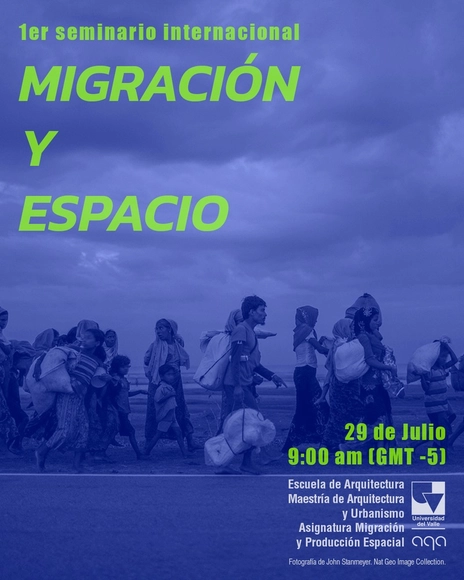
The 21st-century agenda requires addressing a set of structural changes resulting from the development model that, at least since the beginning of the last century, we have maintained as a society and region. This is evident in our cities and rural areas, where conditions associated with poverty, inequality, violence, displacement, and climate change—to name a few—generate intense pressures, imbalances, and maldevelopment in the dynamics of social occupation and vacancy across much of our territory. We are interested in focusing on a spatial process framed within these dynamics: migration.
The Atraviesos Urbanos (Urban Crossings), organized by the School of Architecture at Universidad Finis Terrae, consist of four walking tours through different sectors of the capital during the first semester of 2022. Each tour is led by an architecture faculty member who discusses the history and heritage value of each site for an audience of students, faculty, and the general public interested in learning more about the city.
This upcoming session, titled "From Plaza de Armas to the General Cemetery," will take place on Monday, May 16, at 3:00 PM. The route begins at kilometer 0 in Plaza de Armas, continuing through the Central Market, the Mapocho River, the Pérgola de las Flores, and Avenida La Paz, ending at the cemetery. The tour will be led by academic Max Palma.
Fotografia Edgard Torres, Diagramación Felipe Miño.
Within the academic dialogue and reflection space 'Del territorio al Detalle,' which brings together architecture professors and students alongside renowned architects, the spin-off 'Del territorio al detalle .re' explores, through informal conversations with key stakeholders, the thesis that a territory's richness stems from its capacity for renewal, activating its own disused spaces to transform them into challenges and resources.
Architect and collage artist Camila Mancilla presents her book Las casas de los espejos rotos: El collage como método de investigación creativa (The Houses of Broken Mirrors: Collage as a Creative Research Method). In it, she invites readers to explore this simple yet noble technique, highlighting its value not only as a finished work, but above all as a creative process.
.jpg?1652814271&format=webp&width=640&height=580)