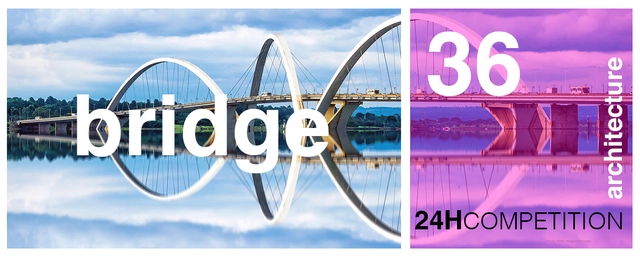
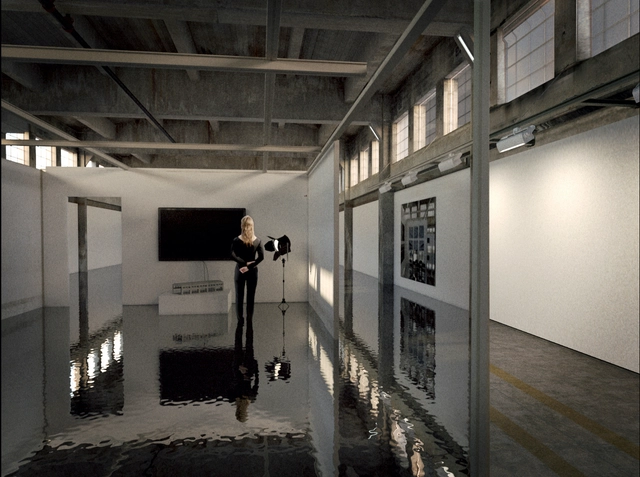
A place where the time limit is used to stimulate your creativity. This contest aims to present 24-hour architectural responses to the problems affecting cities and society today and consecutively the world, with a very strong focus on sustainable and environmentally friendly measures. Commitment, perseverance, inspiration and hard work are all the necessary bases to develop a proposal that meets the premises that will be regularly disclosed in the competition summary. There is a registration period when it ends, the competition starts!
The Nate, in collaboration with Steelcase, RIBA Hong Kong Chapter & District15 Platforms is excited to announce a competition for all designers in Hong Kong, titled . The winner will receive a month stay at The Nate serviced studios, and:
Winter Stations is a single-stage international design competition held annually in Toronto, Ontario, Canada. Participants are tasked with designing temporary winter art installations which incorporate existing lifeguard towers spaced strategically across the city’s Kew and Woodbine beaches. The structures (not in use in the wintertime) must not be ignored in the design and can be used as either an armature for the installations, a central feature, or other- wise linked to the installation.
The September 2020 issue of a+u: Architecture and Urbanism, Japan’s premier monthly architecture magazine, has been dedicated to MAD Architects. This marks the 600th issue of the celebrated journal.
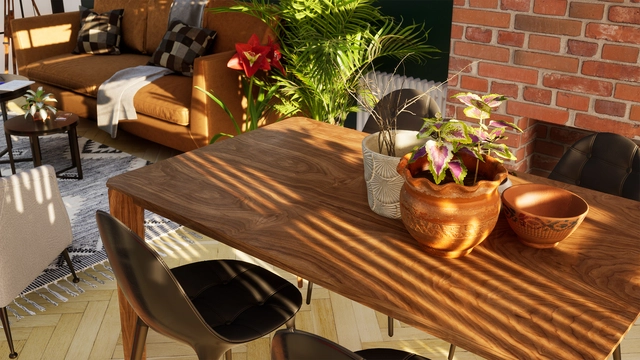
Architectural visualizations are only as good as the scene they’re placed into. No matter how fantastic your building model, if it's placed in an environment constructed of low-quality, low-poly assets, it’s not going to shine. That’s one of the reasons architects and designers have long turned to Quixel Megascans to give context to their archviz scenes.
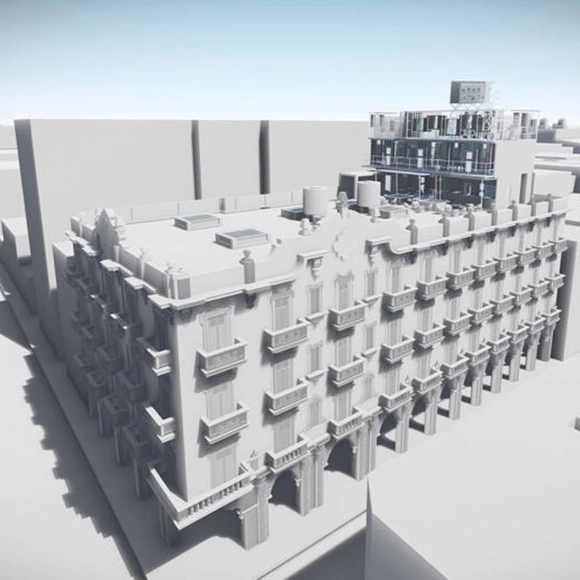
Curated by the Politecnico di Torino (Michele Bonino and Francesca Governa, with the collaboration of Francesco Carota, Maria Paola Repellino and Angelo Sampieri) and by Prospekt Photographers (Samuele Pellecchia, Francesco Merlini) with Tsinghua University in Beijing, the exhibition is the result of years of research and offers the public a new and broad perspective that traces a line of continuity between past, present and future, connecting the culture of traditional China with the impressive transformations of contemporary Chinese cities.
Cuban Architecture: The New Movement is our third virtual event in the series which was kicked-off with Chilean Architectural Design and Detrás del Muro (Behind the Wall). The festival highlights projects from the past 10 years and will include global panel discussions, documentary film premieres, and presentations from leading experts and artists from Argentina, Chile, Cuba, US. We are proud to be collaborating with Miami Center for Architecture and Design, American Institute of Architects and ArchDaily on our 10x10 Festival architectural series.
Modern timber construction is nothing short of breathtaking. The wooden arches and unique curves delight even the most creative architects. The scale and perception of a wooden building make it blend in with the decor while still remaining noticeable. The inspiration and the possibility of achieving this type of construction are now trending upward, but who has the knowledge and expertise for these projects? The province of Quebec does, a world leader in mass timber construction.
The South Shore Cultural Center in Chicago’s South Shore neighborhood. Photo by Eric Allix Rogers.
The Chicago Architecture Center looks forward to welcoming architecture lovers from across and beyond Chicago to enjoy an expanded Open House Chicago festival this October. The second-most widely attended event of its kind in the world, returning for a tenth consecutive year, Open House Chicago 2020 highlights architecturally, culturally and historically significant sites across “the city of neighborhoods,” with an intentional focus for 2020 on the city’s South and West Sides.
For almost two centuries, urbanization has been achieved by conquering land and using the natural environment as a disposable commodity. As a result, we have depleted our forests, wetlands, and soils. These effects have impacted the quality of life in urban areas, as well as the health of urban residents. And yet, the same pattern of development continues to be used, even as its negative consequences are amplified by climate change. Our forest conservation and restoration efforts, shaped by constant struggles against development, are reactive, opportunistic and ad-hoc rather than strategically planned.
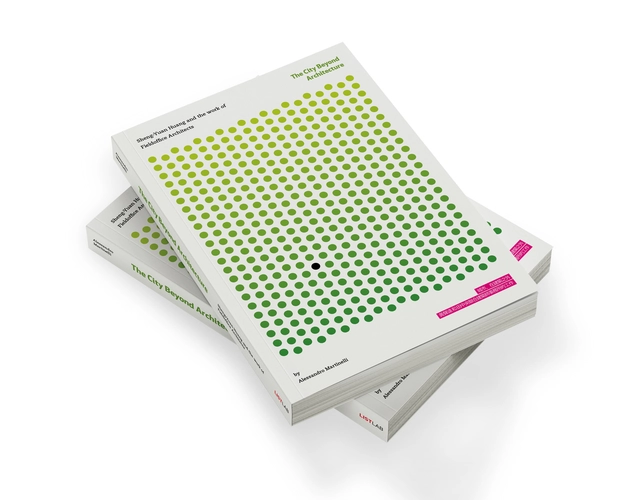
Sheng-Yuan Huang is one of a kind in the architecture world. Indeed, even though he advocates for freedom in the process and shapes of architecture, he contained his work within a county of Taiwan. Here, during a process long 25 years, he has been able to build an urban sequence of public spaces and facilities that spans across more than one kilometer of urban and rural land.
Our Year of Gathering series has allowed us to explore the power of architecture and its role in how, when, and where we gather, inspired by our firm’s latest book. With Gathering we shared a new generation of larger-scale architecture where people gather to learn, work, meet, and play. Throughout 2020 we’ve explored these scales of architecture – how we, with our clients, developed transformational experiences and, then, what adaptations to consider as we work to stem the spread of COVID-19 and curtail gatherings for the time being. At the heart of all our conversations has been our shared sense of community.
Jason Long, Partner at OMA, Will Virtually Address The Dallas Architecture Forum on October 20, 2020.
The Dallas Architecture Forum, a non-profit organization dedicated to providing public education about architecture, landscape architecture, design and the urban environment, is pleased to present the celebrated architect Jason Long, on Tuesday, October 20, 2020 in a virtual lecture via Zoom.
2020 UK Passivhaus Conference: A Healthy & Green Future.
The climate emergency is not just an energy or environmental issue. It is a health crisis, a humanitarian crisis, and an economic crisis. We know that energy-efficient buildings could simultaneously assist with reducing carbon emissions, provide a catalyst to boost jobs & training to build back a greener economy and provide healthy, comfortable indoor environments. In looking at how the UK can get to net zero, the National Grid state in their 2020 Future Energy Scenario Report “Energy efficiency is a no-regrets measure in all scenarios”. Passivhaus offers a robust ‘oven-ready’ solution to make both our existing and new buildings highly efficient.
Are you an architect or designer living and working in the CEE region? VELUX is honored to invite you to submit your project for the 7th annual Architectural Design Awards, Bringing Light to Life. The Awards seek to find outstanding projects that are examples of good practice in the use of VELUX solutions and that explore in their unique manner the generous theme of daylight.
SCI-Arc convened to present its globally renowned Graduate Thesis Weekend, as the culmination of the 2020 graduate programs curricula. Complete with wall-to-wall livestreamed final reviews, SPIN Room commentary sessions throughout, as well as rich and engaging discourse and feedback from a wide range of experts in the field of architecture, this year’s graduating M.Arch 1 and 2 students took the virtual stage via Twitch and YouTube Live to present their final thesis projects.
Call for Papers, inForma Issue 14 ‘Guilty Pleasures: Spaces, Places, and Routines’
Where uncertainty, division, separation, havoc, and disease befall communities worldwide, many of us have resorted to embracing ways to bring solace, gratification, indulgence, and joy into the spaces we inhabit. Rather than setting out to work on an issue that directly and explicitly discusses the problems of our times as the focus, our 14th Issue sets out to critically examine the spaces, places, and routines that give us pleasure because of—and despite—the chaos. Reminded of Bernard Tschumi’s words in “The Pleasure of Architecture”, where he posits that “the ancient idea of pleasure still seems sacrilegious to contemporary architectural theory”, this issue of informa aims to study pleasure as a tool with agency.
We’ve all been there. Tight deadlines, frustrating clients, too much coffee and too many all-nighters. But we’re still here. We keep creating despite the struggles. For each one of us, this journey is unique, but at the same time, we share a common motivation - the urge to create.