Coffee plants grew in the wilderness in Ethiopia and were used by nomadic tribes for thousands of years, only until the 1400s when people figured out that they could roast its seeds. By the 1500s, the drink had spread to coffee houses across the Arab world. Coffee houses first appeared in Turkey, Syria, and Egypt as early as 1530. Since they became a hotspot for political discussions, they were banned repeatedly.
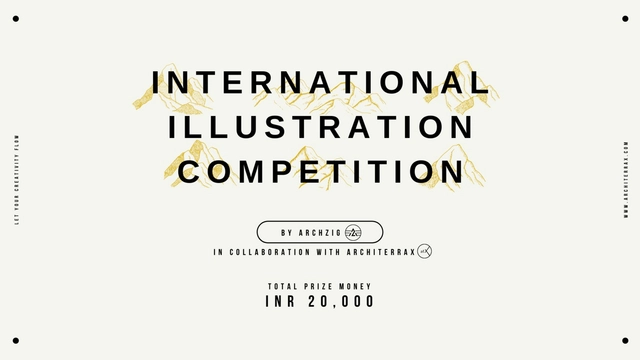
Call for Entries: International Illustration Competition
OVERVIEW The competition aims to celebrate and promote exceptional work of young creative illustrators around the world. There are no limitations as to what you can create, your imagination is the limit.
Young architects are being invited to participate in a design competition for Tipat Halav – early years centres – in Israel. “Between the Drops” is a collaboration between the Israeli Ministry of Health, the Bernard van Leer Foundation and the Department of Architecture at Bezalel Academy of Arts and Design, open to fourth- and fifth-year students and recent graduates in Israel and beyond.
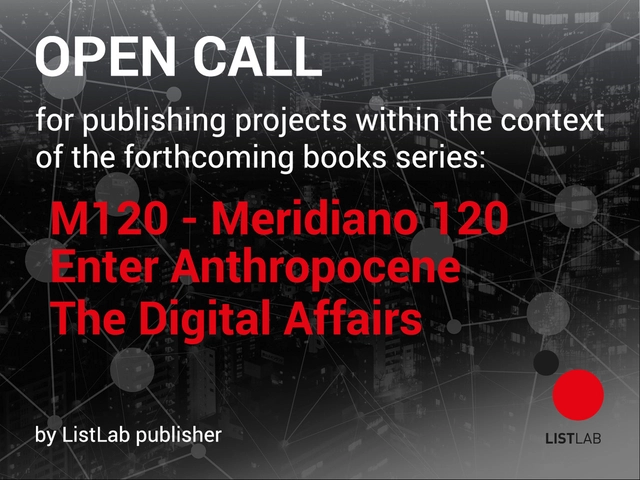
A new ListLab! Open Call for publishing projects within the context of the forthcoming books series' M120 - Meridiano 120,' 'Enter Anthropocene,' and 'The Digital Affairs' by ListLab publisher.
Shaastra, IIT Madras along with L&T Construction launches Archi-Tech Summit 2021, a two day virtual conference (27th - 28th February 2021) which aims to provide the stakeholders with a platform to express and explore the integration of technology in Architecture and Design to spread the ideas of innovation, sustainability, and advancement.
The technical fest has an illustrious line-up of events that include skill building workshops on BIM, GIS and latest visualisation techniques in Architecture using VR, panel discussions on The future of our cities and how technology is transforming how we use architecture and engaging lectures on Sustainability and Rehabilitation.
International Finance Corporation IFC of the World Bank Group and Ministry of Architecture, Lagos invites emerging architects, planners, developers and students to a virtual discovery workshop designed to introduce them to the future of climate business through achieving Excellence in Design for Greater Efficiencies EDGE in building design and construction.
Florian Schaffner has had a passion for architecture ever since his childhood. After he finished his bachelor’s degree in business at IE University, he went straight on to pursue the Master in Real Estate Development. We spoke to Florian to find out more about his experience in the MRED and to learn about Triadic Labs, a real-estate startup project founded during the pandemic.
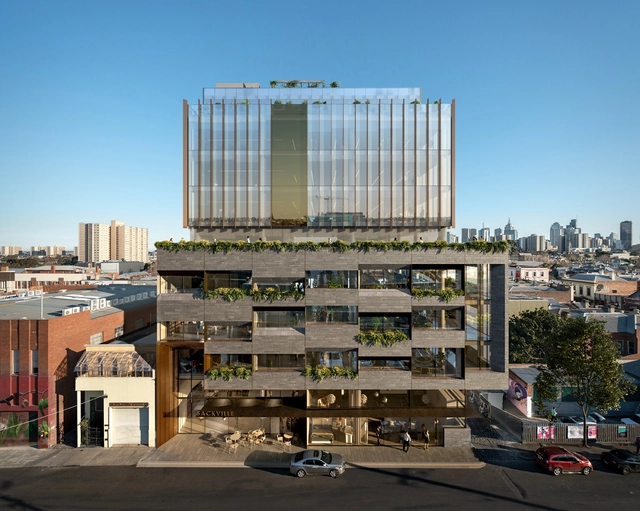
Sackville St. Image Courtesy of Idle Architecture Studio and Biwyan Studios
Vectorworks Architect is well-known for its BIM capabilities, allowing firms around the world to maintain the integrity of their internal design and documentation strategies with an all-in-one solution. The ability to collaborate between firms and share files with ease lets users shift their focus to their designs and all but forget the stress of document sharing. This was the case for Idle Architecture, a Melbourne-based firm that got into Big BIM completely by accident.
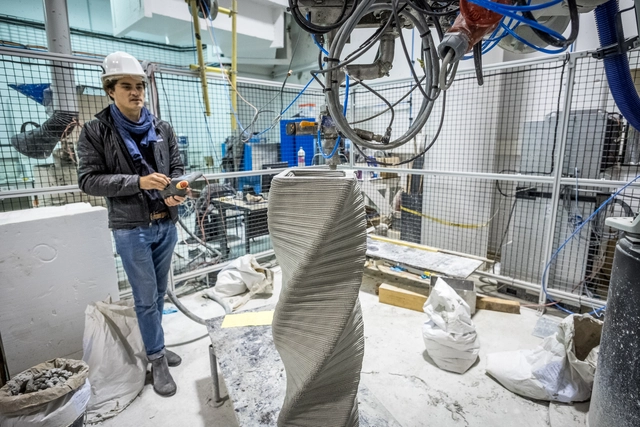
Paul Carneau, Design by Data alumni working with the 3d printing facilities at Ecole des Ponts ParisTech - Photo by Stefano Borghi
The Advanced Master[1] “Design by Data” in Computation Design & Robotics for Architecture and Construction was launched in 2016 and is one of the latest programs in innovative professional education at l'École des Ponts ParisTech. The program was designed to meet the increasing need of the professional sectors of architecture and engineering for combining architectural awareness and skills in creative engineering. Design by Data trains professionals to master advanced design tools (coding, generative design, machine learning) as well as digital manufacturing and design processes (robotics, 3D printing, and mechatronics) applied to architectural and construction projects.
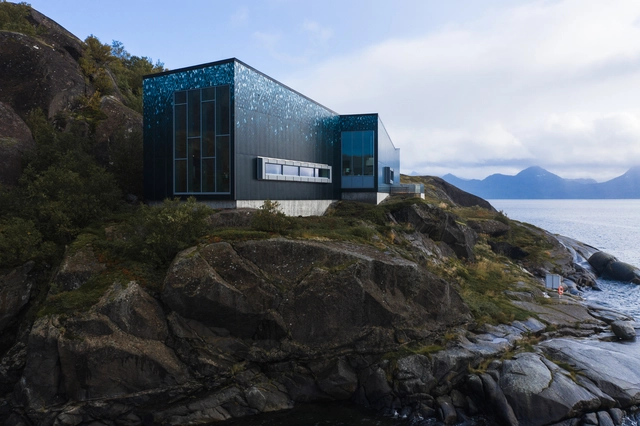
The building rises from a rock face jutting up from the ocean at Skutvik in Nordland, Norway. Steni Vision façade panels give the Arctic Salmon Center a unique and notable appearance. “It has been unbelievably exciting to work with such a special building in such a special place. This is a quite extraordinary building, that has been greeted with astonishment by my colleagues,” comments architect Peter W. Söderman at Norconsult AS. “We chose Vision panels from Steni due to the printing possibilities – we could project an exciting and quite subtle print onto a large surface." The client wanted to have an expressive building that reflected their purpose as an experience center for the fishing industry.
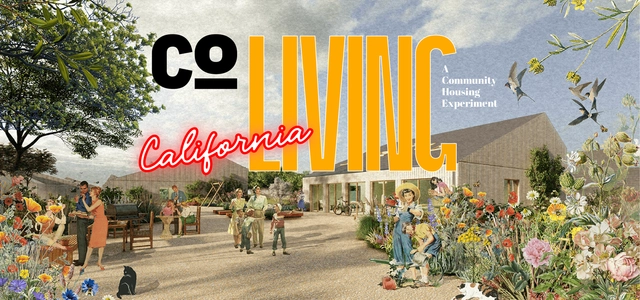
As more of us flock to urban living in quest of enhanced lives and professions, there is a paradigm shift in the way we live, work, and play. Today, more than half the world’s population lives in cities. The century has witnessed a dramatic population shift from rural to urban to experience the growth dynamism of the world’s metropolises. However, this ‘growth’ is chewing the space and adding a ‘weight’ to the functioning of the cities. The housing stock isn’t growing as fast as their migration and hence there is a resurgence of co-living.
Aerial View of Northerly Island. Photo by Tom Harris.
During 28 years as architecture critic at the Chicago Tribune, Blair Kamin deepened civic awareness of design. Join Kamin as he revisits three decades of skyline-shaping towers, imaginative local projects and transformations of the public realm.
On Wednesday, March 10th, 2021 live from 19:00 to 20:30 CET we will “visit” The Netherlands and meet two of its most remarkable architects. If you can’t make it live, save the link and watch it later.
Design through and Indigenous Lens explores the ways in which we, as Indigenous Peoples, approach the world We will be discussing how to improve the process of design and architecture though Indigenous Cultures with an application in contemporary society. Ideas about design process, multi-generational households, “Universal Inclusivity”, Urban agriculture, multi-service provider neighbourhoods, will be discussed. We will discuss alternates goals for urban planning and look at a case study that supports all of these ideas. Understanding Indigenous cultural knowledge can help push us back towards ways of designing and building that create healthier ways of living.
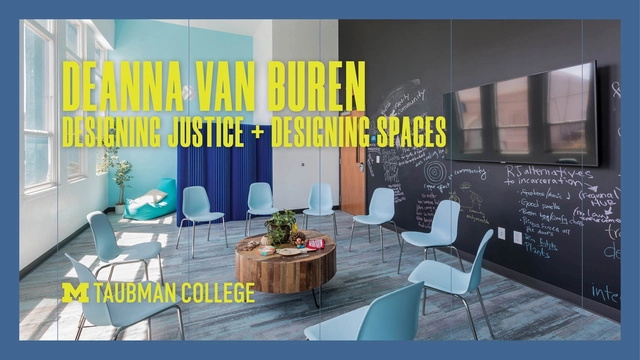
Deanna Van Buren is the Executive Director, Design Director, and Co-Founder of Designing Justice + Designing Spaces (DJDS), an architecture and real estate development non-profit building infrastructure to end mass incarceration. As one of only 500 licensed Black female architects in the U.S, Deanna is committed to racial equity in the built environment and is a national thought leader in advocating for alternative spaces for justice, including restorative justice centers and mobile resource villages. Van Buren’s most recent notable projects with her team include Restore Oakland, a campus for restorative justice and restorative economics in Oakland, California, and the reimagining of the Atlanta City Detention Center into a Center for Equity. Van Buren received her BS in architecture from the University of Virginia and her Masters of Architecture from Columbia University, and she is the only architect to have been awarded the Rauschenberg Artist as Activist fellowship.
How do designers think? How do they visually communicate complex ideas? What strategies do they employ to make a positive impact on the built environment? How does design change the way people see and experience the world?
CANactions School Talk is a series of online talks and offline events investigating «How does the world change in the face of global challenges?». It is aimed to share global knowledge, unite, and consolidate professionals around the globe.