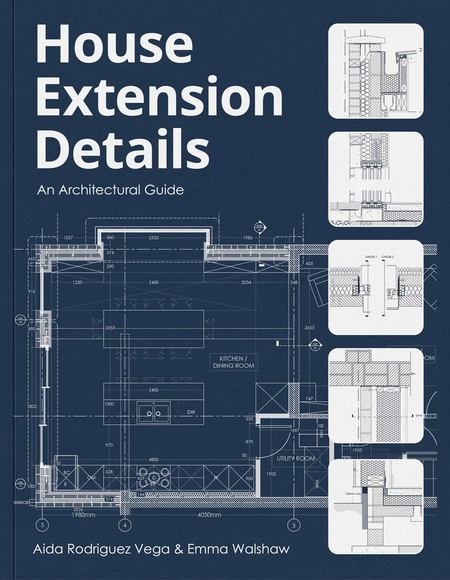
This book is a comprehensive architectural resource focused on the design and construction of residential house extensions in the UK. Written for architects and designers, it offers practical guidance, technical insight, and construction details tailored to real-world extension projects. It covers everything from planning and permissions to sustainability, materials, detailing, and building regulations. The book includes a wealth of construction details and examples to support a variety of common construction scenarios.
As the need for a circular construction industry becomes progressively more apparent, building practitioners are increasingly turning to salvaged building components to construct new projects. Yet the aesthetic potential of reused materials remains underexplored. Drawing from art history, architectural theory and constructed works, this book develops a set of design strategies practitioners might employ to develop thoughtful, architecturally rigorous reuse projects. Author Bailey Bestul illustrates the immense design potential of reuse using nine themes that follow the reader from the initial stages of building planning to the finishing of the interior spaces.
Design Beyond Form is a personal and critical reflection on what truly makes architecture meaningful in today's world. More than just another design book, it's a candid conversation about what gets lost when form is prioritized over function, spectacle over context, and aesthetics over everyday life.
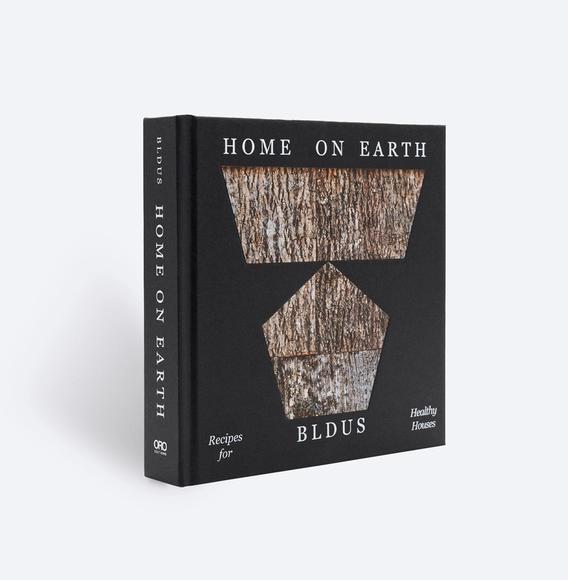
The prototypical recipe book provides a loose framework for BLDUS’s unique farm-to-shelter architecture in Home on Earth, offering delectable suggestions for healthy modes of human habitation. Using traditional materials processed with contemporary techniques, BLDUS designs and builds sustainable houses in and around Washington D.C. that pay tribute to their contexts and gain integrity as they age. Home on Earth showcases built houses alongside material studies and models to propose a healthy building cuisine specific to the Mid-Atlantic Region. These contextual houses are advocates for simple healthy building materials that work well in the Mid-Atlantic region and have low impacts on their points of growth, manufacture, installation, inhabitation, and eventual disposal.
Framework Thinking distills key lessons in creating extraordinary design outcomes. It shares how the clarity, power, and enduring presence of an inspired vision can be increased through holistic thinking, inclusive collaboration, and intentional process—in short, a framework thinking mindset.
The public association "Belarusian Union of Architects" invites you to participate in the XI Minsk International Biennale of Young Architects "Leonardo-2025". This is a traditional large-scale event that unites architects from more than 130 countries of all continents.
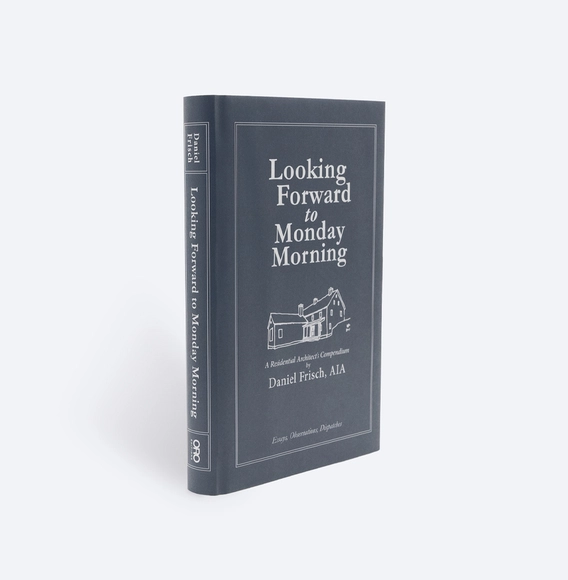
Looking Forward to Monday Morning is a collection of essays that weaves together stories from Daniel Frisch’s thirty-year (plus) residential architecture practice. The essays focus on design and technology, anecdote and philosophy, entrepreneurship and culture, and beyond. Taken together, the essays provide a look into the practice of architecture (with insights applicable to any collaborative field), demystifying the complexities of the profession and challenging the elitism for which architects are so well known.
Michel Foucault, in La volonté de savoir (1976), described how the mechanisms of the examination of conscience belonging to the pastoral tradition of the 17th century progressively extended to all areas of society, marking the threshold of a biopolitical modernity. Here, the 'will to knowledge' is not the subject's drive for research, but the injunction to bring into the field of knowledge-power those borderline domains of life that had been previously excluded from it: death, birth, sexuality. This process of the adherence of knowledge to bodies entirely invests our time and urges us to reflect on the figures of the 'will to knowledge' in the new millennium: the questions of surveillance, of the constant and widespread mapping of life in its social and biological dimension, of ubiquitous visibility, of the collapse of the limits between inside and outside, between inside and outside of work, of wakefulness, of private life, are explored by artistic and design forms. 'The will to knowledge' also carries a more straightforward, primary meaning: here we encounter the sphere of the desire for knowledge and its challenges, a theme constantly evoked today – above all, that of finding orientation within a hypertrophic labyrinth of information. Thus, a few years after Foucault's work, we encounter another text on the inexhaustible drive towards knowledge, its infinite resources of seduction, its lethal traps. With The Name of the Rose (1980), Umberto Eco constructs a thriller whose origin lies in the will to knowledge, with a book at its centre and, surrounding it, the desire of the aspiring initiates in opposition to the strenuous defence mounted by the custodians of tradition. The 'will to knowledge' evokes both the symbol of infinity, to express the limitless scope of knowledge, and the labyrinth, to indicate its intricate structure and the countless possible paths through it.
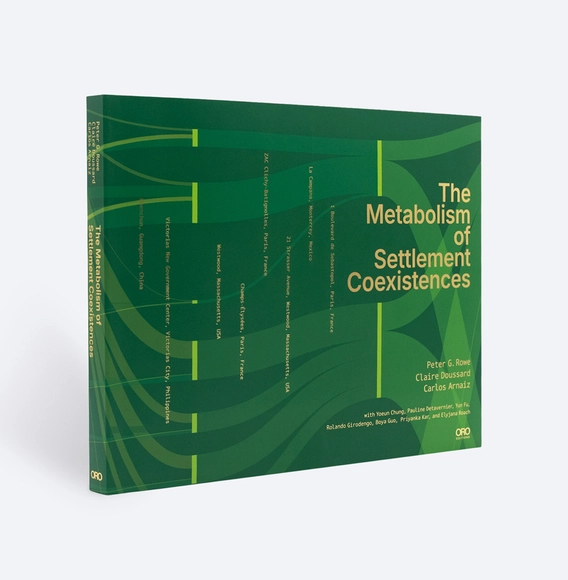
With the onset of the Anthropocene Era, concern for the metabolism of various kinds of settlement has risen appreciably. Of particular concern in the study of architecture and urban design are metabolic contributions of flows of stocks that go into the construction and operation of settlements of one kind or another. This book is about a methodological approach that allows urban settlement patterns to be re-written, as it were, into water, energy, and other material flows emanating from original sources in the geosphere, biosphere, hydrosphere, and so on, through various stages of transformation during settlement construction and operation, and then on to end-of-life activities. In short, the methodology produces a so-called ‘cradle-to-grave’ account of the material aspects of urban settlement from which technological and design proposals can be crafted ameliorating and diminishing adverse impacts, as well as related outcomes such as embodied energy and carbon concentrations so deleterious to climate change and proliferation of other hyperobjects.
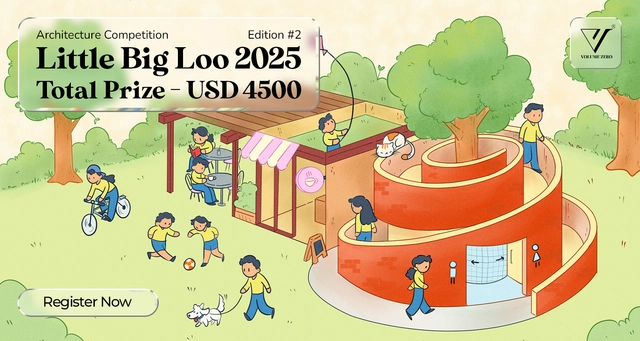
Little Big Loo 2025 Architecture Competition invites you to re-imagine the conventions of public toilets and encourage the best possible solutions for this serious problem scenario, which is plaguing our World.
The 21st century began with great promise filled with ambition, optimism, and dreams of a better future. Now, twenty-five years later, we stand at a crossroads. Humanity has achieved remarkable feats: exploring distant planets, transforming healthcare, and advancing artificial intelligence and robotics. But we've also lived through defining global events, shifts that have tested our societies and systems.
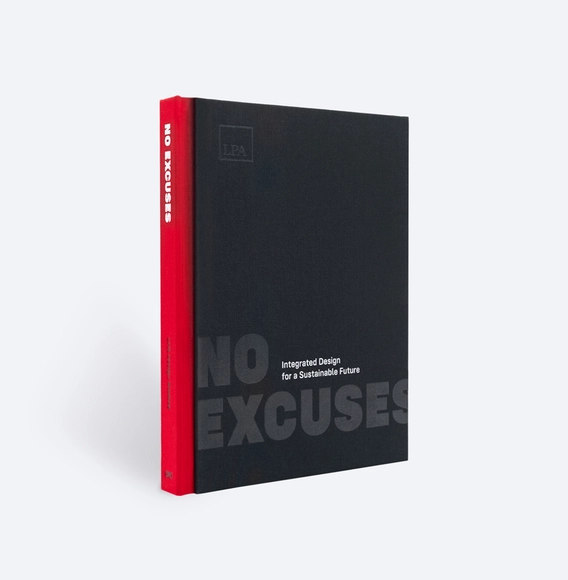
LPA Design Studios rose to national prominence and earned the 2025 AIA Architecture Firm Award by demonstrating that designers can make a real impact on carbon reduction and the human experience. No Excuses: Integrated Design for a Sustainable Future is a detailed exploration of the firm's culture and integrated, research-driven design process, hailed by the AIA as "a trailblazer in sustainable, high-performance architecture."
The Design-z competition is A-Class Marble's annual celebration of imagination and material mastery, aimed at fostering young talent. The Design-z theme for 2025, 'Upcycle with A-Class', is here to offer you the chance to reimagine discarded marble and craft a compact, functional product that blends sustainability with smart design.
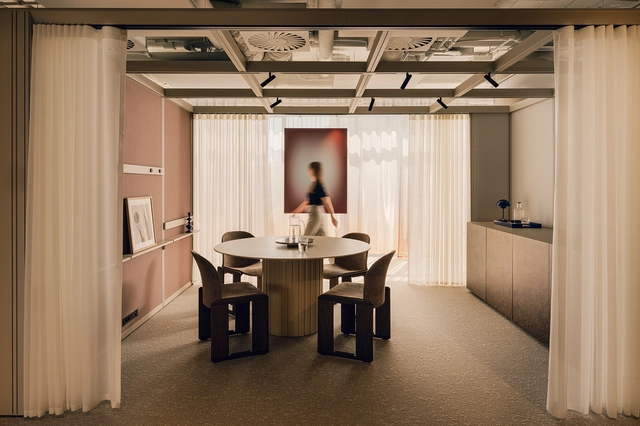
Mute, a global manufacturer of adaptable architecture solutions for modern workplaces, has opened its new headquarters in the Ambassador office building in Warsaw, managed by Hines. Covering more than 840 m², it is the first office in Europe built entirely using a modular system — one that can be freely reconfigured without generating renovation waste or CO₂ emissions.
Sheep Meadow in Central Park, United States. Photo courtesy of Central Park Conservancy.
From increased flooding, longer dry spells, invasive pests, or new plant diseases, parks and gardens are uniquely vulnerable to shifts in climate. They also present valuable opportunities to build climate resilience by countering the urban heat island effect, mitigating pollution, fostering biodiversity, and more.
Scotland is now experiencing relative ‘Sea-level Rise’. All future projections expect the rate of this rise to speed up due to climate change /rising ocean temperatures.[1] The global mean sea level rose by 3.6mm per year from 2006–2015.[2] Estimated global mean ‘Sea-level Rise’ in the next 100 years is around half a metre.[3] There are local variations in sea level rise which have important effects on the UK. 1. (NatureScot: Scotland's Nature Agency, 2024, Present and future sea levels) 2. (Climate GOV, 2023, Rebecca Lindsey, Climate Change: Global Sea Level) 3. (POSTNOTE 363, September 2010, Sea Level Rise)
Experience Audacious New Projects Join the Forecast Forum from July 18–20 in Berlin for a weekend of bold ideas and immersive experiences by visionary creatives from all over the world.