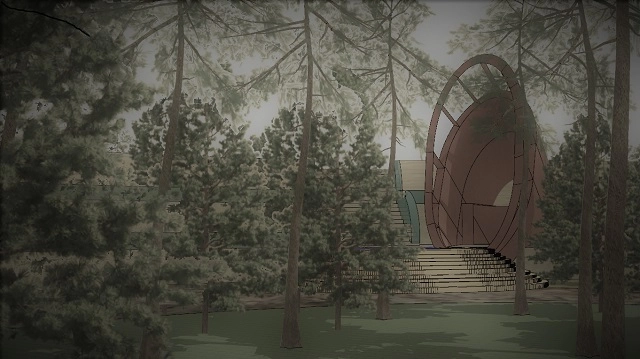
On May 22nd 2021, from 10:00 to 19:00, the Unfolding Pavilion will open its doors to the public. Now in its third edition, the Unfolding Pavilion will pop-up on the occasion of the 17th International Architecture Exhibition at the Biennale di Venezia, inside of the belly of an old mercantile sailboat - a trabaccolo - moored at Punta della Dogana. Now managed by a non-profit organization, the trabaccolo once belonged to Countess Luisa Albertina di Tesserata: an eccentric art collector who in the 1970s commissioned the construction, on a small island of the Venetian archipelago she owned, of an almost exact replica of an unrealised project by John Hejduk: the House for the Inhabitant who Refused to Participate.
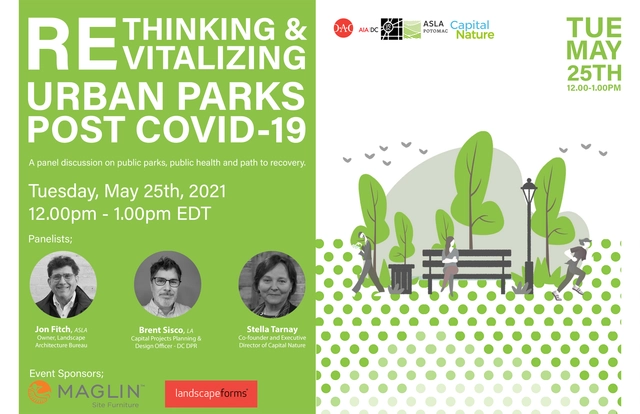
Parks and urban green spaces enrich people’s lives in many ways and are known to provide a range of physical and mental health benefits to communities within which they are located. In the past year, with the increasing number of restrictions and guidelines for social distancing due to the global pandemic, parks across the world have seen dramatic increase in use. They have become spaces of resilience, personal restoration, and social activity when the usual amenities were not available. Parks today provide access to a range of activities such as exercising,
The next online conference of the “AURA on Saturday” series will host Prof. Ute Schneider, architect, urban designer, and the partner of Kees Christiaanse Architects & Planners (KCAP). The lecture will focus on “Re-Activate by Adaptive Re-use” to transform cities into vibrant, open, inclusive, and adaptable places by re-using, re-cycling, re-thinking what is already there, with a holistic vision.
Certain cities or parts of a city are lost in the layers of history and fade away from public memory. However, many of such long-forgotten urban conditions are important because within them they are a repository of certain collective culture and consciousness. In this writing workshop, we will write episodical histories of such cities while emphasising key ideas or practices that defined them. The aim would be to create a narrative which can be quickly shared in the public domain.
En Plein Air - an object for outdoor living in times of pandemic
ATELIER MOBILE launches its first design+build competition! Architects, designers, artists, craftsmen, creatives are called to design and model an object for our going back to outdoor living. The winning projects will be built and exhibited by atelier mobile. Due to the current historical moment and in compliance with the restrictions for the control of the infection from Covid-19, atelier mobile reinvents itself: our first workshop of 2021 is a competition open to all. Our will is to create and share elements of daily use for outdoor life. This summer we’ll do it anyway but safely! 1. INTRO Over the past few months we have been forced to spend most of our days indoors, often with little or limited range of motion. The desire to spend moments of our day also outside invites us to imagine new objects that can be in support of a new period in which open-air spaces become the setting for multiple work, leisure or meeting activities. 2. WE ARE LOOKING FOR designers to create an object that can be used for outdoor living in a period divided between social-distancing and the desire to return to live in public spaces. The object must be selfbuildable, easy to assemble, with limited dimensions and cost, recyclable (or composed by elements that can be reused even individually) and transportable. The object must have one or more defined functions and a clear use to respond to concrete needs. 3. GUIDELINES _object typology Any object that can be used outdoors, in urban or natural spaces, to simplify activities that normally could only be carried out indoors. The object must be easy to make to allow it to be replicated by people without special craft and construction skills and competences, without the use of professional machinery and industrial production technologies. _materials Suggested materials are made through recycling or easily recyclable, as well as those that can be used for a second life if they are abandoned or no longer used. _dimensions and weight The object must be easily transportable and stored in a container with a maximum size of 50x30x20cm (approximately a 30-liter backpack) and low weight. It is admitted that it could be disassembled or folded to be transported, if it’s guaranteed an easy reassembling. _cost The maximum cost of the materials to make the object must be € 30, considering the standard prices in Italy. _target The largest possible pool of users should be favoured. _values to convey Creativity, curiosity, innovation, ease of use, clear functionality, awareness in the use of available resources. 4. MATERIALS TO SUBMIT _gallery of 5 images (.pdf, max. 10MB overall size, ratio 4:3) 1. iconic image of the object, its title and short description (max. 280 characters including spaces), designer(s) name(s) and surname(s) 2. list of elements composing the object and their zenith photo 3. prototype (1:1 scale), photo of the disassembled object 4. prototype (1:1 scale) photo of the assembled object 5. photos of the object’s prototype showing its use(s) _assembly instructions, A3 landscape panel (.pdf, max. 5MB) object assembly explanation by a sequence of operations _list of costs, A4 portrait table (.pdf, max 1MB) _application form designer(s) data and disclaimers (.pdf, downloadable together with the brief) 5. EVALUATION CRITERIA Functionality Innovation Technical feasibility Environmental compatibility 6. AWARDS _prototype construction The jury will select, build and exhibit from 3 to 5 prototypes, according to the number and quality of the submitted works. _exhibition Presentation and exhibition will take place at the natural area of Laghetto dei Camosci in Sant’Ambrogio di Torino (end of July) and at the Intercultural Center 28. Lo Spazio di mezzo in Turin (autumn). Panels and images of the winning projects will be exhibited with stop-motion videos on their construction (edited by our team) and together with a selection of images and panels of other selected projects. _on-line publication Winning and selected projects will be published on atelier mobile website and in an ISSUU flipbook. 7. JURY The jury will be composed by members of the atelier mobile team. 8. LANGUAGE All texts must be written in Italian or in English. 9. CALENDAR _brief publication: 3 May 2021 _deadline for sending FAQs: 18 June 2021 _answers to FAQs: every week on www.ateliermobile.org _deadline for registrations and works submission: 11 July 2021, 11:59 pm CET _publication of results online: 18 July 2021. 10. REVIEW Optional, not mandatory on-line reviews with an atelier mobile team member will take place in June, by appointment to be fixed by e-mail by 25 May 2021. 11. TO JOIN THE COMPETITION The participation to the competition is free, open to creative talents of any nationality, aged 18 or over. The requested materials must be sent to info@ateliermobile.org by the submission date. Works presenting materials other than those requested or arriving after the deadline will not be taken into consideration. The intellectual property of the submitted projects belongs to the authors. With the delivery of the projects, the authors consent to the publication of the works, and to their self-construction replica, protected by the Creative Commons license https://creativecommons.org/licenses/by-nc/4.0/ 12. GENERAL RULES AND PROTECTION OF PERSONAL DATA Participation in the competition presupposes full acceptance of this brief, the acceptance of the general competition rules, and the consent on personal data processing included in the application form.
Arctic Hotel «Bigfoot footprint» But if today Rovaniemi is no longer exclusive the right of adventure seekers and seasoned travelers nicknames, it is necessary to define new models of hospitality properties capable of preserving the distant identity of lands, who have reached development far from a person, and who are thanks to his absence, they managed to preserve primitive beauty and harmony.
The name Cascadia calls to mind forests, mountains, water, vast open spaces, cities and towns and diverse cultural landscapes. But the daily reality for most of us is somewhat different. Yes, there are forests, waterways, urban centers and varied neighborhoods in the region, but there are also miles and miles of very similar commercial strip development, connecting towns along highways and hugging urban edges.
On the occasion of its sixth year of activity, the Banca del Fare project is looking for 10 students and young creatives to participate in a workshop in which to discover local history, mythologize it with unexpected interventions, to discover new collective rites; guide to the design of public space with a hybrid perspective, aimed at subverting traditional urban dynamics, which will take place in the small village of Monesiglio (CN), at the Caldera-Saluzzo Castle, from 10 to 20 September 2021.
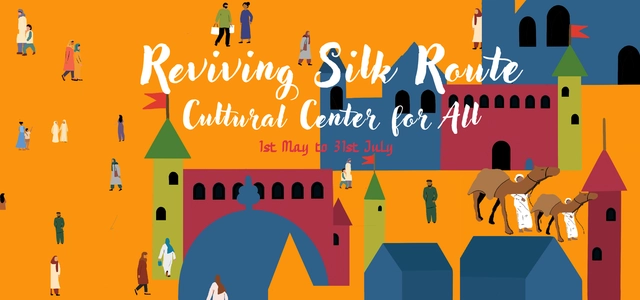
Switch Competitions invites all architecture students, and young professionals to develop and submit compelling ideas for the design of a cultural center for all, located in the soul of the Silk Road cities - Baku. The narrative of this competition design stems from revisiting the solid traditional roots and foundation as well as sculpting the community for the years to come. Designing a center that houses a network for all; a space that welcomes all and celebrates the notion of co-existence.
We hereby invite students from all around the world to join us and to contribute their work to the renewal of the hard-pressed city. Let’s make the dream of the founders of INSPIRELI AWARDS a reality. Let’s help Beirut to be reborn again!
LUBICA - Lucca Biennale Cartasia is the world's biggest art event dedicated to paper art. The Biennale takes place every two years, in 2022 it will be held from the 31st of July until September the 25th. The Biennale is looking for emerging and affirmed artists to work in Lucca, Tuscany, during an artistic residency in July 2022. This call for entries aims to select artworks that involve the use of paper and its by-products to show how versatile this material is: artists that work with cardboard and paper are encouraged to participate in the contest with a challenging and innovative project for a monumental sculpture. The selected artworks will be exhibited in the most popular squares of the city during the event and will then become part of the Biennale's permanent exhibition.
The PAVE Scholarship Program, now in its eleventh year, provides financial assistance to students in educational programs preparing them for careers in the retail environments industry, including but not limited to careers in retail design, visual merchandising, interior design, architecture, and industrial design. PAVE was developed to help ensure a future talent pool for the industry by eliminating barriers to studying in these fields. The funds assist students who are experiencing financial difficulties that may prevent them from continuing school. PAVE has awarded students with over $231,500 in financial grants and scholarships in the past three years.
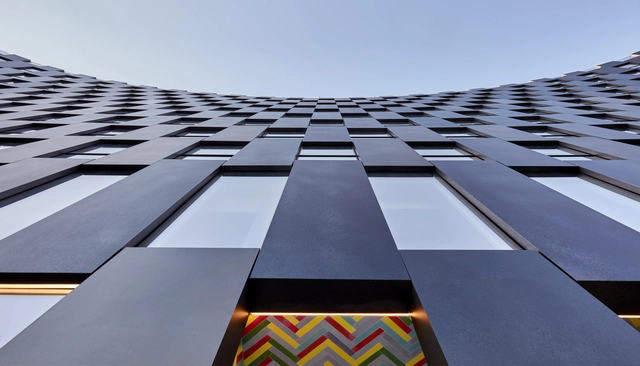
Designed by the Danish architecture office BIG-Bjarke Ingels Group, The Smile made of black blasted stainless steel extends along 126th Street in East Harlem, Manhattan. Inspired by the surface of the moon and the cultural influences of the city district, the T-shaped building fits seamlessly into the surrounding red and brown brick buildings. The interlocking chessboard-like facade panels were manufactured in Cologne, Germany by POHL Facade Division. Flanked by room-high windows, The Smile aims to reflect sunlight and amplitude into the daily lives of its residents.
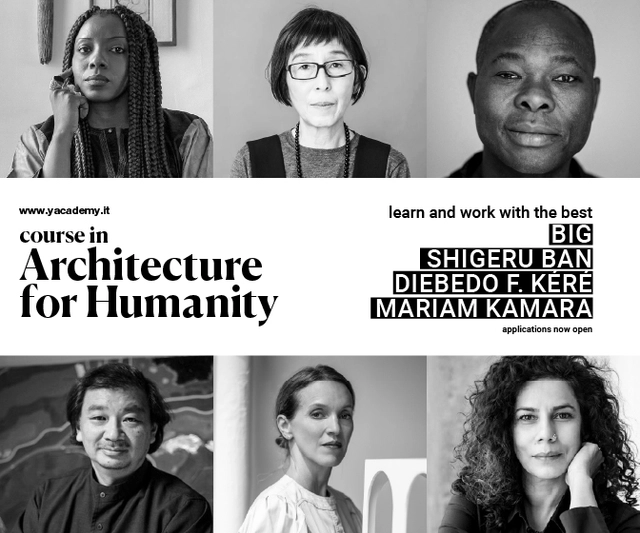
Pandemic, economic crisis, migration and climate change: every area –from the periphery of our metropolis to the most remote tropical village– can now be defined as an "emergency context". The United Nations –already before the pandemic cycle– estimated that the fragmentation of conflicts, combined with the effects of the economic and ecological crisis, was generating a humanitarian emergency greater than that caused by the Second World War.
In this context, the architect plays a fundamental role, because architecture responds to man's primary needs. Finding shelter, receiving education, living healthy are rights that require "containers" in the first place, and architecture –great architecture– would be very little if limited to contexts of well-being; since man is at the center of architecture, and man, in any context, in any condition, deserves dignity and beauty.
There is much discussion about the role of technology in our future, and it is without a doubt an important driver. However, our very human aspects: Creativity, Critical Thinking, Problem Solving, Negotiation, Emotional Intelligence, Judgement and Cognitive Flexibility, are some of the most important skills that will be required in all future jobs, according to the World Economic Forum.
The purpose of the IE School of Architecture and Design Spaces for Creativity competition is to design a nursery that boosts creativity. Develop a proposal that focuses on encouraging a child’s creativity, uniqueness and personality. Create a sense of place that fosters belonging, fun, and responsiveness to all the stakeholders.