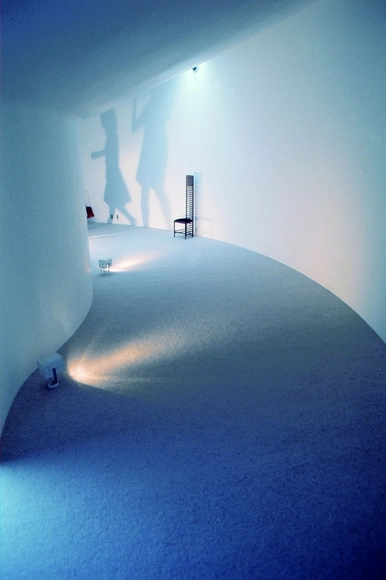
Form and void are inseparable concepts in Japanese culture. This course proposes an analysis of selected architectural works, supported by the aesthetic notion of Ma, to explore different conceptions of space-time in Japan. The course aims to present the conceptual, spatial, and material aspects of these projects to foster an understanding of the potential relationships between form and void, as well as to approach the void as a form of potential rather than an absence. The course is intended for anyone interested in architecture and Japan in general.
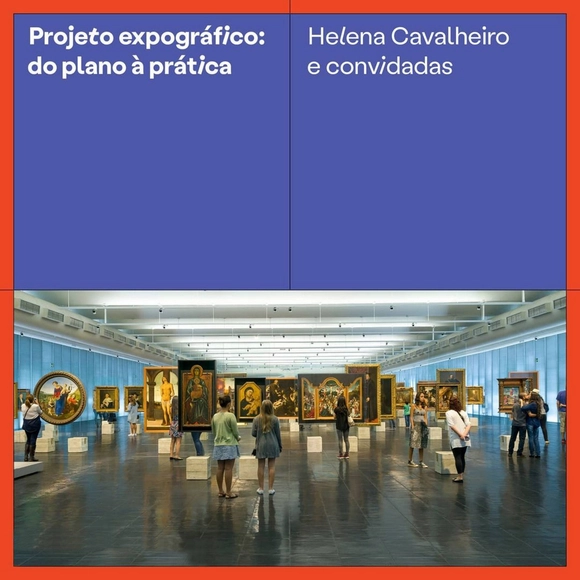
Reissue of Lina Bo Bardi's glass easels at MASP, a project by Helena Cavalheiro in association with Metro Arquitetos. Photo: Eduardo Ortega
What are the conceptual and technical issues that shape an exhibition design project? Who are the agents involved in the process? What are the most commonly used tools and work stages? Although rooted in the realm of architecture, the task of translating an artistic narrative into space has its own particularities.
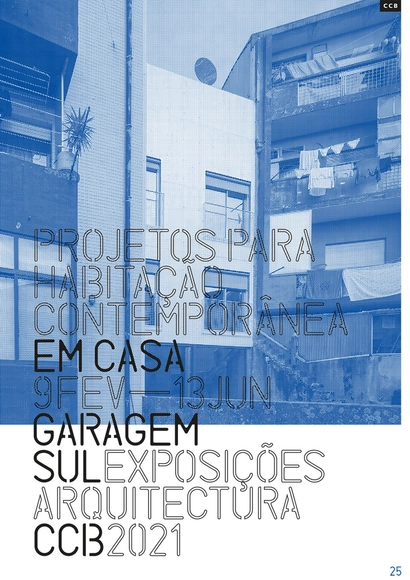
What kind of homes do we live in? How do architects design our homes today? How have notions of dwelling changed over the last generation? The exhibition "At Home. Projects for Contemporary Housing" examines investigations and responses to these questions through the work of various architects.
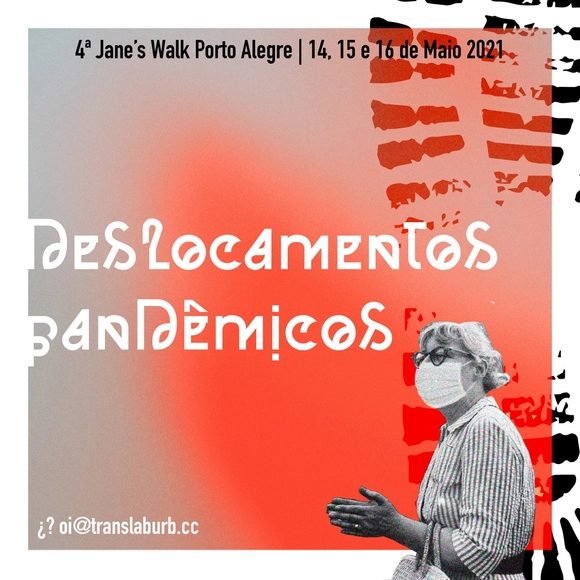
2nd Colloquium: Women, City, and Architecture during the Pandemic
The 2nd Colloquium: Women, City, and Architecture in the Pandemic will take place from March 26 to 27, 2021. Due to the pandemic, it will be a virtual event; however, it maintains the tradition of involving various groups in its organization, a practice initiated by Lab20 PPGAU-UFBA in 2019. This edition is organized by Amar.é.lina, the Observatory of Feminist Studies in Architecture and Urbanism at PPG FAU UnB, making Brasília the host city for this edition.
With an architecture that focuses on social transformation and community building, Giancarlo Mazzanti has established himself as one of the leading Colombian architects today. He will discuss his work and architectural vision in the lecture "Six Strategies for a More Participatory Architecture" this coming Friday, March 26, at 12:00 PM (Chile time). This event will mark the start of the academic year at the Universidad Finis Terrae School of Architecture. The lecture is free and open to the public and will be held via Zoom.
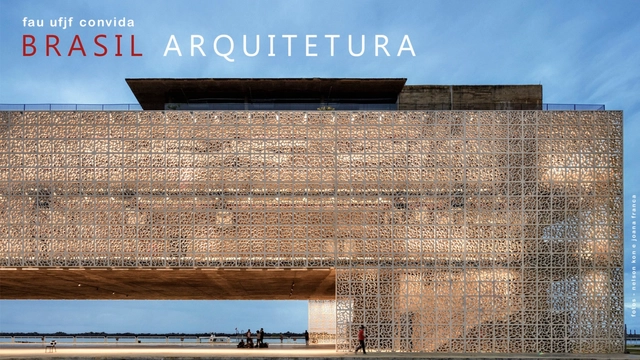
Image produced by the doCACAU organization. It features a photograph of the Cais do Sertão Museum in Recife, along with event information.
Promoted by the Academic Center of the Architecture and Urbanism program at UFJF (CACAU UFJF), the doCACAU audiovisual program aims to democratize architectural education for the community, integrating cultural and social knowledge as a means of extending learning beyond the university walls. The program includes internal initiatives focused on audiovisual production and architectural dialogues, which are also published on the Academic Center's media channels.
The Continuing Education Program of the Rio de Janeiro Department of the Institute of Architects of Brazil was created to share diverse knowledge and perspectives on the contemporary city—essential raw material for building cities that are more inclusive, accessible, socially just, and economically vibrant and sustainable.
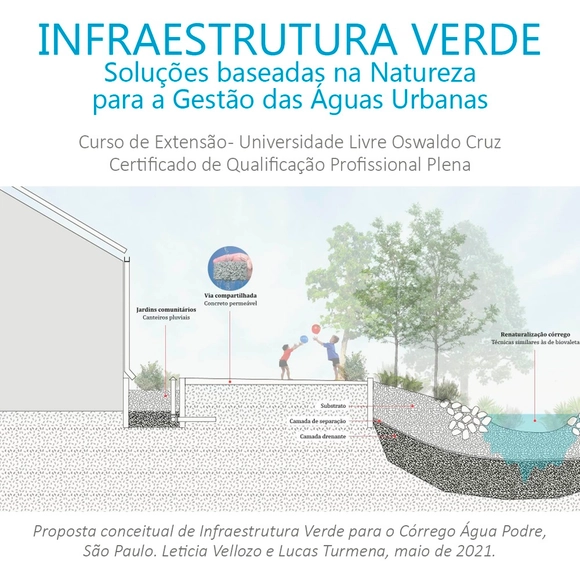
Green Infrastructure is a landscape planning and design method based on creating a network of blue-green landscapes (vegetation and water systems) that perform infrastructural functions while providing ecosystem services to cities. In green infrastructure, design is conceived based on the biogeophysical potential and limitations of the landscape, and water management is carried out through Nature-Based Solutions (NbS) such as rain gardens, bioswales, vegetated infiltration basins, and wetlands, which adapt existing infrastructure to the hydrological cycle and other ecological processes.
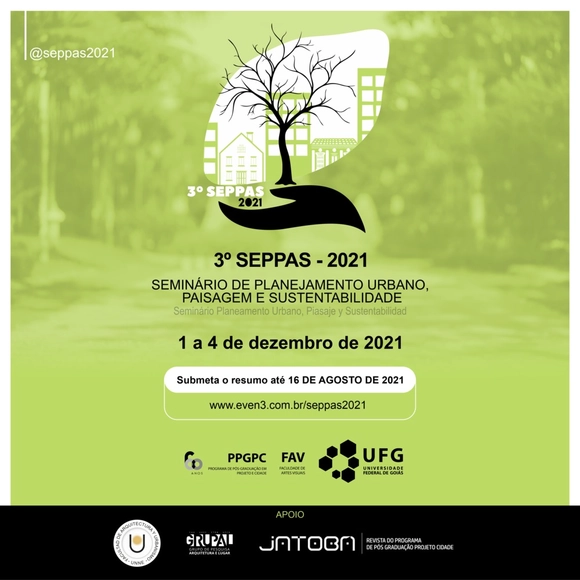
SEPPAS 2021 Event, submit your paper by August 16th.
Now in its third edition, SEPPAS will take place from December 1 to 4, 2021. The event will be held entirely online, featuring lectures and debates with professors, researchers, academics, renowned professionals, and members of the public across various fields of expertise. The event is organized by the Graduate Program in Project and City at the Faculty of Visual Arts of the Federal University of Goiás, with support from the Universidad Nacional del Nordeste (Argentina), the Grupal.UFCG research group, and Revista Jatobá.
The Latin American Steel Association (Alacero) presents the webinar "Health and Well-being in Projects and Structures - SDG 3," a virtual meeting for construction industry professionals and architecture students across Latin America interested in learning more about addressing health and well-being in architectural projects. This topic aligns with SDG 3—Good Health and Well-being—of the UN 2030 Agenda, which is the theme of the 14th Alacero Steel Architecture Competition 2021.
The launch of the first 2021 issue of ARQ magazine, 20/21, will take place on June 8 at 6:00 PM. The event will feature commentary from architects and researchers Fabrizio Gallanti (Fig Projects) and Alejandro Hernández (Arquine), as well as architect and curator Florencia Alvarez.
The postgraduate program in "Parametric Design in Architecture" aims to foster the development of technical skills and cognitive strategies, enabling students to create design methods using programming languages. Through a practical and theoretical approach, the program seeks to equip students with the skills necessary to apply knowledge and techniques of parametric modeling, focusing on material behavior simulation, form-finding processes, and form generation and optimization.
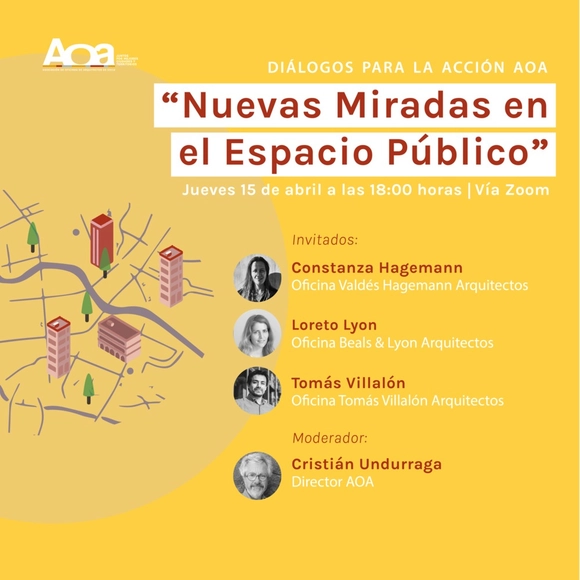
In times of change, the AOA proposes an optimistic approach to the challenges facing the city and its citizens within both local and global contexts. We are highlighting existing opportunities for positive change during and after crisis situations, thereby promoting more resilient cities in both the short and long term.
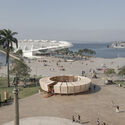
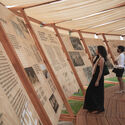
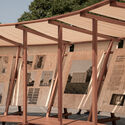
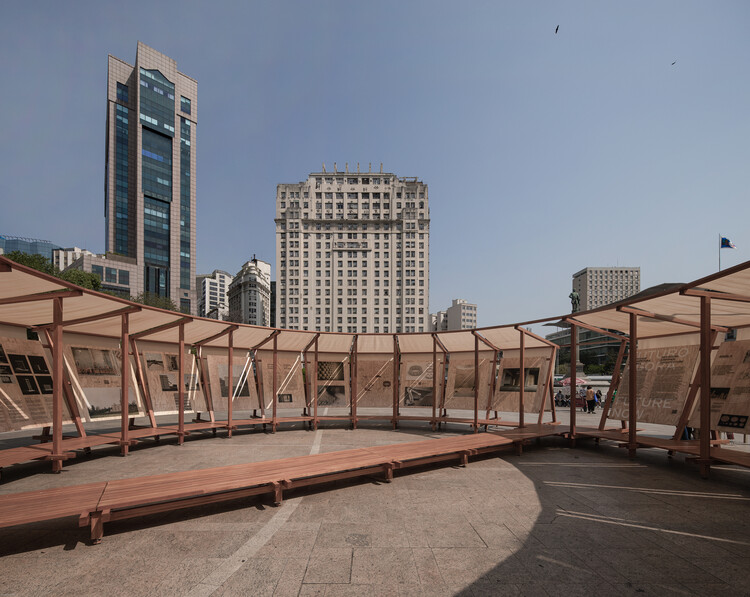
A sustainable, reforested timber pavilion featuring 24 photographic and typographic panels will be installed in the heart of Praça Mauá from September 8 to October 17. The exhibition, Future Now – Revisiting Earth Architecture, offers new perspectives on the challenges of contemporary architecture and addresses urgent global issues. The showcase provides an architectural experience that bridges the latest in high-tech innovation with one of the oldest building materials—earth (such as clay and mud)—and its contemporary applications.
MOVYT has created a tool to support, among other things, the design of Mobility Plans that municipalities must implement under the new Public Space Contribution Law. The launch will take place on Thursday, July 8, at 10:00 AM via our digital platforms, where participants will be able to download the cards for free.