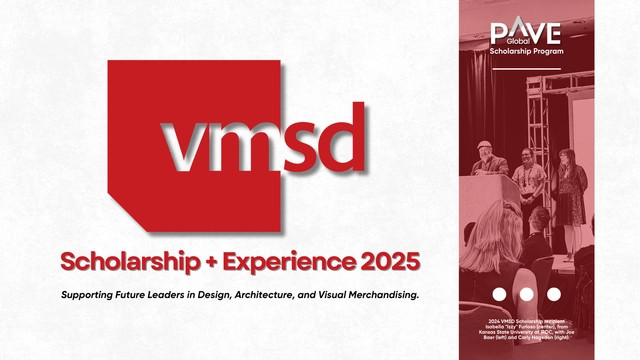
The 5th annual VMSD Scholarship + Experience recognizes and supports leadership potential in the Interior Design, Retail Design, Hospitality Design, Visual Merchandising, Architecture, UX Design, Engineering, and Product Design fields through a $1,500 scholarship plus an invitation to attend the 2024 International Retail Design Conference (IRDC) in Providence, Rhode Island, this October with airfare, hotel, and daily per diem covered—a prize package totaling $4,500 for this year's recipient.
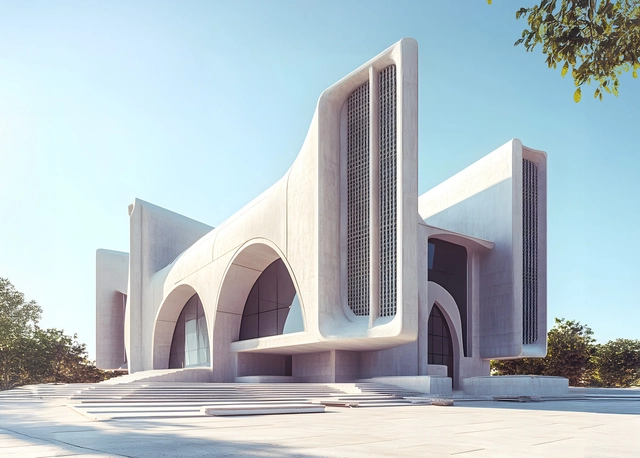
In contemporary architecture, façades have evolved beyond their traditional role as protective exteriors—they now serve as powerful expressions of identity, creativity, and sustainability. As the visual gateway to a building, façades play a dual role: safeguarding structures from environmental stressors while enhancing their aesthetic appeal and architectural character.
Much like interior design reflects the personality of its occupants, a façade communicates the essence of a building. It forms the first impression and serves as a canvas for architectural storytelling, often embodying the vision and creativity of the architect.
The Latin American Meeting of Architecture Students (ELEA) is a space for academic, cultural, and professional exchange that brings together architecture students from across Latin America. The 37th edition will be held in Cuenca, Ecuador, as part of the 40th-anniversary commemoration of the Latin American Coordinator of Architecture Students (CLEA) and will be co-organized with ONEA Ecuador, the country's National Organization of Architecture Students. Through workshops, lectures, debates, and collaborative activities, ELEA promotes meaningful learning based on experimentation, creativity, and critical analysis, with an emphasis on sustainability, innovation, and Latin American cultural identity.
Visual identity and theme of the fifteenth edition of SEMAU.
The UFRRJ SEMAU is an academic event conceived by students with the support of the Architecture and Urbanism program. Now in its fifteenth (15th) edition, the event’s primary objective is to foster the exchange of experiences and enrich academic training through lectures, practical workshops, exhibitions, debates, and cultural activities that broaden perspectives on the profession and its multifaceted experiences.
urbBA[25] - “What does urbanism have to say about Democracy, Violence, and the Climate Crisis?”
The Lugar Comum research group, affiliated with the Graduate Program in Architecture and Urbanism at FAUFBA, announces the 15th Urbanism in Bahia Seminar, urbBA[25], to be held on November 3, 4, and 5, 2025, at the Faculty of Architecture of UFBA in Salvador, Bahia.
@arqvernapop The event will be held from June 8 to 11, 2026, at FAU-USP, São Paulo, Brazil.
The School of Architecture and Urbanism and Design at USP, the Center for Cultural Preservation - Casa de Dona Yayá, the research group "Archive, sources and narratives: between architecture, city and design," 216 - Cultural Heritage, History and Criticism, QUALICON - Quality and Performance in the Built Environment, LabIndus - Laboratory of Industrialization, and Labdias - Laboratory of Studies on Culture, City and Diaspora are pleased to invite professionals, researchers, master craftspeople, holders of traditional knowledge, and other interested parties to submit papers for the 5th Vernacular/Popular Architecture Seminar, to be held from June 8 to 11, 2026. Building on a tradition of studies in the field that began in the 1970s, and currently driven by the democratization of access to the university, FAU-USP is witnessing a resurgence and growing expansion of interest in, and the assimilation of, new perspectives on the diverse processes of vernacular and popular architecture.
The city of Rio de Janeiro will host the 4th Experimental Construction Site Seminar in Architecture and Urbanism and the 2nd National Meeting of Experimental Construction Sites in Schools of Architecture and Urbanism. The events will take place from November 17 to 20.
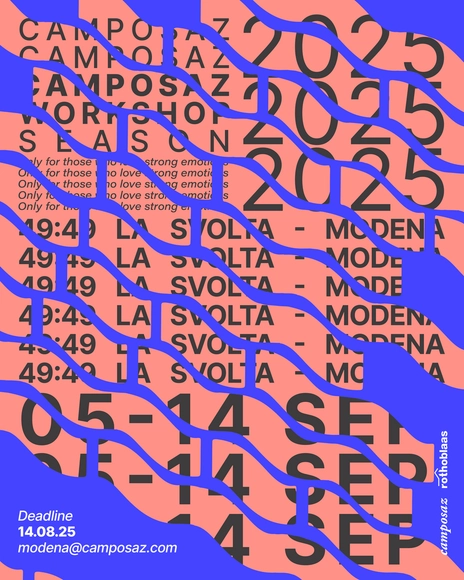
CAMPOSAZ 49:49 La Svolta - Wooden Self-Build Workshop
In the heart of the Modena hills, surrounded by fruit trees and open landscapes, La Svolta Farm is going to host a self-build workshop focused on the realization of a pergola, designed as a resting point for walkers, cyclists, and visitors.
More than a commercial showcase, La Feria De Diseño Medellín powered by imm cologne is a citywide experience. With satellite events and a curated content agenda, we promote a dialogue between business, and wellbeing for design in Latin America.
La Feria De Diseño Medellín powered by imm cologne is Latin America's leading trade show for design, architecture, interiors, and lifestyle. Its 12th edition will take place from September 18 to 20, 2025, at Plaza Mayor Medellín, bringing together over 230 brands and professionals from more than 35 countries.
Don’t miss this fast-paced, design-inspired evening with FORT: LA featuring a sneak preview of Rebel Architects, episode 2 —Art and Rebellion in the ‘70s and ‘80s —before its official release! Join rebel architects Frederick Fisher and Thom Mayne in conversation with artist Chuck Arnoldi, moderated by Frances Anderton. More speakers to be announced! Sommelier India Mandelkern pairs perfect wines to match the rebel architect spirit.
In 2022, 50 years after Denise Scott Brown, Robert Venturi, and Steven Izenour declared in their influential book Learning from Las Vegas that the desert town was to the Strip what Rome is to the Piazza, the American Academy of Rome debuted the exhibition From Las Vegas to Rome, exploring dialogues between these two cities through images taken by Dutch photographer Iwan Baan. This traveling exhibition is opening for the first time in the US in a new iteration on view at the Princeton University School of Architecture from August 6 through September 10, 2025.
India's largest smart tech event for residential and commercial spaces
This three-day event brings together 450+ leading brands showcasing the latest in smart home technology, home automation, lighting technologies, audio video solutions, smart security systems, smart building solutions, and consumer electronics.

![Urbanism in Bahia Seminar - urbBA[25] - Featured Image](https://snoopy.archdaily.com/images/archdaily/media/images/689a/2790/5ee9/5700/013f/6662/slideshow/URBBA25_POST1.jpg?1754933146&format=webp&width=640&height=580)