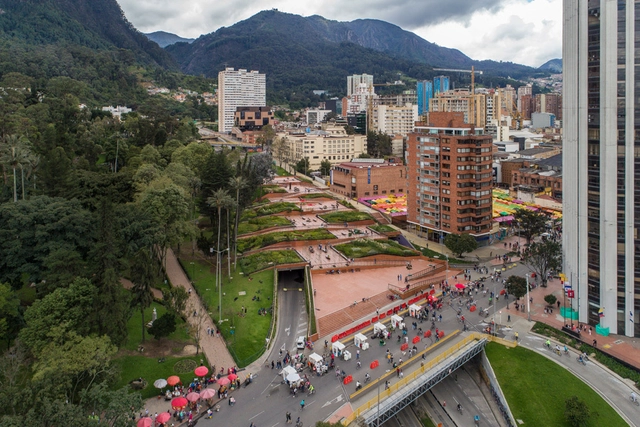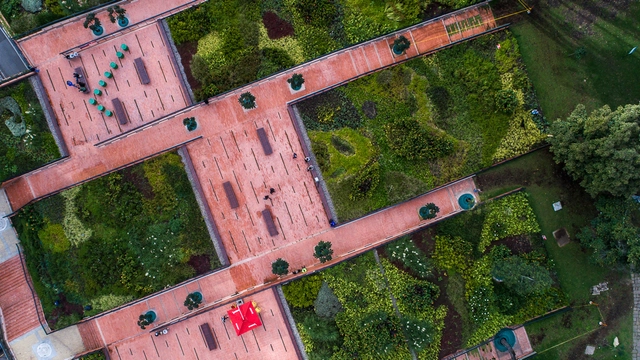
Originally published in Metropolis Magazine as El Equipo Mazzanti Heals a Gash in Bogotá’s Urban Fabric. With a Patchwork of Verdant Gardens, Anna Fixsen writes about Bicentennial Park in Bogotá. "Once a lightning rod for controversy, the innovative park now reconnects two areas at the heart of the city's historic center," she writes.
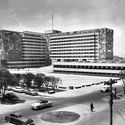
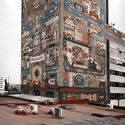
It is impossible to experience Bogotá without encountering the aura of Rogelio Salmona. Perhaps more than any other architect, Salmona shaped the urban identity of this Andean city through civic and poetic buildings. From a small balcony in his last office—located at the top of a tower he designed himself—a tableau of Salmona's legacy unfolds: directly ahead, the massive volumes of the Torres del Parque, a three-tower residential complex completed in 1970; and to the south, MAMBO, the Museum of Modern Art of Bogotá.