

OFIS Arhitekti shared with us a video they put together for their project, Alpine Hut. Situated in a small Alpine village, part of Triglav national park with very strict rules of construction and architectural design, the client bought the site together with existing construction permit for the generic project. Basically, the main task was to give the hut a new look, create a new veranda around the house and position the openings towards the views and increasing its sustainability.
Articles
Video: Alpine Hut / OFIS Arhitekti
https://www.archdaily.com/299564/video-alpine-hut-ofis-arhitektAlison Furuto
Light Forest: Helsinki Central Library Competition Entry / MenoMenoPiu Architects

Situated in the new green heart of Helsinki, the ‘Light Forest’ proposal for the Helsinki Central Library intends to replace the existing green that the architects will subtract to the park in a perfectly controlled indoor environment. Occupying 4500m² of the site, MenoMenoPiu Architects decided to conceive the building as a tree forest enclosed in a climatic box, in which the structure represents the causality of the wood. More images and architects’ description after the break.
https://www.archdaily.com/297040/light-forest-helsinki-central-library-competition-entry-menomenopiu-architectsAlison Furuto
The ABI's Up, But Is Building Really Making A Comeback?

As a follow up to a previous post we recently published regarding the positive look on the Architecture Billings Index (ABI), forward-looking indicators for building and construction activity have been turning increasingly positive over recent months, which is the good news. Current market conditions for architecture and the near-term outlook for the construction industry in the US is a two-sided story, with forward-looking indicators showing steady improvement but serious concerns arising out of an impending ‘fiscal cliff’. To be sure, the good news is not evenly spread across sectors and regions. Buoyed by lower interest rates, growing demand for rental accommodation and the progressive subsiding of the mortgage crisis, the residential building sector (57.3) is improving quickly whereas activity in commercial and industrial building remains flat. More information after the break.
https://www.archdaily.com/299097/the-abis-up-but-is-building-really-making-a-comebackAlison Furuto
AD Round Up: Flickr Part LXXXVI

It’s time for another Flickr Round Up! Remember you can submit your own photo here, and don’t forget to follow us through Twitter and our Facebook Fan Page to find many more features.
The photo above was taken by asli aydin in Amsterdam, Netherlands. Check the other four after the break.
https://www.archdaily.com/299268/ad-round-up-flickr-part-lxxxviDiego Hernandez
BIG and OMA Neck-to-Neck For Miami Beach Convention Center

High profile architects BIG (Bjarke Ingels) and OMA (Rem Koolhaas) are in a close battle to win the redevelopment competition for the design of the Miami Beach Convention Center. Recently put on hold by a corruption probe and procedural concerns, Miami Beach’s ambitious plans to create a 52-acre convention center district are again progressing toward a crucial vote by elected officials. The committee’s recommendations will be reviewed by interim City Manager Kathie Brooks, who will issue her own recommendation to city commissioners. Commissioners could vote on the project and development teams Dec. 12. More information after the break.
https://www.archdaily.com/299095/big-and-oma-neck-to-neck-for-miami-beach-convention-centerAlison Furuto
Video: In Conversation with David Adjaye

https://www.archdaily.com/299120/video-in-conversation-with-david-adjayeSebastian Jordana
NAVER MOBILE APP SQUARE / URBANTAINER

Previously limited to particular locations, Naver App was delivered all around the nation using a ‘kit-box’ concept. With the addition of a ‘kinetic’ element to the existing over-sized delivery box concept, the new Naver App Square, designed and constructed by URBANTAINER has evolved into a giant moving gift box. More images and architects’ description after the break.
https://www.archdaily.com/294527/naver-mobile-app-square-proposal-urbantainerAlison Furuto
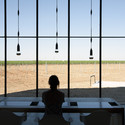
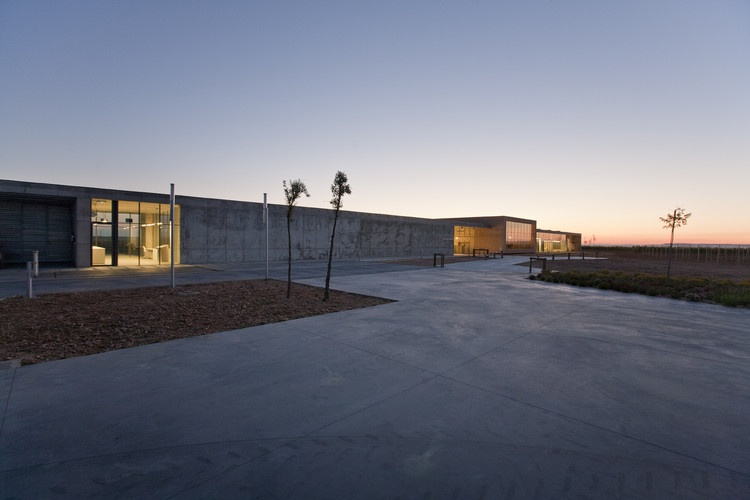
Montepedroso Wineyards / 3.14GA

Architects: 3.14 GA Location: Rueda, Valladolid, Spain Project Year: 2012 Photographs: Jara Varela



https://www.archdaily.com/298867/montepedroso-wineyards-3-14gaAAA
Pont de Singe Installation / Olivier Grossetête

Building on a previous piece entitled “Suspension Bridge, the passage”, Olivier Grossetête’s ‘Pont de Singe’ in the UK is a model of floating bridge attached to helium balloons, thus taking literally the term “suspension bridge “. The object aims to connect two mobile spaces, questioning its usefulness. This bridge becomes a floating symbol of all relationships, and embodies the space surrounding its slight movements caused by our air movement. More images and architects’ description after the break.
https://www.archdaily.com/296363/pont-de-singe-installation-olivier-grosseteteAlison Furuto
Yad Le’Banim Building Competition Entry / Talmon Biran Architecture Studio

Proposed by Talmon Biran Architecture Studio, the Yad Le’Banim building is located within an existing grove at the local council of Ramat Yishay, Israel, which provides a unique opportunity to integrate landscape with the architectural design. This setting doesn’t only add a visual values for the building, but also adds and symbolic aspect – the trees which are seen from all the building’s façades create an image that expresses the relation between life and death, between growth and loss. This relation is inherent in the definition of the Yad Le’Banim buildings as cultural and educational centers on the one hand, and as a memorials on the other hand. More images and architects’ description after the break.
https://www.archdaily.com/296348/yad-lebanim-building-competition-entry-talmon-biran-architecture-studioAlison Furuto
Two Degrees of Separation, Part 2: Architects Must Lead on Climate Change
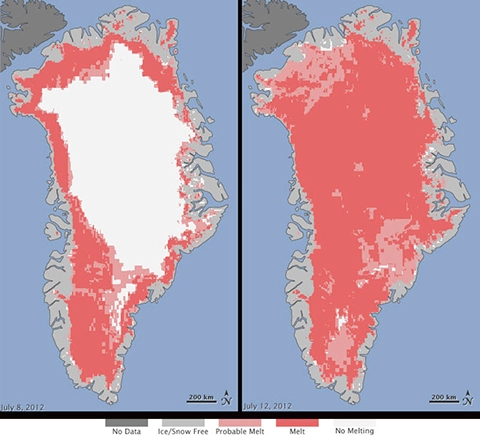
Last week I asked how architecture can ramp up its efforts to do all it can to help limit climate change. Sandy is a turning point. It will take action on the part of the profession and its members to make this turning point meaningful. Turning points are easily forgotten after the panels have been convened and the articles written. The vicarious thrill of crisis abates and everyone returns to business as usual, feeling better for having contributed to the discussion. If we listen to the scientists, we must not lose that sense of crisis and we must do more.
https://www.archdaily.com/298272/two-degrees-of-separation-part-2-architects-must-lead-on-climate-changeRodrigo Frey
Meet the Artist Behind Those Amazing, Hand-Knitted Playgrounds

Toshiko Horiuchi MacAdam is known for her massive, colorful architectural sculptures/playgrounds. The most famous example of her work is the expansive net-structure inside the "Woods of Net" Pavilion at the Hakone Open Air Museum in Japan - which Horiuchi MacAdam knitted, entirely by hand, over the span of a year.
We took a moment to speak with Ms. Horiuchi MacAdam about the Pavilion and her other works, how they bridge the worlds of art and architecture, and how they irresistibly invite the world to play. You can read our interview, and see more images of her fascinating work, after the break...


https://www.archdaily.com/297941/meet-the-artist-behind-those-amazing-hand-knitted-playgroundsVanessa Quirk
TRH Market Stalls / Edit!

With locally grown and organic food becoming more popular in the Czech Republic, EDIT! was asked to design a market stall for a new concept of Green Markets. Through a reconfiguration of the typical retailing method, the architects create a unique response to the importance of enabling a personal interaction between the farmers and market visitors. From this, the farmer can relate to the visitors through their produce, and the relationships formed may contribute to the character of the market as a whole. More images and architects’ description after the break.
https://www.archdaily.com/296824/trh-market-stalls-editAlison Furuto
AD Round Up: Beach Houses Part VI

https://www.archdaily.com/298762/ad-round-up-beach-houses-part-viDiego Hernandez
Kohn Pedersen Fox Associates to Design Giant Office Building Next to Grand Central Terminal

Kohn Pedersen Fox Associates were recently selected to design a giant office building the landlord hopes to build next to Grand Central Terminal. Selected by SL Green Realty Corp., the architects’ design would be one of the largest Midtown towers on the East Side in a generation. While building in New York is a challenge, SL Green is moving ahead full steam with planning. The company is in discussions with the Metropolitan Transportation Authority to obtain additional development rights by building pedestrian improvements including underground connectors to Grand Central, according to executives informed of the planning. More information after the break.
https://www.archdaily.com/298495/kohn-pedersen-fox-associates-to-design-giant-office-building-next-to-grand-central-terminalAlison Furuto
Films & Architecture: "Paris, I Love You"

This week’s film isn’t actually a movie in itself, but rather a lot of little films merged into one: “Paris, I Love You”. Twenty shorts, each representing the 20 arrondissements – districts – of Paris were filmed to show the French capital in its multiple identities (in the end, only eighteen made the cut). The work is an interesting attempt to use film to represent the many facets of a metropolitan urban area; it is also an exploration of the different ways we can see a city, depending on our perceptions and experiences within it.
Have you ever walked through Parisian streets? Does “Paris I Love You” capture your experiences of Paris’ districts? Let us know in the comments below.
https://www.archdaily.com/298122/films-architecture-paris-i-love-youDaniel Portilla
Artist Residence Competition Entry / Talmon Biran Architecture Studio

Located in Nikola Lenivets Park in Kaluga, Russia, this proposal for the Artist Residence, which was shortlisted in the design competition, suggests the typology of a campus, a condensed layout providing the facilities for all of the artist residence community– living, learning and creating. Designed by Talmon Biran Architecture Studio, in collaboration with architect Ana Leschinsky, the proposed scheme is open ended, allowing flexibility and future growth while integrating the buildings within the landscape. More images and architects’ description after the break.
https://www.archdaily.com/296330/artist-residence-competition-entry-talmon-biran-architecture-studioAlison Furuto
"Fluxus Module" Exhibition / modulorbeat

For the exhibition, “FLUXUS – Art for Everyone!” at Museum Ostwall in the Dortmunder U, modulorbeat was commissioned to develop an exhibition architecture. Their ‘Fluxus Module’ project uses 300 items from the years 1958 to 2007 that critically address the events of their times to offer a new and playful look at the everyday. The exhibition architecture works with a modular plywood element that was especially developed for this Fluxus exhibition. More images and architects’ description after the break.
https://www.archdaily.com/296311/fluxus-module-exhibition-modulorbeatAlison Furuto
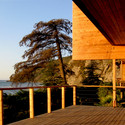
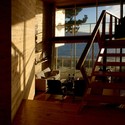
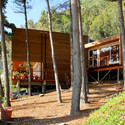
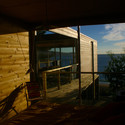
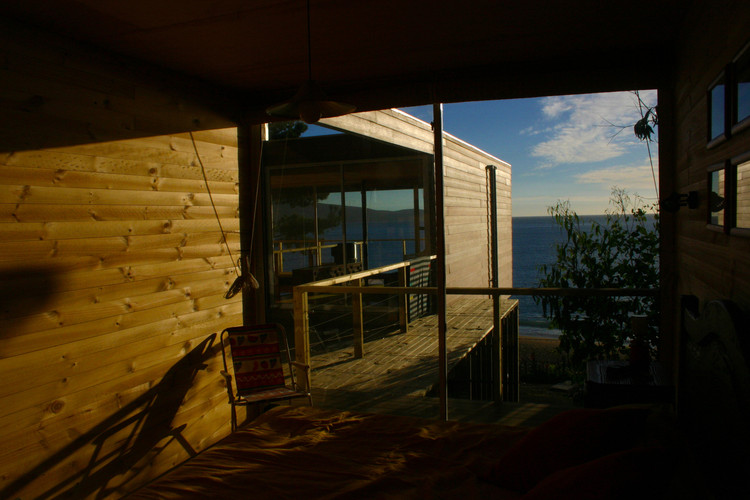
Laguna Verde House I / Altamirano Armanet Arquitectos + Carlos Bisbal

Architects: Altamirano Armanet Arquitectos, Carlos Bisbal Location: Valparaiso, Chile Project Year: 2008 Photographs: Francisca Domínguez
https://www.archdaily.com/298427/laguna-verde-house-i-altamirano-armanet-arquitectos-carlos-bisbalAAA
Frederick Kiesler Prize for Architecture and the Arts Winner: Andrea Zittel

Recognizing one exceptional artist every two years whose work transverses the boundaries between art and architecture, Andrea Zittel came out as this year’s winner for the prestigious Frederick Kiesler Prize. Accepting the award just this month at the New Museum of New York, one criterion for the award is that the artist be under-recognized. While fun and playful in nature, Zittel’s works are also illuminating studies of how we attribute significance to things, including the structure we live in and what we actually need in order to exist in comfort without being surrounded by accumulated belongings. Her ‘Indy-Island’ and ‘A-Z Wagon Stations’ projects can be seen in the images after the break.
https://www.archdaily.com/297850/frederick-kiesler-prize-for-architecture-and-the-arts-winner-andrea-zittelAlison Furuto
AD Architecture College Guide: Domus Academy

If there is one characteristic that defines “architecture” it is innovation. And if by innovative, you think responsive, then Domus Academy certainly qualifies. It was started by Maria Grazia Mazzocchi, daughter of Domus Magazine founder, Gianni Mazzocchi after people kept writing letters asking her to start a design school. And in 1983, she did just that.
For the basics, the school is very clear. Your accreditation comes from an affiliation with the University of Wales, in Cardiff, UK, which is awarded upon completing 180 Master’s level credits. And you also receive a Diploma Supplement from them which proves that you have a degree that is equivalent to major universities across the globe. And it’s sited in Milan, which if one is interested in Italian design, is an ideal locale. It’s a one year program, so it doesn’t require the extensive 2- and 3-year commitments that many programs across the world demand. It will cost a similar amount, however, at €23,790 Euro. But the best aspect of that admittedly large tuition fee is that it is for a single year—11 months to be exact. That means one can immediately begin searching for a job to pay off what is, after all is said and done, a relatively small student loan compared to average ones that are three times that size. There are also unrestricted scholarships available that defray costs from between 20%-50%. And in case you’re wondering, classes are taught in English.
Continue reading after the break
https://www.archdaily.com/298247/ad-architecture-college-guide-domus-academyRodrigo Frey
Frontier Learning: the Future of Architectural Education / Stanislav Roudavski

Yesterday's article "Forget the Rankings, the Best US Architecture Schools Are..." argued that students should judge architecture schools for their strength in areas that are relevant to the profession today (not for their rankings). Today, we bring you an Editorial from Architecture Professor at the University of Melbourne, Stanislav Roudavski, who takes that argument one step further - suggesting that architecture students should look for education opportunities that embrace the architectural world of the future.
Those who look to the future understand architecture as a dynamic system of relationships. These relationships blur the distinctions between digital and physical, natural and artificial, simulated and observable in the wild. Such an interpretation calls for broader collaborations and a commitment to explorations outside established “comfort zones.” But the life outside disciplinary comforts can be harsh. With old certainties left behind and new potentials not yet discovered, one can feel overwhelmed by the richness and complexity of available information and practices. In the contemporary condition of constant and accelerating change, what should an architect know and be able to do? From where should this knowledge be acquired and updated, from whom and in which way?
Innovation (and the learning of the new, needed for innovation to occur) can be encouraged through various strategies. [...] Innovation can also be augmented outside existing professional territories via other types of critical, open-ended learning that is deliberately oriented towards uncertain futures. In striving to address unknown demands, such learning is necessarily speculative and risky. What strategies can be adopted to benefit from such risk-taking?
More on the future of Architectural Education, after the break...
https://www.archdaily.com/298112/frontier-learning-the-future-of-architectural-education-stanislav-roudavskiVanessa Quirk
New Institute Building for FOM / J. Mayer H. Architects

Designed by J. Mayer H. Architects, the new, modern college seminar building for FOM Hochschule für Oekonomie & Management University of Applied Sciences gGmbH will include approximately 1,400 student seats, office units, underground parking and a spacious, green campus. The innovative building also features an extraordinary exterior façade with curved cantilevered balconies. More images and architects’ description after the break.
https://www.archdaily.com/296307/new-institute-building-for-fom-j-mayer-h-architectsAlison Furuto
Update: Nasher Sculpture Center Controversy

As an update to the article we posted several months ago regarding the disputed ‘hot spot’ in Dallas between Renzo Piano‘s Nasher Sculpture Center and the adjacent residential tower, the controversy is still a hot issue. The reflection caused by the sculpture center is still something they have not been able to solve. Any solution will be costly and difficult. The Nasher people have recommended louvers covering the tower’s south face. The tower people say that this will require a computer-generated engine for every window, about two years to study, even more time to install. And it may not work. More information after the break.
https://www.archdaily.com/298103/update-nasher-sculpture-center-controversyAlison Furuto