What does it mean for an architecture biennial—especially a Pan-American one—to have reached more than 20 editions? Clearly, it represents a significant accumulation of participants, speakers, coordinators, and projects that over the years have not only showcased the sheer volume of regional production, but have also consistently reminded us of the potential of keeping both Latin American and global debate and exchange active.
For this reason, it is worth highlighting key figures and milestones. Both serve as empirical evidence of the historical development and reach of the Quito Architecture Biennial, helping us answer this initial question and understand why it is considered one of the most important architectural events in the Americas.
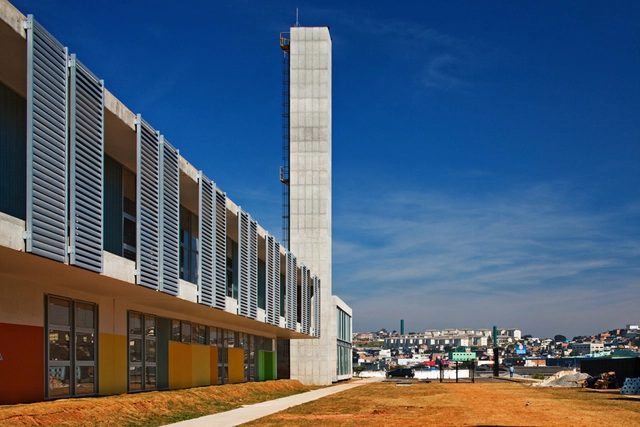
In their classic setup, with a classroom consisting of a blackboard, a standing teacher, and seated students, the interior spaces of a school can easily be mistaken for prisons. Now consider the outdoor, public areas of most educational institutions in Brazil: how often can a place be recognized as a school simply by looking at it from afar?
Videos
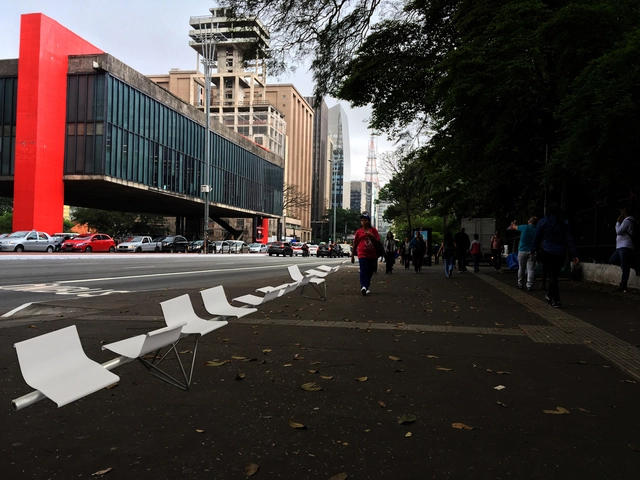
Paulista para Todos Competition - Proposal by Paulo Mendes da Rocha + Nadezhda Rocha. Image via Esquina
Paulo Mendes, Nadezhda Rocha, and three other architecture firms (FGMF, Königsberger Vannucchi Arquitetos Associados, and Nitsche Arquitetos) are competing in the Paulista Para Todos Ideas Festival, an initiative by Esquina.net.br and the law firm Mattos Filho, Veiga Filho, Marrey Jr e Quiroga Advogados, which is based on Paulista Avenue. Each of them has developed a street furniture proposal for Paulista Avenue with full creative freedom. The proposals will be submitted to a three-member jury comprising architects and urban planners Carlos Leite and Sol Camacho, and Renato Schermann Ximenes de Melo, a partner at Mattos Filho. The winner will be announced on December 5th.
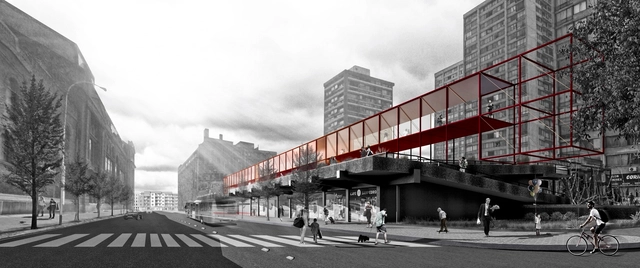
The team led by Oscar Luengo and Álvaro Parraguez won first place in the Pasarelas San Borja competition in Chile. The main objective of the competition was to recognize "the best urban design ideas that contribute to defining intervention criteria and generating proposals for the San Borja Neighborhood."
Titled Corredores San Borja, the winning proposal "proposes the walkways as connecting spatial corridors between towers, plazas, and peripheral activities, allowing for fluidity and articulation between the complex's disconnected interior and exterior spaces."
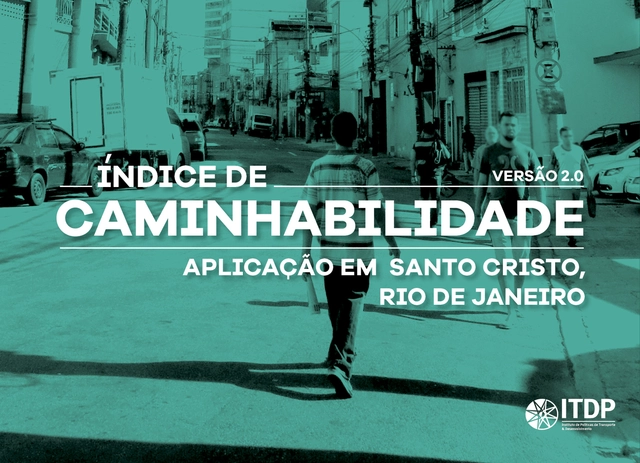
Walking is the most common form of transportation in the world and a basic human right. It connects us directly with our surroundings, does not pollute the city, and offers numerous health benefits, such as reducing chronic diseases, obesity, and diabetes. This is the message that the ITDP and Streetfilms convey in the film The Right to Walk, released this year.
If walking is so beneficial, why is it so difficult to do in urban environments? Rapid urban growth and car-centric planning have increasingly restricted space and respect for pedestrians. Every year, 1.3 million people are killed in traffic, half of whom are pedestrians, cyclists, or motorcyclists. Furthermore, traffic accidents result in 20 to 50 million hospitalizations annually, making them the leading cause of physical disability worldwide. More than 90% of traffic fatalities occur in low- and middle-income countries like Brazil, which has the highest number of traffic deaths per capita in South America.
https://www.archdaily.com/1114557/walkable-cities-how-to-enhance-the-urban-attributes-that-affect-pedestrians-at-the-neighborhood-scaleITDP Brasil
Instagram is an image-sharing application that is increasingly woven into our daily lexicon; currently, Instagram has around 800 million monthly active users. This speaks volumes about the exponential growth of this social network, of which we are big fans, and where we strive to bring you daily news and the most important architectural works from Mexico and the world. By the way, are you already following us on our @ArchdailyMx account?
Instagram is not a new tool for us, as we know that Instagram must be part of every architect's design process in the millennial era. Furthermore, we have organized various contests, such as the one for our fifth anniversary in Mexico. We are eager to maintain a much more direct relationship with our readers and to learn what inspires you, allowing us to continue creating content tailored to your interests. Therefore, starting today, we are launching several interactive activities to stay closer in touch with you.
The Bicentennial of Peru's independence, to be celebrated in 2021, represents not only a great opportunity to take stock of what we have built as a nation in two hundred years of existence, but also to reflect on the challenges for the next one hundred years—that is, on the road toward the tricentennial.
https://www.archdaily.com/1114467/rethinking-the-nation-as-a-project-architecture-for-perus-bicentennialJean Pierre Crousse
When faced with a growing population, a city's first response is often to sprawl, expanding its territory. Unfortunately, this expansion is highly costly for the municipality itself and contributes to socio-spatial segregation and inequality. Cities must find a path that establishes them as prosperous places for both people and the economy. A recent study suggests that the key to achieving this may lie in “good density.”
Defining an area as having “good density” goes far beyond having a high number of people living or working in a specific space. Key factors such as mixed-use zoning, connectivity, and sustainable transportation infrastructure are fundamental.
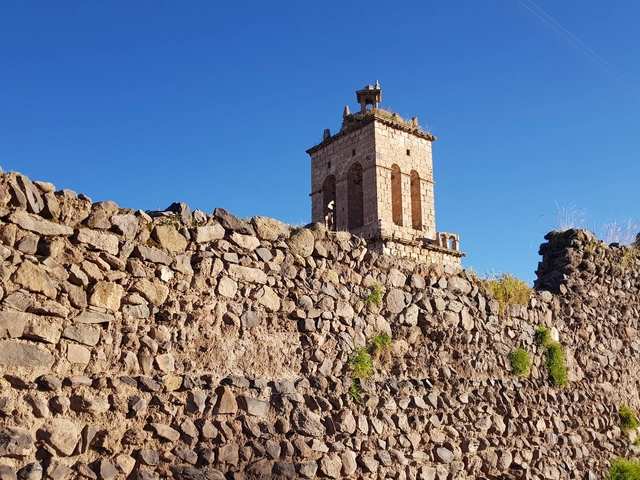
Popularly known as the Ciudad de las Cajas Reales (City of the Royal Coffers), Chucuito is a small Peruvian town located 20 kilometers from Puno at an altitude of over 3,800 meters above sea level. Boasting a privileged location on the shores of Lake Titicaca, it was once part of the ancient pre-Columbian Tiwanaku culture and served as the seat of government for the Lupaca kingdom. During the Spanish colonial era, it became a strategic tax collection center, and today it preserves a valuable architectural legacy throughout its streets.
Following our guide to Puno's must-see landmarks—on the occasion of the recent XV TSL Puno—we recommend seven sites in this town nestled in the Peruvian highlands. Due to the high altitude (and particularly at the San Bartolomé viewpoint), visitors are advised to tour these landmarks with a companion, walk at a measured pace, and chew coca leaves to prevent altitude sickness.
As you know, ArchDaily has joined forces with Spotify, the world's largest music streaming platform. From the very beginning, we have been sharing our own playlists for those key moments in the lives of all architects. At the same time, we have invited architects from Latin America and Spain to share the music that inspires them, or better yet, the sounds that have shaped their careers.
In this installment of ArchDaily en Español + Spotify, we share our most popular playlist: Música para Maquetear (Music for Model Making). If you have to spend your day among cardboard and renders, this ten-hour playlist will keep you company during those long late-night sessions.
Videos
Licensed under CC0 Public Domain. Image via Pxhere
From the Fundación Arquia Blog, architect Zaida Muxí brings us an article that provides basic clarifications on gender-perspective urbanism for beginners, exploring how to build cities from and for women, but not in an exclusive or exclusionary way.
To shape humanity in its truly comprehensive capacity within the dimension of gender, women's movements and feminist philosophical analysis have ethically exposed the alienation that over-identifies women with men and their symbols, while disidentifying men from women and their symbols.
It is time to say goodbye to 2018. Following our showcase of the best architecture of the year, we have gathered the Chilean projects that generated the most engagement on our social media platforms. Indeed, in the architectural field, understanding where design is heading requires looking at its key works and observing how the public has responded to them.
Most people today live in cities, which are growing rapidly. We are living in the age of urbanization, an era that began in the early 19th century when vast masses of people decided to be closer to one another rather than close to the land. There is no doubt that sooner or later the vast majority of us, humans, will be living in cities.
https://www.archdaily.com/1114474/it-is-still-not-true-that-eight-out-of-ten-people-live-in-urban-areasWRI Brasil
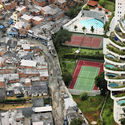
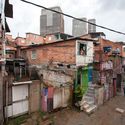
In contemporary urban design, spatial organization, mobility, the demand for new connections, and the boundaries established between public and private space have increasingly become the focus of discussions surrounding the future of global cities, and equally so in Brazil. Under this model of rapid growth, certain built structures have created urban barriers, presenting distinct obstacles.
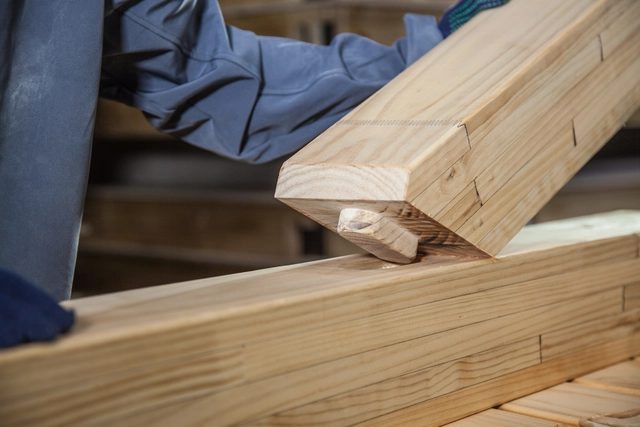
Working hand-in-hand with a wide range of product manufacturers and suppliers allows us to access valuable information to support design and construction processes using different types of materials.
To make this knowledge readily available, we have compiled a series of guides, manuals, and tips covering everything from working with laminated wood and installing cladding, to applying protective finishes and varnishes. Read 12 useful articles below.
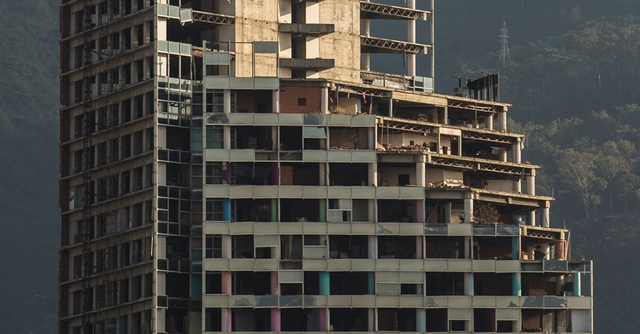
Torre David / Gran Horizonte. Image via EneasMx [Wikipedia] CC BY-SA 4.0
From the Arquia Foundation Blog, architect Adrià Guardiet shares an article reflecting on three perspectives on unfinished architecture—projects where time and their occupants play a central role.
Certain architectures work with time as a design variable. Some are conceived as open, dynamic, growing structures. Others operate around the memory of the site. To name just two examples.
In these projects, time is often introduced as an entelechy—that is, as a specifically intellectual device. Yet time appears far more explicitly when architecture is pending completion, left unfinished due to economic, political, biological, or other reasons. These are what we have come to call meanwhile architectures: projects that find fertile ground for development in unstable contexts.
“Ensuring, through built works, that those ideas explained with these words stand up will be the best proof that those ideas are valid and these words true.” (Campo Baeza – “The Built Idea”).
The Mendoza Association of Architects CAMZA has announced a new edition of Architecture Month MDA2018 under the theme "The Built Idea," to be held from August 28 to 31 at the Nave Cultural in the city of Mendoza.
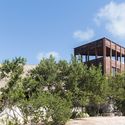
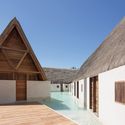
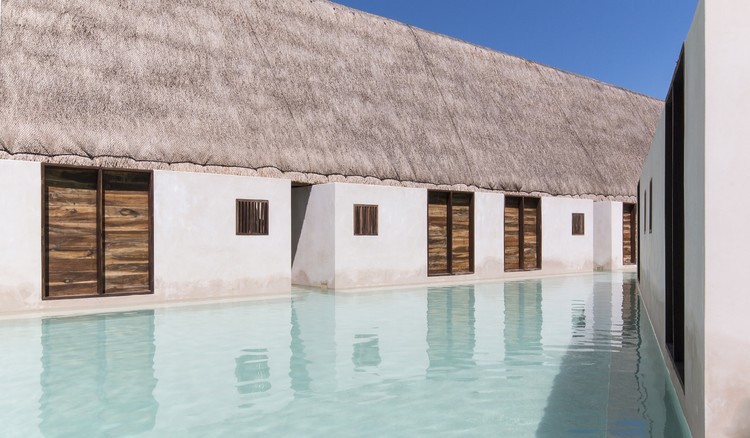
An island is, by definition, a piece of land entirely surrounded by water; in this sense, the element of water serves as a limit, a boundary, and, at the same time, a place.
Hotel Punta Caliza, designed by Estudio Macías Peredo Arquitectos, employs these very concepts so that this naturally salty, aquamarine liquid itself becomes an island—acting as both center and surface, bounded by the built structure to form a cohesive whole that surrounds, contains, and shapes the water.
Launched in 2013, the initiative to establish an Architecture Prize presented a wealth of challenges for the Instituto Tomie Ohtake and its partner AkzoNobel. Its primary objective was to map contemporary Brazilian architecture, focusing specifically on the work of emerging professionals. This ambitious and unprecedented goal set it apart from traditional architectural competitions, not only by encompassing a broader spectrum of categories but also by championing a niche distinct from the output of already established, award-winning firms.
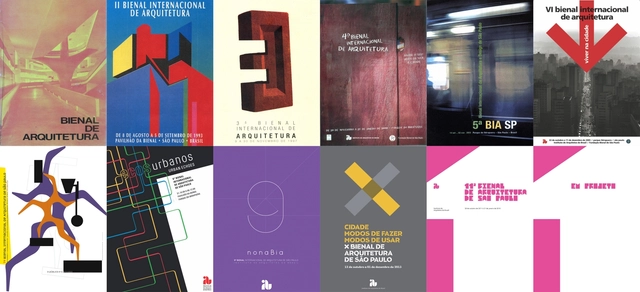
The text below presents a brief summary of the past editions of the International Architecture Biennale of São Paulo, coinciding with the announcement of the curatorial team for the 12th edition. If you are looking for a research source on the first ten editions of the event, we suggest the book Arquitetura em Retrospectiva: 10 Bienais de São Paulo, by Elisabete França, which offers an excellent overview of the paths taken by the exhibitions and shows how the architecture biennials became the preferred venue for promoting Brazilian production, ultimately joining the official calendar of events for the city of São Paulo.
“Progress” is certainly a word that symbols what the 1940s represented for the city of São Paulo. As developments flourished in the fields of art and architecture, new landmarks materialized from the fusion of these two disciplines, such as the Museum of Modern Art of São Paulo (MAM)—an institution inaugurated in 1948 that showcased the height of what was then considered modern.
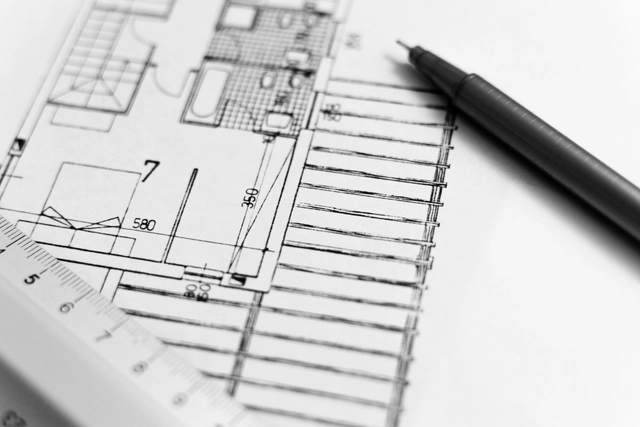
Architecture does not illustrate or imitate ideas born from philosophy, literature, painting, or any other form of artistic representation; rather, it constitutes a mode of thought in its own right: architectural thought. This way of thinking and making requires its own tools as the only means of translating these ideas into something concrete, something real, capable of communicating on its own. One of these tools—perhaps the most indispensable—is drawing.
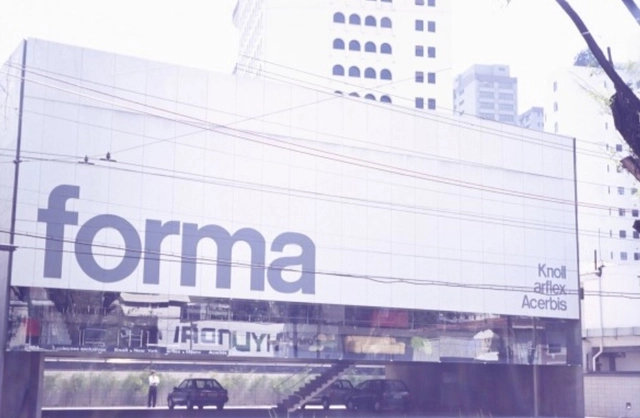
Designing spaces intended for the exhibition of furniture pieces with high structural, ergonomic, artistic, and historical complexity requires a distinct design approach, as the goal is to showcase the product while persuading the viewer-client to purchase it. In Brazil, prime examples such as the Forma store (1987), Micasa (2004), Casa Matriz (2004), Micasa Volume B (2007), Ouvidor (2013), Dpot (2016), Líder (2016), and Micasa Volume C (2017) stand out for masterfully combining these principles. Generally speaking, they provide the “white box” required as a backdrop—akin to works of art within the neutrality of exhibition spaces—while arranging the pieces to evoke the desire to buy.
São Paulo, like so many other Brazilian cities, has a standardized, monotonous, and gray architecture, with its aesthetic defined by real estate developers and builders, offering very little architectural value.
To be sure, there are highly significant buildings—including historical downtown classics like the Martinelli Building, modernist examples by Rino Levi and Artacho Jurado in Higienópolis, and contemporary experiments in Vila Madalena designed by Isay Weinfeld and Triptyque. Unfortunately, these examples are few, dwindling to almost zero as we move toward the outskirts.
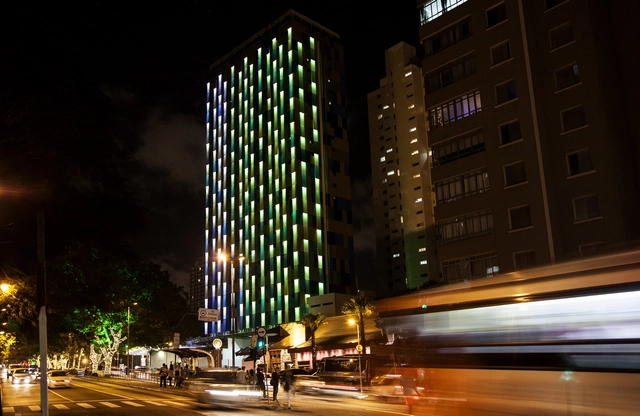
I am obsessed with the idea that we can change this reality by hacking existing buildings, fostering a new urban identity, boosting civic pride, improving quality of life, and promoting innovation and sustainability at viable costs.
It was in Granada, specifically at the Alhambra Palace, where on October 14 and 15, 1952, a group of Spanish architects including Miguel Fisac, Secundino Zuazo, and Fernando Chueca met to reflect on and establish a new direction and foundation for modern Spanish architecture. The outcomes of that meeting were summarized in a document whose tenets remain remarkably relevant today, known as the Alhambra Manifesto [pdf].
Sixty-five years later, under vastly different historical, social, and cultural circumstances, architects from across Spain are gathering once again in Granada for the III National Congress on the Future of the Architect. Running from yesterday, Thursday, April 11, to tomorrow, Saturday, April 13, the event serves as a platform to share experiences, analyze the current state of the profession, and debate the future possibilities of this exciting field.
https://www.archdaily.com/1114590/the-future-of-spanish-architecture-runs-through-granadaJavier García Librero



.jpg?1516164849&format=webp&width=640&height=580)












.jpg?1522936562&format=webp&width=640&height=580)