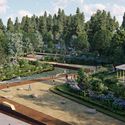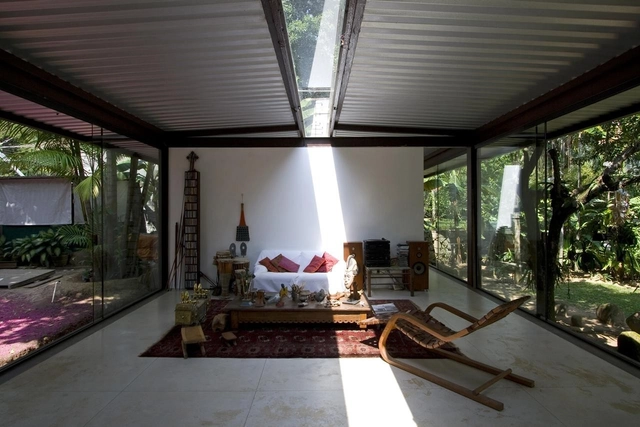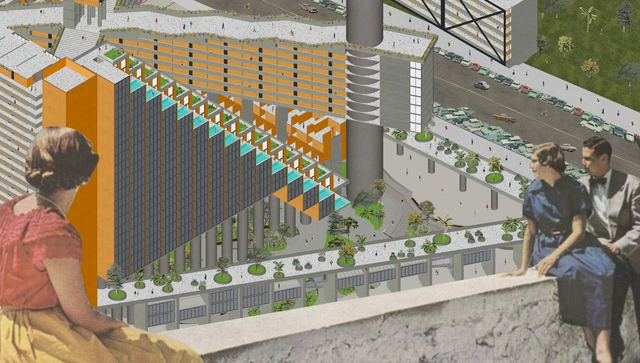
We find ourselves in the Madrid of the 1980s. Specifically at the Superior Technical School of Architecture of Madrid [E.T.S.A.M.], a school in the shadow of the one in Barcelona, a city optimistic about its urban transformations. The latter was a city that trusted its architects, pushing them to participate in the reconstruction of its identity. Meanwhile, Madrid seemed to come alive through other avenues. The city championed other artistic sectors, leaving young architects with few opportunities to express their shared enthusiasm. Iñaki Ábalos and Juan Herreros belonged to this Madrilenian generation. They, like many others, had to wait and devise intellectual strategies to define the new professional and territorial boundaries that would reconstruct the Madrid of the future.
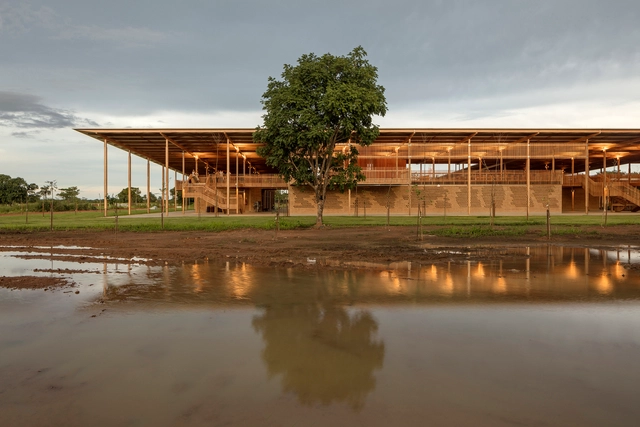
The work of Ábalos & Herreros is not only a virtuous exercise in surfaces and construction techniques; it also establishes mixtures, connections, and spatial relationships. It establishes links that foster a dialogue between all parts: the existing and the new, people and objects, building and landscape, and so on. Their architecture inherits the legacy of Modernism to translate its gestures into something that, while perhaps appearing new and innovative to a less attentive observer, is intrinsically charged with the accumulated technological experience of the 20th century. They do all of this in an illustratively modest way, seeking to solve age-old problems in a different manner. Theirs is not a revolutionary or radical architecture—understanding the latter term as a desire to dismantle a totality. There are no origins, only discoveries along their path. Established tropes are reconsidered, employing technologies, materials, gestures, and forms that, for various reasons, remain stored in the conceptual archives of many who have not yet figured out how to implement them in an ingenious and creative way.

.jpg__José_Alberto_Bastidas.jpg?1539798976)



.jpg?1545014447&format=webp&width=640&height=580)