
Water is not just a resource—it is a voice, a right, a system of relationships. Water shapes landscapes, communities, and futures. It nourishes, resists, and demands justice.


Water is not just a resource—it is a voice, a right, a system of relationships. Water shapes landscapes, communities, and futures. It nourishes, resists, and demands justice.

Built From Dust
Earth, Soil and the Modern Afropolis

TOGO PAVILION at BIENNALE ARCHITETTURA 2025

'Migrating Modernism. The architecture of Harry Seidler' presents the extraordinary personal history and work of the leading modern architect Harry Seidler (1923, Vienna–2006, Sydney), with a particular focus on the artists he worked with and commissioned. The exhibition will feature artists who collaborated on projects with Seidler such as Josef Albers, Alexander Calder, Helen Frankenthaler, Frank Stella, Lin Utzon and Sol LeWitt, as well as the famed Italian structural engineer Pier Luigi Nervi.

Future nostalgia refers to a compelling architectural design concept that draws inspiration from the past and seamlessly blends it with modern innovations and technologies. The objective transcends creating merely aesthetically pleasing spaces; it aims to infuse them with profound meaning—interweaving culture, society, and nature across both present and future contexts. This approach aspires to preserve and evolve historical knowledge and values that enrich our way of life, all while accommodating the shifting needs of future generations. In today's architectural landscape, there's a pronounced emphasis on looking ahead—designing cutting-edge, comfortable buildings that heavily rely on the latest technologies and contemporary insights. While this forward-thinking stance offers undeniable benefits, it often overlooks the wisdom and heritage of the past. The consequence can be designs that lack a meaningful connection to their original roots. Therefore, the international design competition "Futurism: Future Nostalgia in Architecture" serves as an invitation for architects to use the concept's definition to explore creative approaches and develop designs that link the past—in facets ranging from society, culture, and people to nature, place, and time—through the prism of modern knowledge, tools, and technologies. Participants are encouraged to venture without limitations on location or scale, using Thailand as a case study. The aim is to forge new forms of futurist architecture that honor and reflect upon the past through today's lens, guiding us toward a shared architectural future. The international architects and jurors include Kulthida Songkittipakdee, Adul Kaewdee, Christo Meyer, Kulapat Yantrasast, and Jenchieh Hung of HAS design and research.
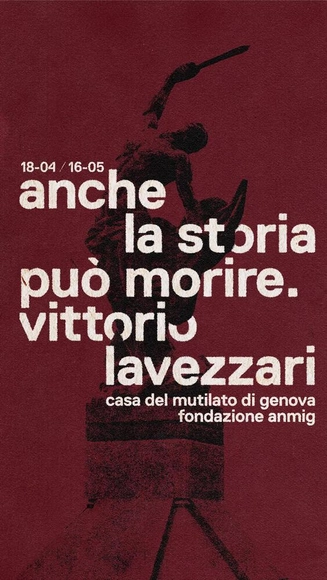
Inside Eugenio Fuselli's iconic architectural work, a reflection on pacifism and absence — through sculpture.
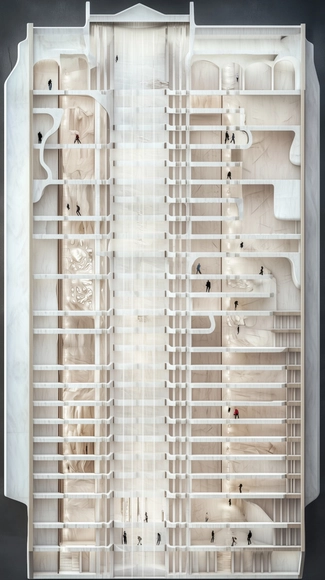
In its fourth year, ShowLTU CoAD 2025 is a Michigan exhibition showcasing more than 250 original works by both students and alumni from Lawrence Technological University’s College of Architecture and Design(CoAD). Returning May 8-9 to Building 3, at 21000 W. 10 Mile Road in Southfield, the event demonstrates how LTU’s CoAD prepares future leaders in architecture and design through the university’s foundation of theory and practice. The show is free and open to the public to attend.

"Sheltering in Space – A Guide" will delve into the concept of sustainable space shelters, addressing the extreme conditions of space while considering cultural, social, and psychological factors.

The exhibition "INCISIONE PER L'ARCHITETTURA –La Porta della città" is the result of the second Engraving Workshop that took place in Spoleto in 2024 following the successful experience of the first Workshop, "The urban facade". The workshop promoted by OFARCH and SPAZIO MTR saw the participation of 19 architects who attended the studios of the artist Maria Teresa Romitelli, creating plates and prints on the theme "La Porta della città" with different engraving techniques.
The architects through the "time of drawing", architectural thought, a synthesis of analysis and projection towards a possible reality, created "points of view" of the city, investigating the contemporary and urban role of the Gate. The visual stimuli multiplied with each sign that appeared between the sheets, gradually building the sense of the workshop enriched by strong experimentation of the engraving technique starting from etching, aquatint, drypoint, photo-engraving, "non-printing" and artificial intelligence. As at the center of a compass, the copper plate and the black color, have maintained the course of reasonings increasingly intense and rambling at the same time; plate and print, the two halves of the same thought.
The engravings on display are by the architects: Aldo Aymonino, Laura Bacchi, Carmelo Baglivo, Alessandro Bulletti, Maria Caterina Cimminella, Elisabetta Cleri, Raffaella Conte, Andrea Dragoni, Fabio Fabiani, Amanzio Farris, Ruggero Lenci, Antonio Pallotta, Giorgios Papaevangeliou, Filippo Parroni, Giovanni Pernazza, Franco Purini, Giovanni Romagnoli, Carlo Vitali, Lorenza Zuccari.
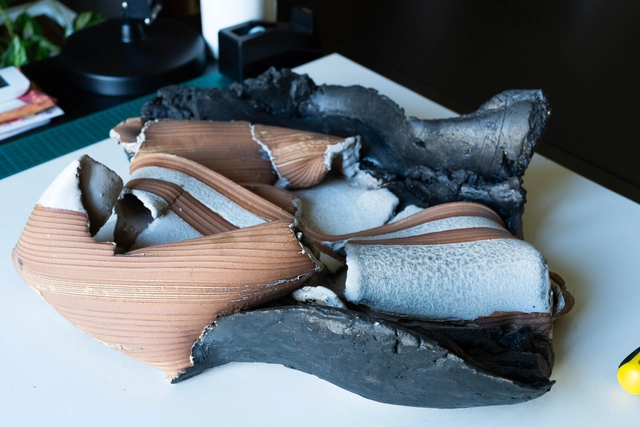
In occasion of the Milan Design Week, Spazio Lima and pconp studio are pleased to present Sconvolti, a project in collaboration with the Carlo Zauli Museum, Faenza.
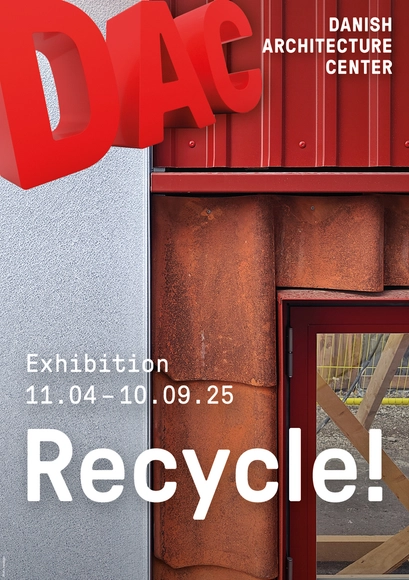
Everything we build has value – even after it has been used. How can we rediscover the beauty of reuse and create a future where used materials gain new life and circular resources take on new value? How can reuse become part of architecture's aesthetic? What does architecture look like if we stop throwing things away?
Construction is one of the world's biggest climate offenders. We build, demolish, and discard resources as if they are infinite. But a new movement is gaining ground—we are starting to build circularly. Across different places, design and construction are being reimagined to make use of what already exists. More buildings are being preserved, and repurposed materials are finding new functions.

New Normal Is The Japanese Design Project Working On "Designs For The New Normal In The Family Business."

"Game of Goose," is a site-specific exhibition at Los Angeles's iconic Neutra VDL House by multidisciplinary artist Maayan Elyakim. Curated by Dan Handel, this marks Elyakim's first solo exhibition in the U.S., following his 2022 show at the Tel Aviv Museum of Art.
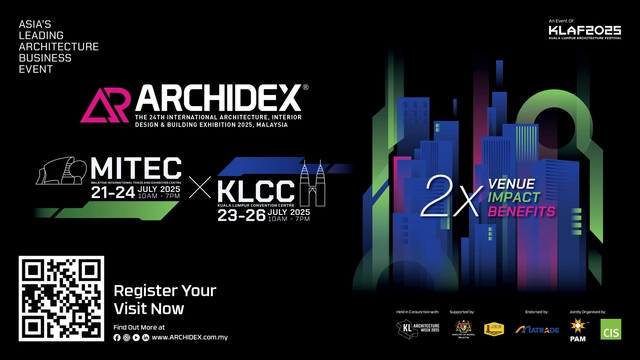
Shaping the Future of Architecture and Design
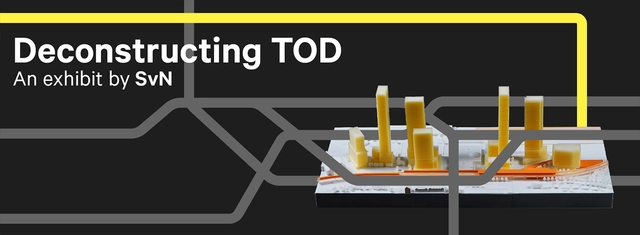
How can major transit projects drive positive social change? Deconstructing TOD: Transit Roots playfully explores how transit can shape thriving communities, spur new housing, create public spaces, and support local businesses—while addressing the challenges that come with it.

Michele Pompilio, a young entrepreneur from San Giovanni Rotondo—a town known for its welcoming spirit and deep spirituality—will present his collection at Milan Design Week 2025, as part of the Superdesign Show by Superstudio, taking place from April 7 to 13 in the vibrant setting of Via Tortona 27, Milan.

The ½” =1’-0” scale model has been an integral part of our design process since we started our practice 8 years ago. The scale of the model allows us to look “into” the model rather than “over” it. Looking in is like finding and the act of finding is important for design. Our primary goal of model-making is not to generate form, but to generate space.
The ½” =1’-0” scale model allows us to test multiple spatial qualities: layout and section, material palette, assembly, details, and light. Testing the relationship of how these elements come together in the model allows us to make decisions. Sometimes things go well together, sometimes we see different elements require more tension.
The models in Models Off-Site are a mix of in-progress models from our office, models returned from exhibitions, and models from completed projects that have been in storage. We see this two-day exhibition as an opportunity to bring models from the last 8 years of our practice together, unboxed, and in one space.
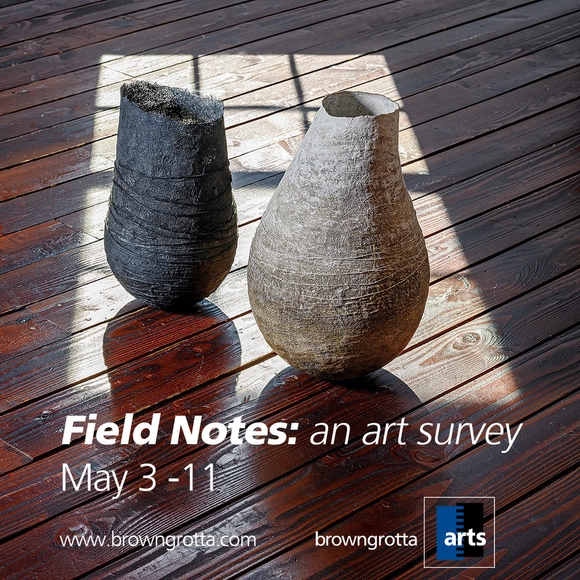
Periodically, browngrotta arts takes a look at what's happening in the fiber medium. For Field Notes: an art invitational, Spring 2025, we are checking in with artists whose work we represent, to see what's on their minds, on their looms and in their studios. We have also reached out to a few other artists who have caught our attention and asked them to submit a possible work for Field Notes. And, we'll be including rarely seen works by art textile pioneers, including Kay Sekimachi and Mariette Rousseau-Vermette, who are receiving renewed, and well-deserved, attention. Mark your calendars – May 3 - May 11 — to see Field Notes, our state-of-play survey of fiber art.