29ddm Mourning Station #4, Dominic Di Mare, hawthorn, handmade paper, silk, bone, bird's egg, feathers, gold and wood beads, 13" x 7" x 7", 1981. Photo by Tom Grotta
Acclaim! Work by Award-Winning International Artists, presented by browngrotta arts The exhibition features 45+ artists whose diverse bodies of work, in addition to being acquired into important collections, have achieved formal art recognition — lifetime achievement awards, artist-of-the-year designations, a Legion of Honor award and even an Order of the British Empire. browngrotta arts will produce a catalog for Acclaim! —its 56th.
"Datament", a monumental installation to be presented at the Polish Pavilion for the 18th International Architecture Exhibition of La Biennale di Venezia, will allow visitors to experience data in its ‘physical’ form. The space of the pavilion will be filled with the frames of four life-size houses. These seemingly chaotic and absurd structures faithfully reproduce the source data. The exhibition is intended as a starting point for a discussion about how, while new technologies may not offer us ready-made solutions, they can help us ask better questions.
New construction as an exception? “Waste” as a new building material? Affordable housing vs. climate protection? How do we design a building’s whole lifecycle? How do we calculate grey energy honestly? What is zero-carbon concrete? Which insights are new, and how can we tap past knowledge to develop solutions for the future? How do we shape this complex change process together? “Second City. On the New in the Old” is the theme of Architecture Matters 2023, where we will explore this topic at different levels: materials, buildings, society.
Installation for 2023 Venice Biennale. 3DM Architecture
3DM Architecture is proud to announce our presence at The Laboratory of the Future at the 2023 Venice Biennale. The TIME, SPACE, EXISTENCE exhibition will feature an installation inspired by the culture and history of Malta, which seeks to transcend said architecture to an international context.
The Republic of Kosovo is taking part for the fifth time in the International Architecture Exhibition – La Biennale di Venezia from 20 May to 26 November 2023 with a project by architects Poliksen Qorri-Dragaj and Hamdi Qorri entitled “rks2 | transcendent locality”.
Small Infrastructures Opening, March 30, 2023. Credit: Sidell Pakravan Architects
In March 2021, the Biden Administration released the American Jobs Plan, earmarking $213B for “quality” and “affordable” housing, yet the bill lacks specificity on how houses are to be built. Here housing’s problem is split into two: a social one of accessibility and equity, and a material one of wood, metal, and rocks. Architects can play a unique role in bridging abstract policy ambitions to real construction as these connections are made every day in practice.
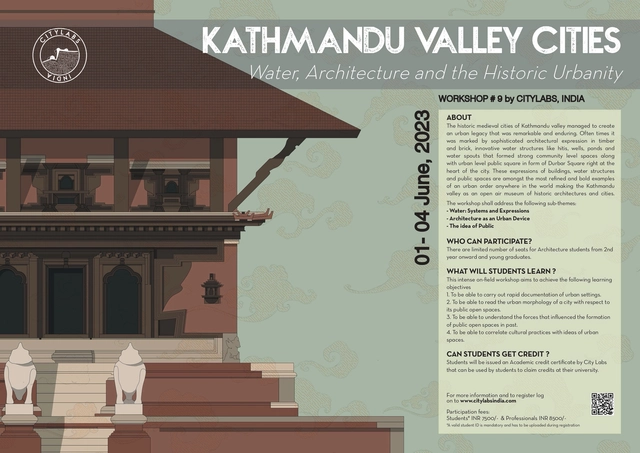
CityLabs India is glad to announce Kathmandu Valley Cities- Water, Architecture and The Historic Urbanity–a four-day intensive on-field workshop between 01-04 June in and around Patan Durbar Square, Kathmandu valley, Nepal.
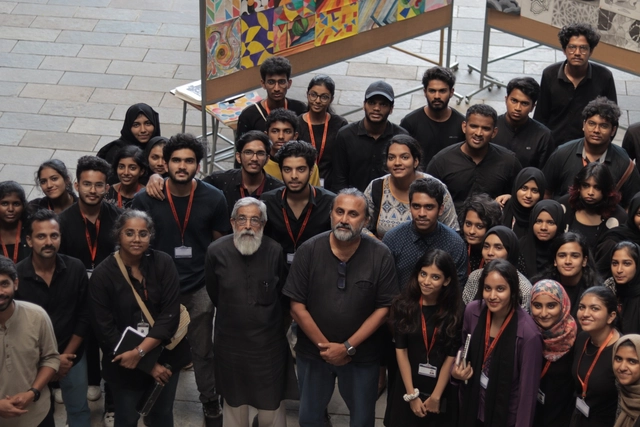
Professor Neelkanth Chhaya, Ar. Tony Joseph, Dr. Soumini Raja and Students
Avani Institute of Design conducted its first mid-semester exhibition for their first-year students on February 22nd, 2023, with the theme "Dhi" - Reflection. The students from the foundation studio displayed projects they completed as part of the programme. It included exercises in ink, pencil, and color. It also included perception drawings and film analysis.
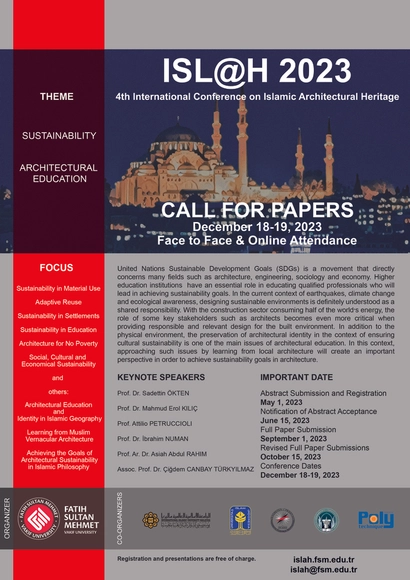
Fatih Sultan Mehmet Vakıf University Faculty of Architecture and Design has been organizing the International ISL@H (Islamic Architectural Heritage) Conferences every two years since 2017. This year, the 4th International ISL@H Conference will be held on December 18-19, 2023, hosted by FSMVU and in cooperation with partner universities; International Islamic University Malaysia, Universitas Islam Indonesia, University of Prishtina, Samarkand State Architectural and Civil Engineering Institute and Ecole Polytechnique Sousse. The conference has both face-to-face and online participation, and the languages of the conference are English and Turkish.Participation and presentations are free of charge and detailed information about the conference can be accessed from the attached poster and website. We will be glad for your participation. ISL@H 2023 Organizing Committee islah.fsm.edu.tr
The 6th annual 1.5 °C Symposium on Climate Change challenges our industry to explore the power of beauty in sustainable design to bridge the practicality of building construction with our desire to live in harmony with the natural world. There has been a paradigm shift that beauty is only a consideration of formal aesthetics; true beauty in architecture must inherently be grounded in an integration of physical form with community connection, livability, equity, resilience, and adaptability.
New Horizons: Through Darkness comes Light showcases the the Perth-based émigré Iwan Iwanoff alongside a collective chorus of artists, designers, architects and creatives of European origin and education who practiced in Melbourne. Explore a wealth of exhibition materials including archival drawings, interviews, print media, 3D models and film that demonstrate how these practitioners explored new horizons and created prolific legacies.
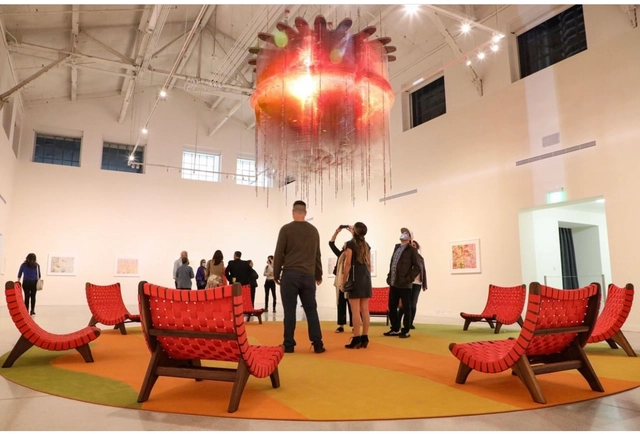
Mongrel, Pardo’s site-specific installation at the Miami Museum of Art and Design, exploring the immigrant experience
Join The University of Texas at Austin School of Architecture for a lecture with renowned artist and MacArthur Fellow Jorge Pardo, whose work explores the intersection of contemporary painting, design, sculpture, and architecture. The lecture will be followed by an on-stage conversation with Program Director for Interior Design, Igor Siddiqui. Free and open to the public.
New educational offer in sustainable spatial development & invitation to test: “Making cities fit for Green Deal Development – Impact Analysis” A team of Austrian and Bulgarian urban development, impact (focus GreenDeal) and IT experts is elaborating a training to strengthen the green skills of urban and rural development staff, including decision makers and investors. On 31.3.2023, 4pm CET the next pilot training on impact analysis will take place – free of charge and online.