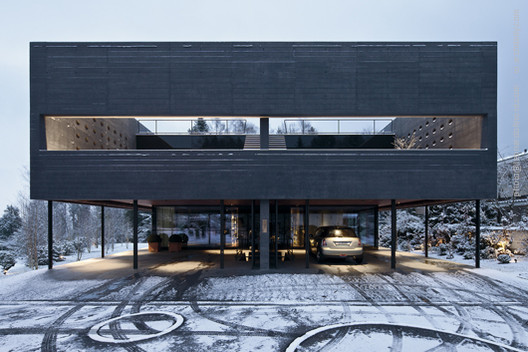
With Birmingham's new public library opening last week, Mecanoo's latest large-scale public building has received mixed reviews from critics in the UK. Check out the critical responses from Hugh Pearman, The Telegraph's Stephen Bayley, The Guardian's Oliver Wainwright, The Observer's Rowan Moore, and The Financial Times' Edwin Heathcote after the break...
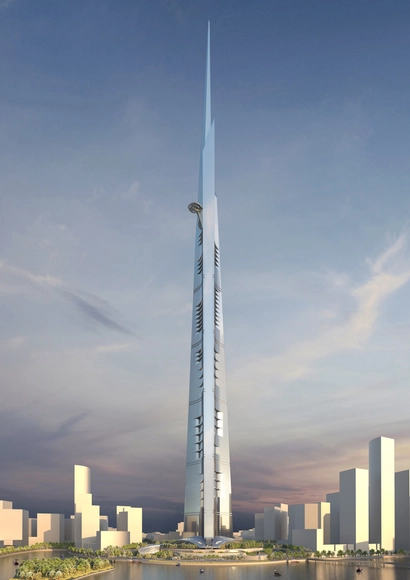
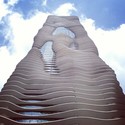
Ever expanding population growth coupled with the continuous development of urban centres mean that buildings, in general, will continue to get taller. With the topping out of One World Trade Centre in May this year the worldwide competition to construct towers with soaring altitudes doesn’t seem to be slowing, especially in China and the UAE. The question on many people’s lips, however, is how much of these colossal buildings is actual usable space?
In this article, originally published in Metropolis Magazine's Point of View blog as "The Real Problem with China's Ghost Towns" , author Peter Calthorpe explains the problems of these cities, predicts their grim future, and explores how the thoughtful planning behind the city of Chenggong could provide a more sustainable alternative.
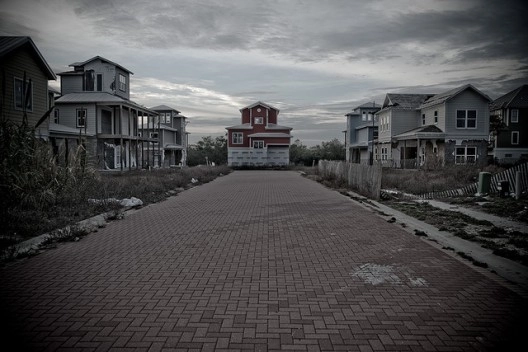
We’ve all seen the reports on “ghost town” developments in China, showing acres of empty high-rise apartments and vacant shopping malls. These barren towns seem particularly ironic in a country planning to move 250 million people from the countryside to cities in the next 20 years. But this massive, unprecedented demand has been distorted by a number of factors unique to China. Flawed financial incentives for cities and developers, along with the poor phasing of services, amenities, and jobs create most of the problems. In addition, China’s emerging middle class is very comfortable (perhaps too comfortable) investing in real estate, so people often buy apartments in incomplete communities but don't move in, expecting that values will rise, or that they will live there someday. The result is a string of large, empty developments that remain speculative investments rather than real homes and communities. [See-through buildings are the worry now, but the real problems may come when they are full.]
While it’s hard to get data on vacancy levels in China, there are certainly many anecdotal examples across the country. An all-too-typical example is Chenggong, the new town planned for 1.5 million just outside of Kunming in the west. This freshly minted city boasts the growing Yunnan University, currently with 170,000 students and faculty; a new government center; and an emerging light industrial area. Under construction are the city’s new high-speed rail station and two metro lines connecting the historic city center.
The post-war city centre of Rotterdam is ruled by commerce. Only five percent of the city's inhabitants live in the centre, which is almost entirely occupied by highstreet fashion chains, fast food restaurants, and offices. After shop closing time, the shutters go down and the streets are deserted. The municipality would like to lure more inhabitants into the centre – but space for new residential buildings is scarce. So in recent years, a 1960s cinema and church had to make way for a huge new housing complex designed by Alsop Architects, and a residential tower by Wiel Arets was speedily attached to Marcel Breuer's department store, De Bijenkorf. It was not until the municipality suggested forcing new housing high-rises into the green courtyards of the Lijnbaanhoven residential complex, designed in 1954 by Hugh Maaskant, that there were protests and the project had to be cancelled. For the time being, that is.
One densification project, however, tried not to destroy or debase the post-war building originally occupying its site. In many respects, the Karel Doorman residential high-rise could even be called the saviour of the old Ter Meulen department store. It might be rather uncommon for a valiant hero to crouch down on the shoulders of the little old lady he intends to rescue – but that's more or less what happened here.
For our latest round of Ask Arup, ArchDaily reader Biserat Yesflgn requested tips for visualization software 3ds Max (formerly known as 3D Studio Max). We spoke to New York-based Arup visualization specialist Anthony Cortez to find out how he uses the program, what skills prospective visualization artists need, and how the field is evolving.
In the following months, we at ArchDaily will be publishing Nikos Salingaros' book, Unified Architectural Theory, in a series of installments, making it digitally, freely available for students and architects around the world. In the following paragraphs, Salingaros explains why we've decided to impart on this initiative, and also introduces what his book is all about: answering "the old and very disturbing question as to why architects and common people have diametrically opposed preferences for buildings."
ArchDaily and I are initiating a new idea in publishing, one which reflects the revolutionary trends awaiting book publishing's future. At this moment, my book, Unified Architectural Theory, 2013, is available only in the USA. With the cooperation of ArchDaily and its sister sites in Portuguese and Spanish, it will soon be available, in a variety of languages, to anyone with internet access. Being published one chapter at a time, students and practitioners will be able to digest the material at their leisure, to print out the pages and assemble them as a "do-it-yourself" book for reference, or for use in a course. For the first time, students will have access to this material, in their own time, in their own language, and for free!
The book itself arose from a lecture course on architecture theory I taught last year. Students were presented with the latest scientific results showing how human beings respond to different types of architectural forms and spaces. At the end of the course, everyone was sufficiently knowledgeable in the new methods to be able to evaluate for themselves which buildings, urban spaces, and interior settings were better suited for human beings.
This approach is of course totally different from what is now known as “Architectural Theory.”
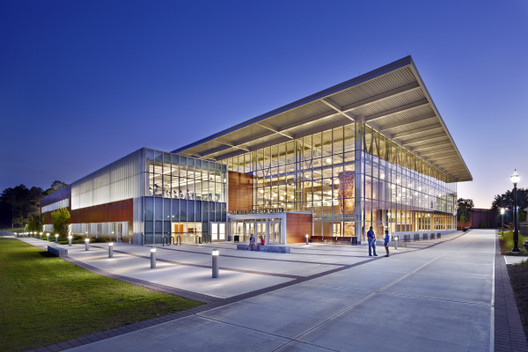
Until recently, student health and counseling services have predominantly been offered independently of athletics and recreation. But as institutions contemplate a more unified approach to health and wellness, the boundaries of these traditionally separated campus services are becoming blurred. Many believe that unifying these various programs and services under one roof is in the best interest of their students’ long-term health, as well as a potential budgetary and operational boon.
This recent shift in mindset has supported the emergence of a new breed of recreation centers that is only anticipated to multiply. “We’re seeing more and more universities come to us with a new set of challenges and program needs, as opposed to simply saying ‘we need this type of building,” says Brad Lukanic, Cannon Design’s executive director of education.
More on this new breed of Wellness Center, after the break...
For much of its existence, American suburbia has been considered an architectural wasteland. From shopping malls to McMansions to residential developments, suburbs from Connecticut to California look eerily similar and share a similar pattern of quick, cheap construction that has left little if any room for thoughtful design.
But with the recent foreclosure crisis and growing environmental concerns, new opportunities have emerged to re-imagine the suburbs into sustainable, architecturally innovative communities. Although the other art forms examined in this issue have fully established themselves, suburban design -- traditionally the realm of profit-driven developers -- is only now beginning to emerge as an artistic field. Fueled by exhibits such as the Museum of Modern Art's Foreclosed: Rehousing the American Dream and Dwell magazine's Reburbia Design Competition, architects and designers are beginning to explore what the suburbs could potentially look and feel like. We spoke with several architects who are leaders within this growing trend, and are quite literally designing new artistic possibilities for all those "little boxes on the hillside." In their own words, here are some of their concerns, projects, and visions.
At Carnegie Mellon University’s School of Architecture, prospective students are likely to find a course of study that will interest them. The School’s newly revised undergraduate curriculum allows students to choose studios in their 4th and 5th year that concentrate on breadth or depth in the following topics of interest: Sustainable Design, Digital Design, Management and Critical Practice, Design/ Build, Urban Design, and Future Studios. For example, students interested in digital fabrication, computational design, and new materials may choose to concentrate in Digital Design.
The advent of electrical lighting has allowed us to colonise the night. Not only have kilometres of street lighting ensured higher levels of safety, but signs, advertisements, etc. continue to draw us into nocturnal landscapes. As Rem Koolhaas explored in Delirious New York, Manhattan and Coney Island were the early luminous prototypes for today’s continuously vibrant metropolises: cities that establish new rhythms, a new balance between work and life.
But what happens when lighting upsets our natural balance? When we lose the beauty of the dark sky, the stars? What happens when lighting turns into pollution?
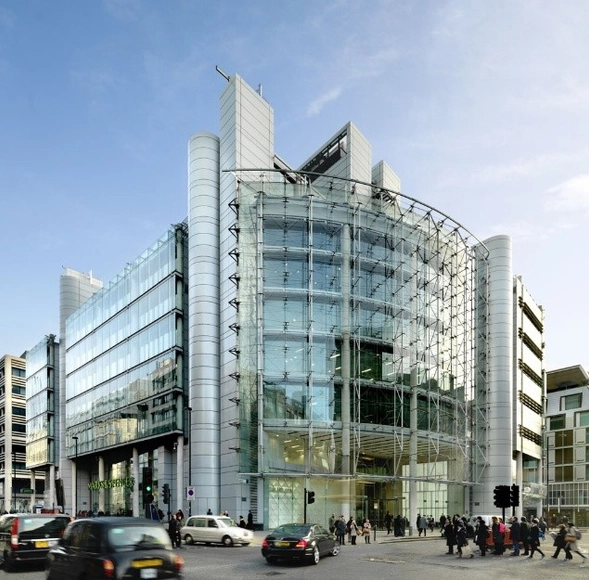
Helicon Building, an example of what Curtis B. Wayne calls "The Fourth Architecture". Image Courtesy of Paul Grundy, bdonline.co.uk
When New York City architect Curtis B. Wayne first started talking about “The Fourth Architecture,” it was clear he was not doing so to make friends. You do not write manifestos to make friends. You write them because of some perceived urgency, because the time is right.
As a long-standing practitioner, radio host, and graduate of Cooper Union and Harvard’s Graduate School of Design, he already has a lot of friends. What he’s interested in is saving architecture from the current orthodoxy of form-making over substance, or “sculpture you can live in.” “We are too wise for this,” writes Wayne.
In fact, I can go further. Judging from the little red book that has finally emerged from Wayne’s brain, appropriately titled, The Shape of Things that Work: The Fourth Architecture, I’m almost certain he set out to piss people off. But not without a purpose.
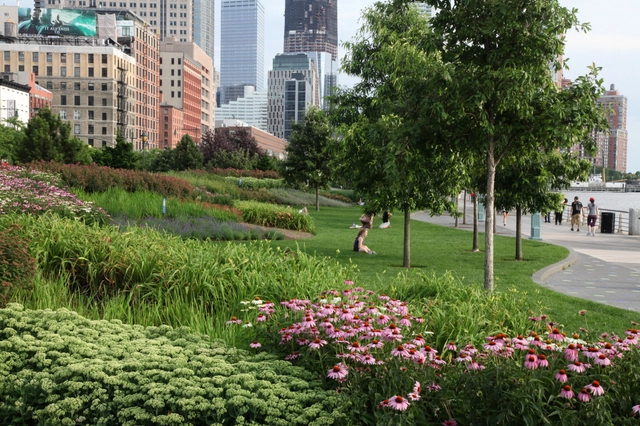
Hudson River Park, Tribeca Section. Image Courtesy of Mathews Nielsen Landscape Architects
In this article, which originally appeared in Metropolis Magazine's Point of View Blog as "Q&A: Kim Mathews and Signe Nielsen," Susan Szenasy interviews the principals of Mathews Nielsen Landscape Architects about how climate change has re-focused landscape architecture today on three important issues: Research, Redevelopment, & Resiliency.
In this season of Architecture’s Lean In Moment, I’m asking principals of three successful female-owned firms in architecture, graphic communication, and here landscape architecture, to talk about the work they do, how they connect with their clients (usually in the messy public realm), how they hone their skills and add to their knowledge base—all to provide the essential design services that they set out to do as idealistic young practitioners.
Here the principals of the New York firm, Mathews Nielsen Landscape Architects, Kim Mathews, RLA, ASLA and Signe Nielsen, RLA, FASLA, talk about the evolution of their profession, their commitment to teaching, writing, lecturing, their research-informed work, as well as the new appreciation of design in the public realm. The firm’s new Green Team reports here regularly on topics like the importance of soil composition, working within the urban infrastructure, and waterfront remediation and redevelopment in a time of climate change.
This article was written by Seattle-based designer and critic Evan Chakroff.
Lexington Kentucky’s Miller House is a built manifesto: an ambitious proposal for the future of suburbia in an age of unprecedented urbanization. Despite its pedigree – designed and built by Le Corbusier protégé José Oubrerie – and despite its (appropriate) selection as a “masterwork” by Kenneth Frampton, the project remains somewhat unknown and the architect underappreciated.
The house should absolutely occupy a place in the canon of great residential architecture. The complex composition alone should inspire myriad formal readings, but more importantly the house represents a model for communal life amid continuously-shifting family structures. It’s a radical rejection of a suburban lifestyle that has become socially, economically, and culturally unsustainable.
In honor of World Photo Day, we've rounded up the 13 architectural photographers who have been impressing us most in 2013. From industry heavyweights, like Iwan Baan and Thomas Mayer, to relative new comers, such as Miguel de Guzmán and Fran Parente, these photographers have traveled the world, getting the architectural shots we only dream of. See all 13, after the break...
Three months ago, Commander Chris Hadfield captured the attention of millions by recording a cover of David Bowie's Space Oddity - entirely on board the International Space Station. The video was the culmination of five months of social media efforts to raise awareness and interest in current space programs worldwide, and it certainly seems that Hadfield succeeded in piquing the interest of at least a few future astronauts.
But for architects, something else probably stands out in the video: the ISS seems an extremely clinical and uncomfortable environment to live in for five months. The reasons for this are obvious: it is a highly controlled engineered environment; sending luxuries into orbit is expensive; the astronauts are there to work, and after all they are trained to cope in stressful and uncomfortable environments. However, with proposals for longer missions, such as a manned trip to Mars, as well as the continued promise of commercial spaceflight on the horizon, the design of living spaces outside of our own planet may soon become an issue which architects must get involved in.
Read on to find out about the challenges of architecture in space, after the break.
Los Angeles-based P-A-T-T-E-R-N-S is among the most intriguing and progressive firms working in architecture today. They seem relentless in pushing boundaries in areas like ultra-light-weight high-tech materials and immersive media. They are also very thoughtful and patient in the way they approach design.
This is good because what they are engaged in and the way they work takes time. By collaborating with engineers and innovators in different industries they are slowly changing the way architecture is carried out and conceived on material and ontological levels. They don’t do spec homes, they do what’s new, and sometimes try to do what hasn’t been done yet.
Founder and co-principal Marcelo Spina and co-principal Georgina Huljich both teach, he at SCI-ARC and she at UCLA, where they pursue research interests with students and then reflect that back into their small but energetic practice tucked away in one of Los Angeles’ rustic urban edges, Atwater Village.
One thing to recently emerge from this office is the experimental carbon fiber pavilion they call Textile Room.
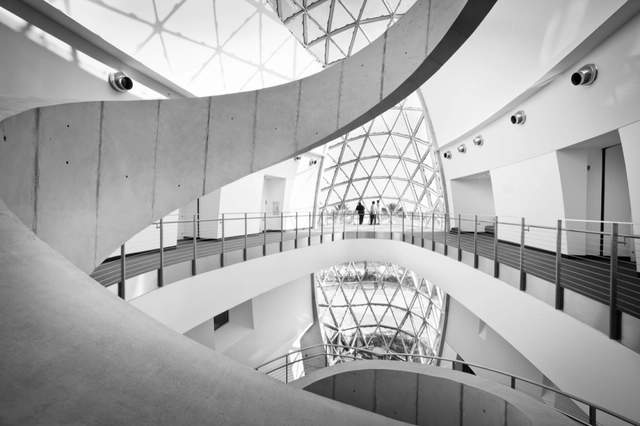
Salvador Dali Museum / HOK. According to Mary Breuer, design consultant, HOK is one of those firms that “'gets' marketing and incorporates it into the fabric of the firm". Image Courtesy of HOK
This article, by Principal of Breuer Consulting Group, Mary Breuer, originally appeared in Dogpatch Dispatch as "Why Marketing People Fail."
In many firms, the marketing function is like a revolving door: a new director comes in; the coordinator resigns; the director stays for six months only to leave the AE industry. Two coordinators later, a new director is hired, doesn’t work well with the market sector leaders, and is asked to leave the firm. Pick up any “People on the Move” section in your local Business Times and there will inevitably be the smiling face of a new Marketing Manager or Director for some design firm in your town.