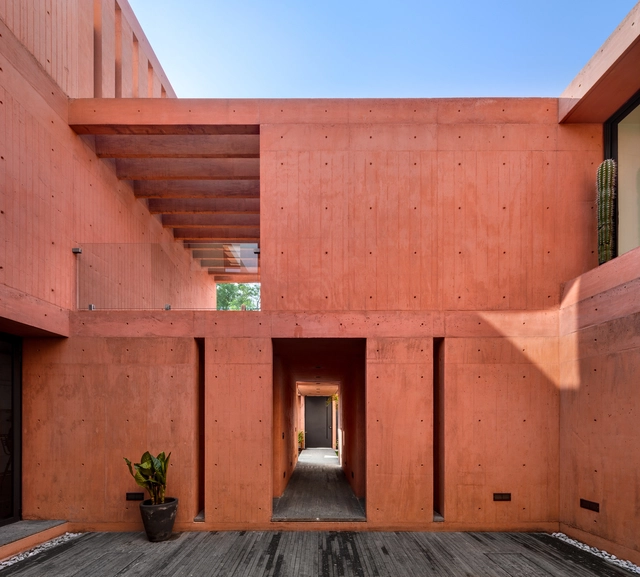
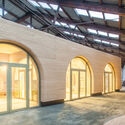
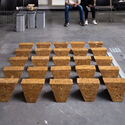
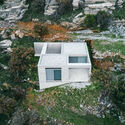
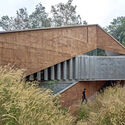
Pigmented concrete is created by adding pigments that provide a specific color to traditional concrete. From subtle touches to more intense hues, this approach allows architecture to play with surfaces and structures across a wide range of shades and finishes. Unlike surface coatings, pigmented concrete is integrated directly into the mix composition, preventing it from fading or wearing over time. Through its diverse aesthetic possibilities, pigmented concrete is a versatile and attractive alternative for adding color to architecture and design.
How can this material be applied in architecture? To achieve optimal and long-lasting results with pigmented concrete from Melón Hormigones, it is essential to correctly follow its application process, whether on walls, interior floors, exterior pavements, sculptures, or urban furniture. Below, we share a series of key recommendations for the proper use of pigmented concrete, from product selection to post-application care.
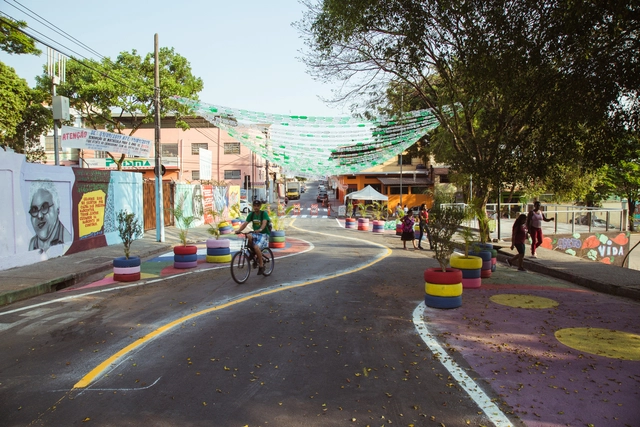
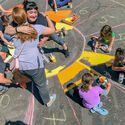
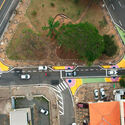
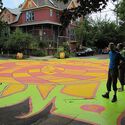
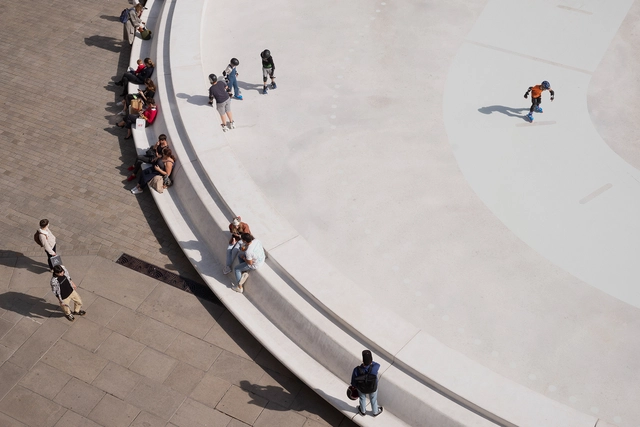
Urban intervention around the Anne Frank school in Belo Horizonte. Photo: Rafael Tavares / Octopus Filmes
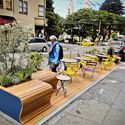
Tactical urbanism is a type of urban intervention that has gained prominence and sparked widespread discussion in recent years. It is based on the premise that low-cost, small-scale civic actions can have a significant impact on the urban environment, improving its dynamics and people's daily lives. Yet, starting as localized, temporary, or small-scale interventions, once accepted and recognized, many of these initiatives have transcended their initial ambitions. They have become catalysts for broader urban processes, triggering new actions that involve other stakeholders, spheres, and even the public administration itself.
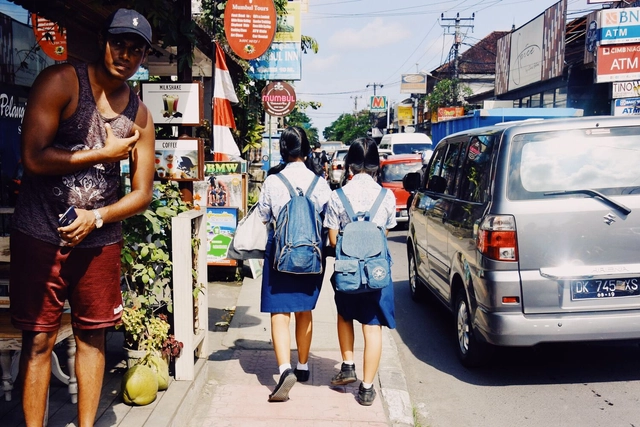
Seeking more accessible school routes and initiatives that integrate children into urban mobility, the Cidade Ativa collective, in partnership with IDOM, has developed an action plan based on the assessment of two case studies in the city of São Paulo. Available online for free, this material serves as inspiration for other cities aiming to make their urban spaces safer and more accessible.
https://www.archdaily.com/1136151/safe-and-accessible-school-routes-for-children-an-action-planArchDaily Team
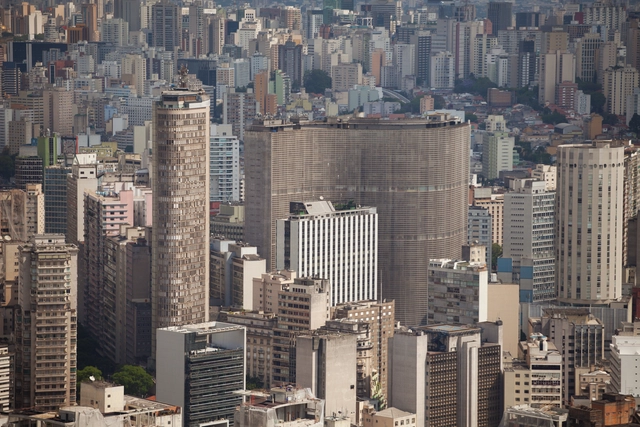
Aerial view of buildings in São Paulo, Brazil, including Oscar Niemeyer's Copan Building. Image via 3 Dias Fotografia / Shutterstock
July 11th marks World Population Day, an annual event established by the United Nations Development Programme in 1990 to raise awareness of global demographic issues. This is a highly pressing issue today; not only is the global population projected to reach nearly 10 billion by 2050, but the latest UN-Habitat reports estimate that two-thirds of us will live in cities by then. Furthermore, this year is particularly notable because India has become the world's most populous country, reaching 1.4286 billion people—a milestone that naturally raises the question of what it means to build for billions.
World Population Review annually tracks urban growth and metropolitan populations to understand global development trends. Although the list of the 20 most populous cities in the world features familiar Asian hubs such as Tokyo in Japan, Delhi in India, and Shanghai in China, it also includes several Latin American giants. Among them are São Paulo, Mexico City and Buenos Aires, which recorded year-over-year growth rates of 0.85%, 0.89%, and 0.78%, respectively.
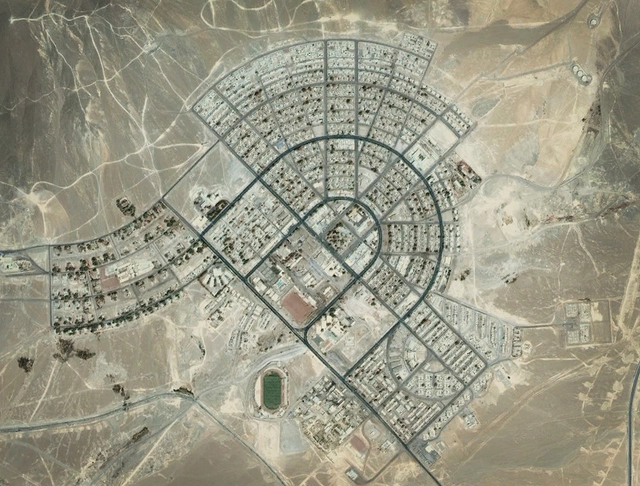
El Salvador was founded by the Andes Mining Copper Company in1959, [1] in the southern area of the Despoblado de Atacama. It originated as a new copper company town[2] designed to fulfill residential and labor functions related to copper mining, based on a project by American architect Raymond Olson of Anaconda-Jurden Associates, Inc. It operates the underground Inca mine, as well as the Campamento Antiguo and Damiana Norte open-pit mines. It complements the smelter located in the company town of Potrerillos, 72 km away. El Salvador was first "Chileanized," later "nationalized," [3] and finally integrated into the Chilean state company CODELCO during the 1980s.
https://www.archdaily.com/1136332/the-origin-of-cities-el-salvador-chileEugenio Garcés Feliú, Juan Barría, Rodrigo Ledezma, Lorena Estai
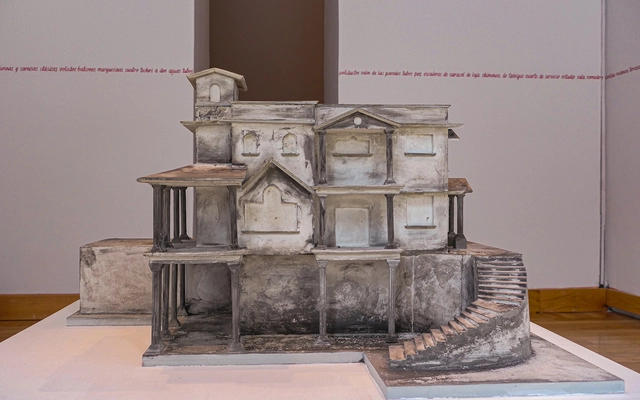
As part of the cultural program of the Centro Cultural España en México, the exhibition "Copias del abandono" is presented as a collaboration between Mexican artist Sandra Calvo and migrant communities from Tlaxcala. It is an investigation that began in 2016 comprising a film, archives, architectural plans, and testimonials. This research—which was presented at the 17th International Architecture Exhibition of the Venice Biennale in 2021—reflects on an architecture born from migratory processes between Mexico and the United States, focusing on the architectural parallels between the houses where migrants work in the US and the homes they build with remittances in their hometowns.
Despite apparent progress and setbacks, migration in North America continues to unfold under conditions of inequality and violence. To this day, the Mexican population continues to make up the largest percentage of migrants residing in the United States, and the cultural bridges between communities are increasingly evident.
The year was 1969. Lina Bo Bardi wandered through the São Paulo neighborhood of Bixiga, which at the time resembled a war zone. The clearings and piles of rubble were the result of a violent urbanization cutting through the region in the shape of São Paulo's East-West expressway complex.
Against this backdrop, Lina collected personal objects found in the debris, picking up "the most sordid items," as Zé Celso, director and creator of Teatro Oficina, stated in an interview. There was a clear reason for this undertaking: to compose the set for the play In the Jungle of Cities (Na selva das cidades), designed by the architect herself. In it, a stage shaped like a boxing ring was fashioned from the rubble of the demolitions taking place around the theater. The play was divided into 11 rounds, in each of which an institution is destroyed until the ring itself is demolished. At the end, the actors remove even the theater floor to reach the bare earth.
Environmental issues have been the defining theme in architecture for several years now. The imminent scarcity of natural resources and growing awareness of the environmental damage caused by the construction industry have forced the profession to take a stand and develop solutions that mitigate its impact on the planet. While developing new technologies that enable more sustainable materials is essential, this impetus can—and must—originate at the very beginning of architectural practice: the design phase.
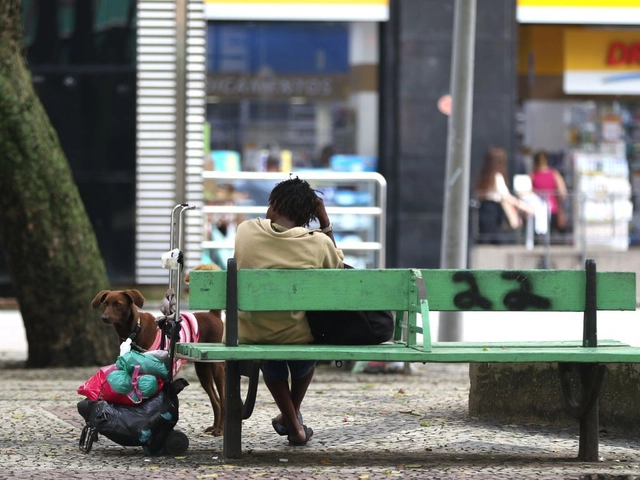
Have you ever considered the possibility of a world with no more people experiencing homelessness? The United States did, and countries like Canada, Spain, Portugal, France, and Denmark followed suit, incorporating the Housing First methodology into their national strategies to address the issue.
The formula consists of providing exactly what they lack: housing and connection. The results are consistent and, moreover, beneficial to public coffers. In Brazil, Projeto RUAS is testing the model and seeking resources to expand it. The NGO's goal is to understand how it adapts to our reality and, in the future, propose it to public authorities.
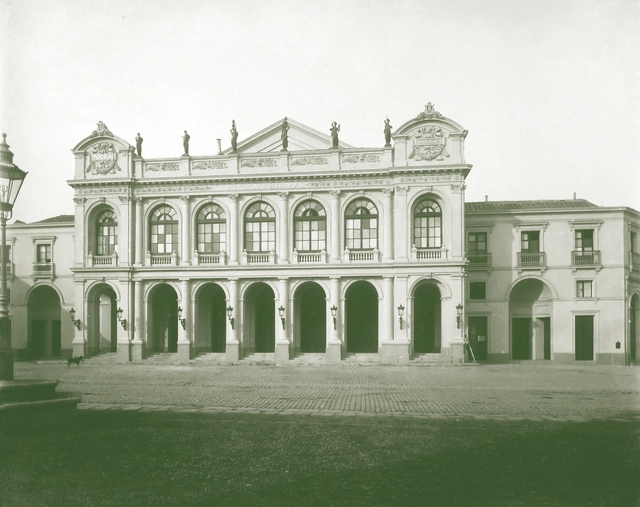
Municipal Theater rebuilt after the 1870 fire. Photograph by unknown author. Source: Photographic Archive of the National Historical Museum. Image via Ediciones ARQ
This article by Germán Hidalgo Hermosilla was originally published in issue 113 of ARQ magazine. Discussing the renovations to the Santiago Municipal Theater building, from its inauguration in 1857 until nearly a century later, Germán Hidalgo recounts the forces driving change: natural disasters, stylistic debates, and urban modernization, among others. The foyer occupies a central role in this narrative as a space of presentation and representation: where the technical demands of the theater meet the aspirations of an institution, a city, and the building's successive architects.
What is the city? It is the opposite of the forest. The opposite of nature. The city is an artificialized, humanized territory. The city is a territory designed exclusively for humans. Humans have excluded all possibilities of other life forms in the city. Any other life that attempts to exist in the city is destroyed. If it does exist, it is thanks to the force of the organic, not because humans want it to.
I was raised in a house with a dirt floor, where I walked barefoot. Chickens and other animals lived with us inside the house. When a chicken left its droppings on the dirt floor, the wet part of the waste was absorbed by the earth. We would pick up the solid part and throw it in the backyard to use as fertilizer. To city people, this is horrifying. Step on chicken droppings? Impossible! There must be perfectly smooth ceramic tile to spot any other life, any other living being that might be there, to disinfect it and kill every microorganism. To kill even what cannot be seen. To walk barefoot, the floor must be disinfected: ceramic tiles were created because humans cannot step on the earth. Shoes were created because humans cannot step on the earth. Because the earth is the original yearning.
https://www.archdaily.com/1136351/cities-and-cosmophobiaAntônio Bispo dos Santos
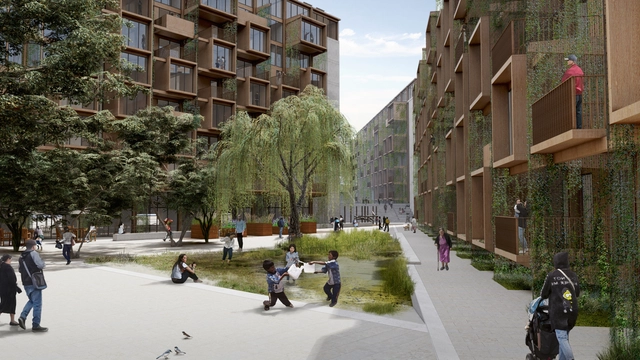
The "Construye para Crecer" (Build to Grow) project by Susana Biondi Antunez de Mayolo and René Poggione Gonzáles (Poggione+Biondi Arquitectos) was named the winner of the XIX National Architecture Biennial of Peru 2022. The jury highlighted its "comprehensive sustainability proposal linked to efficient water management, energy, and the life cycle of the proposed materials." Remarkably, the design not only incorporates an artificial wetland to support the local ecology but is also structured to be built primarily of timber.
This would make the residential complex one of the tallest timber-built developments in South America, directly addressing material use and energy efficiency in the country. It promotes sustainable forest management while offering an environmentally conscious alternative that minimizes energy consumption and boasts a low life-cycle impact.
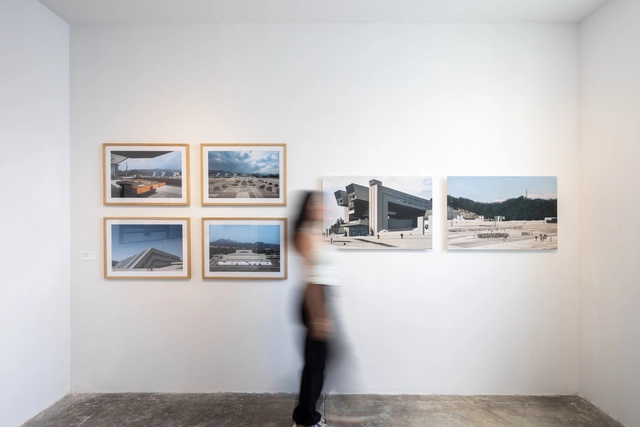
As part of the cultural programming of LIGA, Espacio para arquitectura in Mexico City, the exhibition "Architecture for Gods" ("Arquitectura para dioses") opened in late June. It offers a contemporary record of the Heroico Colegio Militar building, designed by Agustín Hernández Navarro and Manuel González Rul in 1976—an iconic work of Mexican architecture of its era.
In recent years, we have experienced the rapid growth of Digital Age data, which is deeply affecting the physical environment and whose unchecked proliferation will continue to reshape and alter the landscape. However, these impacts may not be immediately apparent. As our dependence on digital technologies increases, it becomes critical to consider the consequences associated with data generation.
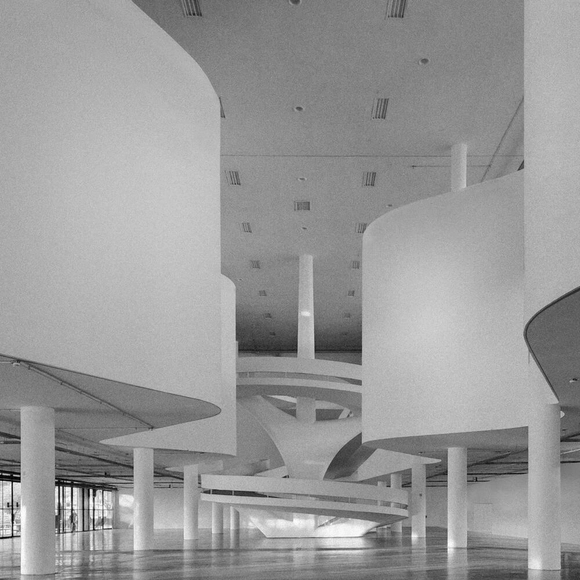
To transcend the idea of progressive, linear, Western time. To create strategies for bypassing, crossing boundaries, and escaping the impossibilities imposed by the world. Attentive to the "politics of movement and political movements intertwined in artistic expressions," the 35th Bienal de São Paulo - choreographies of the impossible presents, through spatial intervention and its list of participants, ways of relating that expand the cultural and social aspects defining the seemingly insurmountable crisis we face as a society.
To delve deeper into how spatial, territorial, and architectural issues unfold in this upcoming edition of one of the world's largest and most important art exhibitions, we spoke with the curatorial collective* comprising Diane Lima, Grada Kilomba, Hélio Menezes, and Manuel Borja-Villel.
Neuroarchitecture and environmental psychology are two fields based on the relationship between the physical environment and human behavior, yet they employ distinct approaches and practical applications. Learn about the differences between these fields and their practical applications in architectural and design projects.
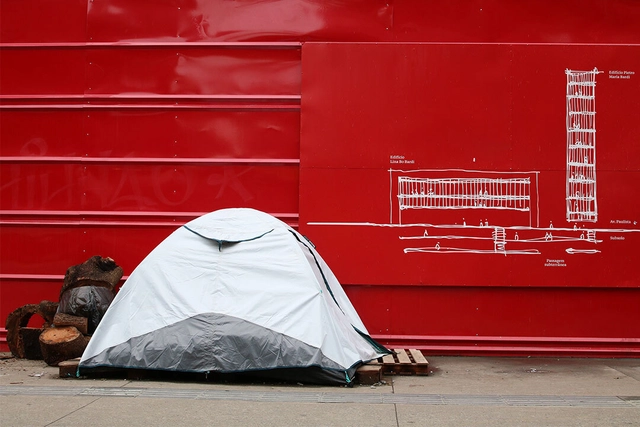
There is a growing public perception that the number of people experiencing homelessness has been rising in Brazil. To better understand this issue, the Brazilian Observatory of Public Policies on the Homeless Population, established under the Polos de Cidadania Program at the Federal University of Minas Gerais, compiled data from thousands of municipalities in a historical series spanning from 2012 to 2021. Unfortunately, the data indicates that this crisis is indeed worsening across the country.
https://www.archdaily.com/1136354/what-does-the-data-say-about-the-homeless-population-in-brazilAndré Sette e Anthony Ling
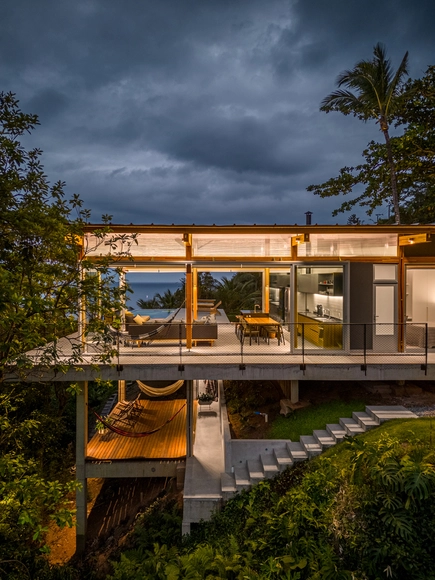
Sloping terrains, hillsides, and mountains present challenges for architects and engineers alike, but they also offer the potential to create unique homes that embrace their context. Following a careful study of the topography, soil, drainage, and access to power and water systems, designing how to integrate the house with the landscape, establishing its aesthetic, and, above all, ensuring a safe and welcoming environment is the responsibility of the architects.