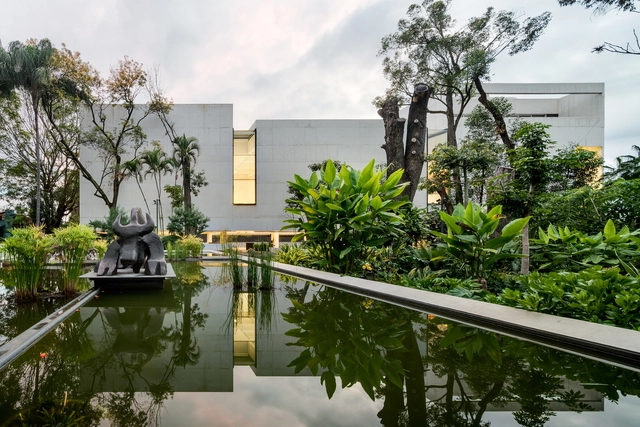
Marking its first hybrid (online and in-person) edition, the 3rd International Facade Forum 2023 will take place on April 26. Broadcasting from Mexico City, the event will feature 15 lectures by international speakers under the academic direction of Marshall Academia de Fachadas (Bill Marshall and Karina Tarrisse) and organized by the Sarzabal agency (Hernán Barbero Sarzabal and Maui Cittadini), alongside Daniela Ruiz de Chávez, who is managing the organization in Mexico.
Last week, we announced the 15 finalists for the 2023 Building of the Year, an award celebrating the best of Portuguese-speaking architecture by inviting our readers to select their favorite projects built in Portuguese-speaking countries. The day has come to reveal the winners of the 2023 ODA.
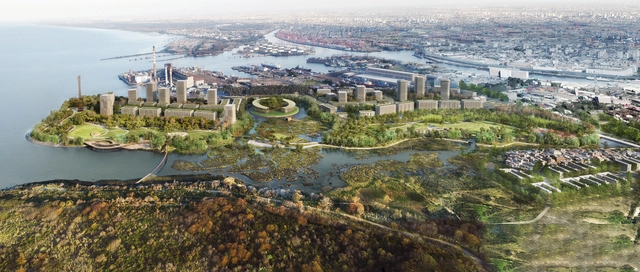
Primer Premio. Image Cortesía de PALO arq + WEST 8 junto a la asesoría de Lucia Bocchimuzzi y Manuela Garcia Faure
The National Ideas Competition for "Buenos Aires and the River – Costa Urbana Public Park" was organized by the Government of the City of Buenos Aires (GCBA) in collaboration with the Central Society of Architects (SCA) and sponsored by the Argentine Federation of Architecture Entities (FADEA). Given its non-binding nature, its primary goal is to reconnect the city of Buenos Aires with the river through an accessible waterfront designed to expand and link public green spaces, while fostering a sustainable relationship with the riparian environment.
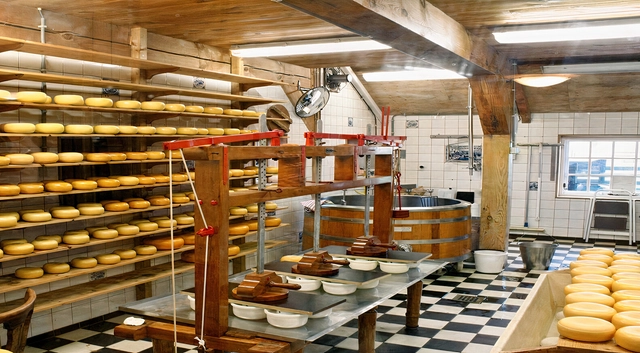
On Wednesday (29), the National Institute of Historic and Artistic Heritage (Iphan) formally presented the nomination of the Artisan Minas Cheese-Making Practices to the Representative List of the Convention for the Safeguarding of the Intangible Cultural Heritage of Humanity, through the Permanent Delegation of Brazil to UNESCO (Brasunesco). The list comprises intangible cultural assets that are considered representative of global cultural diversity and require protection and appreciation.
https://www.archdaily.com/1135897/minas-cheese-could-join-the-intangible-cultural-heritage-of-humanity-listArchDaily Team
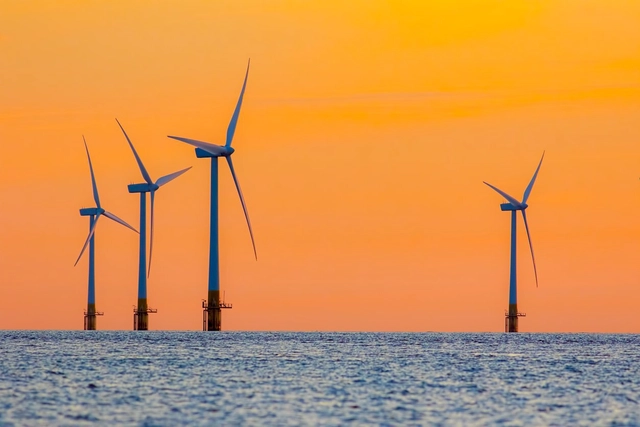
As of February this year, Brazil has 890 wind farms installed across 12 states. These facilities represent 25.04 gigawatts (GW) of installed capacity in commercial operation, benefiting 108.7 million people.
Of this total, 85% are located in the Northeast region. According to the Brazilian Wind Energy Association (Abeeólica), by 2028 Brazil will have 44.78 GW of installed capacity of this energy source, whose share in the national energy mix currently stands at 13.2%. Today, wind power already accounts for 20% of the energy generation needed by the country.
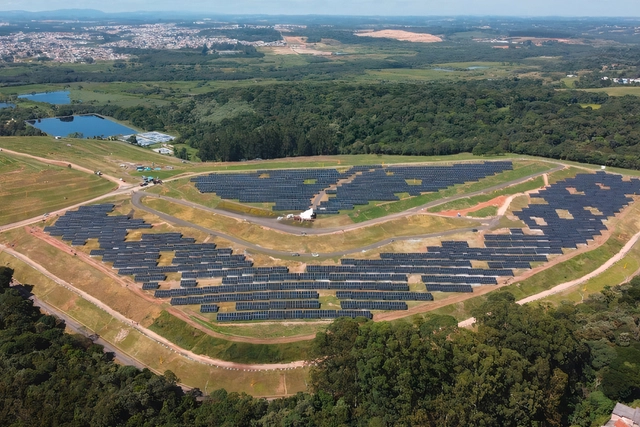
A solar power plant built on top of the Caximba landfill, which was decommissioned in 2010, is the new symbol of Curitiba. Nicknamed the “solar pyramid” due to its shape, the plant has an installed capacity of 4.55 megawatts (MW) and was inaugurated last Wednesday (29) during the city's 330th anniversary celebrations.
The project is part of “Curitiba Mais Energia,” one of the city's initiatives to combat and mitigate climate change by producing renewable energy. The municipality will reduce the emission of 2,000 tons of CO2 into the atmosphere, helping meet the city's greenhouse gas reduction targets.
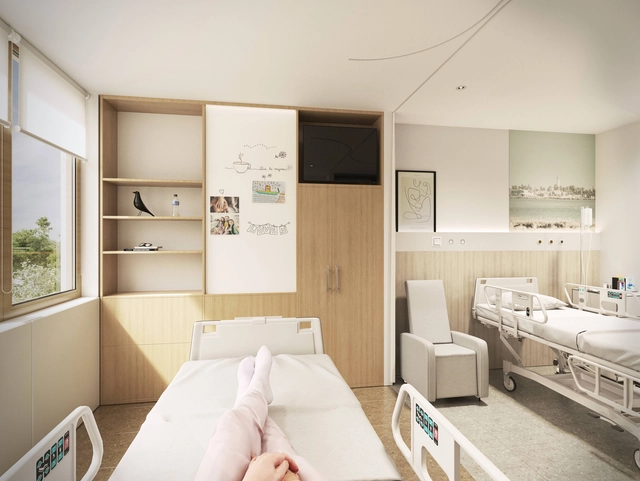
Under the name "Comfort Room: The Empathic Room," PMMT Arquitectura presents a new double inpatient room model designed to improve the patient experience by putting people at the center of the design process. Already implemented at the Nou Hospital Evangèlic in Barcelona, the firm has made the plans available to architects and other professionals. These can be downloaded for free from their website, allowing this new layout to be implemented in projects while fostering interdisciplinary collective intelligence.
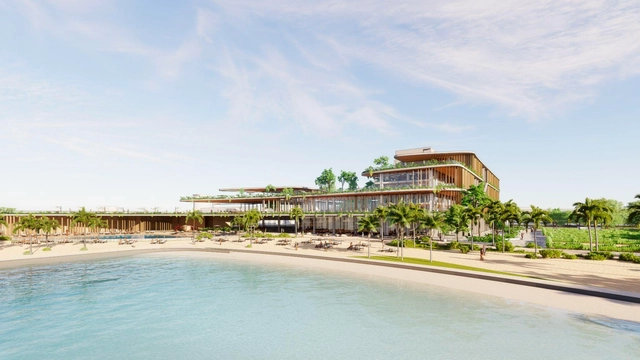
Beyond Club. Courtesy of aflalo/gasperini arquitetos
Surfers in São Paulo will no longer need to travel to catch a wave. Scheduled to open in 2025, Beyond The Club is a sports and wellness complex featuring an artificial wave beach. Designed by the firm aflalo/gasperini arquitetos, the club will feature, in addition to the wave pool and sandy beach, a sports complex with beach tennis and tennis courts, a gym, a spa, an indoor skate park, and three restaurants.
The club will occupy the site of the former Hotel Transamérica, located near Marginal Pinheiros in the city's south zone, which was designed by the firm's first generation in the 1980s.
https://www.archdaily.com/1135969/sao-paulo-to-get-an-artificial-beach-designed-by-aflalo-gasperini-arquitetosArchDaily Team
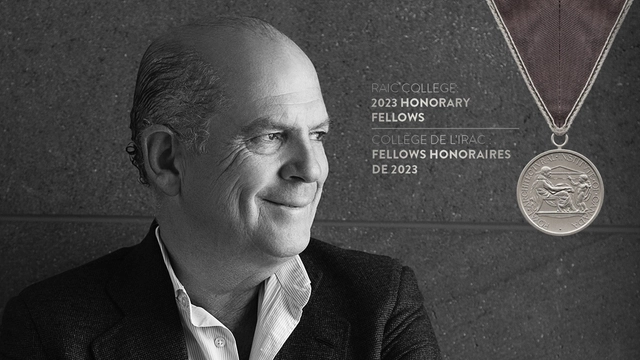
Through a press release, Mexican firm Sordo Madaleno Arquitectos has announced that architect Javier Sordo Madaleno Bringas has been named an Honorary Fellow of the Royal Architectural Institute of Canada (RAIC). He is one of four selected professionals, alongside David Hughes, Tokunbo Ómisorè, and Sumayya Vally, who have significantly influenced the practice of architecture worldwide, exemplifying the tremendous impact that architects have not only on the built environment but also on public life and the world around them.
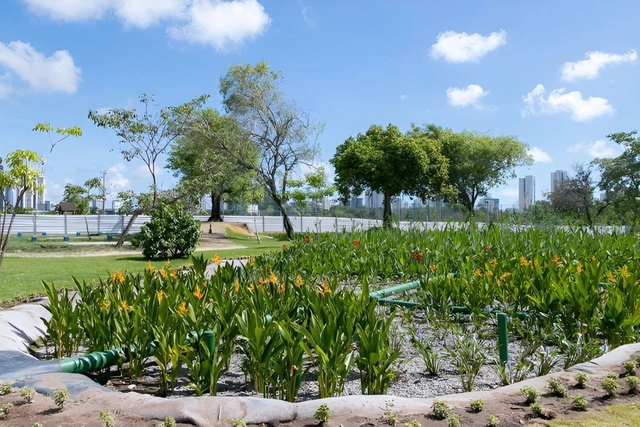
The system uses native aquatic plants to filter pollutants. Photo: Giselle Cahú | ARIES/CITinova
A nature-based solution to clean up a tributary of the Capibaribe River will be implemented in Recife, Pernambuco. Known as filtering gardens, the system consists of a group of native aquatic plants that will filter the mouth of the Cavouco Stream. Considered a sustainable and low-maintenance technology, the filtering gardens will be installed along the section where the stream flows through Caiara Park in the western zone of the capital, where about 10% of the polluted water flow will be treated.
https://www.archdaily.com/1135887/recife-to-build-a-7000-m2-filtering-garden-to-clean-up-a-streamArchDaily Team
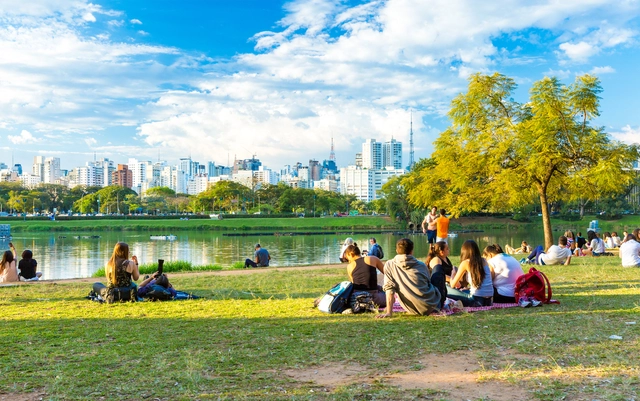
Earlier this month, the Viva o Verde SP project was launched. The result of a partnership between the São Paulo Municipal Government and UN-Habitat (United Nations Human Settlements Programme), the initiative is set to guide new municipal public policies aimed at improving the quality of green public spaces.
Initially, improvements will be proposed for 111 parks across the city of São Paulo. The goal is to achieve equity in the spatial distribution and accessibility of public green areas. “This will be an ongoing effort, not just to expand the number of parks. They will conduct diagnoses starting with ten main parks, followed by a batch of 80 parks, eventually reaching all 111 parks, identifying the specific improvements that need to be made,” said Mayor Ricardo Nunes.
Traditional Agricultural System of the Rio Negro/AM. Photo by Laure Emperaire, via Iphan
The National Institute of Historic and Artistic Heritage (Iphan), a federal agency linked to the Ministry of Culture (MinC), has made a new, modern digital repository of Registered Cultural Assets (BCR) available to the public. The online portal is the result of a partnership with the Brazilian Institute of Information in Science and Technology (Ibict) and provides the Brazilian public with access to information on each of the intangible cultural assets registered as Brazilian Cultural Heritage.
https://www.archdaily.com/1135922/iphan-launches-digital-repository-of-registered-cultural-heritageArchDaily Team
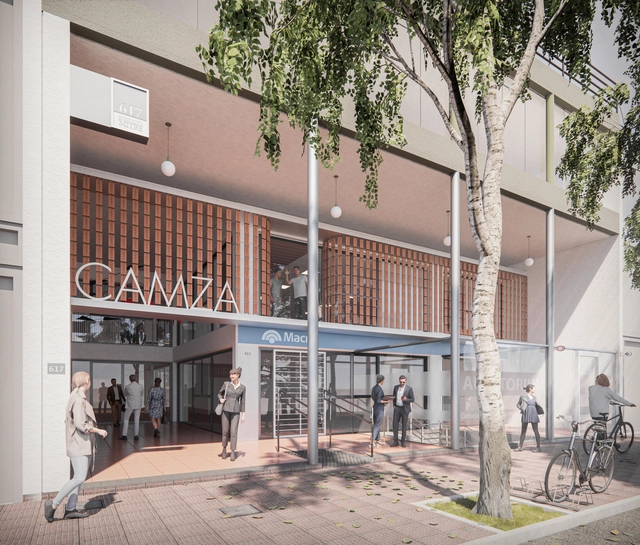
The Mendoza College of Architects (CAMZA) launched a Provincial Preliminary Design Competition for the refurbishment of its offices at the Central Regional and Board of Directors headquarters in the city of Mendoza. With a focus on functional, construction, and energy efficiency, the project aims to rethink the headquarters as a model space, keeping in mind everyone who inhabits and moves through these spaces.
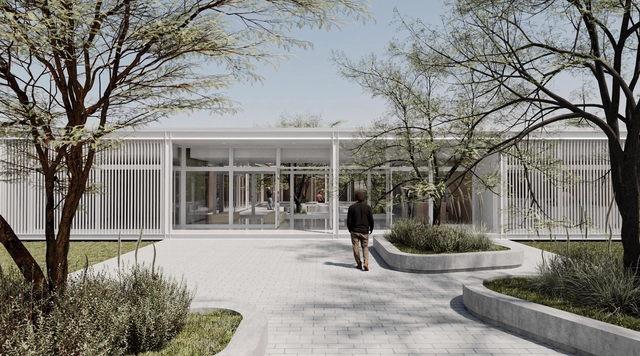
The National Preliminary Project Competition for the construction of the new laboratories of the Córdoba Grain Exchange and Chamber was organized by the Association of Architects of the Province of Córdoba (CAPC) and sponsored by the Argentine Federation of Associations of Architects (FADEA). As a public, nationwide ideas competition, its goal is to rethink the laboratory headquarters through flexible spaces capable of adapting to future changes and growth. The design incorporates functional, constructive, and energy efficiency, while remaining mindful of both the people who occupy these spaces and their landscape context.
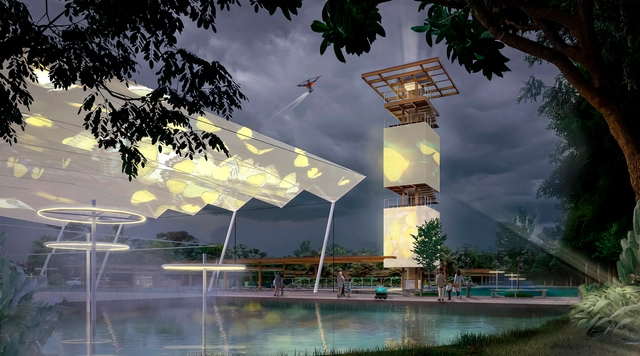
First-place winning proposal. Designed by André Augusto Prevedello. Image via Concurso EcoParque Itaipu
Itaipu Binacional, a company owned by Brazil and Paraguay that manages the Itaipu Hydroelectric Power Plant, has launched a national architecture competition for the design of the EcoParque Itaipu in Foz do Iguaçu. The competition brief, published in December 2022, called for the creation of an urban park that "will contribute to the conservation of one of the most significant green areas in Foz do Iguaçu, combining public and sustainable use."
The submitted architectural proposals had to be prepared to integrate a wide range of technologies, whether digital or nature-based solutions, aiming to transform the park into a living laboratory for solutions to address everyday challenges in a more joyful and effective way.
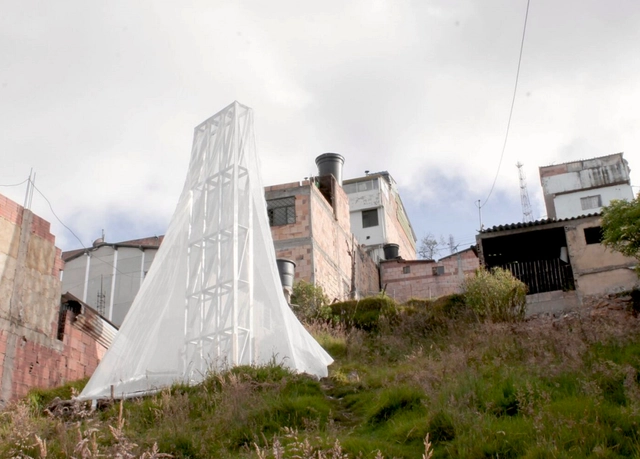
A prototype capable of collecting up to 200 liters of water per week was installed in the San Luis neighborhood of Bogotá, the capital of Colombia. Nicknamed the “fog harvester,” the development of the structure is the result of a collective effort that brought together residents and design professionals.
Ahead of the ninth edition of Open House Madrid, the dates for this international architecture and city festival have recently been announced. Year after year, the event renews itself, inviting visitors to discover a city in constant change through its architecture. From September 21 to 24, 2023, Open House Madrid will take place throughout the capital, as well as in nearby urban areas, with the goal of promoting and showcasing the city's architectural heritage.
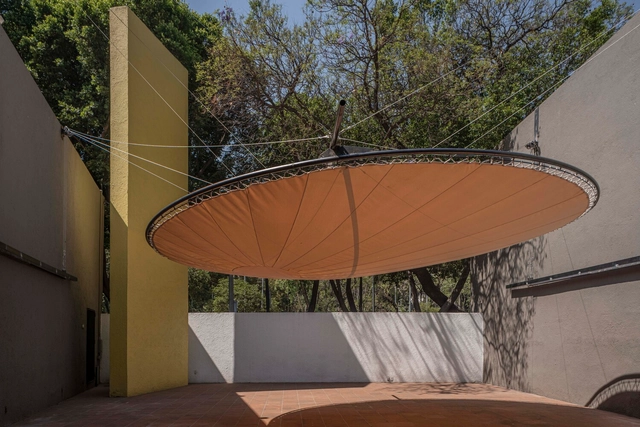
As part of the exhibition program of the Museo Experimental El Eco, the call for entries for the 2023 Eco Pavilion was launched, inviting professionals involved in architectural practice in Mexico to dialogue with the museum's space. This edition marks 13 years of the Eco Pavilion, a competition launched in partnership with Buró-Buró with the mission of offering a platform for architectural production focusing on experimentation and spatial reflection. The winning project belongs to the team composed of OCIO taller + Bianchi Majer + Nicolás Guzmán + Angélica M. Pena + Andrés Lira.