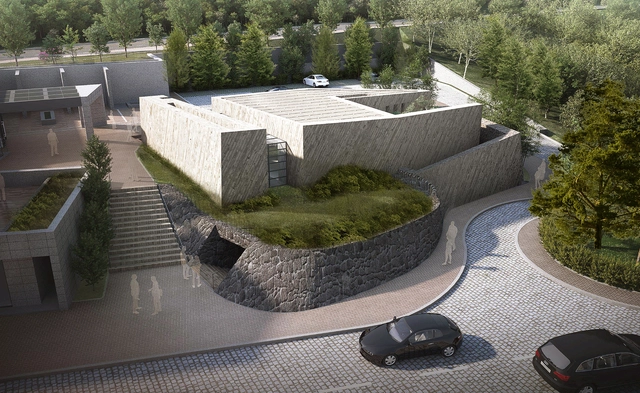
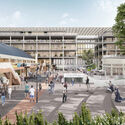
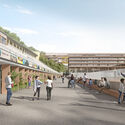
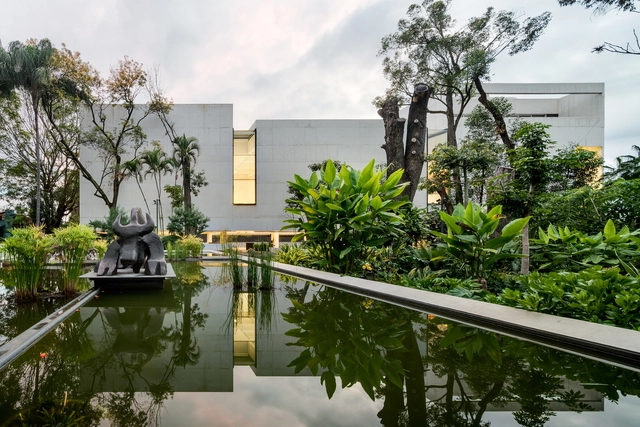
On Jeju Island in South Korea, Spanish architect Fernando Menis is designing the Park Seo Bo Museum of Contemporary Art, dedicated to the legacy of the Korean artist. Inspired by both his introspective work and collection and the volcanic nature of the site, the building aims to merge with its surroundings. Built mostly underground and utilizing local materials, natural light and shadow combine to form the essence of its interior spaces.
Today is the day to meet the finalists of ODA2023, the award celebrating the best architecture in the Spanish-speaking world. Our expert jury—you, the readers—has selected 15 of your favorite projects from nearly 1,000 architectural works built across Latin America and Spain.
Now in its fifteenth year, this award has become a true tradition. It is an open invitation to all our readers to recognize the projects published in 2022 that inspired them and that represent the identity of their local contexts in a globalized planet—shaping how architecture is made in Latin America and Spain within an increasingly heterogeneous and multicultural world.
Pre-assembled, the panels are removable. Image: Sun-Ways
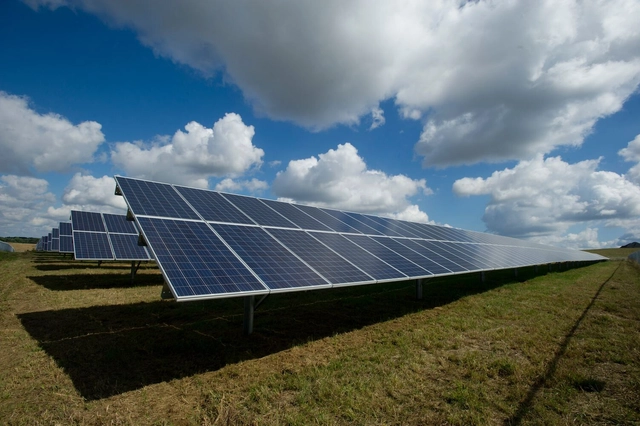
Solar energy is one of the fastest-growing energy sources in the world. Going beyond rooftop installations or large power plants, various innovations are emerging to harness the power of sunlight. One such recent initiative is being developed by startup Sun-Ways, which will install removable solar panels along railway tracks in Switzerland.
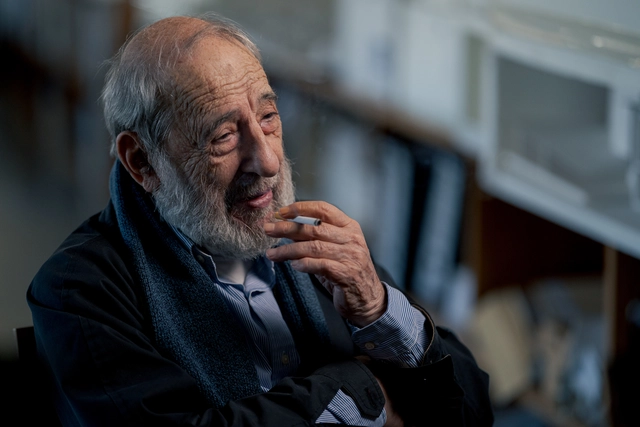
Álvaro Siza, the first Portuguese Pritzker laureate, is undeniably a figure of major importance in the history of contemporary architecture, with projects that have shaped the urban landscape of numerous cities around the world. While his name and work are widely recognized, Siza remains a deeply private and introspective figure who prefers to keep his personal life out of the spotlight.
Directed by producer and director Augusto Custódio, the documentary Siza offers an intimate, personal look at the renowned Portuguese architect. The film covers his childhood, his relationship with his wife, his passion for sculpture, and his appreciation for classical music, exploring both his influences and his professional journey.
https://www.archdaily.com/1135953/documentary-on-alvaro-siza-presents-an-intimate-and-personal-look-at-the-architectArchDaily Team
We are pleased to present the finalist projects for the 2023 Obra do Ano Award. After two weeks of nominations, our readers have chosen their favorite projects from hundreds of works built across Portuguese-speaking countries. Our jury of experts, made up of our very own readers, has once again done an outstanding job of selecting these 15 finalists.
From today until April 3 at 11:59 PM (Brasília time, GMT-3), you can vote once a day for the projects you consider to be the best examples of contemporary Portuguese-speaking architecture. The winners will be announced on April 4.
https://www.archdaily.com/1136002/2023-obra-do-ano-award-meet-the-15-finalists-of-the-largest-award-in-lusophone-architectureArchDaily Team
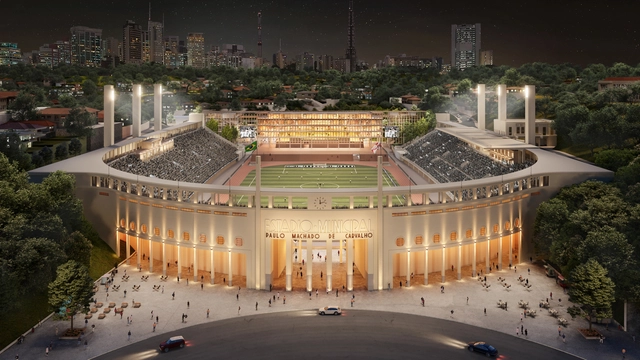
The renovation project for the Pacaembu Complex was named among the winners of the AR Future Projects awards, organized by the British magazine The Architectural Review. The announcement was made on March 14, and the official awards ceremony will take place in London in early June. Featured in the “New and Old” category, the project was among the three “highly commended” entries among this year’s winners.
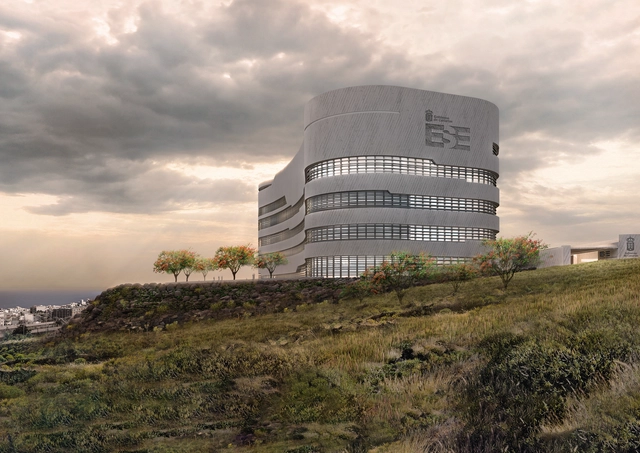
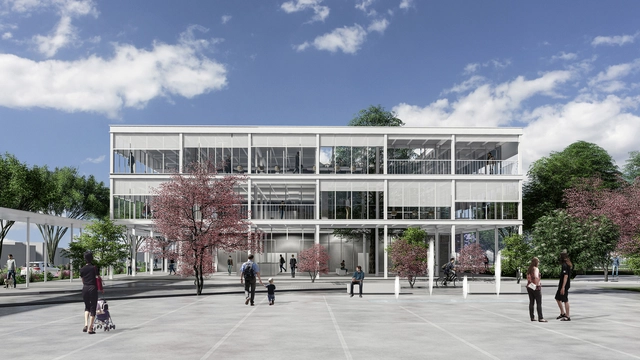
In 2021, Spanish architect Fernando Menis won the public competition to build the two Essential Services Buildings (ESE) of the Canary Islands, to be located on each of the archipelago's largest islands, Santa Cruz de Tenerife and Gran Canaria. By implementing a project focused not only on operational safety but also on hyperconnectivity, functional flexibility, worker well-being, and environmental regeneration, the Government of the Canary Islands aims to enhance public safety, risk prevention, and emergency management to address potential natural hazards, climate change, and other threats such as pandemics, cyberattacks, or terrorism.
Menis's proposal, which features two identical yet autonomous buildings, is expected to achieve greater economic sustainability through lower long-term maintenance and operating costs. Energy-efficient and adaptable to external factors, the Essential Services Buildings (ESE) will provide citizen services year-round.
A week ago, we announced the 15 finalist projects for the 2023 Building of the Year Award—a recognition of the best architecture in Spanish. Our expert jury—that is, you, our readers—selected an initial shortlist of 15 projects from nearly 1,000 works of architecture built across Latin America and Spain, before proceeding to a final vote that resulted in 3 projects representing the very best of the architecture that inspires us, defines us, and leaves its mark.
Today, the winners of the 2023 ODA are finally revealed!
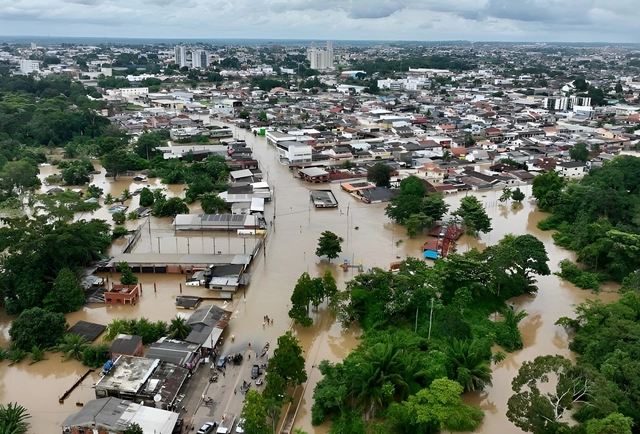
Situation in Rio Branco, capital of Acre. Photo: Pedro Devani | Secom
The past week brought chaos and despair to thousands of Brazilian families living in the country's North and Northeast regions. Heavy rains hit cities in Pará, Maranhão, Acre, and Amazonas, flooding hundreds of homes while others were completely destroyed by currents.
Organized by the College of Architects of the Province of Córdoba (CAPC) and sponsored by the Argentine Federation of Architects' Associations (FADEA), the Provincial Ideas Competition was held for Freyre Central Park, located on the former grounds of the Argentine Central Railway in the town of Freyre, Córdoba, Argentina.
Primer Premio. Image Cortesía de FARO Arquitectura
The Government of the Province of Neuquén, along with Region 1 of the Neuquén Association of Architects (CAN) and the Argentine Federation of Architects' Organizations (FADEA), launched a national competition for ideas and preliminary designs for the Neuquén Memory and Identity Park. The park will be developed on a four-lot federal plot belonging to the Argentine National Army in this region of Argentine Patagonia.
Photo by American Public Power Association on Unsplash
According to the Ministry of Development, Industry, Commerce, and Services (MDIC), President Luiz Inácio Lula da Silva signed Decree No. 11,456, which updates and expands the Support Program for the Technological Development of the Semiconductor Industry (PADIS). The program now includes the photovoltaic sector, focused on solar energy production.
https://www.archdaily.com/1136026/government-eliminates-federal-taxes-on-solar-panels-until-2026ArchDaily Team
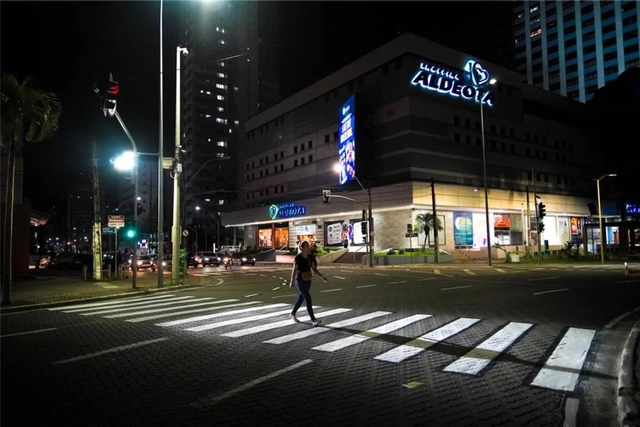
It is the first city in Latin America to implement the system. Photo: Daniel Calvet | Fortaleza City Hall
Fortaleza, the capital of Ceará, has just implemented an intelligent lighting model for crosswalks. Installed at the Praça Portugal roundabout, in the middle of the intersection of two of the city's major roads, the system could help reduce traffic accidents.
Powered by artificial intelligence, the system is capable of detecting human presence based on movement. When the dynamic lighting is activated, light beams track pedestrians from the start to the end of the crosswalk. The light improves driver visibility, especially at this specific location, where vehicles navigate a curve.
Marking its first hybrid (online and in-person) edition, the 3rd International Facade Forum 2023 will take place on April 26. Broadcasting from Mexico City, the event will feature 15 lectures by international speakers under the academic direction of Marshall Academia de Fachadas (Bill Marshall and Karina Tarrisse) and organized by the Sarzabal agency (Hernán Barbero Sarzabal and Maui Cittadini), alongside Daniela Ruiz de Chávez, who is managing the organization in Mexico.
Last week, we announced the 15 finalists for the 2023 Building of the Year, an award celebrating the best of Portuguese-speaking architecture by inviting our readers to select their favorite projects built in Portuguese-speaking countries. The day has come to reveal the winners of the 2023 ODA.
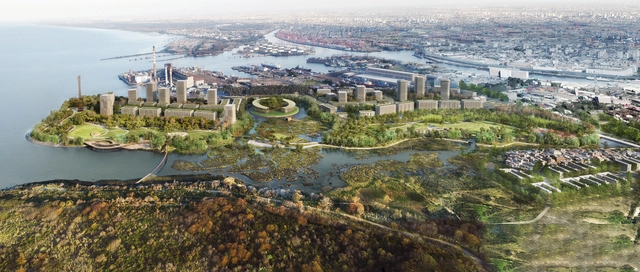
Primer Premio. Image Cortesía de PALO arq + WEST 8 junto a la asesoría de Lucia Bocchimuzzi y Manuela Garcia Faure
The National Ideas Competition for "Buenos Aires and the River – Costa Urbana Public Park" was organized by the Government of the City of Buenos Aires (GCBA) in collaboration with the Central Society of Architects (SCA) and sponsored by the Argentine Federation of Architecture Entities (FADEA). Given its non-binding nature, its primary goal is to reconnect the city of Buenos Aires with the river through an accessible waterfront designed to expand and link public green spaces, while fostering a sustainable relationship with the riparian environment.
On Wednesday (29), the National Institute of Historic and Artistic Heritage (Iphan) formally presented the nomination of the Artisan Minas Cheese-Making Practices to the Representative List of the Convention for the Safeguarding of the Intangible Cultural Heritage of Humanity, through the Permanent Delegation of Brazil to UNESCO (Brasunesco). The list comprises intangible cultural assets that are considered representative of global cultural diversity and require protection and appreciation.
https://www.archdaily.com/1135897/minas-cheese-could-join-the-intangible-cultural-heritage-of-humanity-listArchDaily Team
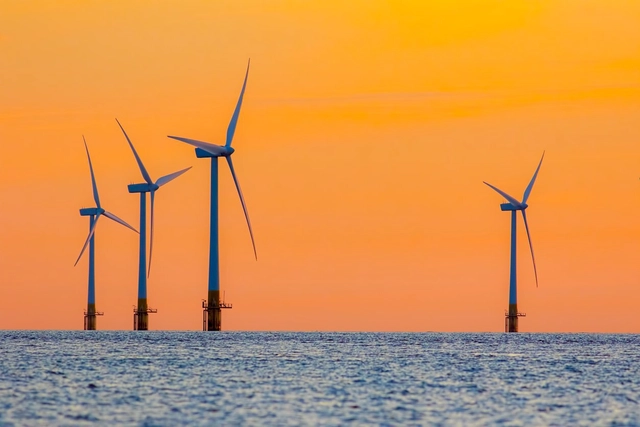
As of February this year, Brazil has 890 wind farms installed across 12 states. These facilities represent 25.04 gigawatts (GW) of installed capacity in commercial operation, benefiting 108.7 million people.
Of this total, 85% are located in the Northeast region. According to the Brazilian Wind Energy Association (Abeeólica), by 2028 Brazil will have 44.78 GW of installed capacity of this energy source, whose share in the national energy mix currently stands at 13.2%. Today, wind power already accounts for 20% of the energy generation needed by the country.