1. ArchDaily
  2. Architecture News

Architecture News

Discover the 8 Interventions of the 2nd Placemaking Latinoamérica Meeting in Mexico

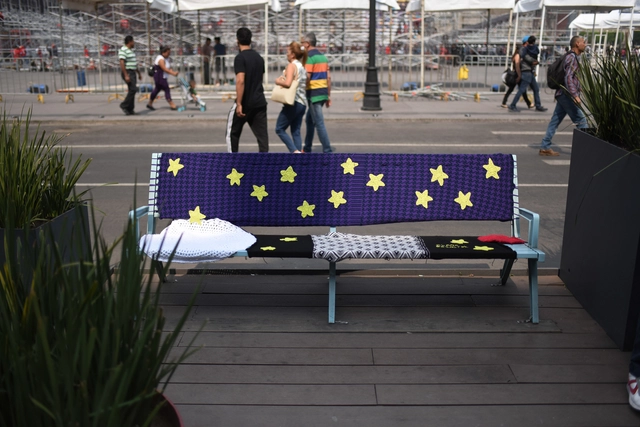
Discover the 8 Interventions of the 2nd Placemaking Latinoamérica Meeting in Mexico - Imagem 1 de 4Discover the 8 Interventions of the 2nd Placemaking Latinoamérica Meeting in Mexico - Imagem 2 de 4Discover the 8 Interventions of the 2nd Placemaking Latinoamérica Meeting in Mexico - Imagem 3 de 4Discover the 8 Interventions of the 2nd Placemaking Latinoamérica Meeting in Mexico - Imagem 4 de 4Discover the 8 Interventions of the 2nd Placemaking Latinoamérica Meeting in Mexico - More Images+ 10

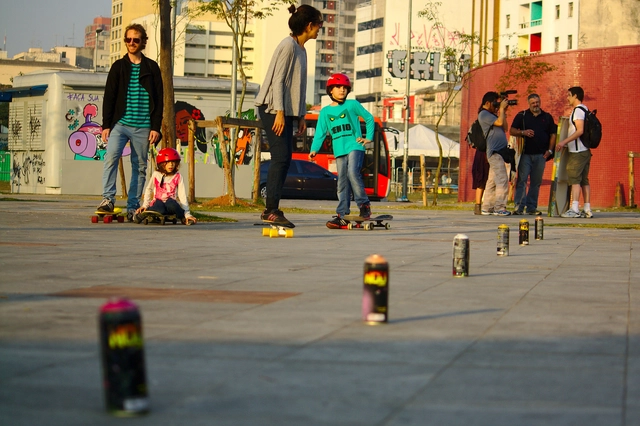
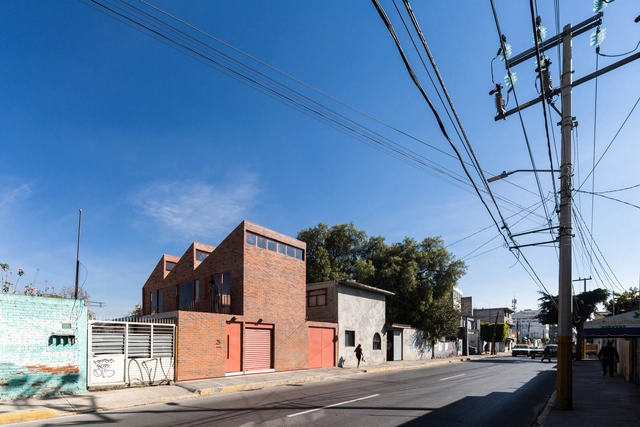
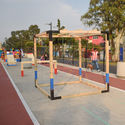
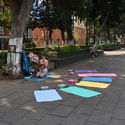
The 2nd Placemaking Latinoamérica Summit—organized by Lugares Públicos A.C.—took place in Mexico City during the first and second weeks of November. It featured various activities, including the rehabilitation of eight public spaces led by Mexican and Latin American participatory urban planning specialists in the boroughs of Cuauhtémoc, Iztacalco, and Miguel Hidalgo.

These interventions were carried out as part of a broader effort to reflect and act on the Placemaking methodology at a Latin American scale, fostering collaboration between organizations from different countries to improve public space. This process is detailed in the "White Paper on Latin American Placemaking: Tactical Urbanism and Innovation in Public Space Program," presented this week by the Alliance for Urban Regeneration (ARU) and Lugares Públicos.

World Design Capital CDMX 2018 Program Presented

In the presence of officials from the Ministry of Culture, Dra. Lidia Camacho, general director of the National Institute of Fine Arts, Mtra. Irene Muñoz Trujillo, director of the Mixed Fund for Tourism Promotion of Mexico City, and Maria Laura Medina de Salinas, honorary president of the Design Week México board, the general director of Design Week México and World Design Capital CDMX 2018, Emilio Cabrero, announced the details of the activity program for World Design Capital CDMX 2018.

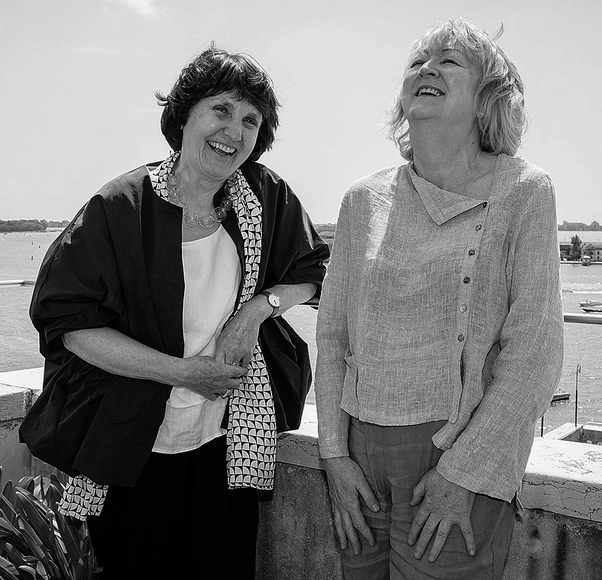
Yvonne Farrell and Shelley McNamara, directors of the 2018 Venice Biennale, define the theme 'Freespace'

The Venice Biennale appointed Irish architects Yvonne Farrell and Shelley McNamara (Grafton Architects) for the 16th International Architecture Exhibition. “Freespace” is the theme, resulting from a series of lectures previously referenced by both architects in publications, exhibitions, and biennales: Architecture and New Geography, Arena for Learning, The Physics of Culture, and Dialogue and Translation. For Farrell and McNamara, “Freespace,” as a compound word, means:

Discover the participating projects for the INFONAVIT Materials, Energy, and Water Laboratories

Discover the participating projects for the INFONAVIT Materials, Energy, and Water Laboratories - Image 1 of 4Discover the participating projects for the INFONAVIT Materials, Energy, and Water Laboratories - Image 2 of 4Discover the participating projects for the INFONAVIT Materials, Energy, and Water Laboratories - Image 3 of 4Discover the participating projects for the INFONAVIT Materials, Energy, and Water Laboratories - Image 4 of 4Discover the participating projects for the INFONAVIT Materials, Energy, and Water Laboratories - More Images+ 26

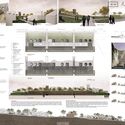
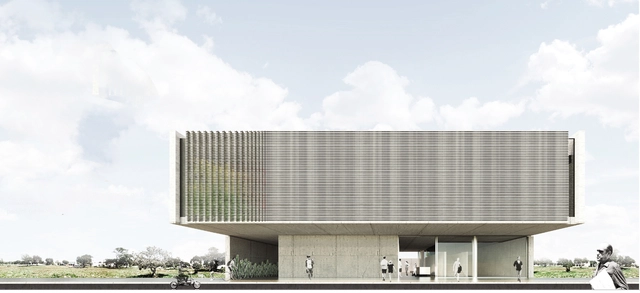
Through the Center for Sustainable Development Research (CIDS), Infonavit launched an open call for architecture and engineering firms to design the "Materials, Energy, and Water Laboratories" Building. Aiming to research and experiment with new materials, industrialized components, and spatial characteristics that foster the development of social housing, the building will be part of the complex named "Infonavit Housing Practical Research and Experimentation Laboratory" in "San Miguel del Arco," Apan, Hidalgo.

The brief required the proposal to be designed as a program container. Specifically, the design for this Ideas Competition had to house three major research spaces (materials, energy, and water) tailored to the specific testing and research needs of each laboratory, which will be developed in detail during the executive project phase with the winning firm. A key requirement for these spaces was spatial flexibility and versatility in both plan and section.

The Lutheran Church of São Paulo five months after part of its structure collapsed

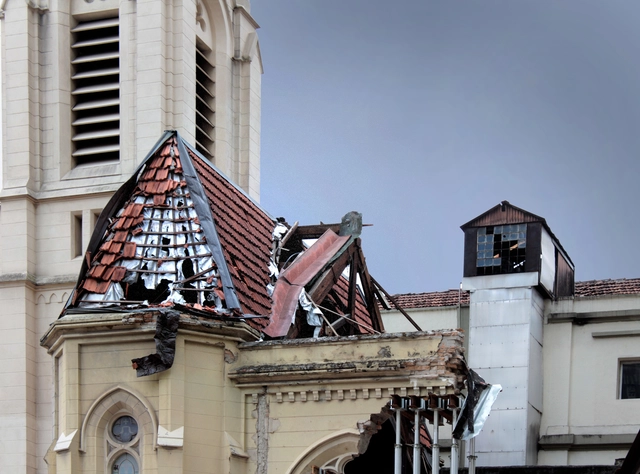
Exactly five months ago, residents of São Paulo witnessed the tragic collapse of the Wilton Paes de Almeida Building. Following a massive fire, the structure of the iconic 24-story modern building came down, leaving dozens dead and injured, and hundreds homeless. Located at the intersection of Rio Branco Avenue and Largo Paissandu, the collapse also affected three other adjacent buildings, including the headquarters of the Lutheran Church of São Paulo.

MUBO: The new interactive museum opening its doors at the Mexican Stock Exchange

MUBO: The new interactive museum opening its doors at the Mexican Stock Exchange - Imagem 2 de 4MUBO: The new interactive museum opening its doors at the Mexican Stock Exchange - Imagem 3 de 4MUBO: The new interactive museum opening its doors at the Mexican Stock Exchange - Imagem 4 de 4MUBO: The new interactive museum opening its doors at the Mexican Stock Exchange - Imagem 1 de 4MUBO: The new interactive museum opening its doors at the Mexican Stock Exchange - More Images+ 20

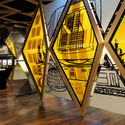
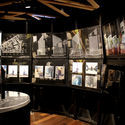
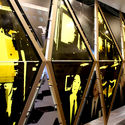
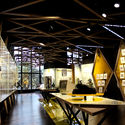
A new interactive museum is opening its doors at the Mexican Stock Exchange. The Mexican Stock Exchange Museum, “MUBO”—inaugurated in May 2018—is a space dedicated to a historical narrative focused on the country's financial market culture, utilizing interactive modules to enhance the understanding of the curatorial script. Through this new space, the Bolsa Mexicana de Valores Group brings together efforts initiated just over a year ago alongside the "Escuela de la Bolsa" to disseminate financial topics and foster an understanding of the country's history and development.

Chile, Winner of the 2018 Alacero International Competition

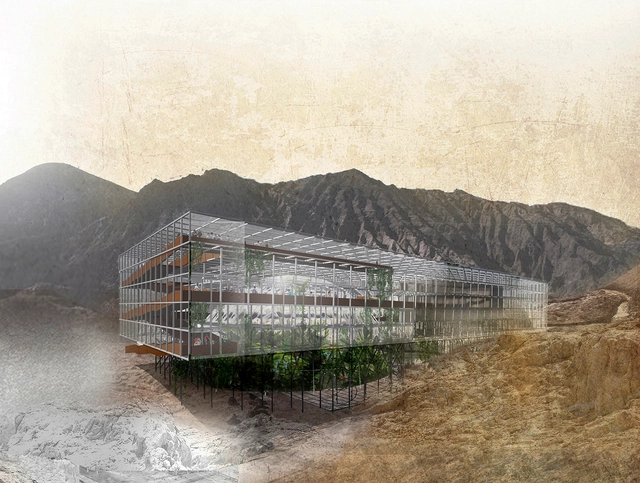
With the proposal 'Phytoremediation Machine for Mining Tailings,' the Chilean team won first place in the 11th Alacero Steel Design Competition for Architecture Students 2018 in Colombia.

The team, comprising Universidad Finis Terrae students Diego Concha, Tomás Aguirre, and Trinidad Hermosilla, presented a project that seeks to "recover and reuse mining waste through the use of plants with high mineral resistance to reduce and mitigate the site's environmental risks," as the authors explain in their project description. Their advisors were professors Andrés Echeverría and Cristián Lecaros.

São Paulo organizations publish a report on how to design safer public spaces for women.

Safer and more sustainable cities designed from the experiences and perspectives of women—this is the goal of the Mulheres Caminhantes! Auditoria de Segurança de Gênero e Caminhabilidade Terminal Santana (Walking Women! Gender Safety and Walkability Audit at the Santana Terminal) project, whose results were presented on May 5 at the Expo Center Norte convention center in São Paulo.

The project report reflects on how the city presents obstacles for women to move around and experience public space safely and with quality of life.

Meet the winners of the competition for the new CAU/TO headquarters

Launched on October 16, 2018, by the Council of Architecture and Urbanism of Tocantins (CAU/TO), the National Public Architecture Competition No. 001/2018 aimed to select the best Preliminary Architectural Study proposal for its new headquarters. The building will be constructed in block ACNO 11(103N), Conjunto 02, on Pedestrian Street NO-09, Lot 37, in Palmas, Tocantins.

São Bernardo do Campo City Hall opens public competition for architects

The Municipal Government of São Bernardo do Campo has opened applications for a public selection process with ten vacancies for architects and urban planners. Organized by the Fundação VUNESP, the exam requires candidates to hold a degree in architecture and urban planning and an active professional registration with CAU/SP.

UNESCO calls for the demolition of the Aquarela project in Colombia

Following much anticipation, the results of the report compiled by the International Council on Monuments and Sites (ICOMOS) for UNESCO have finally been released. The report follows a visit to the city several months ago, where experts inspected Cartagena's heritage sites and the development of the Aquarela residential complex—a project that threatens Cartagena's status on the UNESCO World Heritage list.

The inspection was carried out jointly by the Ministry of Culture, the Ministry of Foreign Affairs, the Mayor's Office of Cartagena, and ICOMOS advisor and expert Luis María Calvo, during which various plans and initiatives were presented to safeguard the heritage sites. The primary objective of the visit was to provide technical expertise and draft recommendations to improve the conservation of the Port, Fortresses, and Group of Monuments of Cartagena, without passing any value judgments during the process.

Research explores the legacy of nine industrial ruins across Chile

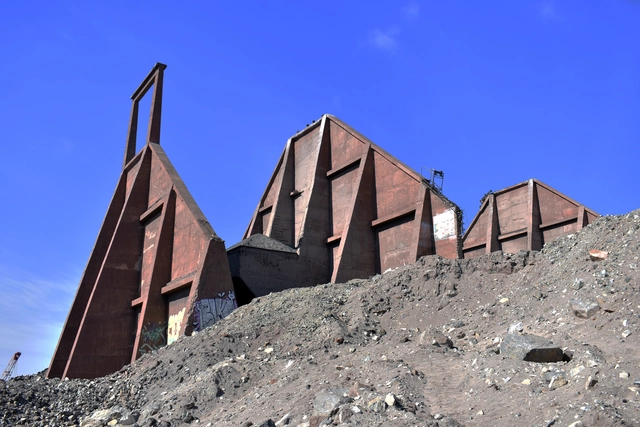
Alongside an archaeologist and a visual artist, the team led by architect and University of Chile academic Claudia Torres has documented a series of industrial ruins in rural areas throughout Chile. These are structures where geography and nature have played a fundamental role, both as a productive resource and as witnesses to their progressive deterioration after being abandoned decades ago.

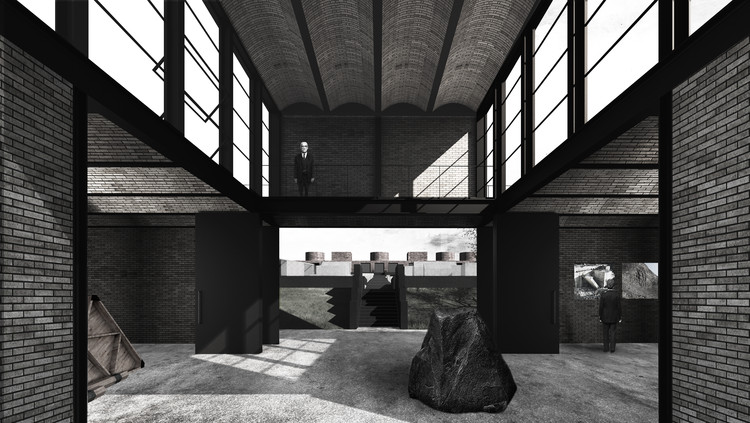
Titled “From Noise to Silence: Valuing Industrial Ruins in Rural Areas,” this research, funded by Fondart 2017, selected nine cases across Chile: from the historic use of the coastline associated with mining in the northern desert (Caldera) to logging in the Patagonian forests of the far south (Contao). Each site features unprecedented photographic and audiovisual documentation that showcases the rich natural environment where they were built to spark or secure productive processes that have shaped the socioeconomic and cultural history of each region.

Between a World of Ideas and the Material / DOSA Studio

Text by Raúl Medina and Paola Monreal.

The eternal task of architecture is to create embodied and lived existential metaphors that concrete and structure our being-in-the-world. Architecture reflects, materializes, and eternalizes ideas and images of real life. Buildings and cities allow us to structure, understand, and remember who we are. —J. Pallasmaa

We understand architecture as a series of processes directly linked to two phases. The first involves the birth of ideas, and the constant emergence and creation of questions, affirmations, and negations. It is a back-and-forth between affirmation and self-questioning, between narrative and utopia, arising from our architectural proposals. However, we chose to dedicate this documentary to the second phase: the materialization of that flow of ideas.

The Buildings You Can Visit at Open House Buenos Aires 2018

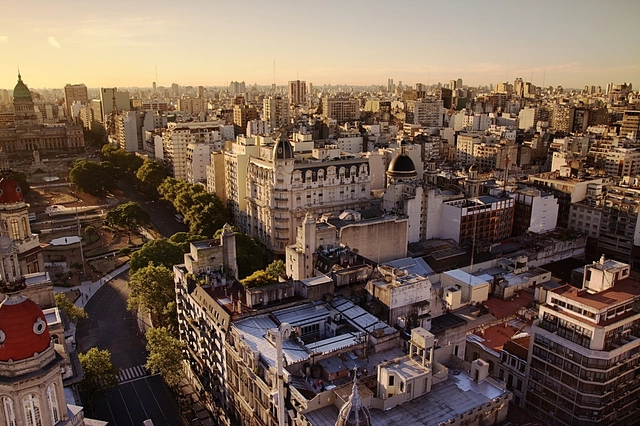
More than 100 buildings will open their doors during Open House Buenos Aires 2018, the architecture festival that, over the course of two days—October 27 and 28—will grant access to numerous buildings of architectural value that are normally closed to the public.

As is the case every year, the festival is completely free, offering a unique invitation and opportunity to rediscover both the architecture of the Autonomous City of Buenos Aires and the stories of its citizens.

Discover all the buildings you can visit during the event below.

2018 NOVA Future Living Space Competition Announces Shortlist! Public Voting Now Open

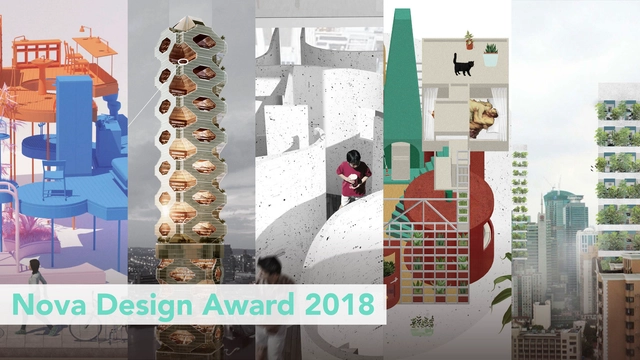
On August 6, the NOVA Design Award 2018 announced its competition finalists. The NOVA Design Award 2018 is the inaugural edition of the NOVA Design Award (NDA). Under the theme of "Future Living Space," the competition explores the possibilities of residential living over the next decade within a residential space of under 50 square meters with a ceiling height of no more than 6 meters in a first-tier Chinese city, aiming to build a physical prototype of "future living."

The competition selected five finalists from 131 submissions across more than 20 countries to enter the final round of judging.

First Line of the Bogotá Metro Will Have 16 Stations

During an official tour in late April, the Metro company revealed new details of the alignment for the Bogotá Metro's first line. The inaugural route will feature 16 stations, 10 of which will integrate with Transmilenio, the Colombian capital's mass transit bus system.

According to local newspaper El Tiempo, a 32-hectare site in the Bosa district will house the metro's train yard and workshop, serving as the "starting point for the 23 trains scheduled to begin operating in 2022." Currently, the site is located near the Cundinamarca canal—a stormwater reservoir that, along with a major power transmission tower, will be modified to accommodate the project.

8 Colombian Projects That Speak to Functionality and Interior Design

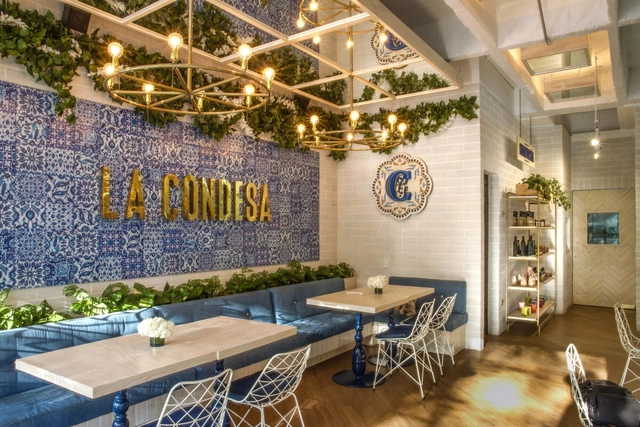
In interior design, striking a balance between aesthetic style and the functional needs of a project is essential. In this regard, it is fascinating to see the diverse solutions that Colombian architects and designers have recently proposed. We have selected eight local projects that demonstrate a compelling balance between functionality and aesthetics in interior design.

8 Colombian Projects That Speak to Functionality and Interior Design - Image 1 of 48 Colombian Projects That Speak to Functionality and Interior Design - Image 2 of 48 Colombian Projects That Speak to Functionality and Interior Design - Image 3 of 48 Colombian Projects That Speak to Functionality and Interior Design - Image 4 of 48 Colombian Projects That Speak to Functionality and Interior Design - More Images+ 4

Mexico City Implements Nighttime Transportation System: Nochebús Insurgentes

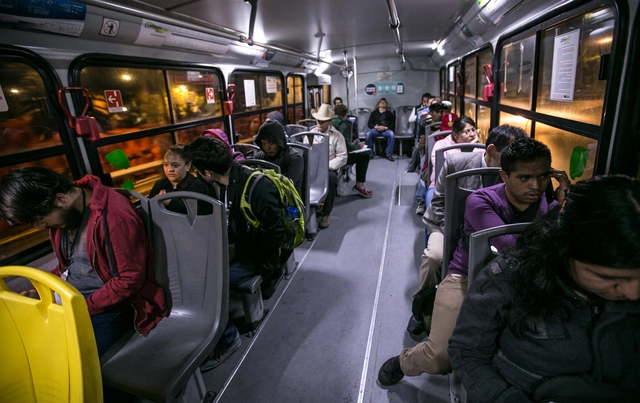
Mexico City Implements Nighttime Transportation System: Nochebús Insurgentes - Image 1 of 4Mexico City Implements Nighttime Transportation System: Nochebús Insurgentes - Image 2 of 4Mexico City Implements Nighttime Transportation System: Nochebús Insurgentes - Image 3 of 4Mexico City Implements Nighttime Transportation System: Nochebús Insurgentes - Image 4 of 4Mexico City Implements Nighttime Transportation System: Nochebús Insurgentes - More Images+ 2

Can you imagine arriving at a bus stop in the early hours of the morning—after a party, work, or school—and knowing the exact minute your public transit will arrive? Cities like London, New York, Madrid, and Melbourne have successfully implemented night transit systems with fixed schedules, yielding various financial and safety benefits for residents while boosting tourism and encouraging sustainable mobility. What would happen if this system were applied to the second-largest avenue in the Americas, after Buenos Aires' Avenida 9 de Julio? 

Mexico City already has a night transit service: the Nochebús. With 11 routes operating between midnight and 5:00 a.m., it serves late-shift workers, night-lifers, and others needing late-night transportation. However, the service faces several challenges, many of which stem from uncertainty around arrival times—largely due to a much lower frequency than daytime public transit.