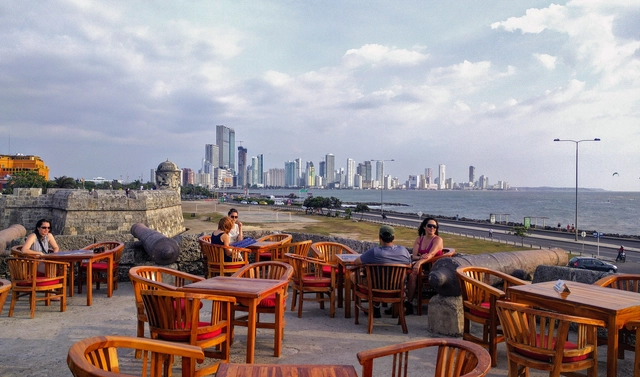
The construction of a four-tower housing complex just steps from the historic center threatens Cartagena (Colombia)’s status as a UNESCO World Heritage site. The community is currently awaiting a judicial ruling on the Aquarela case, the name of the multi-family social housing (VIS) project.
According to statements by the Bolívar Business Council (Consejo Gremial de Bolívar)—the organization tasked with promoting competitive development in the city and department—the situation is delicate, as the advanced stage of construction complicates potential decisions. Given that the city is one of Latin America's primary tourist destinations, the lack of oversight from national and local authorities—who failed to act in accordance with the planning principles outlined in Article 2 of the Colombian Constitution—is difficult to explain.
View from the rooftop lookout. Photo: Courtesy of Sesc
Closed for renovations since 2010, the Sesc branch on Avenida Paulista now has an official opening date: April 29. Designed by the firm Königsberger Vannucchi Arquitetos Associados, the renovation project transformed the former Sesc Paulista space, creating three auditoriums, workshop rooms, exhibition areas, rehearsal and fitness rooms, as well as the traditional services offered by all Sesc branches, such as a café, restaurant, and shops.
Focused on performing arts and body movement, the program of Sesc Paulista is spread over 17 floors, featuring a rooftop café and an observation deck overlooking the avenue.
The Sebrae Sustainability Center (CSS), designed by architect and urban planner José Portocarrero, won the BREEAM Awards 2018 for best sustainable building in the Americas, as well as the popular vote category. Inspired by indigenous dwellings, which are benchmarks in bioclimatic design, the building in Cuiabá (MT) stands out for its thermal comfort and maximum use of natural light. Its double-shell roof enables internal cooling and rainwater harvesting, which is filtered and stored for garden irrigation and floor washing.
The exhibition "Women Architects XIX-XX" on the role of women in the history of the profession, installed at the University of Beira Interior (UBI) in Portugal, was vandalized between last Friday night and Saturday morning. Held by the Integrated Master's in Architecture of the university's Department of Civil Engineering, the exhibition occupied the building's lobby and was destroyed, likely by punches and kicks, according to an article published by the Portuguese newspaper Expresso.
Aiming to reflect on how "the visibility of women architects in the context of established architectural history is minimal and does not do justice to their actual and real presence in building cities and architecture," the exhibition, organized by Patrícia Santos Pedrosa, showcased the results of research on the production and presence of female architects over the past two centuries who contributed to expanding "the way we make, think, and question architecture."
National Architect and Urban Planner Day, celebrated on December 15, has officially become law. Law 13,627/2018, which adds the date to the official Brazilian calendar, was signed into law by the Presidency of the Republic on January 16. This marks an important step in the process of professional recognition initiated by CAU/BR and regional CAUs since their creation in 2011. The Council began operating precisely on December 15 so that its establishment would coincide with the birth date of Oscar Niemeyer.
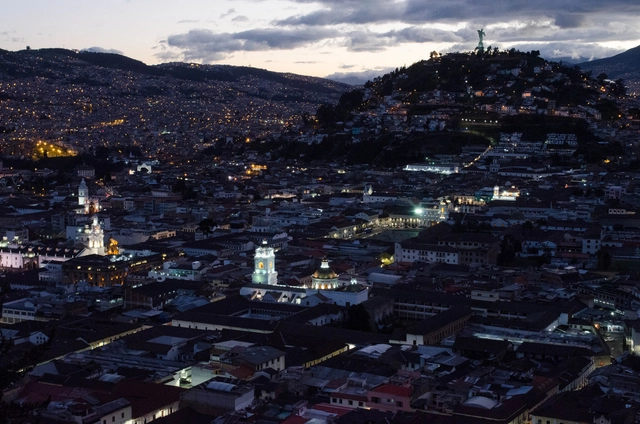
With one month to go before its opening, the details of the official program for the 21st Pan-American Architecture Biennial of Quito (BAQ2018) have been announced. Marking its 40th anniversary, the event will focus its dialogue and debate on architecture itself.
To be held from November 19 to 23 in the Ecuadorian capital, the event offers a prime opportunity to discuss and debate a discipline that, in recent years, has seen a decline in the spaces dedicated to fostering such encounters and dialogue.
https://www.archdaily.com/1114028/discover-the-details-of-the-program-for-the-2018-pan-american-architecture-biennial-of-quitoJavier García Librero
Videos
Cortesía de Ciro Miguel + Vanessa Grossman + Charlotte Malterre-Barthes
For the first time in its history, the São Paulo International Architecture Biennale opened a call for proposals to select the curators for its next edition. Consequently, on August 31, the Instituto de Arquitetos do Brasil - Departamento São Paulo (IABsp) announced the curatorial team that will lead the XII São Paulo International Architecture Biennale.
With the proposal Todo Dia, the winning team is composed of Brazilian architects Ciro Miguel and Vanessa Grossman, alongside French architect Charlotte Malterre-Barthes.
Below is an excerpt from the winning proposal's statement:
https://www.archdaily.com/1114031/iabsp-announces-the-curatorial-team-for-the-xii-international-architecture-biennale-of-sao-pauloEquipe ArchDaily Brasil
The impact of the Santiago Metro's new lines, recognition for a new metropolitan park in the capital, and the final design for the Barón Pier in Valparaíso. Indeed, a week dedicated to major metropolitan projects is the focus of this edition of La ciudad chilena en la prensa, the ArchDaily column where we cover what is happening in Chile's major cities.
Videos
Escala 1:5. Documental nueva Sala Beckett. Image Cortesía de Architecture Player
The Catalan architecture firm Flores & Prats Architects presents the launch of the documentary series ESCALA 1:5, which explores the design process of the international drama center at the new Sala Beckett in Barcelona. Produced by the independent production company 15-L, the documentary consists of five 10-minute episodes directed by Patricia Tamayo and Albert Badia.
Following its premiere on December 14, 2017, at the Girona Cinema in Barcelona before an enthusiastic crowd of about 200 spectators, the episodes are now available on demand on The Architecture Player channel on Vimeo.
https://www.archdaily.com/1114041/scale-1-5-the-new-documentary-on-the-sala-beckett-designed-by-flores-and-prats-architectsJavier García Librero
Colombian architect Konrad Brunner passed away this Tuesday, September 25, in Bogotá. Grandson of the historic urban planner Karl Brunner, Konrad was born on November 17, 1950, in the Colombian capital and graduated from the Universidad de los Andes in 1974.
Brunner founded his own architecture firm in 1978, a practice noted for projects such as the Plaza de Jubileo at Compensar, the master plan for the Ciudadela El Recreo (alongside Germán Samper and Gustavo Perry), the Arroyoviejo and El Vigía residential buildings, and the Casa Vélez. Additionally, the architect balanced his private practice with teaching at the Universidad de los Andes starting in the 1980s.
The president of the Venice Biennale, Paolo Baratta, and directors Yvonne Farrell and Shelley McNamara presented, via videoconference, the official curatorial proposal of the Artistic Direction for the 16th International Architecture Exhibition of the Venice Biennale.
The 21 projects making up the Official Selection of the Mexican Pavilion at the 16th International Architecture Exhibition of the Venice Biennale converge across latitudes, geographical regions, and territorial echoes, rooted in the curatorial concept of "Freespace." In four installments, we will share the work and ideas of each participant representing Mexico in Venice. Read on to discover the fourth part of these projects.
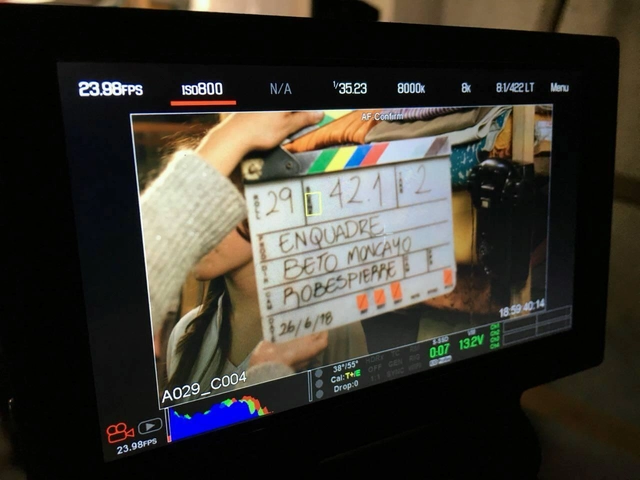
Filming of the movie 'De topos y sapos' by Colombian architect and filmmaker Alberto Moncayo. Image via 'De topos y sapos' Fan Page
What began as an audiovisual production for an architectural project—Vive Bambú—turned into a lifelong passion. This is the story of Colombian architect and professor Alberto Moncayo, who shared details of his latest film project with the newspaper El Espectador.
"Architecture earns me a living, but I live for cinema," comments Moncayo, while working on the filming of "De topos y sapos," inspired by the historic Banco de la República heist of 1977. In this event, two brothers dug a tunnel to the vault of the bank branch in the city of Pasto, stealing 82 million Colombian pesos at the time (equivalent to USD 38.2 million today).
The controversial "sun tax," a measure implemented several years ago by the Spanish government, has been eliminated thanks to the new Royal Decree-Law 15/2018 on energy transition. Approved by the Council of Ministers, this measure comes at a time when Spain remains far from meeting the targets set by the European Union in this area.
Among other measures, the Royal Decree establishes the right to self-consume electricity free of charge; recognizes the right to shared self-consumption (multiple users sharing a single installation); simplifies administrative procedures; limits electricity bill prices; and introduces measures to promote electric vehicles.
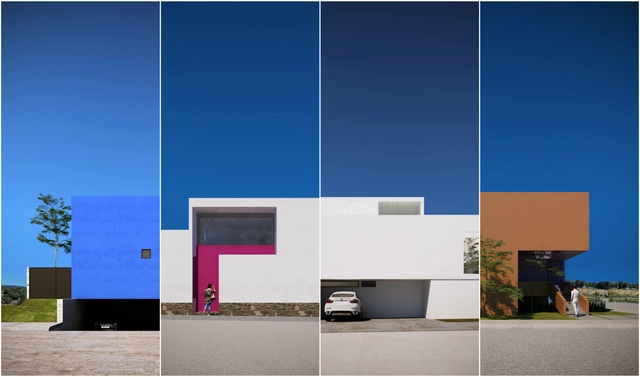
The "Single-Family Home" Architectural Design Workshop, organized by the architecture firm Cota Paredes Arquitectos, concluded its fourth edition, inviting recent graduates and final-semester architecture students to develop a single-family housing project over four weeks, either in person or online.
The project involved designing a home for a small family within a gated community in Zapopan, Jalisco, Mexico. The proposal also had to comply with the building regulations of the "Los Robles" development, incorporating essential guidelines to achieve a single-family home design based on the concepts of introspective architecture.
https://www.archdaily.com/1114093/results-of-the-fifth-single-family-home-architectural-design-workshop-by-cota-paredes-arquitectosArchDaily Team
This week, Congress approved the creation of 231 positions for the office of the federal interventor in Rio de Janeiro and the Extraordinary Ministry of Public Security — to fund these new roles, positions will be eliminated at the National Institute of Historic and Artistic Heritage (Iphan).
Of the newly created positions, all of which are appointed roles, 67 will be allocated to the office of the interventor, General Walter Braga Netto, and 164 will be chosen by the Extraordinary Minister of Public Security, Raul Jungmann.
Like any other discipline or science, urban planning is dedicated to the empirical study of planning and organizing cities and territories. It faces not only the challenges of designing agile mobility, planning accessible residential fabric, allocating land for economic activities, and efficiently managing environmental and energy impacts, but also the ultimate goal of making the resulting cities as livable as possible.
Named after Arturo Soria, Arturo is an algorithm trained by citizens and designed to determine which urban variables make our cities more livable. Much like Arturo Soria himself—whose commitment to livability was evident in projects like the Ciudad Lineal—the algorithm aims to turn livability into a measurable parameter, into objective data. To achieve this, it relies on the input of thousands of citizens to build an accurate picture of what makes a city livable.
On July 17, the Council of the Arq. Marcelo Zambrano Scholarship selected architect Nuria Benítez Gómez as this year's winner: “The Arq. Marcelo Zambrano Scholarship is an initiative through which CEMEX reaffirms its commitment to Mexican architecture, promoting the professionalization of the construction industry by training highly talented young architects,” stated Juan Romero, President of CEMEX Mexico. “I recognize the important work of the Scholarship Council in choosing the winner during this year's deliberations, which, as in every year, has been highly enriching and now even more challenging due to the high level of competition and quality of work among the applicants.”




.jpg?1520005213&format=webp&width=640&height=580)
.jpg?1520005166 "© Mexico Pavilion")
.jpg?1520005196 "© Mexico Pavilion")
.jpg?1520005136 "© Mexico Pavilion")
.jpg?1520005151 "© Mexico Pavilion")
.jpg?1520005213)