This guide shows how to use a D5 Render a free live-sync plugin to improve SketchUp workflow.
Architecture Competitions
How to improve rendering workflow on SketchUp
| Sponsored Content
https://www.archdaily.comhttps://www.archdaily.com/catalog/us/products/32369/how-to-improve-rendering-workflow-on-sketchup-d5-render
Open Call For Residency: VARES Spring 2026

OPEN CALL: VARES SPRING RESIDENCY 2026
https://www.archdaily.com/1038570/open-call-for-residency-vares-spring-2026Rene Submissions
Call for Entries: International Master Plan Competition for the National Assembly Sejong Complex

International Master Plan Competition for the National Assembly Sejong Complex
https://www.archdaily.com/1038459/call-for-entries-international-master-plan-competition-for-the-national-assembly-sejong-complexRene Submissions
Call for Proposal

As part of the CONTEMPORANEA programme, the House of Architecture of Rome promotes the Call for Proposal 2026, addressed to architects, planners, landscape architects and/or conservation specialists, and aimed at selecting a research project to be developed through the use of the space known as "Monitor P" at the Casa dell'Architettura of Rome for a three-month period, between April and June 2026.
https://www.archdaily.com/1038458/call-for-proposalRene Submissions
Experimental Fellowship 2026: Open Call for Practice-Based Architectural Research

The Open Call for the next Experimental Fellowship, in partnership with material data platform revalu is now open. Experimental Foundation’s Spring Fellowship with revalu supports practice based research by emerging architectural practices with applied industry experience. The Fellowship is aimed at practitioners who seek to contribute to a transformative shift in the building sector. It is intended for architects collaborating with clients (developers, public or private) or industry partners who seek to implement regenerative, circular, and climate-conscious solutions in pilot projects, through innovative, systemic-analytical approaches.
https://www.archdaily.com/1038455/experimental-fellowship-2026-open-call-for-practice-based-architectural-researchRene Submissions
Creative Residency 2027

Frank Lloyd Wright’s Martin House (Buffalo, New York) is pleased to announce a call for applications to its Creative Residency Program. The residency provides individuals from multiple disciplines a thought-provoking environment in which to produce new works of the imagination inspired by one of the great examples of 20th century architecture.
Applications to the 2027 season will open on March 30, 2026 and close on April 24, 2026. They will be accepted in two distinct categories. The Artist Program supports the development and presentation of creative works as they relate to Martin House. The Researcher Program provides opportunities to conduct research that will lead to published texts or projects in various fields, again as they relate to Frank Lloyd Wright and Martin House.
Creative makers who are selected to participate will generally spend 2-4 weeks onsite either consecutively or incrementally within the residency term: June - October, 2027. Residents are also expected to deliver a free public program, performance, exhibition, or other creative presentation in order to share their Martin House-inspired work with the larger public.
Residents will receive a stipend of $5,000. Travel expenses of up to $1,000 will also be provided to residents who are from outside the Buffalo-Niagara region.
The Creative Residency Program is an opportunity for the Martin House to respond to and engage with our community. We anticipate that it will lead to more robust interpretations of Frank Lloyd Wright, the Martin House, and the people who once lived and worked here so as to expand the dialogue as to what great architecture is and why it matters.
https://www.archdaily.com/1038420/creative-residency-2027Rene Submissions
ET CONTEST Beyond Underground

ET CONTEST is an architectural design competition
inviting ideas, visions, and proposals for the architectural
and landscape transformation of the former mining site of
Sos Enattos, in Sardinia. The site is one of the candidates to
host the Einstein Telescope (ET), a cutting-edge European
scientific infrastructure set to become the world’s most
advanced third-generation gravitational wave detector.
https://www.archdaily.com/1038171/et-contest-beyond-undergroundRene Submissions
OPEN CALL FOR IDEAS

Our Call for Ideas for Forecast's 2026-27 Edition Is Open!
https://www.archdaily.com/1038099/open-call-for-ideasRene Submissions
Open call: Dutch Architecture 2025

There’s a housing crisis. Construction projects are facing delays. There’s concern about the declining role of the architect. Despite this, remarkable architecture is still being created.
https://www.archdaily.com/1038042/open-call-dutch-architecture-2025Rene Submissions
International Design Competition for the New Building of the Museum of Contemporary Art of Panama

The Museum of Contemporary Art of Panama (MAC Panamá) announces the launch of an international architecture competition for the design of its new building, a milestone in the institution’s history and in Panama’s cultural projection within the Latin American context.
https://www.archdaily.com/1037862/international-design-competition-for-the-new-building-of-the-museum-of-contemporary-art-of-panamaRene Submissions
Mureș Parks, Târgu Mureș, Romania, International Design Competition

The Contracting Authority – The Municipality of Târgu Mureș, along with the Organiser - The Romanian Order of Architects (OAR), with the support of Mureș Territorial Branch of OAR, is glad to announce the official launch of the ”Mureș Parks, Târgu Mureș – The Hippodrome Park, Municipal Park, Turbinei Canal Green-blue-green ensemble” International Design Competition.
https://www.archdaily.com/1037861/mures-parks-targu-mures-romania-international-design-competitionRene Submissions
Premios Arquitectura 2026

Launch of the ARCHITECTURE AWARDS 2026 (Spain)
https://www.archdaily.com/1037789/premios-arquitectura-2026Rene Submissions
Call for Submissions: Douglas A. Garofalo Fellowship (Visiting Faculty) 2026–27

The School of Architecture at the University of Illinois Chicago (UIC) is now accepting applications for the “2026–27 Douglas A. Garofalo Fellowship. Named for the architect and educator Doug Garofalo (1958–2011), the nine-month visiting faculty teaching and research fellowship provides emerging designers the opportunity to teach design studio and seminar courses and conduct independent research, culminating in a public lecture at the Graham Foundation for Advanced Studies in the Fine Arts and an exhibition or public conversation at the school.
https://www.archdaily.com/1037787/call-for-submissions-douglas-a-garofalo-fellowship-visiting-faculty-2026-27Rene Submissions
Open Call: IE MBArch Entrepreneurship Challenge

IE School of Architecture and Design at IE University announces the fifth edition of the IE MBArch Entrepreneurship Challenge, an international initiative inviting architects and designers to explore the intersection of design, business, and innovation within the built environment.
https://www.archdaily.com/1037620/open-call-ie-mbarch-entrepreneurship-challengeRene Submissions
Full Reclaim

The annual Antepavilion commission is an initiative to develop, construct and display experimental structures offering emerging artists, makers and architects an opportunity to create new work within a complex urban environment.
https://www.archdaily.com/1037619/full-reclaimRene Submissions
Chicken Coop Competition

We, a group of ten hens (in collaboration with Outsider Magazine), are launching an architectural competition. We need a new chicken coop. Our living standard has not changed significantly for centuries: a few planks, some straw, and the simple logic of “keep it covered and closed so the fox can’t get in.” While people debate living, sustainability, structure, materials, light, and microclimate, hens remain stuck in a kind of pre-modern era—which, let’s be honest, does not reflect well on the progress of architecture for animals.
https://www.archdaily.com/1037561/chicken-coop-competitionRene Submissions
Call for Entries: Rifat Chadirji Prize 2026: The Right to Landscape

Call for Entries: Rifat Chadirji Prize 2026: The Right to Landscape
Reclaiming Land and Sustaining Lives in Sahl Al Khiam, Lebanon
https://www.archdaily.com/1037431/call-for-entries-rifat-chadirji-prize-2026-the-right-to-landscapeRene Submissions
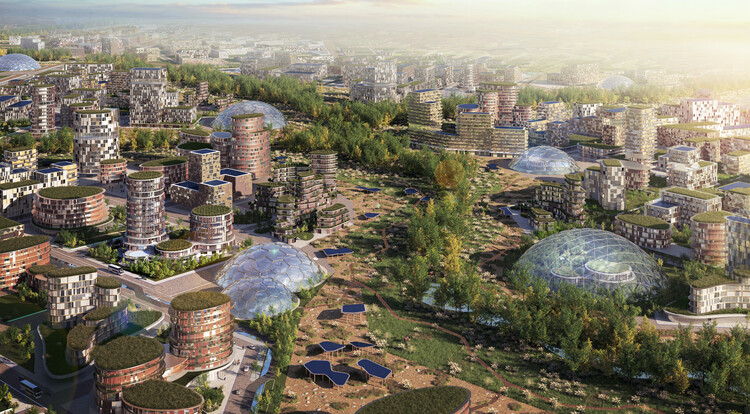
Bechu & Associés Wins Competition for Hunnu City Master Plan, Supporting Mongolia’s Vision 2050

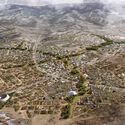
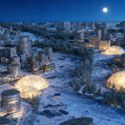
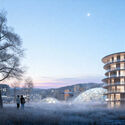
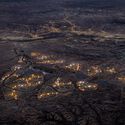
Bechu & Associés has been selected as the winner of the international open competition for the masterplan of Hunnu City, a new satellite city planned south of Ulaanbaatar, Mongolia. Announced in 2025, the winning proposal establishes a long-term urban framework for a 31,503-hectare site located near Chinggis Khaan International Airport, with phased development planned between 2025 and 2045. The project forms part of Mongolia's broader territorial strategy under the Ulaanbaatar 2040 Master Plan and the national Vision 2050 framework, positioning Hunnu City as a new emerging major city intended to support population decentralization, economic diversification, and long-term urban resilience.
https://www.archdaily.com/1037250/bechu-and-associes-wins-competition-for-hunnu-city-master-plan-supporting-mongolias-vision-2050Reyyan Dogan
Redefining an Industrial Landmark: Bratislava’s Next Urban Chapter
| Sponsored Content

Bratislava, the rapidly developing capital of Slovakia—located in the heart of Europe—continues to strengthen its presence on the European architectural map. As a growing hub of contemporary design—already home to projects by Zaha Hadid Architects, Massimiliano & Doriana Fuksas, Stefano Boeri, Studio Egret West, and Snøhetta—the city has now reached another important milestone: an international architectural and urban design competition has been announced to shape the future of Zváračák, one of the last major brownfield sites near the city center.
https://www.archdaily.com/1036975/redefining-an-industrial-landmark-bratislavas-next-urban-chapterRene Submissions
Vilnius Launches International Competition for Landmark Congress Centre Design
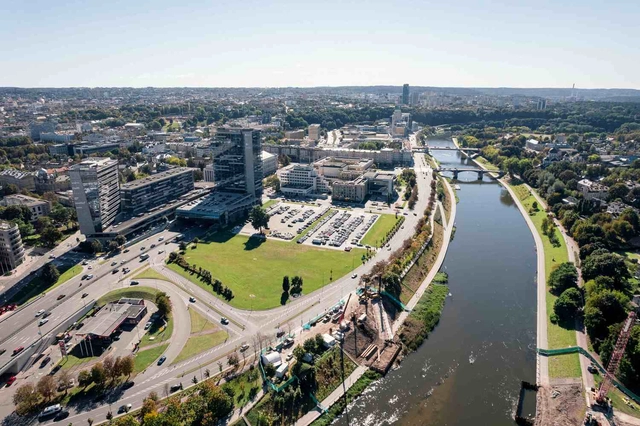
Vilnius has launched an open international architectural competition to select the design concept for the future Vilnius Congress Centre, a flagship venue aimed at transforming the city’s competitiveness in the global meetings and events market. Proposals are invited until 16 March 2026, with a total prize fund of 100 000 euros. The winning concept will form the basis for a next-generation congress centre planned for completion at the end of 2031 on A. Goštauto street, next to the Parliament of the Republic of Lithuania.
https://www.archdaily.com/1037209/vilnius-launches-international-competition-for-landmark-congress-centre-designRene Submissions
11th INSPIRELI Awards is Now Open

The international student architecture competition INSPIRELI AWARDS is entering its 11th edition. The competition is open to students of architecture and related disciplines from around the world and has long ranked among the largest international student architecture competitions.
https://www.archdaily.com/1037205/11th-inspireli-awards-is-now-openRene Submissions
European Prize for Urban Public Space 2026

The Centre de Cultura Contemporània de Barcelona (CCCB) announces the 13th edition of the European Prize for Urban Public Space. Since 2000, this biennial honorary competition recognizes the best interventions to create, transform and recover public spaces in European cities. For the first time, in this edition the time limit for works submitted is extended to 5 years (completed between the months of January 2021 and December 2025). The call for entries will be open for two and a half months, from 10 December to 26 February.
https://www.archdaily.com/1037119/european-prize-for-urban-public-space-2026Rene Submissions
Christ & Gantenbein Win International Competition for New Museum at Kistefos, Norway
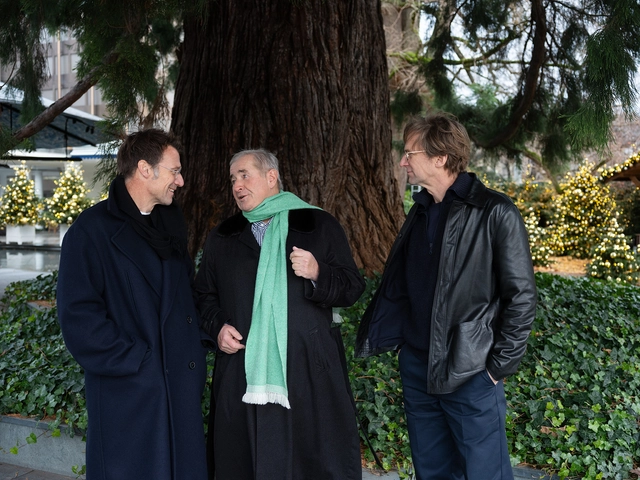
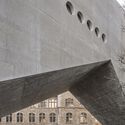
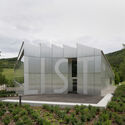
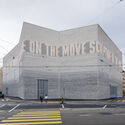
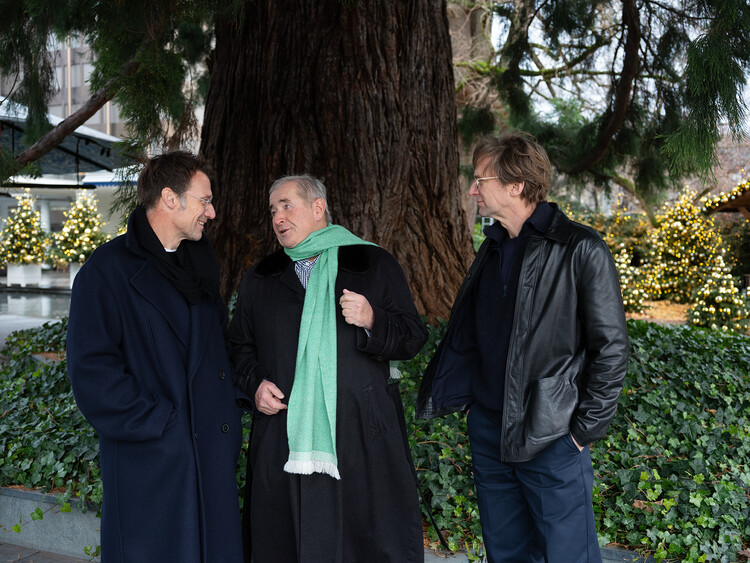
Kistefos Museum has announced Swiss architectural practice Christ & Gantenbein as the winner of its international design competition for a new museum building at the Kistefos site in Jevnaker, approximately one hour north of Oslo. Conceived as a significant new addition to one of Europe's leading sculpture parks and cultural destinations, the project is scheduled to open in 2031 and will house the art collection of Kistefos founder and collector Christen Sveaas through the Christen Sveaas Art Foundation. Following the announcement, Christ & Gantenbein will now work with Kistefos Museum to further develop the concept design toward realization.
https://www.archdaily.com/1037114/christ-and-gantenbein-win-international-competition-for-new-museum-at-kistefos-norwayReyyan Dogan
Modular Arctic Research Station Architecture Competition

[premise]
The acceleration of climate change has amplified the scientific urgency to study Earth’s polar regions. Traditional research stations are often permanent, carbon-intensive structures with significant logistical and environmental footprints. This competition challenges architects and designers to envision the next generation of scientific outposts. We seek a paradigm shift towards a mobile, modular, and sustainable architecture that can be deployed, reconfigured, and removed with minimal impact on the fragile Arctic ecosystem. This new model must prioritize energy self-sufficiency, operational resilience in extreme conditions, and the psychological well-being of researchers living in prolonged isolation, thereby enabling more agile and responsible scientific exploration.
https://www.archdaily.com/1037065/modular-arctic-research-station-architecture-competitionRene Submissions
Commonwealth Association of Architects 2026 Awards: Environmental Impact, Social Impact & Lifetime Achievement Award

The Commonwealth Association of Architects (CAA) is pleased to launch its 2026 Awards Programme, inviting architects from across the Commonwealth to submit work that demonstrates significant contributions to addressing contemporary global challenges including climate change, rapid urbanisation, biodiversity loss, and social inequality. Aligned with the CAA's charter objectives to maximise the contribution by architects to the well-being of society, the awards programme recognises projects and individuals whose work advances the United Nations Sustainable Development Goals (SDGs) while demonstrating exceptional design quality and measurable impact.
https://www.archdaily.com/1036950/commonwealth-association-of-architects-2026-awards-environmental-impact-social-impact-and-lifetime-achievement-awardRene Submissions