A unique Charrette-style competition bringing together architects, designers and innovative solution providers (students and young professionals) to create a concept to re-generate a former industrial area into a sustainable Net Zero community.
Resurrect Syrian Migration (Refugee Shelter Design Challenge) - Background Image by Sam Mann
Submission: December 25th, 2021 23:59 GMT Registration: December 25th, 2021 23:59 GMT Language: English Location: Rukban, Jordan Prizes: $2000 USD Type: Open for All (Students, Professionals & Studios)
Designing for kids is not an easy task. The design process is undertaken by adults, with children being the end-users and therefore, it is a huge responsibility to deliver high-quality designs.
Mies Memorial Library Architecture Competition for Students
Mies van der Rohe’s professional career was one of continuous exploration, endless ambition, and a tireless search for what modern architecture should be and stand for.
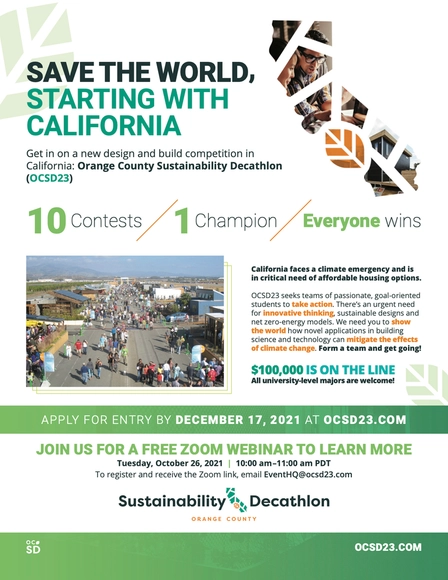
The Orange County Sustainability Decathlon (OCSD23) is a new competition to build and market affordable, sustainable housing for the State of California. OCSD23 is seeking teams that are passionate, goal-oriented, and motivated to take action because they understand the urgent need for inventive thinking. Teams will design and build, from the ground up, model net zero-energy homes that demonstrate how innovative applications of building science and technology can help mitigate climate change and alleviate the housing crisis.
1. Armin Linke, Lake Assal, extraction of salt, Djibouti, Africa, 2012. Courtesy Armin Linke and Vistamare / Vistamarestudio, Pescara / Milano.
Sophia Journal is currently accepting submissions on the theme of its third thematic cycle “Landscapes of Care”, addressing contemporary photography and visual practices that focus on how architecture understood in a wide sense can help to heal a broken planet. The concept of “Landscapes of Care” has increasingly been adopted by diverse areas of study, from health geography to the arts and architecture. It allows us to understand architecture, city and territory as living and inclusive organisms, constituted by multifaceted landscapes with complex social and organisational spatialities which embody the difference and the other, the strange, the unfamiliar, the indigenous, the human and the non-human. Our aim is to explore the ways in which the image can be used as a meaningful instrument of research about the multifaceted complex socioeconomic, political, historical, technical and ecological dimensions of architecture, city and territory that testify, question or emerge from those relationships of care.
The BERKELEY PRIZE encourages undergraduate architecture students to expand their academic education by going into their communities and investigating how the built environment best serves and best reflects the everyday lives of those for whom we design.
Seeking to deliver high visibility and recognition to the world's best designers, architects, and design-oriented companies, A' Design Award & Competition is the world's largest annual juried design competition. The A’ Design Awards are organized and awarded internationally in over 100 categories, ranging from industrial design to architecture. Each year, the winning projects receive public relations, advertising, and marketing services to celebrate their success, at no additional cost to them.
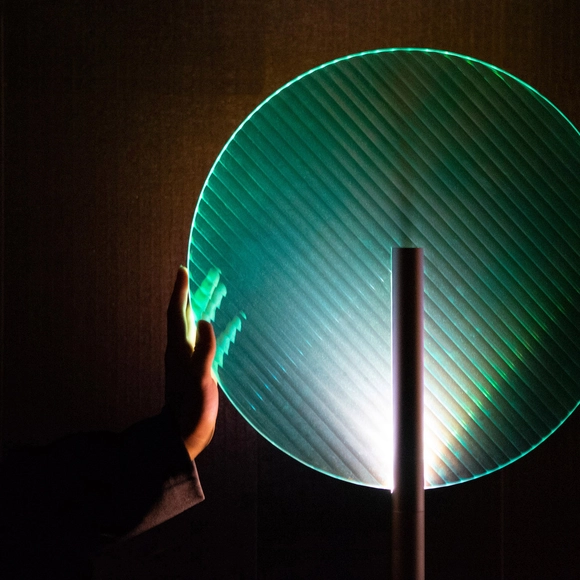
Early registration for the A’ Design Award & Competition for the period 2021-2022 is now open and you can register here. To encourage you to participate and recognize the awarded works in the 2020-2021 version, we present a selection of winners from the category Lighting Products and Projects Design.
□³LE Competition is looking for individual shelter solutions for evacuation centers in Japan proposals. Record-breaking rainfall and subsequent flooding, hurricanes, earthquakes, volcano eruptions, heatwaves, and forest fires, humanity is experiencing devastating natural disasters with no signs of easing.
Volume Zero Competitions invites you to design The community pavilion would serve as a medium to raise awareness surrounding the issues faced by women in today’s society.
The worth of a civilization can be gauged from the place that it gives to women. Women today have distinguished themselves in various spheres of life as orators, doctors, diplomats and so on. There is no denying the fact that women all across the globe have made tremendous progress in this constantly developing economy.
The Terraforming is a three-year (2020–2022) design-research initiative of the Strelka Institute, directed by Benjamin H. Bratton and Nicolay Boyadjiev. The program runs as an interdisciplinary design think-tank and will host contributions from multiple faculty and experts including Lydia Kallipoliti, Clapperton Chakanetsa Mavhunga, Tobias Rees, Valerie Olson, Christina Agapakis, Ken Goldberg, Venkatesh Rao, Fred Scharmen, David Delgado and many others. The third and final cycle of The Terraforming program invites a group of 30 interdisciplinary researchers to join the initiative for 5 months from February - June 2022.* The premise of the design research program is that a viable future depends on comprehensive terraforming, not of Mars to make it suitable for Earth-like life, but of Earth itself — ecologically, geopolitically, geotechnologically. The research of the first two years has reoriented foundational debates on how to conceive and model that viability, based on speculative analyses of synthetic intelligence, automation and ecology, food systems, space law, new modes of governance, the evolution of cities and much more. The final year returns to the question of the built environment at multiple scales, from the epidermal to the continental. Artificial environments are designed spaces for diverse functions and ways of being and knowing: the city, the laboratory, the factory, the home, the space station, virtual and mixed reality, the body itself, etc. All speak to the planetary as both the condition that makes specific enclosed worlds possible and also as a collective compositional project. In 2022 The Terraforming is adding a new chapter of motivating research themes - Artificial Environments, Astropolitics, Synthetic/Spatial Materialism, Planetary Sapience. The program is tuition-free (researchers receive a monthly stipend) and invites architects, urbanists, filmmakers, media theorists, historians, philosophers, science-fiction writers, artists, engineers, economists, political scientists, ecologists, anthropologists and graphic designers to apply and work collaboratively on interdisciplinary projects at the intersection of cinema, text and speculative design-research. Applications will be accepted till November 7, 2021. For more information visit theterraforming.strelka.com or contact us at apply@strelka.com
mOOO calls on architects live in every continent to submit successful and unsuccessful stories of their ventures in a video format, to fire up young architects to create their unique careers and realise the full potential of an architect’s skill set.
Transformation of the space, once intended for military infrastructure, into a public multifunctional city park has multiple significance for the future development of Banja Luka.
SUMMARY Our world is changing fast, while ambitions and challenges match in importance. In this context, design can play a huge role. How do we imagine the world to be? What range of possibilities we haven’t discovered yet? What’s a Non Architecture for a World in crisis? In 2020 we started the second phase of competitions to address the issues of tomorrow.
IMPORTANT DATES Submission Deadline: December 31, 2021 Voting Opens: January 5, 2022 Voting Closes: January 31, 2022 Event Participants Announced: February 3, 2022
Impact Design Competitions invite you to envision and create an innovative sustainable solution that maximizes usable space in a minimum footprint.
A “home” is a space that is intimate to all. Apart from being our safe haven, a home goes beyond its everyday function of being a shelter for its users and their activities; it connects with each of us on an emotional and personal level. As time evolves, the definition of “home” also keeps changing. The 21st century witnessed concepts like Airbnb, Co-Living, Smart Homes, Tiny Homes, etc. gaining popularity with both young and older generations alike sparking movements across the globe.